Designing AI Products — How to decide if your problem needs AI?
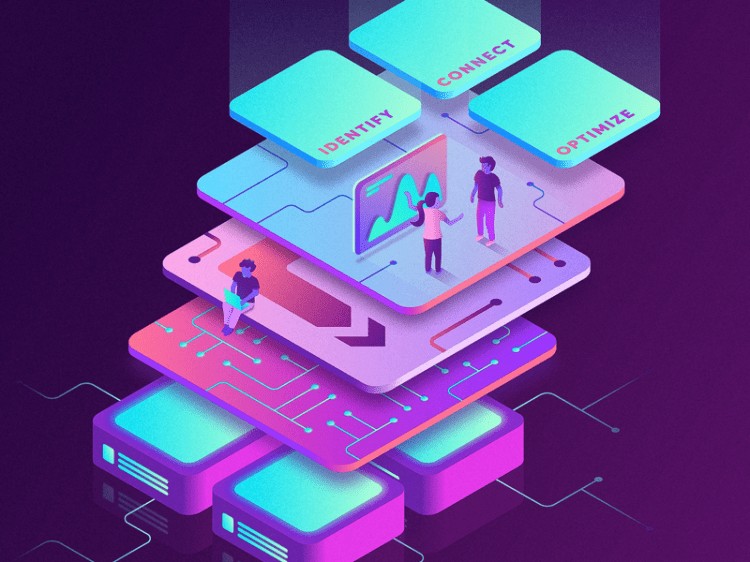
In traditional software systems, outcomes are discrete and the creators are aware of the behaviour of these systems (rigid set of instructions). AI/ML based systems bring a fundamental shift to this way of thinking where instead of programming a system to do a certain action, it’s creators provide data and nurture them to curate outcomes based on the input. These systems learn over time.
What role do designers, managers and HCI practitioners play in defining guidelines and design of these systems when much of the workings of these systems are largely inaccessible to it’s creators?
Before getting into the details of whether your problem needs AI, let’s understand some basic terminologies.
Machine Learning (ML)
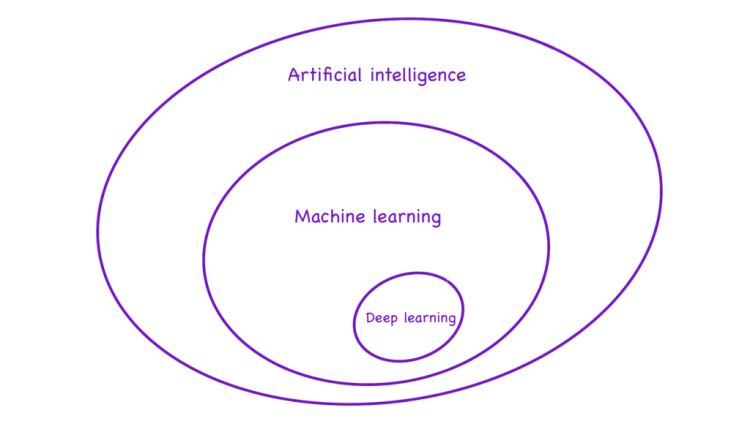
Machine learning comprises techniques and methods that make computer programs do something without programming super-specific rules. It’s creators help computers discover patterns and relationships from a dataset. Popular examples where ML is used include object detection, voice recognition, OCR or recognizing cats from youtube videos.
In machine learning, instead of the creator specifying rules to the program, the program learns by discovering patterns and relationships from a dataset. The job of the creator then is to nurture, guide and provide feedback to this ML algorithm to behave predictably.
An important thing to remember is that techniques like machine learning don’t actually bring intelligence, but rather they bring a critical component of intelligence — Prediction
ML Model
A model is a specialized mathematical function that represents steps for a computer to arrive at a decision. When programming traditional software, we are used to strict rules; if this then that. For eg. If you click the button, send an email, press the shutter and a picture is taken . On the other hand, machine learning models are ‘soft’: they don’t follow a strict logic. ‘Write’ and ‘right’ sound the same but have different meanings depending on the context. Maybe a bald person’s head looks really similar to a duck egg from a certain angle, a bunch of skin colored pixels. We can grasp the workings of ML models better if we embrace this ‘softness’ and understand how these algorithms make the mistakes that they do.
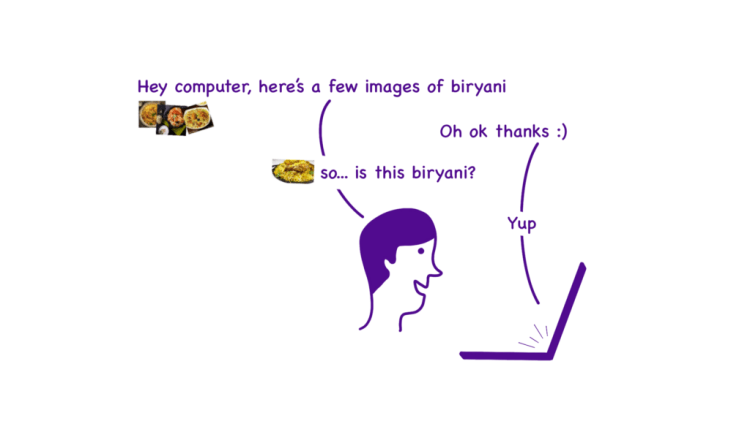
How do you tell a computer what Biryani looks like?
Explaining a computer what Biryani looks like is a really difficult problem to program traditionally. Here’s how you would go about it:
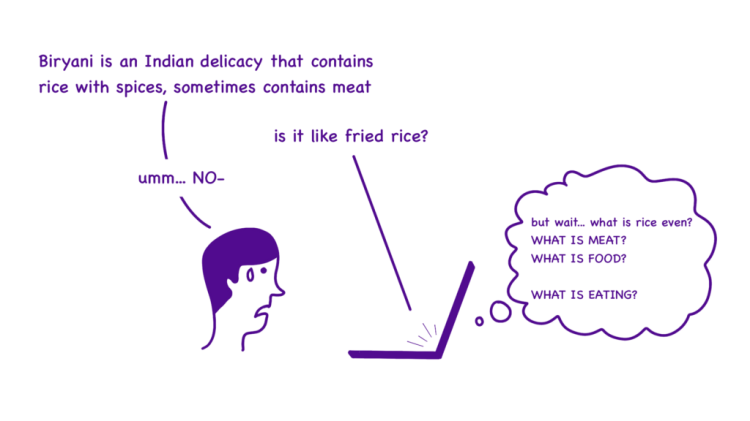
Here’s how you’d go about the same problem with a Machine learning approach:
Deep Learning
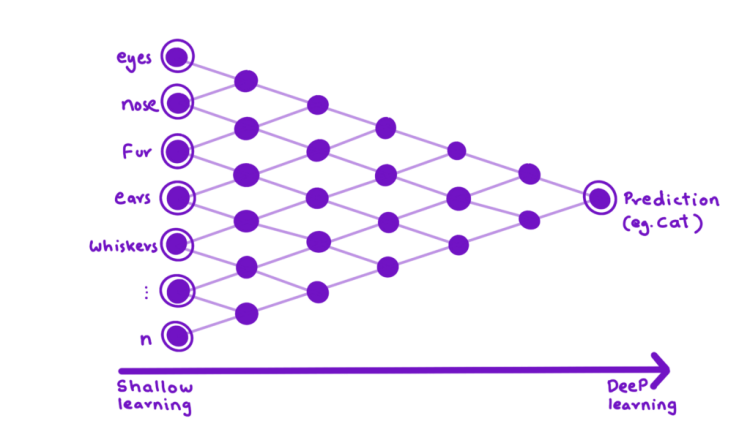
This is a subfield of Machine learning where multiple ML models are layered into artificial neural networks. The system learns from large volumes of datasets and has the ability to learn deeply. Deep learning enables the system produce results which are often more creative than the predicted outcome.
One useful mental model for deep learning is that systems which use deep learning models often appear to be creative. Eg. FaceApp, AlphaGo
Artificial Intelligence
The science of making machines intelligent, so they can recognize patterns and get really good at helping people solve specific challenges or sets of challenges.
How are AI products different?
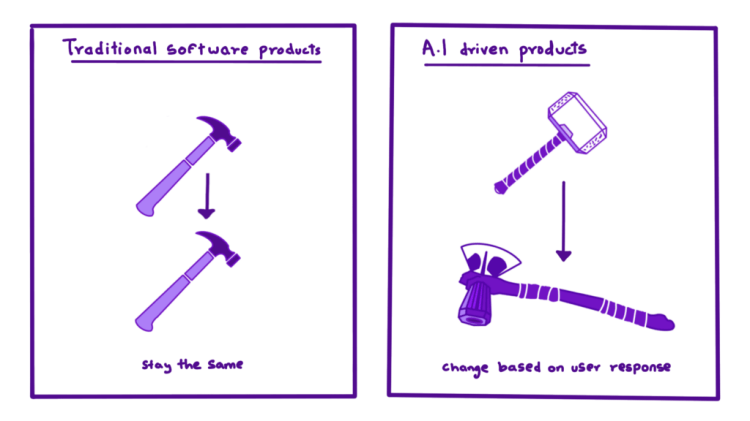
Most traditional products stay the same, while AI driven products tend to change overtime in response to their users and the environment (digital or physical).
Does your problem need AI?
When designing products, the most important thing to consider is the problem being solved and then look at whether AI is uniquely positioned to solve it. Shift your thinking from technology-first to people-first. Often a simple non-AI solution is the best way solve a problem with an added benefit of being easier to build, explain, debug and maintain. Take time to evaluate whether AI will improve or degrade your product.
Instead of asking “Can we use AI to solve {problem x} ?”, a better approach would be to ask “How might we solve {problem x} ?” and “Can AI solve this problem in a unique way?”
When is it not good to use AI?*
- Maintaining predictability
E.g. Keeping the location of the search button constant - Minimize costly errors. If the cost of errors outweigh the benefits that AI provides.
E.g. Detecting cancer - Complete transparency. If users want complete transparency about predictions.
E.g. Open source projects - Optimizing for high speed and low cost.
Cases where getting to market first is more important since training an ML model accurately is time consuming. - Static information
E.g. Visa application forms don’t change for a large set of users
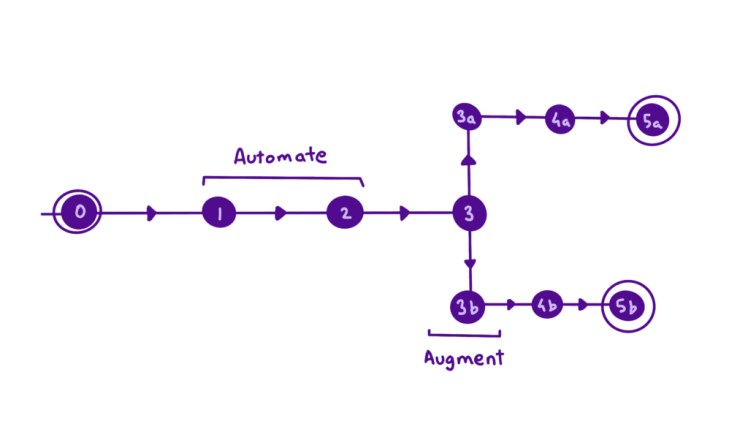
Automation vs Augmentation
Once you’ve decided that your problem can be better solved through an AI based approach, an important consideration is to evaluate whether your solution should automate a task or augment the user’s ability to do the task themselves. It can be tempting to believe that the most valuable product is one that automates everything that people do manually. For eg. A movie app that tells you what to watch with no option to choose an alternative.
Top 4 Most Popular Ai Articles:
Map existing workflows
Mapping existing workflows of the user’s current tasks is a great way for finding opportunities where AI can improve the experience. As you walk through the user’s experience, you can better understand the necessary steps that can be automated or augmented.
Automation
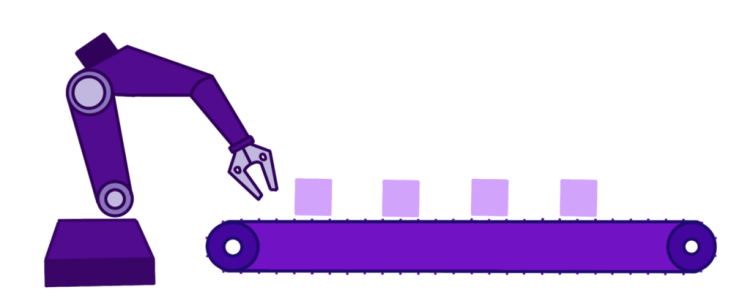
In automation, the AI system performs the task without user involvement. It is good to automate tasks that are undesirable and the user’s investment of time, money or effort is not worth it. Many of the tasks that can be automated do not require oversight and users are often happy to delegate. E.g. Sifting through a large number of photos.
When to Automate?
- People lack the knowledge or ability to do a task.
E.g. Complex tax calculations, Spellcheck. There could also be cases where there are temporary limitations where the task needs to be completed quickly. In such cases, users might prefer to give up control. E.g. Scheduling an Uber while getting ready. - Tasks are boring
E.g. Complex tax calculations, buying milk everyday - Tasks are repetitive
E.g. Sorting photos by people in them - Tasks are awkward
E.g. Calling customer care, asking for money - Tasks are dangerous
E.g. Check for a gas leak - Tasks are low stakes
E.g. Getting song recommendations
Human in the Loop
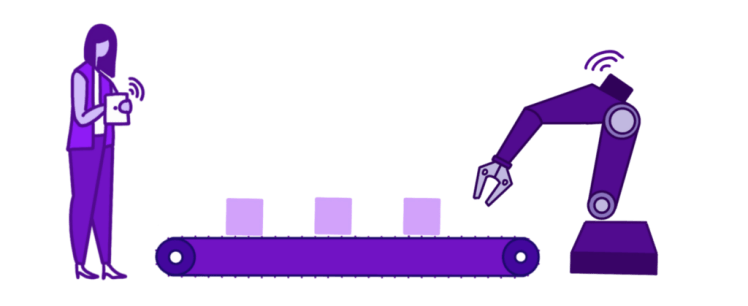
Like any AI system, automation will not always be foolproof. Even when automating, there should be an option for human oversight and intervention if necessary. This can be achieved by allowing users to preview, test, edit or undo any actions that the AI automates. When your system isn’t certain, or can’t complete a request, make sure there’s a default user experience that doesn’t rely on AI.
Successful automation is often measured by the following:
- Increased efficiency
- Improved human safety
- Reduction of tedious tasks
- Enabling new experiences that weren’t possible without automation
Augmentation
In augmentation, the AI system extends the abilities of the user to perform a task. It is good to augment tasks that are inherently human, personally valuable or high stakes in nature. Think of giving your users superpowers instead of doing the work for them. E.g. An illustration design software that suggests colors to pick based on what’s on the artboard.

When to Augment?
- People enjoy the task E.g. Painting, writing
Not every task is a chore. If you enjoy painting, you wouldn’t want an AI to paint for you. However an AI that helps you in the creative process by suggesting colors, generate styles might be useful without taking out the humanity out of the artistic process. - Specifics are hard to communicate E.g. Interior design
Sometimes people can imagine how something should be, but it is hard to communicate. In such cases, people prefer to stay in control to see the vision through. - Stakes are high E.g. Flying an airplane, conducting a surgery
People prefer to stay in control when the stakes are high. The stakes can be physical like a life and death situation, financial like investing in a stock or emotional like giving harsh feedback to a family member.
Successful augmentation is often measured by the following:
- Increased user enjoyment of a task
- Higher levels of user control over automation
- Greater user responsibility and fulfillment
- Increased ability for user to scale their efforts
- Increased creativity
Still confused? Here’s a flowchart
Use this flowchart to decide whether you need to invest in AI/ML capabilities for your product.
A compilation of best practices for designers, managers and HCI practitioners to build human-centred AI products.
Don’t forget to give us your ? !

How to decide if your problem needs AI? was originally published in Becoming Human: Artificial Intelligence Magazine on Medium, where people are continuing the conversation by highlighting and responding to this story.
 365 Data Science