An authoritative guide to Blockchain app development
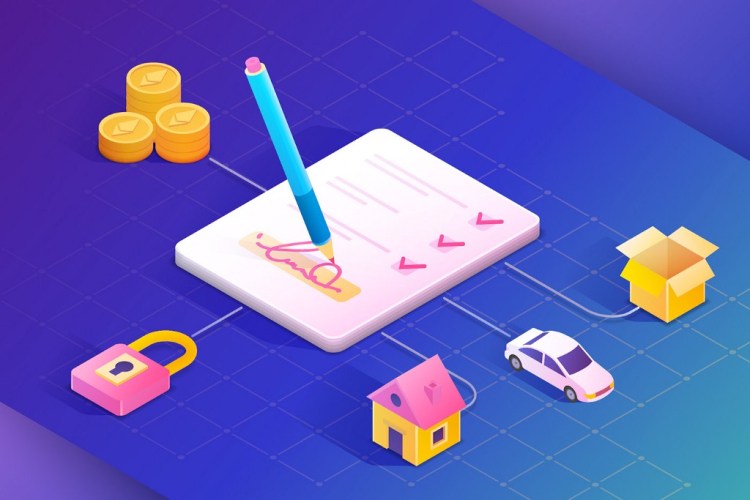
Blockchain technology based application from scratch can be a tedious task for a developer. So, this is a complete guide highlighting all the blockchain app development needs.
Everybody knows that Blockchain technology is the future. It has shaped each and every industry vertical from fintech industry to healthcare & education. In fact, it is the most effective technology to automate business processes today.
That’s why I have created this blockchain guide which would answer all your programming as well as web app development needs.

You are going to learn various things in this blog.
-> Best Blockchain development platforms
-> Types of blockchain programming
-> Top blockchain development languages
-> Use cases of each mentioned blockchain frameworks
-> Lastly, videos on blockchain development
Two Types Of Blockchain Programming
1. DApp development or building smart contracts
If you develop a centralized application, you have to run the backend code on the centralized servers. On the other hand, decentralized applications run their backended code on a decentralized peer-to-peer network. Similar to other web app development, DApps can have its frontend code be written in any of the frontend languages & user-interfaces so that it can make call to the backend servers.
2. Architecture programming of blockchain
When bitcoin blockchain was released in 2009, the coding of its rules and regulations governing that situation was done using C++ programming. Similarly, before a blockchain can be released, all its main features consisting of its architecture & protocols should be settled down. This type of coding can be done using web app development programming languages like C, java that actually works closer to the machine.
Blockchain programming languages
A.Solidity
It is object-oriented, JS domain-specific and high-level programming language given by Ethereum team. It was inspired by other programming languages including Python, C++, JS for developing decentralized applications on the Ethereum platform i.e. EVM(Ethereum virtual machine). Using EVM, smart contracts are written on the Ethereum platform. Till now, it is the most adapted programming language in the blockchain industry and Ethereum community.
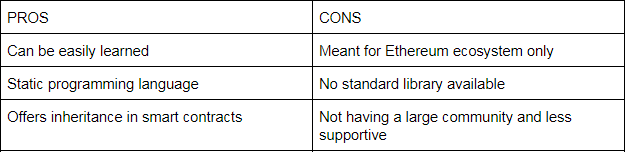
Use case: Smart contract development
Here I can show you how it is developed. A smart contract is written in Solidity language. Before this, you need to set up machine for local development:
1)For node environment, use
Install using Brew: brew install node@8
2) Smart contracts are usually compiled by Solc compiler. You can use npm to install:
npm install -g solc
3) Now is the time to run Go Ethereum which is referred as geth
4) Now, install truffle using npm
npm install -g truffle
5) Lastly, create a virtual Ethereum blockchain for fake accounts used during the development.
npm install -g ganache-cli
Hence, the local machine is setup for blockchain development
How to write smart contract?
- First add truffle coding file:
module.exports = {
networks: {
development: {
host: “127.0.0.1”,
port: 8545,
network_id: “*” // Match any network id
}
}
};
2) Now, you have to create a contract “counter.sol” file
pragma solidity ^0.4.23;contract Counter {
event CounterIncrementedEvent(int count);
event CounterDecrementedEvent(int count); int private count = 0; function incrementCounter() public {
count += 1;
emit CounterIncrementedEvent(count);
} function decrementCounter() public {
count -= 1;
emit CounterDecrementedEvent(count);
} function getCount() public constant returns (int) {
return count;
}
}
3) Add the deployment script “2_initial_migration.js” for counter.sol
var Counter = artifacts.require(“./Counter.sol”);module.exports = function(deployer) {
deployer.deploy(Counter);
};
4) Now, write the truffle test cases:
const Counter = artifacts.require(“Counter”);contract(‘Counter test’, async (accounts) => {
let instance; before(async () => {
instance = await Counter.deployed();//deploy contract
}); it(“Initial value of counter should be zero”, async () => {
let count = await instance.getCount.call({from: accounts[0]});
assert.equal(count, 0);
});});
5) Finally, you can now run the test cases
To run ganache-cli, use code:
Ganache-cli
To run truffle tests: use code
truffle test
So, you have deployed and tested your first smart contract app.
However, the full code is available here (https://github.com/sarveshgs/firstBlockchainApp)
B. Go
The language was developed by Google in 2007 and bring out among public in 2012. It is a popular domain-general programming language. It has a similar syntax as of C programming language and is statically typed. It comes with various features viz. User-friendly, robust, performing, highly secure and multi-purpose language. Since, it contains a rich standard library, it provides maximum flexibility when blockchain developers use GO for their blockchain projects. You can take free consultation from expert Golang app developer team if you wish to have a high performing and advance application offering features like fast data compilation in less time, collecting clutter for boosting up speed and performance and many more.
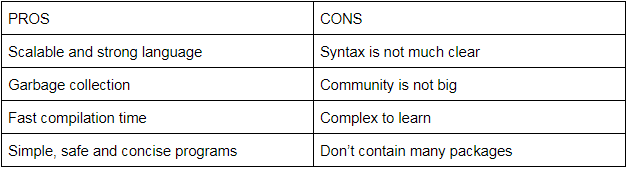
Use cases: Go-Ethereum apps , Hyperledger Fabric, Loom Network

How to create Ethereum apps using Go?
You can build native Ethereum applications using eth-go. Infact, Ethereum comes with a global config found in the “ethutil package”.
First you need to set base path for global config.
func main() {
// Read config
ethutil.ReadConfig(“.test”, ethutil.LogStd, nil, “MyEthApp”)
}
Now, you can set up & create your Ethereum node:
func main() {
// Read config
ethutil.ReadConfig(“.test”, ethutil.LogStd, nil, “MyEthApp”)
// Create a new ethereum node
ethereum, err := eth.New(eth.CapDefault, false)
if err != nil {
panic(fmt.Sprintf(“Could not start node: %s\n”, err))
}
// Set the port (default 30303)
ethereum.Port = “10101”
// Once we reach max, bounce them off.
ethereum.MaxPeers = 10
}
Once the base Ethereum stack get set up. Now, connect it to the main network:
package main
import (
“github.com/ethereum/eth-go”
“github.com/ethereum/eth-go/ethutil”
)
func main() {
// Read config
ethutil.ReadConfig(“.test”, ethutil.LogStd, nil, “MyEthApp”)
// Create a new ethereum node
ethereum, err := eth.New(eth.CapDefault, false)
if err != nil {
panic(fmt.Sprintf(“Could not start node: %s\n”, err))
}
// Set the port (default 30303)
ethereum.Port = “10101”
// Once we reach max, bounce them off.
ethereum.MaxPeers = 10
keyRing := ethutil.GetKeyRing()
// Create a new key if non exist
if keyRing.Len() == 0 {
// Create a new keypair
keyPair, err := ethutil.GenerateNewKeyPair()
if err != nil {
panic(err)
}
// Add the keypair to the key ring
keyRing.Add(keyPair)
}
ethereum.Start(true)
ethereum.WaitForShutdown()
}
Hence, you node should be catching up with the blockchain now.
For full source code, please click here.(https://github.com/ethereum/go-ethereum/wiki/Creating-your-own-Ethereum-apps-using-Eth-go)
Top 4 Most Popular Ai Articles:
1. Cheat Sheets for AI, Neural Networks, Machine Learning, Deep Learning & Big Data
3. Getting Started with Building Realtime API Infrastructure
4. How I used machine learning as inspiration for physical paintings
C. Python
It is the most demanding programming language among new coders as it has a simple syntax like English language. It is one of the popular and modern programming languages used to create web apps on a server. It can also connect to database systems, perform complex mathematics and handle big data. In fact, each blockchain ecosystem contains one or more public tools written using Python language.
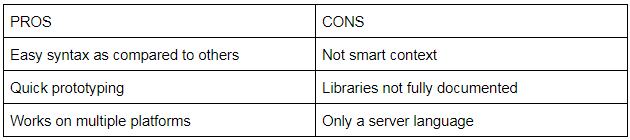
Use cases: Smart contracts on Hyperledger, Ethereum(pyethereum), Contracts for NEO
D. JavaScript
It is the most preferred language among software developers today and widely used for rapid web application development. It has various wonderful frameworks viz. Angular, React, Node and jQuery for website application development. The best thing about this language is that it perfectly suits blockchain operations as it can handle asynchronous actions involved in it. Moreover, it can easily handle the communications between all the different types of blockchain nodes.

Use cases:- Hyperledger Fabric SDK, Smart contracts development
E. C++
It is one of the oldest and most admired languages for web app development. As we all know that it is an extension of the C language

Use cases:– Cryptocurrency development, Bitcoin, Ripple, Bitcoin cash, Litecoin, Stellar, Monero
Blockchain platforms
1. Ethereum:
It is one of the popular blockchain development platforms which comes open-source for developing DApps running on blockchain technology. It not only track transactions but also program them. It facilitates scripting or smart contracts which are running via nodes in the respective network. Blockchain developers use Go, Python, C++, Java languages to build apps. However, smart contracts are built using high level programming language known as Solidity.
Use cases: ICO’s, Digital Identity Management, Smart contracts development, Fintech apps
2. Hyperledger:
It is considered as the king of open source blockchains and act as a leader by providing related training, tools and events for the development of blockchain-based distributed ledgers. The aim behind using Hyperledger for blockchain applications is to provide modular blockchain tech which is consisting of easy-to-use and rich APIs. Hyperledger platform comes with a lot of features viz. data privacy, immutability, information sharing, reduces security risks and increase authenticity.
Use cases: B2B contracts, Supply chain management, Manage depository assets
3. OpenChain:
It is an open-source blockchain platform developed by CoinPrism for industries that manage their digital assets. It develops secure and scalable applications and can have a single authority in multiple transactions. Here, the transaction process comes free-of-cost and considered as one of the efficient blockchain platforms.
Use Cases: Keep inter organizational records, develop lightweight fintech systems
4. Stellar:
This blockchain platform is used to develop smart devices, wallets and many more blockchain apps. It is a distributed ledger network which facilitates cross-platform asset transfers. For recording financial transactions, SCP(Stellar consensus protocol) maintain consensus without being rely on a closed system.
Use Cases: SureRemit, Satoshi pay, IBM world wire
5. R3 Corda:
R3 Corda is an innovative blockchain platform which was launched in 2015 and allows institutions to carry out transactions directly from smart contracts, thus reducing the friction of commercial transaction costs. Initially developed for financial institutions, R3 Corda can now be used in applications such as medical care, supply chain, government authorities, and commercial financing.
Use Cases: Manage digital assets, Facilitate global trade
Final Words:
Blockchain technology is predicted to have a huge impact on all business sectors and industries. In the next few years, as the world becomes more and more decentralized and the blockchain adapts as the mainstream, the future is really gonna be definitely unlimited.
Don’t forget to give us your ? !



A comprehensive Guide For All Your Blockchain App Development Needs was originally published in Becoming Human: Artificial Intelligence Magazine on Medium, where people are continuing the conversation by highlighting and responding to this story.
 365 Data Science