
Building a machine learning model or training a machine learning algorithm is a long process. You can’t just train a model once and leave it alone, because there’s a lot more to the machine learning lifecycle — data changes, preferences evolve, and competitors will emerge.
Therefore, you should keep your model up to date when it goes into production. While you don’t have to go through the same level of training that was required when creating the model, you can’t assume that it will be self-sufficient.
Also, Read — Network Security with Machine Learning.
Machine learning lifecycle
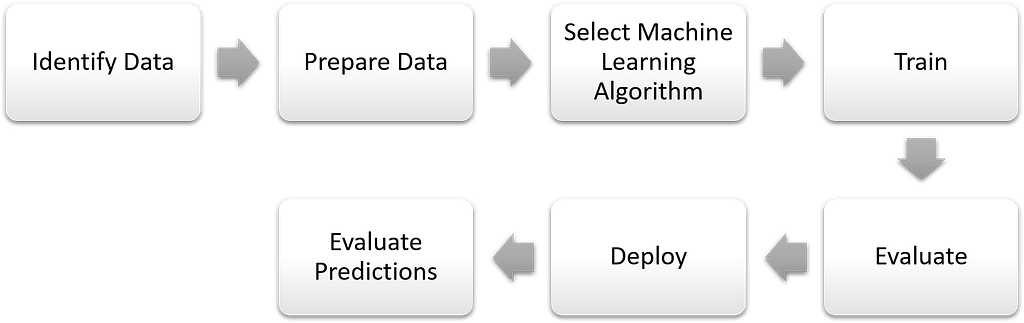
The machine learning lifecycle is continuous and choosing the right machine learning algorithm is only one step. The stages of machine learning lifecycle are as follows:
Also, Read — Sentiment Analysis with Machine Learning.

- Identify data: Identifying relevant data sources is the first step in the cycle. Also, when developing your machine learning algorithm, consider extending the target data to improve the system.
- Prepare data: Make sure your data is clean, secure, and governed. If you will build a machine learning model based on less accurate data, the application will fail.
- Select Machine Learning Algorithm: You can have multiple machine learning algorithms applicable to your data and business challenges.
- Train: you must train the algorithm to build the model. Depending on the type of data and algorithm, the training process can be supervised, unsupervised, or reinforcement.
- Evaluate: Evaluate your machine learning models to find the best performing algorithm before deploying it to production.
- Deploy: Machine learning algorithms create models that can be deployed in both cloud and on-premises applications.
- Prediction: After deployment, start making predictions based on new incoming data.
- Evaluate predictions: Evaluate the validity of your predictions. The information you collect by analyzing the validity of predictions is then fed back into the machine learning cycle to improve accuracy.
Once your model has started making predictions, start the process again by evaluating the data you are evaluating. Are all the data relevant? Are there any new datasets that could help improve forecast accuracy? By sticking to this machine learning lifecycle and continuously improving models and evaluating new approaches, you will be able to maintain the relevance of your machine learning-based applications.
Trending AI Articles:
1. Machine Learning Concepts Every Data Scientist Should Know
3. AI Fail: To Popularize and Scale Chatbots, We Need Better Data
Some More Amazing Articles to Read —
Machine Learning in Finance
LSTM in Machine Learning
Translate Using Python
I hope you liked this article on Machine Learning Lifecycle. Feel free to ask your valuable questions in the comments section below. You can also follow me on Medium to learn every topic of Machine Learning.
Don’t forget to give us your ? !




Machine Learning Lifecycle was originally published in Becoming Human: Artificial Intelligence Magazine on Medium, where people are continuing the conversation by highlighting and responding to this story.
Via https://becominghuman.ai/machine-learning-lifecycle-915f632b67f5?source=rss—-5e5bef33608a—4
source https://365datascience.weebly.com/the-best-data-science-blog-2020/machine-learning-lifecycle
 365 Data Science