
Indoor is the New Outdoor
Using novel positioning systems to enable indoor location-based applications
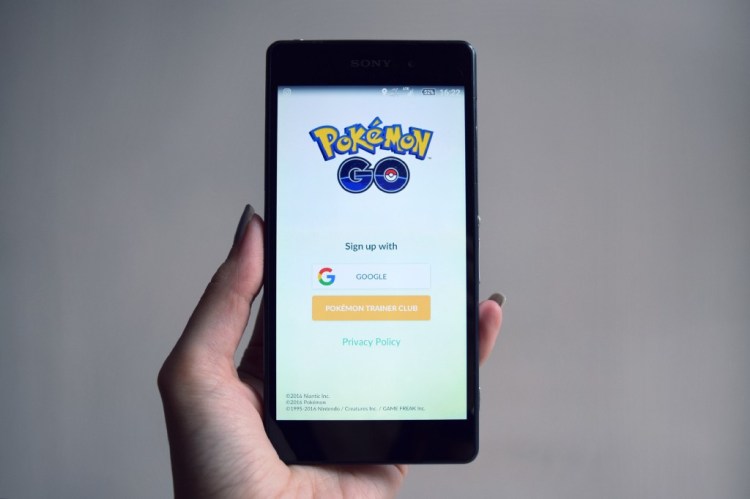
As developers and designers, which technologies should we use to build indoor location-based experiences? Traditional positioning systems, such as GPS, often fail to achieve satisfactory accuracy indoors. Therefore, state of the art indoor positioning techniques are key in enabling indoor location-based applications, such as games, navigation services for humans and drones, ambient assisted living, and more. As the literature review conducted for my master’s thesis suggests, there are few potential ways to go about that.
The most prominent indoor positioning systems (both existing and those that are under research) are based on radio waves, optical wireless communication, ultrasound or computer vision. Inertial, magnetic and visual sensors may also aid in positioning. Compared to GPS’s indoor accuracy of multiple meters, indoor positioning systems can achieve an accuracy of 1–2 meters, or, in special cases, even sub-centimeter accuracy. In addition, some of these systems can determine a mobile device’s orientation precisely, which is important for interactive indoor location-based applications, such as AR games. Let’s quickly go through the most promising approaches:

Radio wave based approaches can use already-existing consumer-grade devices, such as WiFi routers and Bluetooth beacons. In the best realistic cases, a one meter level of accuracy can be achieved. Little to no modifications have to be made to the WiFi routers or beacons. However, the area surveying work can be cumbersome, and it is difficult to capture the mobile device’s orientation.
Optical wireless communication is an active field of research. The idea is that LED lights can potentially be used for internet connectivity, providing faster speeds than regular WiFi. This technology has a catchy name — “LiFi”. Conveniently enough, it is also possible to measure received light strengths with special equipment, from which a device’s indoor position can be inferred with a precision range from sub-centimeter to 2 meters. This means that if LiFi would one day become a mainstream data transmission technology, indoor positioning systems could be built that utilize that infrastructure as a convenient side product. However, a lot of work has to be done before light-based positioning is practical. In addition, the equipment and the infrastructure for LiFi is not mainstream yet, and whether it will ever be is anyone’s guess.
Trending AI Articles:
1. Machine Learning Concepts Every Data Scientist Should Know
3. AI Fail: To Popularize and Scale Chatbots, We Need Better Data
Ultrasound positioning uses sounds inaudible to the human ear, and can achieve an accuracy as good as 10 cm. However, signal reflections and interference are a problem, as in the systems described above. Additionally, the microphone equipment can be expensive.
Computer vision (CV) positioning has several approaches, such as point clouds or feature recognition. A 1–2 meters level of accuracy can be achieved, with zero to minimal physical infrastructure required. CV can also estimate the device’s orientation, so computer vision is the go-to solution for indoor applications where AR content needs to be placed in very precise locations.
It is important to know that multiple systems can be combined together, in order to benefit from the strengths of one system while mitigating the weaknesses of another. For example, WiFi fingerprinting and CV can be combined in a hybrid system to reduce localization overhead.
By utilizing VimAI’s proprietary CV algorithm, a sample indoor navigation application was built. In it, a brisk AR character walks indoors and guides the user to the point of interest of the user’s choice. As a proof of concept, it shows that CV provides sufficient accuracy for such AR navigation applications, although the AR character may occasionally walk inside walls, breaking the realism.
Indoor location-based games and applications are only limited by the imagination of designers and developers. Functional applications can already be built today, but there is room for improvement and creativity. Before deciding on an indoor positioning system for your application, ask yourself this: will it require considerable manual work in each indoor location in order for your application to work? Or, can the domain of functional indoor spaces instead be expanded passively, as users use your application?
For more content about indoor positioning and indoor location-based applications, see my full master’s thesis here.
Don’t forget to give us your ? !




Indoor is the New Outdoor: was originally published in Becoming Human: Artificial Intelligence Magazine on Medium, where people are continuing the conversation by highlighting and responding to this story.
Via https://becominghuman.ai/indoor-is-the-new-outdoor-fc7988b7447e?source=rss—-5e5bef33608a—4
source https://365datascience.weebly.com/the-best-data-science-blog-2020/indoor-is-the-new-outdoor
 365 Data Science