
Artificial intelligence refers to the development of computer-based solutions that can perform tasks that mimic human intelligence.
AI collects different technologies that can be brought together, where a machine acts at human-like intelligence levels. This includes learning rules that require simple decisions and reasonings to arrive at certain conclusions, learn from past mistakes, and experience self-correction.
There are many steps along the way where the computer can learn like a human. AI systems can be put into complexity buckets. At the moment, simple, weak and narrow systems are everywhere. We use them into our homes, cars and air traffic controllers.

The idea is that an AI system is trained for specific tasks. These tasks could include virtual personal assistants such as Apple’s Siri, classifying images, and translation speech. For example, by merely asking Amazon’s Alexa, it can help you answer, set alarms and purchases, and so much more. So you may already be using artificial intelligence every day in your home.
There is a race to build robust AI when presented with unfamiliar tasks. A strong AI system would be able to find a solution without human intervention. Its intelligence would not just be able to touch but also to surpass that of humans. Strong AI currently exists with limits but is expected to advance over the next few decades. There are a host of other benefits that AI Brings.

The origins of Artificial Intelligence Technology
Artificial Intelligence is not new. It was formally founded in 1956 by a group of scientists in the United States. Artificial Intelligence has gone through many cycles since then, going through significant scientific breakthroughs, followed by ‘AI winters’ — times of disappointment after AI failed to deliver its hype. In recent years, with the more widespread AI application, AI’s responsible use, including ethics and bias, has become a significant factor in its development.
The technologies behind Artificial Intelligence
Sense lets a machine perceive the world around it by gathering and processing images, sounds, speech and text, facial recognition, image categorisation, sound pattern recognition, and translating speech to text.
Computer vision allows machines such as computers or mobile phones to see their surroundings. Computer vision has already made its way to our mobile phones via different e-commerce or camera apps.
Trending AI Articles:
2. Generating neural speech synthesis voice acting using xVASynth
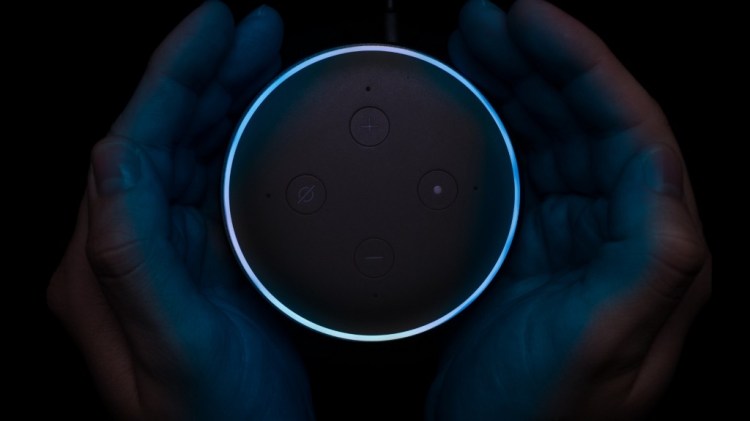
Audio Processing has to do with detecting and translating audio signals, like Google Cloud vision. It classifies images into thousands of categories such as cats and detects objects and faces within images. The second is Amazon Echo, which acts as a personal DJ to control through your voice.
Now a Fourth Industrial Revolution is building on digital technologies. It is thought to be a fusion of technologies that blur the lines between the physical, digital, and biological spheres. (Nkusi, 2020)
AI enables a machine to understand the information it collects through pattern recognition, such as finding patterns in social media posts on fraudulent behaviours for insurance claims. This is very similar to how humans interpret information by understanding the patterns presented and their contexts.

Some of the technologies that are behind it are Natural language processing or NLP. This technology allows computer programmes to understand spoken language. NLP currently works through a process called deep learning. In essence, language is broken down into shorter elemental pieces to teach the machine to understand their relationships and work together.
Knowledge representation is about representing information about the world in a form. A computer system can solve complex tasks such as diagnosing a medical condition or having a natural language dialogue. Speech recognition, this is the translation of speech into text or format that machines can read. For instance, think about automated phone systems that recognise your voice, process your request and put you through the correct department when you call a company.

Facebook also uses natural language processing to look for patterns and user posts to understand how people feel about a particular brand or product. Chatbots like IPSoft Amelia or IBM Watson perform service desk roles such as handling customer complaints or solving customer complaints or customer help desk issues.
AI can continuously learn, improve the outcomes, and become better at doing the task. It can continually optimise the performance by learning from successes or failures of these actions.

Some examples of where AI is acting and learning are Netflix, suggesting movies, TV Shows, and documentaries, based on the viewer’s prior activity, patterns, and behaviours. The more you watch, the more it learns and better suggests relevant content for you to watch. Deep learning is one of the things that makes self-driving cars possible.
Artificial Intelligence is also used to assist humans in non-repetitive tasks to find patterns. Learns from experiences and then using machine learning, choose the correct responses. Unlike automation, it does not follow orders or rules.
It is used to provide insights. For example, imagine someone has a head injury and needs to determine the level of damage. An AI machine could help diagnose the degree of damage by being ‘trained’ on multiple X-rays of previous head injuries. It would then understand the severity of the current head injury and provide an informed result. This could help doctors provide their overall diagnosis for the patient a lot quicker as they would already have gained insight into the severity of the AI machine’s injury and would therefore have a better understanding of the patient’s condition before doing their checks.
The benefits and things to consider relating to Artificial Intelligence
AI brings a new level of efficiency to the use of resources. Machine learning can extract meaning from large and complex data sets. Can, therefore, see patterns and anomalies in data that humans cannot.
Secondly, AI has been able to analyse weather patterns and climate data, resulting in more accurate forecasts. Thirdly, a better customer experience, using AI, can improve how it interacts with its customers. This could involve things like customer experience through chatbots and digital assistants, who are available 24/7 to converse with customers. It could also mean that in hospitals, AI can focus on the manual and repetitive tasks such as understanding a patient’s medical history by reading through all the historical records. In contrast, nurses focus on the more human side of their jobs, like forming close interpersonal relationships with patients. AI has also led to other enjoyable and innovative solutions. In certain hotels, hotel guests can now check-in to their hotel using an app by merely using their fingerprints or taking a selfie.
Artificial Intelligence is not here to replace us. It is here to help us.

The best results are achieved when human experts work hand in hand with AI, each bringing the best of their unique capabilities to a problem.
Artificial Intelligence, including machine learning and deep learning systems, are changing each and every industry and could create incredible opportunities for businesses. (Nkusi, 2020)
Bibliography
Accenture. (n.d.). What is AI exactly? Retrieved November 21, 2020, from https://www.accenture.com/us-en/insights/artificial-intelligence/what-ai-exactly
Artificial Intelligence (AI) Services & Solutions | Accenture. (n.d.). Accenture. Retrieved November 19, 2020, from https://www.accenture.com/us-en/services/ai-artificial-intelligence-index
Global, B. (n.d.). The history of artificial intelligence. Bosch Global. Retrieved November 21, 2020, from https://www.bosch.com/stories/history-of-artificial-intelligence/
Nkusi, B. F. (2020, December 23). Let’s adapt our skills to work with Artificial Intelligence. The New Times | Rwanda. https://www.newtimes.co.rw/opinions/lets-adapt-our-skills-work-artificial-intelligence
What is Machine Learning? (2017, January 11). [Video]. YouTube. https://www.youtube.com/watch?v=f_uwKZIAeM0
This blog is a project for Study Unit MCS5460, University of Malta.
Don’t forget to give us your ? !



A crash course on Artificial Intelligence was originally published in Becoming Human: Artificial Intelligence Magazine on Medium, where people are continuing the conversation by highlighting and responding to this story.
 365 Data Science