
No Bias Labeled Data — the New Bottleneck in Machine Learning
The Performance of an AI System Depends More on the Training Data Than the Code
Over the last few years, there has been a burst of excitement for AI-based applications through businesses, governments, and the academic community. For example, computer vision and natural language processing (NLP) where output values are high-dimensional and high-variance. In these areas, machine learning techniques are highly helpful.
Indeed, AI depends more on the training data than the code. “The current generations of AI are what we call machine learning (ML) — in the sense that we’re not just programming computers, but we’re training and teaching them with data,” said Michael Chui, Mckinsey global institute partner in a podcast speech.
AI feeds heavily on data. Andrew Ng, former AI head of Google and Baidu, states data is the rocket fuel needed to power the ML rocket ship. Andrew also mentions that companies and organizations which are taking AI seriously are eager to acquire the correct and useful data. Moreover, as the number of parameters and the complexity of problems increases, the need for high-quality data at scale grows exponentially.

Data Ranks the Second-Highest Obstacle in AI Adoption
An Alegion survey reports that nearly 8 out of 10 enterprises currently engaged in AI and ML projects have stalled. The research also reveals that 81% of the respondents admit the process of training AI with data is more difficult than they expected before.
It is not a unique case. According to a 2019 report by O’Reilly, the issue of data ranks the second-highest obstacle in AI adoption. Gartner predicted that 85% of AI projects will deliver erroneous outcomes due to bias in labeled data, algorithms, the R&D team’s management, etc.

The data limitations in machine learning include but not limited to:
Data Collection: Issues such as inaccurate data, insufficient representatives, biased views, loopholes, and data ambiguity affect ML’s decision and precision. Especially during Covid-19, certain data has not been available for some AI enterprises.
Data Quality: Since most machine learning algorithms use supervised approaches, ML engineers need consistent, reliable data in order to create, validate, and maintain production for high-performing machine learning models. Low-quality labeled data can actually backfire twice: during the training model building process and future decision-making.
Efficiency: In the process of machine learning project development, 25% of the time is used for data annotation. Only 5% of the time is spent on training algorithms. The reasons for spending a lot of time on data labeling are as follows:
- The algorithm engineer needs to go through repeated tests to determine which label data is more suitable for the training algorithm.
- Training a model needs tens of thousands or even millions of training data, which takes a lot of time. For example, an in-house team composed of 10 labelers and 3 QA inspectors can complete around 10,000 automatic driving lane image labeling in 8 days.
Trending AI Articles:
2. Generating neural speech synthesis voice acting using xVASynth
How to avoid sample bias while obtaining large scale data?
Solution
Accuracy
Dealing with complex tasks, the task is automatically transformed into tiny component to make the quality as high as possible as well as maintain consistency.
All work results are completely screened and inspected by the machine and the human workforce.
Efficiency
The real-time QA and QC are integrated into the labeling workflow.
ByteBridge takes full advantage of the platform’s consensus mechanism which greatly improves the data labeling efficiency and gets a large amount of accurate data labeled in a short time.
Consensus — Assign the same task to several workers, and the correct answer is the one that comes back from the majority output.
Ease of use
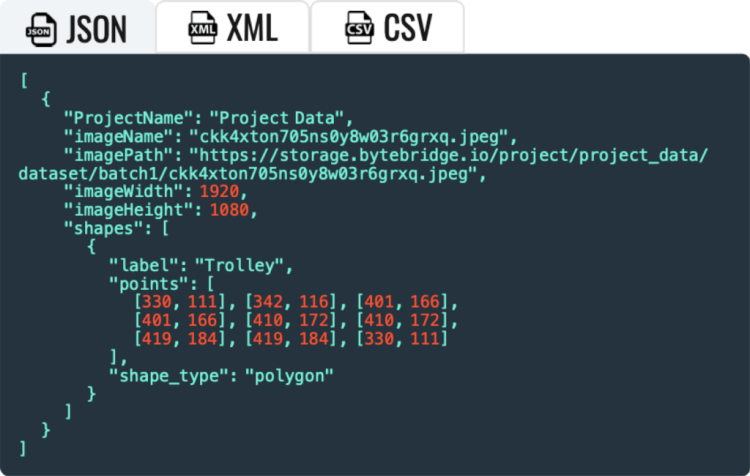
The easy-to-integrate API enables the continuous feeding of high-quality data into a new application system.
End
“We have streamlined data collection and labeling process to relieve machine learning engineers from data preparation. The vision behind ByteBridge is to enable engineers to focus on their ML projects and get the value out of data,” said Brian Cheong, CEO of ByteBridge.
Both the quality and quantity of data matters for the success of AI outcome. Designed to power AI and ML industry, ByteBridge promises to usher in a new era for data labeling and collection, and accelerates the advent of the smart AI future.
Don’t forget to give us your ? !




No Bias Labeled Data — the New Bottleneck in Machine Learning was originally published in Becoming Human: Artificial Intelligence Magazine on Medium, where people are continuing the conversation by highlighting and responding to this story.
 365 Data Science