Different Algorithm Stage, Differentiated Demand for Training Data

Three Basic Elements in AI
The algorithm, computing power, and data are the three basic elements of the development of artificial intelligence. Just as a triangle needs three sides to stabilize its shape, artificial intelligence will also need all three elements to perfect itself.
Among them, data is the foundation, which provides the underlying support for the algorithm. If you compare an algorithm to a car, data is the fuel that drives the car forward.
Data is the Key

At present, AI enterprises have to go through three stages: research and development, training, and implementation, and each stage requires the support of massive basic data sets.
In machine learning, with each round of testing, engineers would discover new possibilities to perfect the model performance, therefore, the workflow changes constantly. There are uncertainty and variability in data labeling. The clients need workers who can respond quickly and make changes in workflow, based on the model testing and validation phase.
Therefore, High-quality labeled data for machine learning algorithms training has become the core part of artificial intelligence development in recent years.
The requirement at Research and Development Stage
The research and development phase is the starting point of training a new algorithm. At this stage, the algorithm has been through a process from 0 to 1 and has a large demand for data. In the initial stage, standard data set products are mostly used for training, and later in the middle and late stages, data customization and professional labeling services are required.
For data service providers, in order to better meet the needs of AI algorithms in the research and development stage, they need to not only improve their own labeling and delivery capacity but also improve their own customized data output capacity, so as to achieve a seamless fit between service and demand.
The requirement at Training Stage
At the training stage, AI enterprises aim to optimize the performance and other abilities of the existing algorithm with annotated data. At this stage, the demand for data quantity decreases, and AI enterprises focus mainly on data accuracy.
For data service providers, in order to better meet the needs of AI algorithms in the training stage, it is necessary to guarantee data quality. The data accuracy rate to 95% or even higher can be realized by using advanced annotation tools and establishing tight internal management.

The requirement at the Application Stage
After the research and development and training process, the algorithm is mature enough to move from the laboratory to the market. In this stage, the demand for data volume is further reduced, and the requirements for scenario-based data sets with consistency are much higher.
For example, in the field of autonomous driving, data scenarios include lane changing and overtaking, crossing intersections, unprotected left turns and right turns without traffic light control, as well as some complex long-tail scenarios such as vehicles running red lights, pedestrians crossing the road, and vehicles parked illegally on the side of the road, etc.
For data service providers, in order to better meet the requirements in the landing stage, apart from improving the output capacity of customized data sets, meanwhile, they need to improve their customer service, so as to put forward professional opinions and suggestions for algorithm landing.
The above three stages cover the whole process from scratch, in which data plays an indispensable role.
Trending AI Articles:
1. Top 5 Open-Source Machine Learning Recommender System Projects With Resources
4. Why You Should Ditch Your In-House Training Data Tools (And Avoid Building Your Own)
End
The booming data annotation market has also stimulated the players to secure a niche position in the competition. Only by constantly guarantee data quality and provide flexible service for different stages can the data provider take the lead in the fierce competition.
ByteBridge, a human-powered data labeling tooling platform with real-time workflow management, providing high-quality data with efficiency:
- The real-time QA and QC are integrated into the labeling workflow as the consensus mechanism is introduced to ensure accuracy.
- All work results are completely screened and inspected by the machine and human workforce.
- Clients can set labeling rules, iterate data features, attributes, and task flows, scale up or down, make changes.
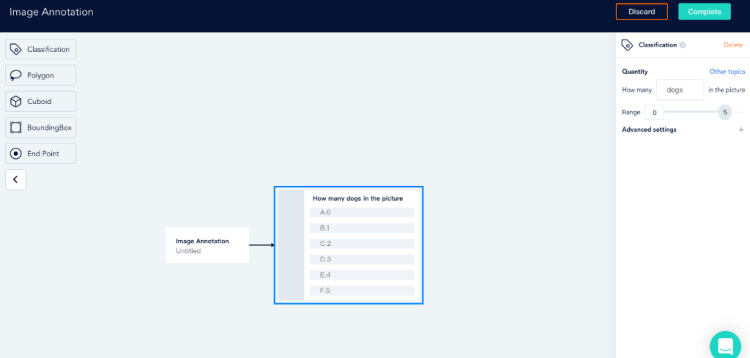
- Clients can monitor the labeling progress and get the results in real-time on the dashboard.

For further information, please visit our website site:ByteBridge.io
Don’t forget to give us your ? !




The different algorithm stage, the differentiated demand for data was originally published in Becoming Human: Artificial Intelligence Magazine on Medium, where people are continuing the conversation by highlighting and responding to this story.
 365 Data Science