
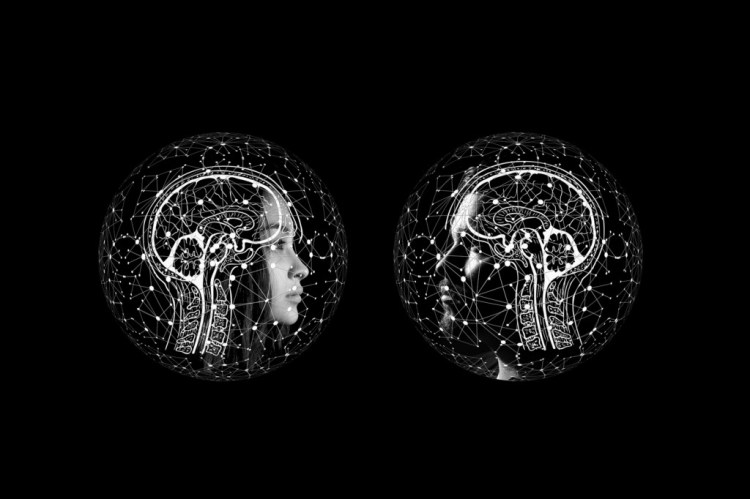
Artificial intelligence is concerned with the creation of intelligent machines. It is undoubtedly one of the most important inventions of mankind, because it combines important future technologies and will accelerate them. It can also help us to master the greatest challenges of our time.
Already today, algorithms using AI are firmly integrated into our everyday life. For example in route calculation with Google Maps, in conversations with Alexa/Siri or our personalized Netflix recommendations.
However, artificial intelligence is (still) far from being a general problem solver. Its applications are currently limited to individual areas in which it is constantly improving.
“The rise of powerful AI will be either the best, or the worst thing, ever to happen to humanity.” — Stephen Hawking
The artificial intelligence known from science fiction movies such as Ex Machina, Blade Runner or Star Trek, which dominates our world, is thus far from being reality. However, anyone who only deals with the subject a little will quickly recognize the opportunities, but also the risks, of this future technology. It is the motor for perhaps the greatest change in human history …
Summary: Artificial intelligence as the brain of our future?
- Artificial intelligence gives machines the ability to analyze data and make independent decisions and perform human-like tasks intelligently.
- In fact, most people have already had contact with an AI. Be it through the personalized feed on Instagram, filtered spam in Gmail or the proposed Spotify playlist.
- AI is especially suited for analyzing and detecting patterns in large amounts of data. It is also able to make accurate predictions based on historical data.
- The research of artificial intelligence comprises a multitude of sub-areas. These include computer science, neuroscience and linguistics.
- It is highly controversial among researchers whether artificial intelligence will develop humanity for the better or for the worse. What is certain is that AI will exponentially accelerate either one or the other.
WTF is artificial intelligence?
To answer the question, when a machine is intelligent, the Turing test is used in general. Simplified: A machine is to consider as intelligent, if its behavior (e.g. in chat-answers) is not distinguishable from a human being.
A milestone in this context is the passing of the Turing Test of Google Duplex in May 2018. The further development of the Google Assistant arranged a hairdresser appointment without her counterpart noticing that she was talking to a machine on the phone. Creepy? This is just the beginning.
Machine Learning, Deep Learning & Co: Subareas of AI
People make around 20,000 decisions a day. Most of them unconsciously. What we decide for depends strongly on our past experiences (the data).
But what is everyday life for us is incredibly difficult for machines. Over the past 70 years, researchers in the field of artificial intelligence have made considerable progress, opening the door to many areas. For example, computer science, with its complicated computer models, is just as much a part of AI as the neurosciences, which have brought a great deal of knowledge from the human brain — in the form of neural networks, for example — to the study of smart machines. The results are self-learning machines. But learning also involves the reception of information, which confronted scientists with questions about how we communicate with each other and generally process information. Questions upon questions.
Trending AI Articles:
1. Top 5 Open-Source Machine Learning Recommender System Projects With Resources
4. Why You Should Ditch Your In-House Training Data Tools (And Avoid Building Your Own)
The main areas of artificial intelligence can be summarized as follows:
- Machine Learning: Applications make decisions based on data. A distinction is made between supervised learning and unsupervised learning. Supervised learning requires pairs of inputs and outputs. As soon as the system has been trained with enough data, it is able to create connections on its own. In unsupervised learning the application creates its own model with its own classifiers.
- Deep Learning: is a subset of Machine Learning. Also called the supreme discipline of AI. It is used to examine large amounts of data for patterns and trends — e.g. in face, object or speech recognition. So-called neural networks are used for this purpose, which are inspired by the biological neural networks of our human brain. The networks are able to learn on their own and to link what they have learned with new content again and again. The human being does not intervene any more. In contrast to machine learning, which works with fixed model groups, deep learning algorithms develop the models independently.
- Computer Vision: Enables applications to understand images or videos. A common application is face recognition — whether for marking friends on Facebook or identifying suspects. Other applications can be found in medicine, where algorithms can recognize x-rays, compare them with huge amounts of data, and provide doctors with diagnoses and recommendations for action.
- Natural Language Processing, NLP for short: Attempts to process natural language on a computer. This should enable applications to be controlled by speech. Everyone who has ever talked to Alexa, Siri, Google Assistant or Cortana has been an NLP user.

Weak vs. strong artificial intelligence
In addition, a general distinction is made between weak AI and strong AI.
Weak AI (also called Narrow AI) is limited to individual application problems, whereby they are capable of self-optimization or learning within their limited problem. All AIs existing today fall into this category. Examples can be found in speech recognition via Siri & Alexa, navigation systems like Google Maps but also in the individualized control of advertising.
Strong AI (or general AI) is also called super intelligence and fulfills all the clichés of Hollywood movies. The goal is to achieve or even exceed the same intellectual abilities of people. Such artificial intelligence no longer acts only reactively, but of its own accord, intelligently and flexibly.

How artificial intelligence is shaping our present and future
Artificial intelligence in the form of intelligent machines is not a specter of the future! For many people, it is already usable in the here and now — be it with Google Maps navigation, Facebook’s news feed or a Spotify playlist personalized for you.
It’s important to make a distinction here: We’re only talking about “weak” AI here. All of our artificial intelligences in 2020 are to be classified as weak. They are only applicable to individual application areas. A strong AI, on the other hand, knows everything, can do everything and acts on its own initiative. It is superior to humans in every respect. Such a thing exists (so far, fortunately) only in our imagination. After all, would you trust the same people who demonstrated against Corona security measures during the Corona pandemic to make rules for AIs? I have my doubts if we are ready for that.
“A year spent in artificial intelligence is enough to make one believe in God.”
– Alan Perlis
In this article, we’ll take a look together at some of the most important areas of our lives and how AI could disrupt them. One thing in advance: The future will be incredible — whether incredibly good or incredibly bad remains to be seen.
Where is AI already being used and what could our future look like with it?
The ideal area of application for AI is the analysis and recognition of patterns in large amounts of data. AI systems can make predictions after recognizing the patterns — in the meantime better than humans. Among other things, this opens up the possibility of automating everyday tasks.
There are hardly any limits to the use of artificial intelligence. The first applications of simple AI are already firmly integrated into our everyday lives — often without us noticing. But what potential does the new technology offer beyond that?
Education
As the saying goes, “You never stop learning.” Yet our current education system has changed little over the past decades, learning from the changes in our world. Most of the time, someone still stands in front and talks. The rest have to listen. On average, there are 65 students per professor in Germany. At the elementary school, there are “only” 16 students per teacher. This makes it almost impossible to promote the strengths and weaknesses of the students individually. In addition, not everyone learns in the same way (keywords: visual, auditory, kinesthetic, communicative) and not at the same time of day.

However, it has been recognized that digitization is not a passing fad. Providing funding alone is not enough, however, as the DigitalPakt’s €5 billion scope makes clear. The digitization of the education system in Germany is already failing because many of the teachers do not even have e-mail addresses. In addition, many schools in this country are still WLAN-free zones.
But leaving aside these “teething troubles,” the education system — along with its students and teachers — is poised for a never-before-seen wealth of fascinating opportunities.
Pupils/Students
- Personalized course plans (“smart content”): artificial intelligence can recognize what type of learner you are and tailor learning content to make it easier to remember. Visual learners watch more video content, auditory learners are introduced to topics via podcasts, and communicative learners are brought together in groups. Media companies will have exciting business models in the future to market a variety of quality content per learner type.
- On-demand learning: Especially in the tech industry, there are many “night owls” who are more productive in the evening than in the early morning. Why should students be any different? Instead of treating everyone the same, artificial intelligence will also be able to determine the optimal time for learning and thus support learners.
- AI tutors: some subjects are just not that easy to understand. Whereas in the past you might have been able to intercept a family member with questions, nowadays, for one thing, the topics have become more complex and, for another, there isn’t always someone at home. Artificial intelligence-controlled tutors (like chatbots only with a visual appearance) could help with queries and give learners a hand at any time.
Teachers
- Lesson & test preparation: Teachers invest a large part of their work in preparing the topics to be taught. However, it would be a Herculean task to consider the preparation for the different learning types completely separately. Artificial intelligence can do this. In addition, smart machines can also assign students to their type and react to changes in response. Students who need to catch up on certain topics could be given additional support through, for example, smaller interim tests, instead of being pushed to their limits only with the final test.
- Highlighting student weaknesses: While AI takes the daily grunt work away from teachers and professors, they would have time to devote to creativity, weaknesses as well as supporting learning. In doing so, AI can provide summaries of performance so that subsequently the teacher can work on it with the learner.
- Encourage engagement: Teacher and learner collaboration could experience a new level. Instead of talking about Rome in 44 B.C., you could engage all types of learners by walking through the historic city in virtual reality. You could experience together how the United States Declaration of Independence is signed. Students could also be placed into levels through gamification and receive benefits for certain achievements. Similar to the principles in our video games.
The possibilities are fabulous! Teachers are given powerful tools through artificial intelligence to infect learners with their knowledge and give them a lifetime of opportunities. That these are no longer just fantasies is shown by our research today. Startups like Knewton, Century Tech and Thinkster Math are already creating the education system of the future that learners can look forward to.
Healthcare
In healthcare, the three areas of diagnosis and treatment, medical imaging and health management are leading the way in the use of artificial intelligence. That our system needs support is shown by the data: By 2050, one in five Europeans will be over 65.
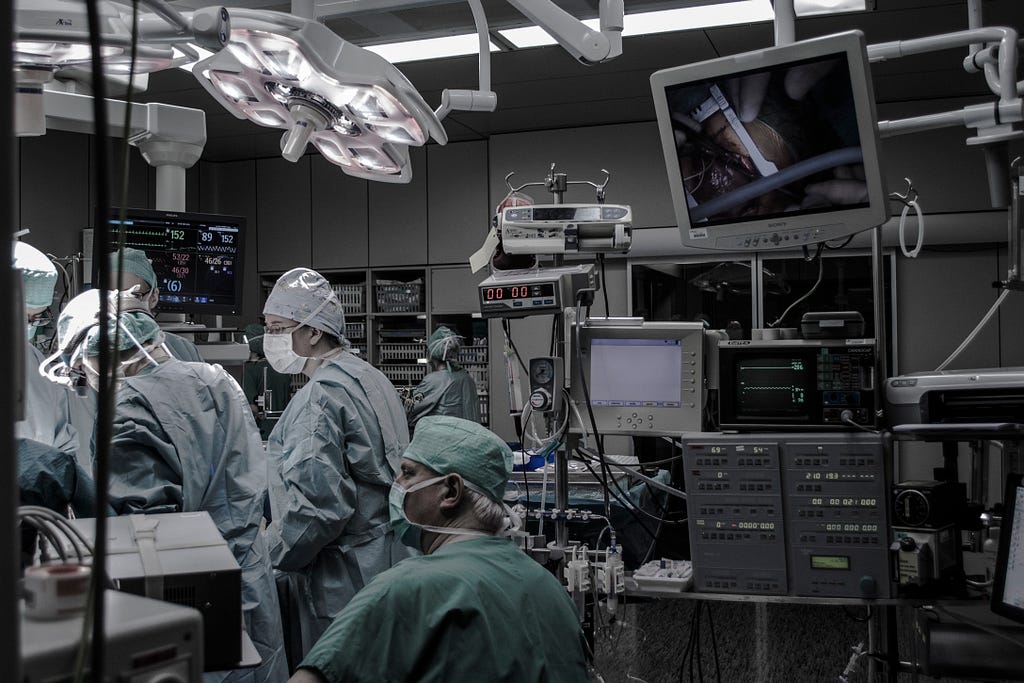
A lot of medical data is already available today. However, this data is hardly used and is often not accessible to patients. This applies both to the selection of doctors and to patients’ own medical records. Another problem is administration. Many appointments canceled at short notice remain vacant, while new patients have to prepare for long waiting times. There is an additional significant workforce gap in the European healthcare sector.
Artificial intelligence will be able to take over adminstrative tasks such as appointment management, make predictions about expected treatments and maintain (digital) patient records in the short term.
In addition, AI will assist physicians such as nurses with treatment. Artificial intelligence can use image recognition in combination with Deep Learning to diagnose diseases early (see freenome and PathAI) and make recommendations to physicians. In addition, AI can be used to treat diseases preventively. In biotechnology, AI is generating new compounds and testing them at speeds not previously possible. Researchers at MIT, for example, developed AI that can identify new antibiotics. But startups BenevolentAi and Insitro are also conducting research in this area.
The goal of artificial intelligence in healthcare is to create freedoms so that doctors and nurses can be brought closer to patients and their individual treatment. The tasks will undoubtedly change, but the jobs will become more important than ever.

Mobility
The fact that environmental pollution is very advanced, our cities are overcrowded and thousands of traffic deaths occur every year due to human error is forcing people to rethink. Hardly any other topic has been as hyped in recent years as mobility. The field of autonomous driving in particular is very popular with the public, not least thanks to Elon Musk’s Tesla.
- Artificial intelligence can take over traffic management in our major cities in the future. Traffic jams can be avoided if all road users communicate with each other in real time. Accidents will be reduced to a minimum if human distraction is eliminated.
- It’s not just autonomous cars that can be controlled by artificial intelligence as if by magic, but also trucks, public transportation, airplanes, and shipping and rail traffic. Startups like Waymo, Aurora and Einride are already sending autonomous vehicles out on the roads and collecting billions in data. Even new modes of transportation like air cabs are no longer just science fiction, but are being implemented by startups like Lilium. Yet automated driving is not the same as driverless driving. Experts distinguish between five levels, from driver assistants to autonomous driving. Technologies such as AI, cloud computing and blockchain will also make it easier to operate autonomous vehicles like robots remotely in the future. Experts can intervene in special situations without having to be on site.
- Thanks to the Internet of Things (IoT) in combination with machine learning, vehicles such as aircraft will also be able to be maintained proactively and autonomously in the future. Errors can thus be ruled out in advance, as wear and tear will be detected and avoided in good time.
One future scenario could be that people will no longer want to leave their vehicle unused 95 percent of the day. They could switch to car-sharing providers whose vehicles can use machine-learning prediction models to calculate expected usage and thus autonomously meet demand in cities. The free space created by fewer and fewer vehicles could be redesigned and used more efficiently in the smart cities of the future.
E-Commerce

In marketing & especially in e-commerce, market leaders like Amazon and Alibaba are already using smart machines and algorithms from customer contact to automated logistics. Simple artificial intelligence, as in the personalized recommendation of products, has long been used by smaller companies as well.
In the future, applications for AI are likely to be found in almost every area of online commerce.
- Customer relationship management (CRM): Even the smallest online retailers collect lots of customer data. Maintaining this data and linking it in a way that leads to a better understanding of the customer and concrete market advantages for the company is very difficult for humans. Artificial intelligence, on the other hand, finds this data management easier. It can divide customers into segments and serve them recommendations and content based on these segments.
- AI Support: Great companies are characterized by their world-class customer support. Artificial intelligence is already supporting our businesses today in the form of chatbots. In the future, however, we could also have digital shopping assistants advising us in the form of virtual people. That these are likely to be indistinguishable from real people is demonstrated by the startup Soul Machines and Samsungs’ NEON.
- IoT + AI: Probably everyone has heard of the refrigerator that will reorder milk when it is empty in the future. The technology behind this is called the Internet of Things (IoT). Combined with artificial intelligence, this opens up completely new possibilities for online retail in the future. Subscriptions to groceries could be rethought, as could the autonomous repair of items.
- Last-mile delivery: making deliveries as fast as possible is an important issue for retailers. Thanks to artificial intelligence, drone deliveries and autonomous last-mile delivery vehicles are within the realm of possibility.
This is just a small sample. Start-ups like Coveo and Narvar are working on applications that will make shopping easier for us in the future and make it seem even more personalized.
Industry
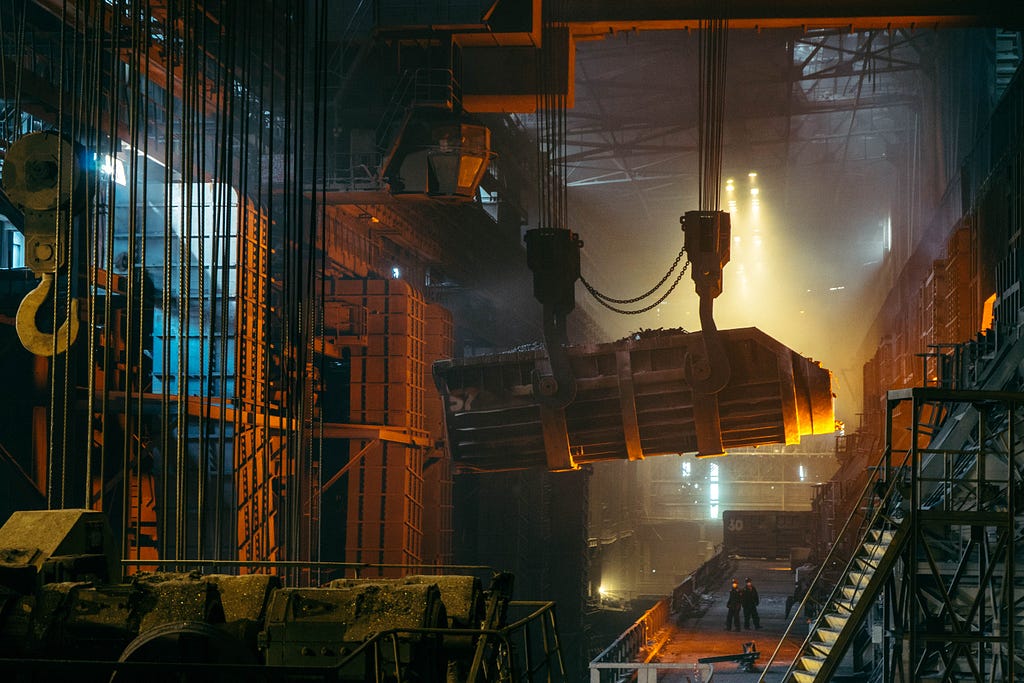
Artificial intelligence is already an integral part of our modern industry. It enables machines to perceive their environment, make their own decisions and learn on their own. AI is driving robots, which have become an integral part of production for decades — especially in the automotive industry.
But artificial intelligence will also play an important role beyond that.
- Automation: In factories, products go through multiple processes. Many of these tasks are recurring and can therefore be automated. Modern robots can recognize objects, assign them and act on them.
- On-demand production control: New technologies such as 3D printing will make it possible to produce on demand in the future. Artificial intelligence can predictively control production based on demand and with predictive models.
- Error detection & quality assurance: Machines make fewer errors. This also applies to the thoroughness of their work. There are already machines in factories that ensure the quality of products.
- Product development: Artificial intelligence can be used, for example through topology optimization, to calculate new structures that, based on their function, deliver better performances with fewer materials.
Danger of conflict — Why artificial intelligence is and should always be critically questioned
The use of artificial intelligence opens up previously unimaginable opportunities for mankind, but also risks. For all this to succeed, AI needs one thing above all: structured, detailed data from as many sources as possible.
The falsification of data by us humans is problematic, as project “Tay” shows. This chatbot AI from Microsoft was fed conversations from Twitter users. It took just one day for the bot to become both racist and anti-feminist. But the tested AI also reached the wrong conclusions in experiments conducted by the American police. Because the AI was trained with “dirty data” from decades of police misconduct, it caused officers to disproportionately patrol and sweepingly suspect African-American neighborhoods.
Another much-discussed issue is the ethics of machines. Because of the unprecedented scope of new technologies, machines will inevitably make life-and-death decisions. The example of autonomous driving raises the question of who gets to live: the child who runs a red light in front of a vehicle or the two pensioners in the vehicle who, if they swerve, will themselves be killed. The MIT Media Lab has used the Moral Machine to create scenarios to test for yourself.
Perhaps the greatest concern, however, is the fear of omnipotent (powerful) artificial intelligence overtaking humanity in the Singularity and subsequently suppressing it. Even if, according to the current state of science, such an AI is far from being in the realm of feasibility, the question remains, how can we ensure that strong AIs are good in character? Only so much: The discussion would go beyond this framework.
Cool stuff
How will machines — e.g. autonomous cars — decide in critical situations in the future? Researchers at the Massachusetts Institute of Technology (MIT) have designed the Moral Machine. Critical situations are shown — for example: children on the roadway vs. an elderly couple in the vehicle — and you have to make a moral decision about life and death. How would you decide, and only then how should the machine judge that:
Samsungs’ NEON virtual assistants — based on artificial intelligence — give a pretty impressive taste of the future. Whether as tutors in education, customer support in retail or as a virtual friend — they seem amazingly real:
Machine learning combined with automation: Strateos Cloud Lab offers scientists the opportunity to have their tests performed autonomously in a lab automated by artificial intelligence and robotics. This involves defining the tests and then running them autonomously. Pretty cool:
Sources
- https://www.theverge.com/2016/3/24/11297050/tay-microsoft-chatbot-racist
- https://becominghuman.ai/artificial-intelligence-to-transform-10-industries-498338359f41?gi=e0ebd1786c2a
- https://www.businessinsider.com/sc/artificial-intelligence-companies?IR=T
- https://beebom.com/examples-of-artificial-intelligence/amp/
- https://medium.com/towards-artificial-intelligence/artificial-intelligence-in-education-benefits-challenges-and-use-cases-db52d8921f7a
- https://builtin.com/artificial-intelligence/ai-in-education
- https://www.bmbf.de/de/wissenswertes-zum-digitalpakt-schule-6496.php
- https://www.welt.de/politik/deutschland/article197968521/Digitalpakt-fuer-Schulen-Wo-bleiben-die-Milliarden.html
- https://www.mckinsey.com/industries/healthcare-systems-and-services/our-insights/transforming-healthcare-with-ai#
- https://www.cbinsights.com/research/artificial-intelligence-startups-healthcare/
- https://www.appliedai.de/hub/artificial-intelligence-in-mobility
- https://www.bmw.com/en/automotive-life/autonomous-driving.html
- https://www.arrow.com/en/research-and-events/articles/5-levels-of-autonomous-driving-technology
- https://hackernoon.com/revolution-of-artificial-intelligence-in-e-commerce-in-2020-vo41l232q
- https://towardsdatascience.com/how-can-artificial-intelligence-be-applied-in-manufacturing-8662eaaea999
- https://www.salesforce.com/blog/2019/04/ai-quotes.html
- https://www.datainnovation.org/2019/08/who-is-winning-the-ai-race-china-the-eu-or-the-united-states/
- https://www.cbinsights.com/research/artificial-intelligence-top-startups/
- https://flia.org/wp-content/uploads/2017/07/A-New-Generation-of-Artificial-Intelligence-Development-Plan-1.pdf
- Book „Zukunft? China! Wie die neue Supermacht unser Leben, unsere Politik, unsere Wirtschaft verändert“ from Frank Sieren
- https://asgard.vc/wp-content/uploads/2018/05/Artificial-Intelligence-Strategy-for-Europe-2018.pdf
- https://www.appliedai.de/hub/2020-ai-german-startup-landscape
- https://ec.europa.eu/digital-single-market/en/artificial-intelligence
- https://asgard.vc/wp-content/uploads/2018/05/Artificial-Intelligence-Strategy-for-Europe-2018.pdf
Don’t forget to give us your ? !



What’s Artificial Intelligence? | A Beginners’ Guide was originally published in Becoming Human: Artificial Intelligence Magazine on Medium, where people are continuing the conversation by highlighting and responding to this story.
 365 Data Science