
Living in the Internet age, how occasionally have you come across the tricky CAPTCHA tests while entering a password or filling a form to prove that you’re fully human? For example, typing the letters and numbers of a warped image, rotating objects to certain angles, or moving puzzle pieces into position.
What is CAPTCHA and How Does It Work?
CAPTCHA is also known as the Completely Automated Public Turing Test to filter out the overwhelming armies of spambots. Researchers at Carnegie Mellon University developed CAPTCHA in the early 2000s. Initially, the program displayed some garbled, warped, or distorted text that a computer could not read, only a human can. Users were requested to type the text in a box before having access to the websites.
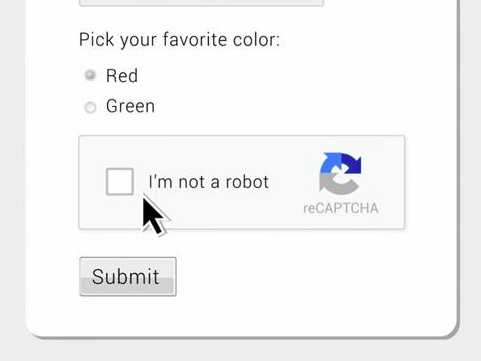
The program has achieved wild success. CAPTCHA has grown into a common part of the internet user experience. Websites need CAPTCHAs to prevent the “bots” of spammers and other computer underworld types. “Anybody can write a program to sign up for millions of accounts, and the idea was to prevent that,” said Luis von Ahn, a pioneer of the early CAPTCHA team and founder of Google’s reCAPTCHA, one of the biggest CAPTCHA services. The little puzzles run on because computers are not as good as humans at reading distorted text. Google says that people are solving 200 million CAPTCHAs a day.
Over the past years, Google’s reCAPTCHA button saying “I’m not a robot” was up in more complicated scenarios, such as selecting all the traffic lights, crosswalks, and buses in an image grid.
CAPTCHA’s Potential Influence on AI
While used mostly for security reasons, CAPTCHAs also serve as a benchmark task for artificial intelligence technologies. According to CAPTCHA: using hard AI problems for security by Ahn, Blum, and Langford, “any program that has high success over a captcha can be used to solve a hard, unsolved Artificial Intelligence (AI) problem. CAPTCHAs can be used in many places.”
reCAPTCHA is a CAPTCHA system developed by Google, which is a system that allows web hosts to distinguish between human and automated access to websites. The original version asked users to decipher hard to read text or match images.
Since 2011, reCAPTCHA has digitized the entire Google Books archive and 13million articles from New York Times catalog, dating back to 1851. This done, reCAPTCHA started to select snippets from Google Street View in 2012. the company made users recognize door numbers, signs, and symbols.

The warped characters that users identify and fill in for reCaptcha are for a bigger purpose, as users have unknowingly transcribed texts for Google. reCAPTCHA distribute the same content to dozen users across the world and automatically verifies if it has been transcribed correctly by comparing the results.
Clicks on the blurry images can also help identify objects that computing systems fail to manage, and users are actually sorting and clarifying images to train Google’s AI engine.
In 2014, the system started training the Artificial Intelligence (AI) engines.
Through such mechanisms, Google has been able to get users involved in recognizing images process, in order to give better Google search and Google Maps results.
Trending AI Articles:
2. How AI Will Power the Next Wave of Healthcare Innovation?
ByteBridge: a Human-Powered Data Annotation Platform to Empower AI
Turing Award winner Yann LeCun once expressed that developers need labeled data to train AI models and more quality-labeled data brings more accurate AI systems from the perspective of business and technology.
ByteBridge is a human-powered data labeling tooling platform with real-time workflow management, providing flexible data training services for the machine learning industry.
Flexibility
On ByteBridge’s dashboard, developers can create the project by themselves, check the ongoing process simultaneously on a pay-per-task model with a clear estimated time and price.
Precisely, developers can decide when to start your projects and get your results back instantly
- Clients can set labeling rules directly on the dashboard. (No need to communicate with a project manager about labeling guideline)
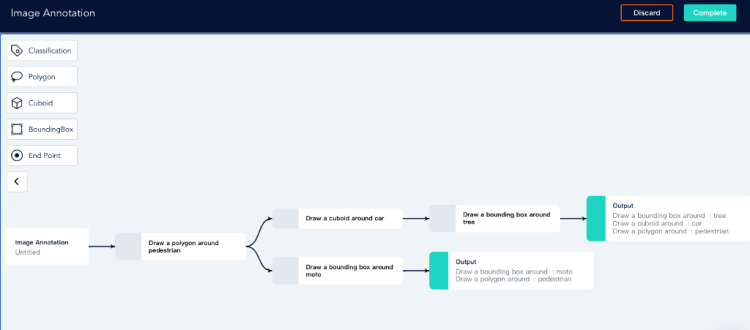
Clients can iterate data features, attributes, and workflow, scale up or down, make changes based on what they are learning about the model’s performance in each step of test and validation
- Progress preview: clients can monitor the labeling progress in real-time on the dashboard
- Result preview: clients can get the results in real-time on the dashboard
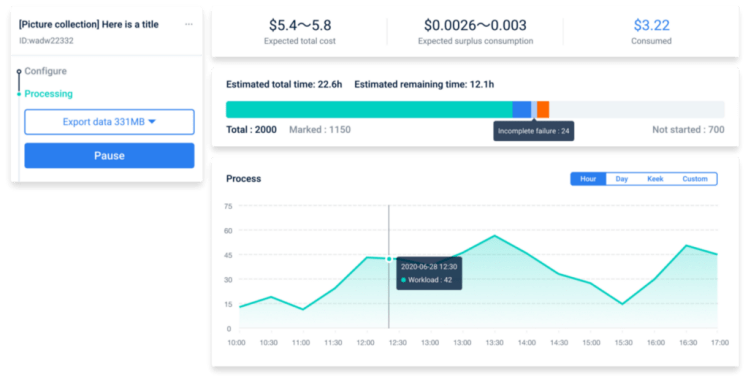
Real-time Outputs: clients can get real-time output results through API, support JSON, XML, CSV, etc.
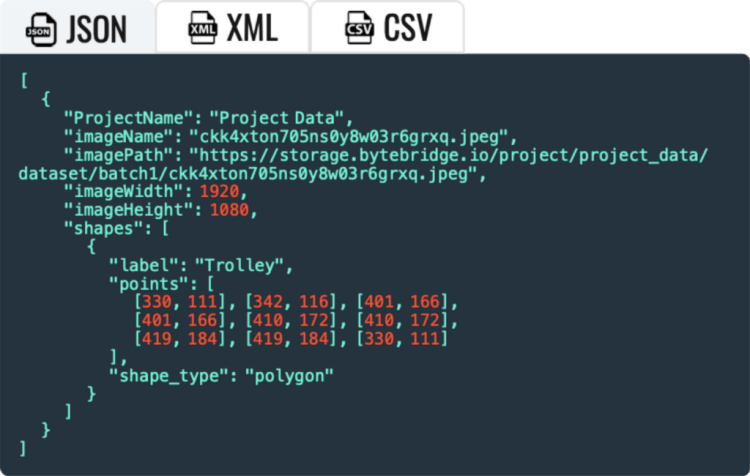
*Customizable datatype to meet your needs
End
Designed to empower AI and ML industry, ByteBridge promises to usher in a new era for data labeling and accelerates the advent of the smart AI future.
For more information, please have a look at bytebridge.io, the clear pricing is available.
Don’t forget to give us your ? !




Data Annotation: By Typing Captcha, You are Actually Helping AI Model Training was originally published in Becoming Human: Artificial Intelligence Magazine on Medium, where people are continuing the conversation by highlighting and responding to this story.
 365 Data Science