An end-to-end example of deploying a machine learning product using Jupyter, Papermill, Tekton, GitOps and Kubeflow.
Originally from KDnuggets https://ift.tt/31euntk

365 Data Science is an online educational career website that offers the incredible opportunity to find your way into the data science world no matter your previous knowledge and experience.
Originally from KDnuggets https://ift.tt/31euntk
Originally from KDnuggets https://ift.tt/2EiqsTx
Originally from KDnuggets https://ift.tt/3aIwDw4
Using novel positioning systems to enable indoor location-based applications
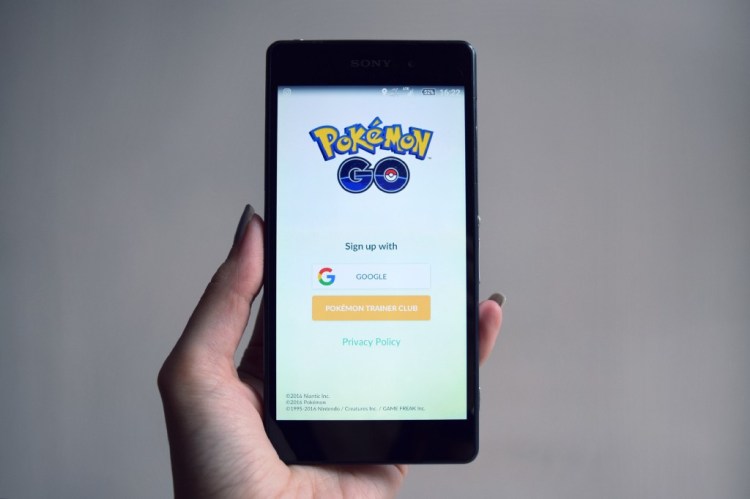
As developers and designers, which technologies should we use to build indoor location-based experiences? Traditional positioning systems, such as GPS, often fail to achieve satisfactory accuracy indoors. Therefore, state of the art indoor positioning techniques are key in enabling indoor location-based applications, such as games, navigation services for humans and drones, ambient assisted living, and more. As the literature review conducted for my master’s thesis suggests, there are few potential ways to go about that.
The most prominent indoor positioning systems (both existing and those that are under research) are based on radio waves, optical wireless communication, ultrasound or computer vision. Inertial, magnetic and visual sensors may also aid in positioning. Compared to GPS’s indoor accuracy of multiple meters, indoor positioning systems can achieve an accuracy of 1–2 meters, or, in special cases, even sub-centimeter accuracy. In addition, some of these systems can determine a mobile device’s orientation precisely, which is important for interactive indoor location-based applications, such as AR games. Let’s quickly go through the most promising approaches:

Radio wave based approaches can use already-existing consumer-grade devices, such as WiFi routers and Bluetooth beacons. In the best realistic cases, a one meter level of accuracy can be achieved. Little to no modifications have to be made to the WiFi routers or beacons. However, the area surveying work can be cumbersome, and it is difficult to capture the mobile device’s orientation.
Optical wireless communication is an active field of research. The idea is that LED lights can potentially be used for internet connectivity, providing faster speeds than regular WiFi. This technology has a catchy name — “LiFi”. Conveniently enough, it is also possible to measure received light strengths with special equipment, from which a device’s indoor position can be inferred with a precision range from sub-centimeter to 2 meters. This means that if LiFi would one day become a mainstream data transmission technology, indoor positioning systems could be built that utilize that infrastructure as a convenient side product. However, a lot of work has to be done before light-based positioning is practical. In addition, the equipment and the infrastructure for LiFi is not mainstream yet, and whether it will ever be is anyone’s guess.
1. Machine Learning Concepts Every Data Scientist Should Know
3. AI Fail: To Popularize and Scale Chatbots, We Need Better Data
Ultrasound positioning uses sounds inaudible to the human ear, and can achieve an accuracy as good as 10 cm. However, signal reflections and interference are a problem, as in the systems described above. Additionally, the microphone equipment can be expensive.
Computer vision (CV) positioning has several approaches, such as point clouds or feature recognition. A 1–2 meters level of accuracy can be achieved, with zero to minimal physical infrastructure required. CV can also estimate the device’s orientation, so computer vision is the go-to solution for indoor applications where AR content needs to be placed in very precise locations.
It is important to know that multiple systems can be combined together, in order to benefit from the strengths of one system while mitigating the weaknesses of another. For example, WiFi fingerprinting and CV can be combined in a hybrid system to reduce localization overhead.
By utilizing VimAI’s proprietary CV algorithm, a sample indoor navigation application was built. In it, a brisk AR character walks indoors and guides the user to the point of interest of the user’s choice. As a proof of concept, it shows that CV provides sufficient accuracy for such AR navigation applications, although the AR character may occasionally walk inside walls, breaking the realism.
Indoor location-based games and applications are only limited by the imagination of designers and developers. Functional applications can already be built today, but there is room for improvement and creativity. Before deciding on an indoor positioning system for your application, ask yourself this: will it require considerable manual work in each indoor location in order for your application to work? Or, can the domain of functional indoor spaces instead be expanded passively, as users use your application?
For more content about indoor positioning and indoor location-based applications, see my full master’s thesis here.




Indoor is the New Outdoor: was originally published in Becoming Human: Artificial Intelligence Magazine on Medium, where people are continuing the conversation by highlighting and responding to this story.
Via https://becominghuman.ai/indoor-is-the-new-outdoor-fc7988b7447e?source=rss—-5e5bef33608a—4
source https://365datascience.weebly.com/the-best-data-science-blog-2020/indoor-is-the-new-outdoor
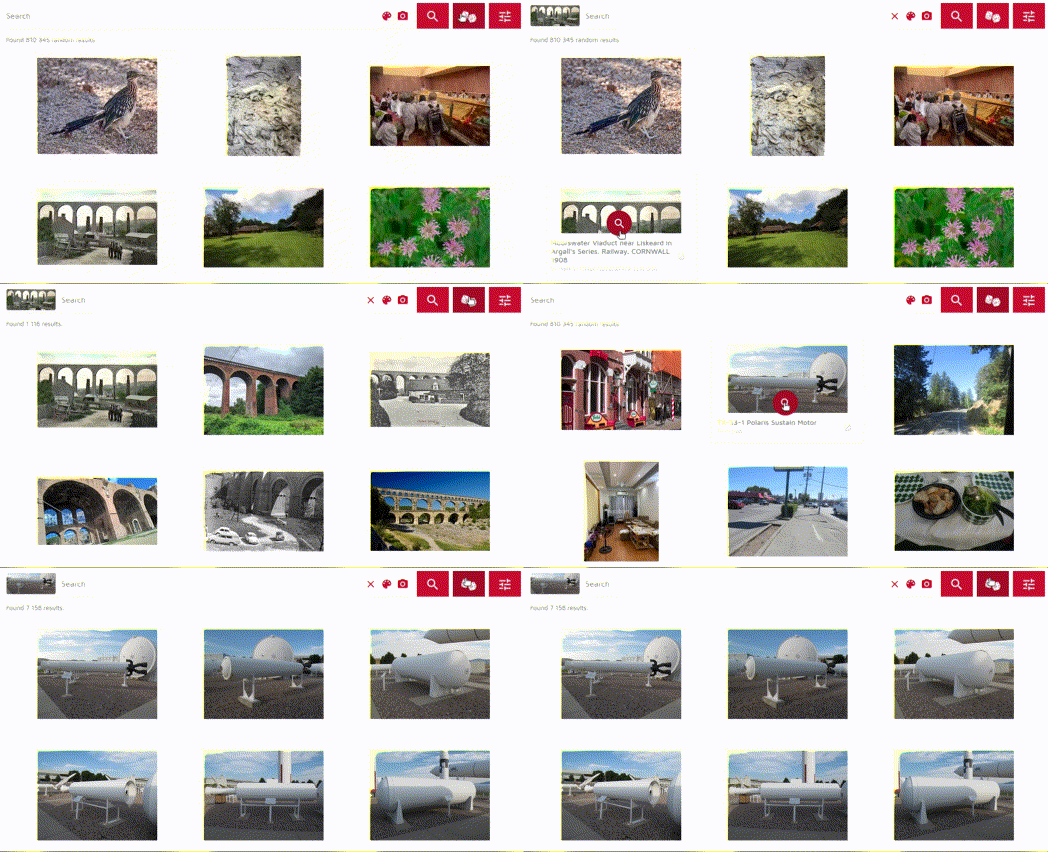
A few weeks ago we released our latest Visual Search technology. It contains everything we’ve learned over the past years and brings a massive improvement to the visual search experience. Now, we have integrated our high performance image search engine in our online demo, so everyone can use it.
Powered by our latest general purpose image search AI, you can upload and search your own image collection or use the prefilled demo collection.
Our prefilled demo contains Creative Commons photos from the Flickr community. It is a really tough task for an image search engine to handle these images and return great results, since Flickr images cover almost every scene and topic you can imagine.
In our previous demo we used stock photos as they are unambiguous and obvious. They deal with a specific topic or contain a main object. These images are quite clear in their message and this makes it relatively easy to grasp the subject and find similar images.
Flickr images are the complete opposite. Just about every motif you can imagine is available. The picture language is not clear. Often there is not even a main motive and it is even difficult for a human to judge what a relevant search result would look like given a particular image.

In addition, there is a wide range of styles and quality, as really anyone can upload anything. In short: Flickr images are the wildest mix there is. And only now — after ten years of research — we dare to use this image collection in our open online demo.
And because Flickr images are often poorly tagged, we do this without metadata support. We only have the pixels as data basis for visual search. This is less than Google has by default. So this demo is the most honest state of the art demonstrator available. No curation, no metadata boost.
1. Machine Learning Concepts Every Data Scientist Should Know
3. AI Fail: To Popularize and Scale Chatbots, We Need Better Data
As far as we know our demo is the only way to visually search Flickr images and get similar images with just one click. We encourage you to explore and support the great work of the Flickr community.
In search results we link to the original High-Res photos on Flickr as well as to the photographers, so you can easily browse the Flickr image library for Creative Commons photos on our demo platform and use great images for your own projects.
Now it’s your turn. Try our demo on pixolution.io. Enjoy testing and if you are curious how to integrate pixolution Visual Search into you website or app.
Try Our New Visual Search was originally published in Becoming Human: Artificial Intelligence Magazine on Medium, where people are continuing the conversation by highlighting and responding to this story.
Via https://becominghuman.ai/try-our-new-visual-search-dc64bbc0878b?source=rss—-5e5bef33608a—4
source https://365datascience.weebly.com/the-best-data-science-blog-2020/try-our-new-visual-search

On Sunday May 31, we invited Meredith Broussard @MerBroussard, author of “Artificial Unintelligence: How Computers Misunderstand the…
Continue reading on Becoming Human: Artificial Intelligence Magazine »
Originally from KDnuggets https://ift.tt/3iQGPpg
Originally from KDnuggets https://ift.tt/3gbMpkd
source https://365datascience.weebly.com/the-best-data-science-blog-2020/introduction-to-federated-learning
Originally from KDnuggets https://ift.tt/31bNowF
Originally from KDnuggets https://ift.tt/3aFywtr

 365 Data Science