365 Data Science is an online educational career website that offers the incredible opportunity to find your way into the data science world no matter your previous knowledge and experience.
Continuing with the second of this three-part series covering a step-by-step review of statistical survival analysis, we look at a detailed example implementing the Kaplan-Meier fitter theory as well as the Nelson-Aalen fitter theory, both with examples and shared code.
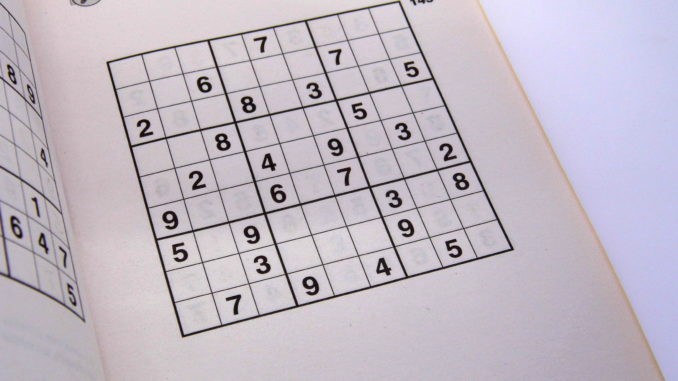
“I set myself the challenge of using the optimized inference engine, along with a few other advanced features, of a decision rules management solution to solve Sudoku puzzles.” Read the full post on how it was accomplished.
Top Stories post excerpt: Also: A Complete Guide To Survival Analysis In Python, part 1; PyTorch for Deep Learning: The Free eBook; Exploratory Data Analysis on Steroids
As has become tradition on KDnuggets, let’s start a new week with a new eBook. This time we check out a survey style text with a variety of topics, Foundations of Data Science.
It’s a known fact that machine learning models need data to be trained. Without training data, even complex algorithms are essentially useless. So what do you do when you don’t have the necessary amount of data?
Over the years, researchers have developed a variety of ingenious solutions. Data Augmentation is one of these solutions. Instead of trying to find and label more data points, we construct new ones based on what we have.
Wait? Can we do that? Sure we can. Though it is not always easy and it might not produce the best results, it’s still a viable alternative.
Expanding a dataset with Data Augmentation methods is not only helpful for the challenge of limited data. It can also reduce overfitting and improve the generalization of our models because it increases the diversity of our training set.
So let’s cut to the chase: How can we perform Data Augmentation?
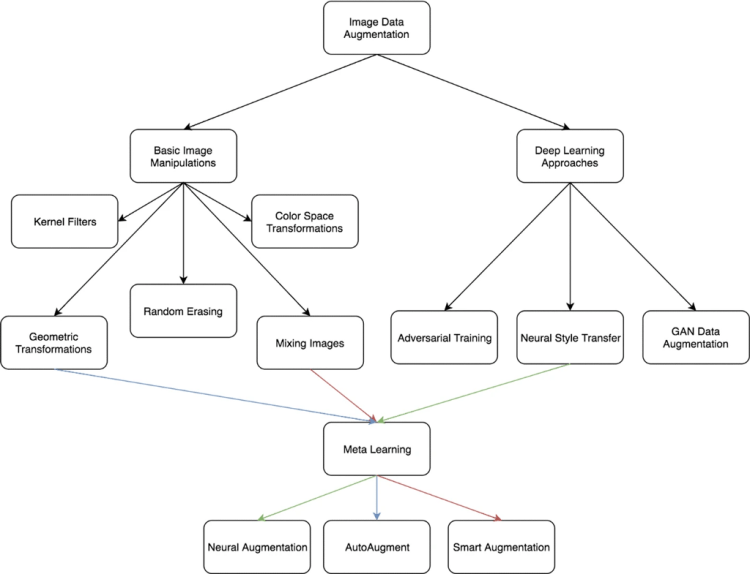
I think the image below says it all. In this article, we will focus on image augmentation as it is currently the most active field of research, but most of these techniques can be applied to all sorts of data.
The first simple thing to do is to perform geometric transformations to the image. You might assume that machine learning can easily distinguish two identical images with different rotations, but it can’t.
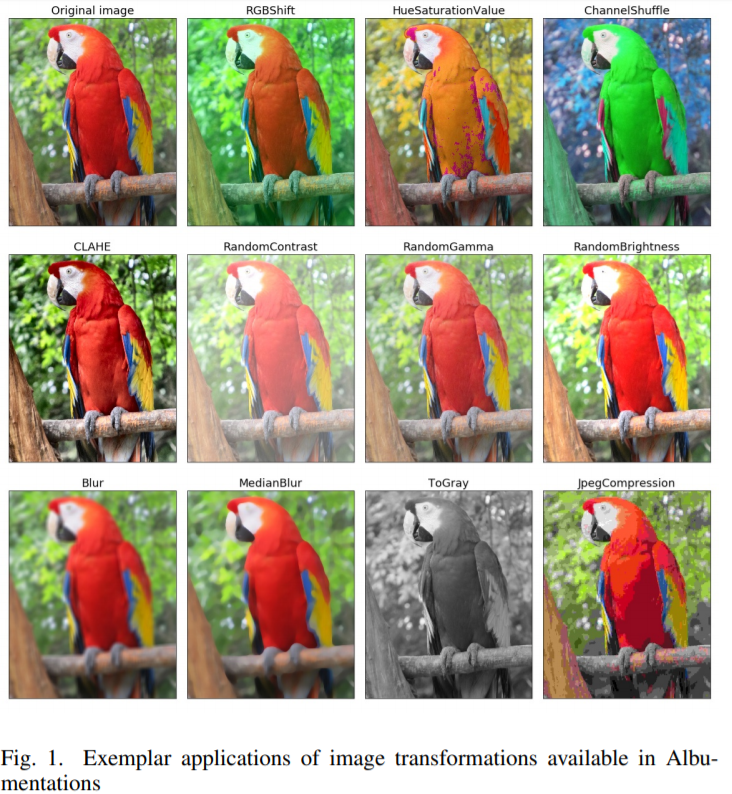
Image flipping, cropping, rotations, and translations are some obvious first steps. We can also change the color space of the image using contrast, sharpening, white balancing, color jittering, random color manipulation and many other techniques (called photometric transformations). If you’ve ever used Instagram filters or Snapseed, then you’ll get what I’m saying. You can get as creative as you want.
Artificial Intelligence Jobs
Moreover, you can mix images together, randomly erase segments of an image, and of course, combine all the above in all sorts of various ways.
Besides basic image manipulations, more and more engineers are starting to use machine and deep learning techniques to augment their data. Think about it this way: We can use machine learning models to produce more data to train more machine learning models. Some of the most promising works are below:
Feature Space Augmentation and Autoencoders
In the above examples, we transformed images on the input space. We can also apply transformations in feature space.
With Neural Networks we can very efficiently map high dimensional inputs (such as images) in lower-dimensional representation (known as feature or latent space). Think of it as encoding a 3D tensor into a 1D vector without losing too much information. Having an image encoding in a few dimensions makes it much easier to perform augmentations.
Many interesting papers suggest different ways to do so such as joining k nearest neighbors together, adding noise, interpolation, and more.
Autoencoders have proven the best choice to extract feature space representations. Autoencoders are a special type of neural networks, which try to reconstruct the input. They consist of two networks, an encoder and a decoder. The encoder takes the input and encodes it into a vector in lower dimensions (feature space). The decoder takes that vector and tries to reconstruct the original input.
By doing this, the latent vector in the middle contains all the information about the dataset and can be extracted to do all sorts of things, including data augmentation.
GAN-based Data Augmentation
Generative Modeling is one of the most exciting techniques at the moment because it can produce completely new images. Generative models can generate new patterns in data because they learn the distribution of the data and not the boundary between them (as is common in most machine learning models).
In that direction, Generative Adversarial Networks (GAN) have become the industry and research standard. GANs consist of two networks, the generator, and the discriminator. The generator’s job is to produce fake data with nothing but noise as input. The second model, the discriminator, receives as input both the real images and the fake images (produced by the generator) and learns to identify the image as fake or real.
As these networks compete against each other, and by training them simultaneously (in a process called adversarial training), the magic begins:
The generator becomes better and better at image generation because its ultimate goal is to fool the discriminator. The discriminator, in turn, becomes better and better at distinguishing fake from real images, because its goal is to not be fooled. The result is incredibly realistic fake data from the generator.
GANs have produced some of the most realistic images and videos we’ve ever seen. Remember deep fakes? That was all the work of GANs. So why not use them for data augmentation instead of replacing Jack Nickolson with Jim Carrey in the Shining?
Meta-Learning
Last but not least, we have Meta-Learning. Meta-Learning is a relatively new area, in which we use neural networks to optimize other neural networks by tuning their hyperparameters, improving their layout, and more. In terms of data augmentation, things get a little more complicated.
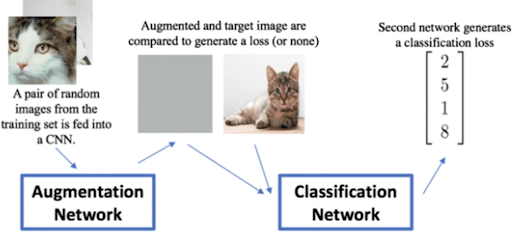
In simple terms, we use a classification network to tune an augmentation network into generating better images.
Take a look at the image below: By feeding random images to the Augmentation Network (most likely a GAN), it will generate augmented images. Both the augmented image and the original are passed into a second network, which compares them and tells us how good the augmented image is. After repeating the process the augmentation network becomes better and better at producing new images.
Of course, this procedure is not the only one available, but it’s a very good starting point for the different research papers in the area.
Conclusion
Data Augmentation is by no means an easy task. There have been quite a few interesting works (here is a collection of them) but there is still much room for improvement. For example, we can still improve the quality of GANs samples, find new ways to use Meta-Learning, and perhaps establish a taxonomy of different augmentation techniques.
And of course, we can still discover new ways to use these techniques in other forms of data, such as text, tabular data, graph data, and more. Why not also expand beyond that? How about Reinforcement Learning? Or search algorithms? The stage is yours.
Original article by Sergios Karagiannakos, reposted with permission.
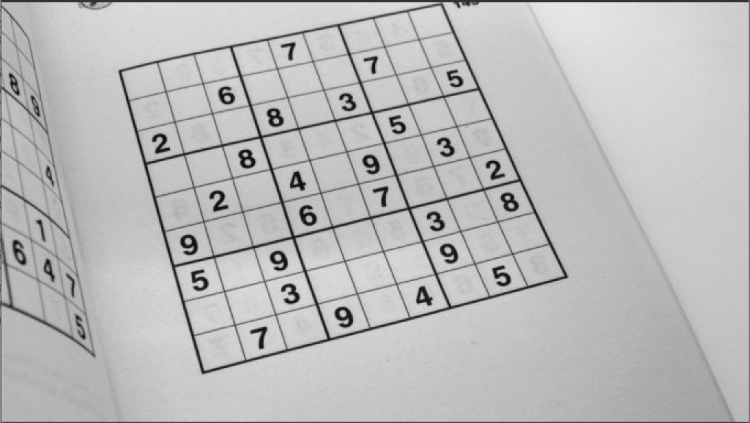
We will be creating a Sudoku Solver AI using python and Open CV to read a Sudoku puzzle from an image and solving it. There a lot of methods to achieve this goal. Thus in this series, I have compiled the best methods I could find/research along with some hacks/tricks I learned along the way.
Sudoku is a logic-based, combinatorial number-placement puzzle with a 9×9 grid with digits so that each column, each row, and each of the nine 3×3 subgrids that compose the grid contain all of the digits from 1 to 9. (Wikipedia). To learn more about how to solve the same, check out Peter Norvig’s Solving Every Sudoku Puzzle.
Let us get started…
Steps
I am trying to be as detailed as possible in listing the steps along with there descriptions.
Import the image
Pre Processing the Image 2.1 Gaussian blur: We need to gaussian blur the image to reduce noise in thresholding algorithm 2.2 Thresholding: Segmenting the regions of the image 2.3 Dilating the image: In cases like noise removal, erosion is followed by dilation.
Artificial Intelligence Jobs
1. Import the image
Firstly, we need to imposrt the image of the Sudoku. We will be using openCV for this.
# a function to read the
def read_img():
    # I wanted the user to have the liberty to choose the image
    print("Enter image name: ")
    image_url = input()
    #image url also conatins the image extension eg. .jpg or .png
    #reading in greayscale
    img = cv2.imread(image_url, img = cv2.imread(image_url, cv2.IMREAD_GRAYSCALE))
Image after grey scale input
2. Pre Processing the Image
2.1 Gaussian blur:
We need to Blur the image using gaussian blur to reduce noise obtained in thresholding algorithm (adaptive thresholding). To know more about what exactly is Gaussian blur, https://datacarpentry.org/image-processing/06-blurring/.
Syntax: GaussianBlur(src, dst, ksize, sigmaX)
src − input image
dst − output image
ksize − A Size object representing the size of the kernel.
sigmaX − A variable of the type double representing the Gaussian kernel standard deviation in X direction.
# Note that kernel sizes must be positive and odd and the kernel must be square.
proc = cv2.GaussianBlur(img.copy(), (9, 9), 0)
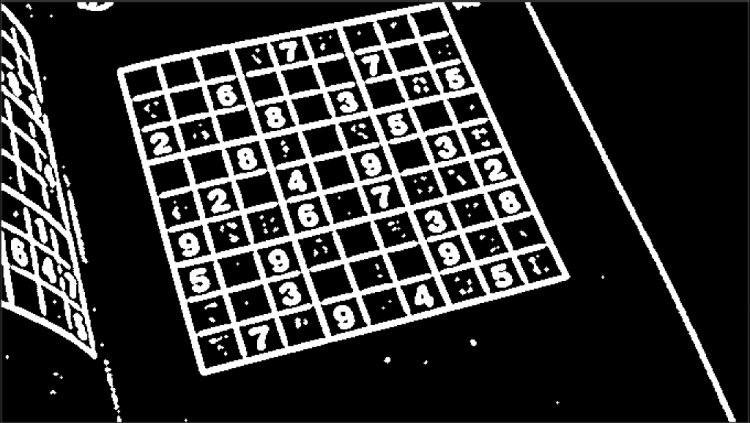
Why is thresholding used in image processing? We need to separate an image into some regions (or their contours), the process is called segmentation. So, one of the ways to segment such regions is called thresholding.
# cv2.adaptiveThreshold(src, maxValue, adaptiveMethod, thresholdType, blockSize, constant(c))
# blockSize – Size of a pixel neighborhood that is used to calculate a threshold value for the pixel: 3, 5, 7, and so on.
# C – Constant subtracted from the mean or weighted mean (see the details below). Normally, it is positive but may be zero or negative as well.
process = cv2.adaptiveThreshold(process, 255, cv2.ADAPTIVE_THRESH_GAUSSIAN_C, cv2.THRESH_BINARY, 11, 2)
Image after thresholding
2.3 Invert colors and Dilation
In order to successfully extract the grid, we need to invert the colors
process = cv2.bitwise_not(process, process)
We need to use dilation as while using Gaussian Thresholding we reduced noise which in turn lead shrinking of our object. So we need to dilate it.
# np.uint8 will wrap.
# For example, 235+30 = 9.
kernel = np.array([[0., 1., 0.], [1., 1., 1.], [0., 1., 0.]], np.uint8)
process = cv2.dilate(process, kernel)
Getting a good job in the field of Machine Learning is getting very competitive. The best way to showcase your Machine Learning skills is in the form of Portfolio of Data Science and Machine Learning Projects.
A good Portfolio of Projects will show that you can apply those Machine Learning skills in your work.
Here are 10 Machine Learning Projects which will boost your Portfolio and will help you to get a job as a Data Scientist.
1. Human Activity Recognition with Machine Learning
Human activity recognition is the problem of classifying sequences of data recorded by specialized harnesses or smartphones into known well-defined Human activities.
It involves predicting the movement of a body, based on the sensor data, and involves deep knowledge of the domain from signal processing to correctly measure the features from the data to fit into a machine learning model. See Complete Project.
2. Predict Customer Churn with Machine Learning
Prediction of Customer Churn means our beloved customers intending to leave us in the future. We do this by implementing a predictive model with the help of machine learning and python.
With this model, you can expect a good understanding of customer churn in your own company. See Complete Project.
Artificial Intelligence Jobs
3. Movie Reviews Sentiment Analysis with Machine Learning
Sentiment relates to the meaning of a word and is associated with an opinion or an emotion, and analysis if you are a Data Scientist.
This is the process of looking at data and creating a binary classification using Machine Learning to learn and predict whether the movie reviews are positive or negative. See Full Project.
4. Bitcoin Price Prediction with Machine Learning
Bitcoin is the very first decentralized digital currency. This means this is not being governed by the government or by any central bank or any other authority.
In this project, you will learn to build your Python program with the Machine Learning algorithm, Support Vector Machines, so you can start trading and making money. See Full Project.
5. Student Performance Analysis with Machine Learning
Performance evaluation of students is essential to check the feasibility of improvement. Regular evaluation not only improves the performance but also helps in understanding where the students are lacking.
This Project is an automated solution for the performance evaluation of a student using machine learning. See full project.
6. Movie Recommendation System with Machine Learning
Recommendation systems are becoming increasingly important in today’s busy world. People are always short with their time and try to accomplish the work in their limited 24 hours.
The purpose of a recommendation system is basically to search for content that would be interesting to an individual. In this project, you will learn to create a Movie Recommendation system with Machine Learning. See full Project.
7. Email spam Detection with Machine Learning
Email spam is also called junk emails, are unsolicited messages sent in bulk by email (spamming).
In this project, you will learn how to detect email spam using a Machine Learning technique called Natural Language Processing and Python. See full Project.
8. Amazon Product Reviews Sentiment Analysis with Machine Learning
Sentiment relates to the meaning of a word and is associated with an opinion or an emotion, and analysis if you are a Data Scientist.
This is the process of looking at data and creating a binary classification using Machine Learning to learn and predict whether the product reviews are positive or negative. See full Project.
9. Algorithmic Trading Strategy with Machine Learning and Python
Trading strategies are usually verified by backtesting: you reconstruct, with historical data, trades that would have occurred in the past using the rules that are defined with the strategy that you have developed. See full Project.
10. Weather Forecasting with Machine Learning
In this article, I will show how we can do Weather Forecasting with Machine Learning algorithm and compare some frameworks for further classification. See full Project.
Understanding data is key to being a Data Scientist. But, how can you know if you might be a good fit for the field when you haven’t worked with much data? These telltale signs will suggest you are competent to work with data, and that you might have a talent for being data literate.











 365 Data Science