Computer vision has tremendous promise for improving crop monitoring at scale. We present our learnings from building such models for detecting stem and wheat rust in crops.
Originally from KDnuggets https://ift.tt/3hDDgD9

365 Data Science is an online educational career website that offers the incredible opportunity to find your way into the data science world no matter your previous knowledge and experience.
Originally from KDnuggets https://ift.tt/3hDDgD9
Originally from KDnuggets https://ift.tt/3d61GSh
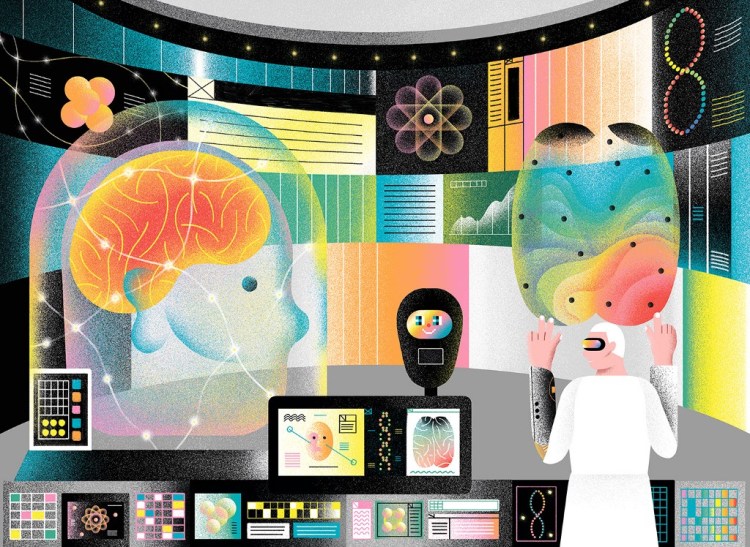
We usually think of intelligence as a quality that individuals possess. However, many of our largest and most complex problems are often solved by groups of individuals. If we think of intelligence as an ability to solve problems, groups can also act intelligently. We call this intelligence ‘Collective intelligence’ — the result of a group of individuals acting together in ways that seem intelligent. Collective intelligence is something that makes systems effective, productive, adaptable, or even resilient.
‘Collective intelligence’ — the result of a group of individuals acting together in ways that seem intelligent.
Although the individuals in the system might not have the same goals, most systems do work towards achieving a particular outcome. A company’s goal could be increasing its profits or market cap while a government’s goal could be improving the well-being of its citizens. This desired outcome can simply be described as the impact of the system. Increasing collective intelligence can help increase the efficiency, productivity, or output of the system, and thereby its impact.

The collective intelligence of a system can be increased through three different ways:
HUMAN-MACHINE COLLABORATION
OTHER

When we decide to introduce technologies like Artificial Intelligence into the system, we are inherently trying to increase the system’s collective intelligence. AI increases the collective intelligence of the system by:
Imagine a machine that boils eggs. You put in some eggs, set the timer and you get boiled eggs. Pretty soon you run into some obvious problems with this machine. It only boils chicken eggs well. What about duck eggs? What about Quail? Let’s make a smarter egg boiler. It uses an AI algorithm to analyze different types of eggs, temperature, humidity and whole host of other parameters to boil any kind of egg perfectly. Instead of creating a new product altogether, they simply build an attachment for the original egg boiler that converts it into a smart boiler. In a similar fashion, a software update to an electric boiler can make it more efficient, humane and appear smarter.
This is an example of AI improving existing machines. This can happen either through improvements in the hardware or the software.
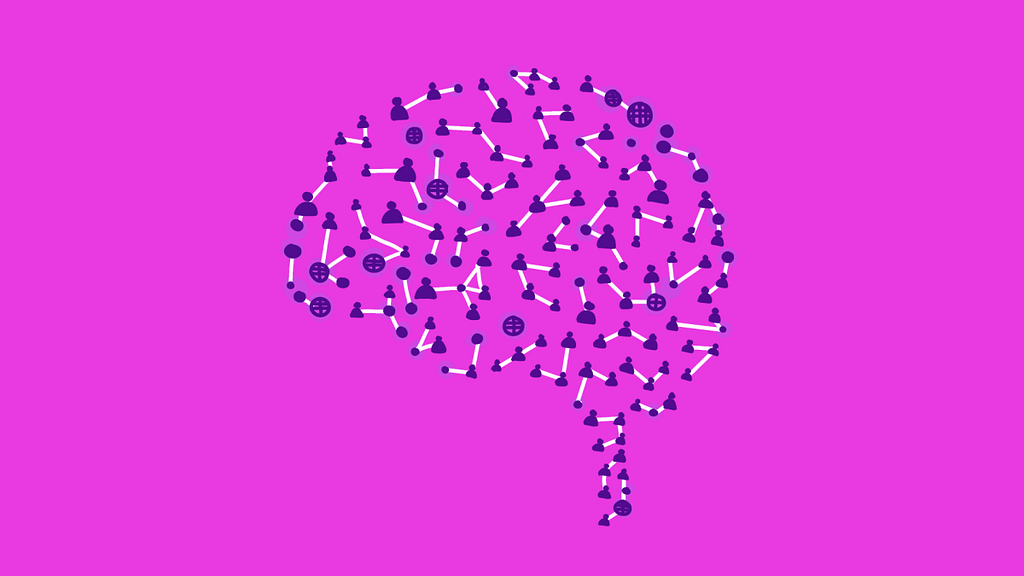
There is a factory that produces pizza. The factory consists of two main machines: one that makes the base and one that makes the topping. However these machines do not talk to each other. There is a human operator that moves the pizza bases to the the topping machine where the pizza gets built. The company makes some simple software updates and some hardware changes to make the transition between these machines seamless and without the need of a human operator. This is very effective but not very smart. Some engineers tweak the software of these machines and plug it with an AI based sentiment detector. The system predicts the demand for pizza in the locality where the company has customers as well as identifies more areas for supply. It discovers new products like plain pizza base or topping sauce and makes the machines collaborate together to meet demand. Such a system would greatly increase the efficiency of the system. This is an example of making machines help other machines. The AI in this case acts like a manager of the machines.
Often humans and machines are seen as adversaries fighting for each other’s jobs. This view however neglects the powerful opportunities in collaboration between the two sides. Now as our tools become more interconnected and intelligent, machines and humans start looking like symbiotic partners in the system. This symbiotic relationship can enable new business models and create jobs that never existed. And yes it will impact jobs too. Imagine a flexible, nimbler robot that works alongside humans to help perform generic, repetitive tasks. Or an algorithm that produces a variety of design options based on the designers preferences and goals. The designer can simply select the most optimum option and start using it as a reference or straight up modify it. This idea is sometimes also referred as ‘Organic AI,’ where machines are flexible and easily partner with humans to perform tasks. Such teams can easily adapt to new data and novel market conditions. The machine can become an extension of the human mind and body.
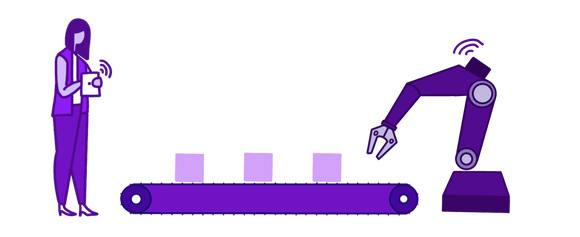
Although improving machines and helping them talk to each other sound like great opportunities, so far we do not have human systems that are fully automated and operate without any person overseeing them. The opportunities that will truly increase the impact of systems lies somewhere in the middle, where humans and AI collaborate and push each other to achieve higher levels of performance.
Superminds: The Surprising Power of People and Computers Thinking Together
Human + Machine: Reimagining Work in the Age of AI




Artificial Collective Intelligence was originally published in Becoming Human: Artificial Intelligence Magazine on Medium, where people are continuing the conversation by highlighting and responding to this story.
Via https://becominghuman.ai/artificial-collective-intelligence-5a48462c7755?source=rss—-5e5bef33608a—4
source https://365datascience.weebly.com/the-best-data-science-blog-2020/artificial-collective-intelligence

We are literally living in an era where machines can understand the verbal commands; remembers your choice for accurate suggestions; drive cars; play chess better than most of us; distinguish the difference between pictures, and so much more.
Already, we have progressed significantly in terms of technology in just over a decade, and many experts are already predicting that the day is not too far when machines will possess human-like intelligence.
All these sci-fi movies like possibilities are majorly the result of the advancements in Artificial Intelligence. Though AI today can be achieved in numerous ways like machine learning, natural language processing, robotics, expert systems, speech recognition & vision-based classification, but generally it is of 7 major types.
But before jumping directly to the various types of Artificial Intelligence, let’s first know a little about this technology itself!
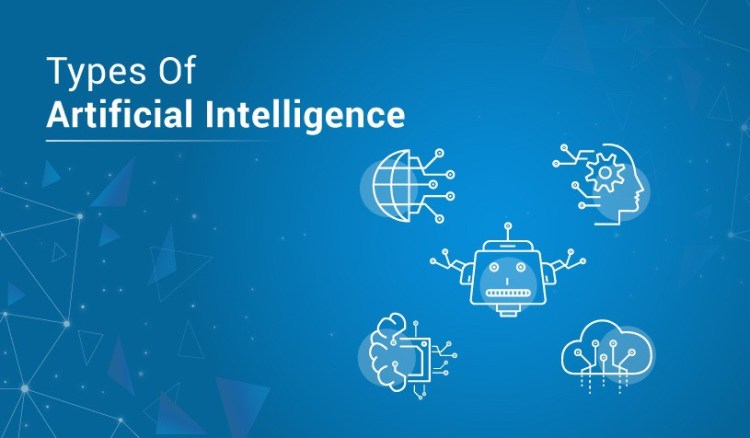
The roots of artificial intelligence date back to over half a century from today, but it was the last decade where all the remarkable discoveries were made. Today, it is one of the most astounding yet complex creations of humanity that promises to revolutionize almost all the industries.
Despite all this, you might be amazed to know that, this field still remains largely unexplored. Many AI-experts have agreed to the fact that “what we are experiencing today might just be the tip of the iceberg”.
Depending on who you ask, artificial intelligence can be defined as any particular task that is performed by a computer or machine requiring some level of human intelligence. It definitely a broad definition and is repeatedly argues over.
But in simple words, artificial intelligence can help systems to use any of the following behaviors that are related to human intelligence. These include reasoning, planning, manipulation, recognition, motion, learning, problem-solving, creativity, perception, or social intelligence.
Mainly, AI includes machine learning and natural language processing (NLP) that is widely used currently. Both are the 2 major subsets of AI that include applications like deep learning, supervised learning, unsupervised learning, content extraction, auto answering, text generation, classification, and so on.
AI can help businesses to find the right customers, dynamic pricing, build effective strategies, reduce cost, and on the other hand, it can help in speech recognition, image processing, fingerprint patterns, and others.
There are hundreds of gadgets that we are using to make our daily tasks easier. These can be Alexa, Amazon Echo, Siri, Google Assistant, or your smartwatch. All these can help you with the grocery list, daily appointments, alarms, reading news, playing your favorite music, waking you up, tracking your heart rate, or even the KMs that you have walked. All these are the results of artificial intelligence.
Some restaurants even have robots that are taking orders and even serving food. And, everyone has heard about self-driving cars!
As discussed above, artificial intelligence can help machines to think like humans to make effective decisions; but the degree to which an AI-based system can replicate human-like thinking is something that is used for classifying AI into different types. The criteria can be based on the performance, accuracy, and versatility of the AI-powered machines.
#1. Reactive Machines
It has very limited capabilities and is also one of the oldest types of AI. These systems do not possess memory-based functionality but it can showcase human-like behavior for responding to various types of stimuli.
Because of the lack of memory-based functionality, they can’t utilize previously gained experiences to evolve their current forthcoming actions. Simply, these systems cannot learn and can only be used as an auto-response for a limited set of inputs.
One of the famous examples of reactive machines is Deep Blue by IBM. It was a machine that won a chess grandmaster in 1997 against Garry Kasparov.
#2. Limited Memory
These are the systems that include all the features of reactive machines along with the additional capability of learning from historical data. It can use these to modify or improve their decision-making.
3. Real vs Fake Tweet Detection using a BERT Transformer Model in few lines of code
A majority of the existing AI-based systems come under this category including all those using deep learning. These systems might get trained with the large sets of data that they can use in their memory to form a reference for forthcoming problems.
Almost all the current AI applications like virtual assistants, personalized feeds, chatbots, self-driving cars, and others come under this section of AI.
#3. Theory of Mind
The first two types that I have mentioned were or are used in abundance, however, the theory of mind & the one that I’ll discuss after this, exist in theories. You can consider them a work in progress.
Coming to the theory of mind, it is a type that is recognized by researchers as the next level of AI systems on which work is still being done. It is still in the innovating phase but once it’ll be completed, there are predictions that “Theory of Mind” will be able to make far better and improved decisions. It will be able to understand all the entities significantly better by recognizing beliefs, needs, thought processes, and emotions.
Since AI is still in its initial phase and a lot of exploration is still left, making Theory of Mind a reality might require significant breakthroughs in other branches of AI as well.
#4. Self-Aware
It only exists hypothetically and it is believed as a final stage of AI development. As its name suggests, it will be a type of AI that will evolve to the extent that it can mimic the human brain to develop self-awareness.
If not centuries, then probably scientists will take decades to create and materialize this type of Artificial Intelligence. These systems will not just be able to evoke or understand the emotions of others, but will also have their own beliefs, emotions, needs, and even desires in some cases.
And this is exactly the type of AI from which all the big names like Stephen Hawking, Elon Musk, Bill Gates, James Barrat, Sir Tim Berners-Lee, Steve Wozniak & others are worried about. Though it is highly debatable but on one side it can take human civilization to the next level, but on the other side it can also lead to catastrophe.
Its dark side arises from the fact that it will be based on its self-aware nature that can make these systems capable of developing their own ideas that may completely outmaneuver the human intellect.
— — — — — —
Apart from the 4 above-listed types, people can also use another classification system that is more used in tech parlance. These are divided into ANI (Artificial Narrow Intelligence), AGI (Artificial General Intelligence) & ASI (Artificial Super Intelligence).
#1. Artificial Narrow Intelligence or ANI
It is a type of AI that includes all the current AI-based systems including the most capable, accurate & complicated AI that has ever been created till now. ANI refers to all the systems that have the ability to perform the specific set of tasks requiring human-like intelligence.
These systems will only be able to perform tasks that they are programmed for. Nothing more than that because it has a very narrow or limited range of capabilities. Currently all the AI’s including the most advanced or complex forms using machine learning or deep learning that can teach themselves fall under this category.
#2. Artificial General Intelligence or AGI
All the AI-based systems or machines that have the ability to learn, understand, perceive, and act completely as a human being comes under AGI. It is predicted that these systems will be able to build their own connections, competencies, and generalizations by massively reducing the time required for training. This will power AI systems to be as good as any other humans by using their several functional capabilities.
#3. Artificial Super Intelligence or ASI
Systems or machines coming under this category will definitely show the pinnacle of researches in artificial intelligence. ASI systems will be considered as one of the most capable forms of intelligence on earth since it will be able to perform all its tasks with various forms of intelligence of human beings.
It will get better at every time after each of its actions because of its data processing & analysis, high memory, and decision-making capabilities. If AGI and ASI become reality then it might even lead to a technological singularity — which is also referred to as a point where tech growth becomes irreversible or uncontrollable that can result in unpredictable changes to human civilization. This might fascinate many, but it can have the potential to threaten human existence.
With this, I’ll wrap up the article. To give you a gist, we started with the understanding of artificial intelligence in the simplest words along with the brief of its use cases.
We have covered different ways through which AI can be utilized such as machine learning, natural language processing, robotics & others. Later on, we have seen some of its use cases including businesses, automobiles, chatbots & others.
In the last section, we explored the types of artificial intelligence based on 2-different classification systems having different criteria. First, we learned about reactive machines, limited memory machines, the theory of mind, and then self-awareness type of AI which might take a long time.
After this, we have checked AI types from another classification that included Artificial Narrow Intelligence (all the current AI applications), Artificial General Intelligence (might be possible in a decade or two) & Artificial Super Intelligence (far from reality).
As concluding remarks, I have always believed in tech advancements and I am mesmerized with all the current applications that have been only possible because of artificial intelligence. However, considering AI in the long run, the picture still looks hazy for me as it will be too early to advocate for its benefits or its negativity.
I mean, come on guys, AI is still in the rudimentary phase and we still have a lot of time to figure out the safety from its more advanced forms. And, to all those people who are optimistic about artificial intelligence, trust me, we have just scratched the surface and in the next 5 to 10 years will definitely be the game-changer.
Whatever you think, on whatever side you are; I strongly believe that AI will be everywhere in the next few years. And who knows, we might get introduced to more advanced types of artificial intelligence! So, what do you think and what are the types of artificial intelligence that you are hooting for?
Learn About the Different Types of Artificial Intelligence was originally published in Becoming Human: Artificial Intelligence Magazine on Medium, where people are continuing the conversation by highlighting and responding to this story.
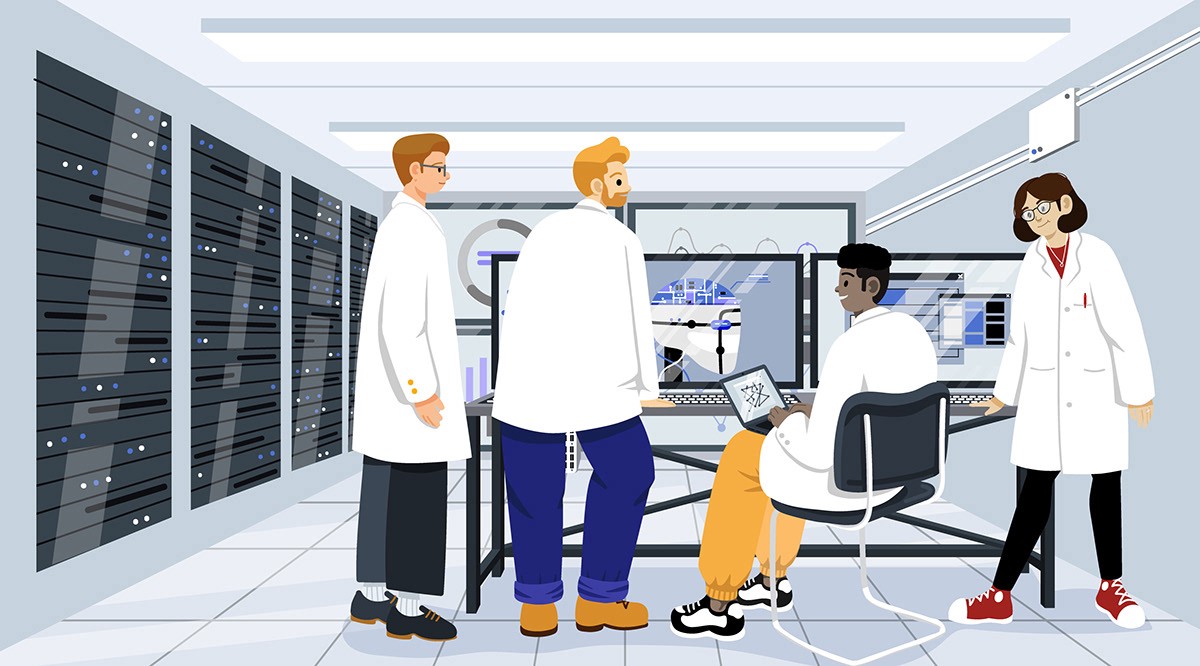
“Where do I go from here?” It’s a question that can be asked at any engineering career stage, at any point in life. As engineering career…
Continue reading on Becoming Human: Artificial Intelligence Magazine »
Via https://becominghuman.ai/the-joy-of-engineering-ab5e8668989?source=rss—-5e5bef33608a—4
source https://365datascience.weebly.com/the-best-data-science-blog-2020/the-joy-of-engineering
Originally from KDnuggets https://ift.tt/2UPkFtW
Originally from KDnuggets https://ift.tt/30N3c9m
Originally from KDnuggets https://ift.tt/3dd87TG
Originally from KDnuggets https://ift.tt/2Y3ClUP
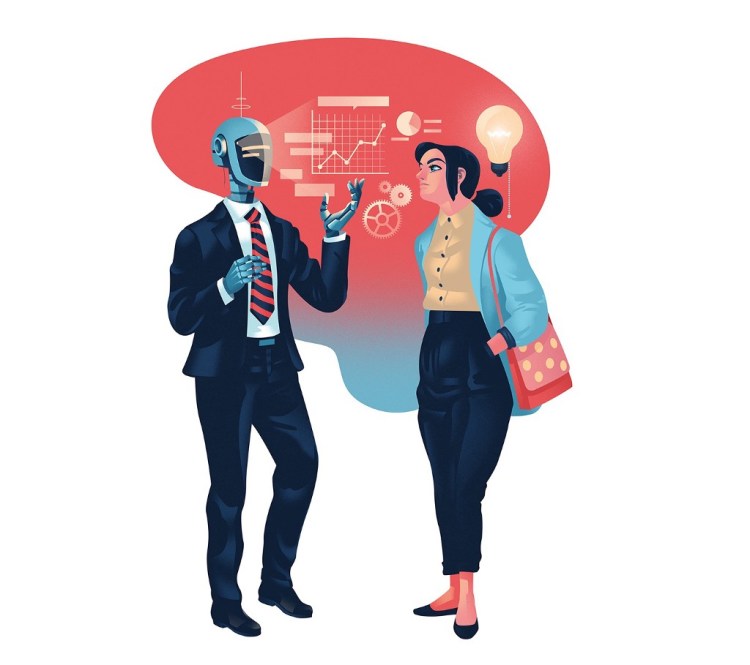
Machine learning is one of the up to date technologies of artificial intelligence. It was originated by Arthur Samuel in the late 1950s. With the increasing demand of machine learning technology, engineers play a significant part. The aim of this article is to describe a significant role of machine learning in the field of engineering. This increasing utilization of machine deep learning has led to demand for machine learning expert.
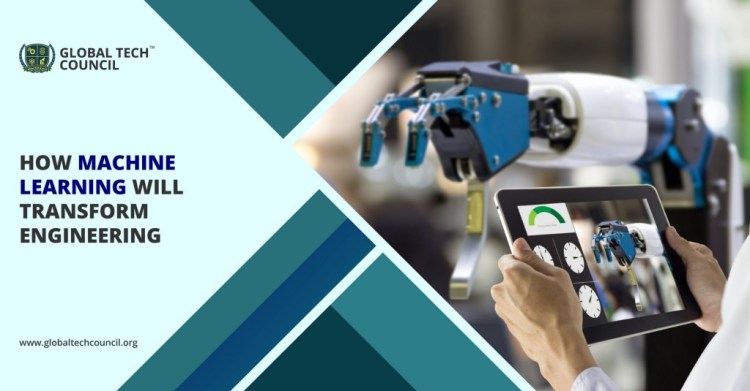
Machine learning is the technology of getting machines to enhance and react like persons do. It is a subset of artificial intelligence which operates on information and data. This technology allows the ability to automatically enhance and from experience without being operated by humans. Deep learning algorithms are categorized in supervised and unsupervised mechanisms.
If you want to make a career in machine engineering, you can check out a list of machine learning training.
Machine learning plays a crucial role in the engineering sector. Engineers face a lot of variation in terms of technology, process and demand of users. The engineering industry is affected by the category of technology we use. Machine learning is one of the technologies that has transformed the engineering sector.
Innovations in the deep learning industry have transformed life forever, most particularly the work of humans. Advanced computers are now able to learn, hear and even see. Currently, machine learning is a big participant in the engineering profession.
Here we have explored how machine learning will transform the engineering industry.
The workflow process of the engineering sector is highly affected with the innovation of deep learning. Machine learning techniques and tools extend deeply in data management. Deep learning permits us to execute our jobs in a better way. Our complete jobflow from work definition to application is already being affected by deep learning algorithms.
3. Real vs Fake Tweet Detection using a BERT Transformer Model in few lines of code
Machine learning innovation supervises our engineering data efficiently. For example- Industry 4.0 mitigates the challenge of big data and makes advancements in the engineering profession. Industry 4.0 is one of the machine learning trends that highly impacts engineers. The management of big data becomes easier with the help of deep learning algorithms. ML tools also help in real time monitoring of big data.
Every innovation of the machine learning field has generated a new industry of research and work. Machine learning brings a lot of advancement in job sectors. Machine learning has now become one of the most popular career options. There are a lot of job opportunities in the deep learning industry. With the implementation of deep learning, new companies will be generated that current engineers will require to flow into.Machine learning engineers are one of the best job opportunities in the information technology sector.
The development capability is one of the important processes of the engineering industry. The accomplishment of engineers is changing with the implementation of deep learning tools. The work of engineers becomes perfect and faster at the same time. Deep learning mechanisms bring extreme abilities to the engineer. With the help of innovative designs, engineers can survey options like never before. Weight saving features are also offered by machine latticing tools. The capabilities of the engineering industry will get expanded with the implementation of computer aided design tools.
Summary
Deep learning is the core foundation of the modern engineering industry. This sector folds a lot of scope and growth in career opportunities. In future we are going to see how deep learning will be transforming the process of working. Machine learning technology will help to supervise engineering activities more productively. Deep learning algorithms allow us to collect data outcomes in an efficient way. All these smart management and data gathering is done automatically though machines.
If you want to explore more about deep learning technology, you can check out machine learning certification offered by Global Tech Council.
How Machine Learning Will Transform Engineering was originally published in Becoming Human: Artificial Intelligence Magazine on Medium, where people are continuing the conversation by highlighting and responding to this story.

 365 Data Science