The Battle for AI Talent

Photo by Payam Tahery on Unsplash

According to LinkedIn workforce report published in 2018, data scientist roles in the US had grown by 500 percent since 2014, while machine learning engineer roles had increased by 1,200 percent. Mobile devices have become data factories, pumping out a massive amount of data daily; consequently, the AI and analytic skills required to harness these data has grown by a factor of nearly 4.5 since 2013

According to the IBM Marketing cloud study, 90% of the data on the internet today, has been created only since 2016. A publication by Seagate today, also predicts worldwide data creation will grow to an enormous 163 zettabytes (ZB) by 2025. That’s ten times the amount of data produced in 2017, and a plethora of embedded devices would drive this growth.

ML Jobs

Top organisations are competing for the best AI talents in the market. In 2014 Google acquired DeepMind, a British AI start-up, purportedly for some $600 million, around the same time, Facebook started an AI lab and hired an academic from New York University, Yann LeCun, to oversee it. By some estimates, Facebook and Google alone employ 80 percent of the machine learning PhDs coming into the market. As industries turn to big data, the result has been a global shortage of AI talents.

“I cannot even hold onto my grad students,” says Pedro Domingos, a professor at the University of Washington who specialises in machine learning. “Companies are trying to hire them away before they graduate.”

There are concerns AI expertise could become concentrated disproportionately in a few private-sector firms such as Google, which now leads in the field. Although these private companies make public some of their research through open-source, many profitable findings are not shared. To avoid the threat of any single firm having too much influence over the future of AI, several tech executives, including Tesla’s Elon Musk, pledged to invest over $1 billion on a not-for-profit initiative, OpenAI, which will make all its research public.

The mission of OpenAI is to ensure AI’s benefits are as widely and evenly distributed as possible

The extra money on offer in AI has excited new students to enter the field; college students are rushing in record numbers to study AI-related subjects according to this AI index 2019 annual report. Stanford’s enrollment in the school’s “Introduction to Artificial Intelligence” course has grown “fivefold” between 2012 and 2018, according to the report, “Introduction to Machine Learning” course at the University of Illinois also grew twelvefold between 2010 and 2018

Data and analytics are a critical component of an organisation’s digital transformation. Studies conducted by Indeed’s Hiring Lab showed an overall increase of 256% in data science job openings since 2013, with a rise of 31% year on year.

Whiles many individuals have job titles related to AI, many are unskilled at machine learning and AI. To train more aspiring data scientist, boot camps, massive open online courses(MOOCs), and certificates have grown in popularity and availability. Many of these boot camps are available online. Coursera alone has more than four specialisations in data science taught by seasoned experts and researchers in the field, edx, datacamp, udemy all offer impactful training, to name a few.

Top 4 Most Popular Ai Articles:

1. AI for CFD: Intro (part 1)

2. Using Artificial Intelligence to detect COVID-19

3. Real vs Fake Tweet Detection using a BERT Transformer Model in few lines of code

4. Machine Learning System Design

To address the overall demand for AI training, the government of powerful nations have begun to take huge steps, For instance, China
has made AI a central pillar of its thirteenth five-year plan and is investing massively in AI research. The Chinese Ministry of Education has drafted its own “AI Innovation Action Plan for Colleges and Universities,” beckoning for 50 world-class AI textbooks, 50 national-level online AI courses, and 50 AI research centres to be established by 2020. Many countries are following a similar program with China and the US leading the way

Conclusion

We have entered a transition period, and organisations everywhere are looking to retrain their existing workers and recruit skilled AI graduates to help align their business to the ongoing digital transformations. The demand for AI talents would not plummet anytime soon; we are in the data generation. How is your organisation implementing AI solutions, and what are thoughts on the skills shortage?

Don’t forget to give us your ? !


The Battle for AI Talent was originally published in Becoming Human: Artificial Intelligence Magazine on Medium, where people are continuing the conversation by highlighting and responding to this story.

Via https://becominghuman.ai/the-battle-for-ai-talent-e938f4082f94?source=rss—-5e5bef33608a—4

source https://365datascience.weebly.com/the-best-data-science-blog-2020/the-battle-for-ai-talent


Why Do AI Systems Need Human Intervention to Work Well?

All is not well with artificial intelligence-based systems during the coronavirus pandemic. No, the virus does not impact AI – however, it does impact humans, without whom AI and ML systems cannot function properly. Surprised?

Originally from KDnuggets https://ift.tt/373x0j3

source https://365datascience.weebly.com/the-best-data-science-blog-2020/why-do-ai-systems-need-human-intervention-to-work-well

Data Augmentation Programming

Source

Data Augmentation using Python for Deep Learning

Dealing with small data sets for Deep Learning.

Data Augmentation is a technique that can be used for making updated copies of images in the data set to artificially increase the size of a training dataset. This technique is very useful when the training data set is very small.

There are already many good articles published on this concept. We can refer to some of these articles at, learn about when to use data augmentation, and other important concepts at data augmentation.

Imagine that you are afraid of Thanos and believe that he is real and will visit Earth one day. As a token of measure, you want to build a defense system that feeds on camera input. The system is meant to be activated when Thanos arrives on Earth by classifying his image from the camera feed. To do that we need to train a reliable model for activating the defense system. If we have only 10 pictures of Thanos its very difficult to build a reliable model that can capture his presence.

Top 4 Most Popular Ai Articles:

1. AI for CFD: Intro (part 1)

2. Using Artificial Intelligence to detect COVID-19

3. Real vs Fake Tweet Detection using a BERT Transformer Model in few lines of code

4. Machine Learning System Design

So to have multiple pictures for training sets we can consider Data Augmentation. Better examples and scenarios of when to use augmentation are mentioned at click here. Let us consider the below image is the one for which we want to perform Data augmentation.

Image by Matt McGloin at comicbook.news

In this article, I’m going to solely concentrate on the coding part of Data Augmentation.

At first, we will look at, how this can be done using NumPy, and then we will discuss the image preprocessing Data Augmentation class in Keras that brings simplicity for this task.

Using Numpy

Importing required modules.

Loading an image to work on.

Cropping: with cropping, we can capture the required parts of the images. Here we are cropping at random to capture random windows of the images. Cropping too small images from the original image can cause information loss.

Randomly cropped images from the original image

Rotating Images: rotating the images to capture the real-time effect of capturing pictures at different angles.

Sample output after rotating images

Image Shifting or otherwise called Image translation: this is nothing but shifting pixels of a picture in some direction and adding back the shifted pixels back in the opposite direction.

Sample output after shifting images

For better results, we can combine some of these techniques, as we will get augmented pictures of different styles.

We have seen that using NumPy takes a lot of effort to manually change the values of the image array which is both computationally expensive and requires a lot of code as mentioned above.

Jobs in AI

Now, we can try augmentation using the Keras Neural Network framework, which makes our job a lot easier.

Using Tensor flow and Keras

TensorFlow has a separate class which deals with data augmentation with a lot of different options rather than just flipping, zooming, and cropping the images.

By using Keras, there is no need for manual adjustment of pixels. Keras has inbuilt functions that take care of these things. So the code required for augmentation with Keras is way less along with multiple options.

Let us look at image prepossessing ImageDataGenerator class of Keras:

Let’s look at important arguments that are used for common data argumentation techniques:

  • rotation_range: Int. Degree range for random rotations.
  • width_shift_range: Float, 1-D array-like or int — a fraction of total width
  • height_shift_range: Float, 1-D array-like or int — a fraction of total height
  • brightness_range: Tuple or list of two floats. The range for picking a brightness shift value from.
  • shear_range: Float. Shear Intensity (Shear angle in the counter-clockwise direction in degrees)
  • zoom_range: Float or [lower, upper]. The range for random zoom. If a float, [lower, upper] = [1-zoom_range, 1+zoom_range]. A fraction of the total image to be zoomed.
  • horizontal_flip: Boolean. Randomly flip inputs horizontally.
  • vertical_flip: Boolean. Randomly flip inputs vertically.
  • rescale: rescaling factor. Defaults to None. If None or 0, no rescaling is applied, otherwise we multiply the data by the value provided (after applying all other transformations).
  • preprocessing_function: a function that will be applied to each input. The function will run after the image is resized and augmented. The function should take one argument: one image (Numpy tensor with rank 3) and should output a Numpy tensor with the same shape.
  • data_format: Image data format, either “channels_first” or “channels_last”.
  • validation_split: Float. The fraction of images reserved for validation (strictly between 0 and 1).
  • dtype: Dtype to use for the generated arrays.

For more details and arguments please check out the tf documentation.

Now, we will augment our images with some of the most common techniques like flipping, rotation, width and height shifting, varying brightness of the image, zooming, and re-scaling the images.

Sample output after using Keras augmentation

Now let’s look at how to augment a complete data set. We will consider the cifar10 data set.

We can notice from the above examples, it is better to use Keras for data augmentation than using NumPy.

Hope these large set of augmented images can help you to activate your defense system and save our planet.

The complete Jupiter notebook can be found at my git hub.

This is my first article, please provide feedback on how to improve my articles from here on.

Don’t forget to give us your ? !


Data Augmentation Programming was originally published in Becoming Human: Artificial Intelligence Magazine on Medium, where people are continuing the conversation by highlighting and responding to this story.

Via https://becominghuman.ai/data-augmentation-programming-e9a4703198be?source=rss—-5e5bef33608a—4

source https://365datascience.weebly.com/the-best-data-science-blog-2020/data-augmentation-programming

Creating an App that can Detect Your Emotions Based on Your Voice

Photo by Priscilla Du Preez on Unsplash

Imagine this: You are going to school and as you walk up to your group of friends you notice one of your friends seems quieter. They are quieter than usual, are wearing sweatpants, and have bags under their eyes. You ask them: What’s wrong? And they respond:

I’m fine

At that moment, you know that they are not fine.

There are ways to tell, such as their appearance, but one of the key giveaways was the way they said I’m fine (their tone). You were able to tell based on their tone. Being able to tell tone is usually the best way to tell a person how they feel. From talking passive-aggressively, sarcasm, etc…. These are usually ways to tell how people really feel. Now, wouldn’t it be cool if machines could also detect emotions in your voice? Well, I built an app that can do just that.

Photo by William Hook on Unsplash

What are classifiers?

I already wrote about classifiers before in this article and how they work. To summarize, A classifier is an algorithm that sorts data into labeled classes or categories of information. They usually work by using machine learning algorithms to learn and help classify data better (learn more about machine learning in this article). Machine Learning are computer algorithms that work to help computers learn without human intervention. They work to help the classify train to help become better at classifying data.

Jobs in AI

How did I make it?

The model

What did I use

To train the model, I used Create ML, which is Apple’s machine learning application. Create ML uses transfer learning, which is when it takes other algorithms to create their machine learning models. This application is great as you could create and make machine learning models easily. You could create image classifiers, recommenders, object classification, motion classifiers, etc. This application is very versatile and easy to put into application to use. For this model, I used a sound classifier.

How I trained the model

To create this, I had to create a machine learning model. Now for this model, I had to start by creating training data (in this article, I talk more about training data while creating a machine learning model). To summarize, training data is what allows the model to learn to classify data. For this training data, I got all the audio samples from this website. For this website, I downloaded over 1,000 files. I made five folders labeled happy, sad, neutral, angry, and fear. Each of these files has around 400 files each. Each class has files of men, women, different ages, and dialects expressing the emotion. This set had a lot of variation and it made a good set to train and make a good model.

I also created testing data from the same website. It also had variation and was a good way to test the model and make sure that it works well. Once I got the training data done, I was able to put it into Create ML to build the model.

How does the model work

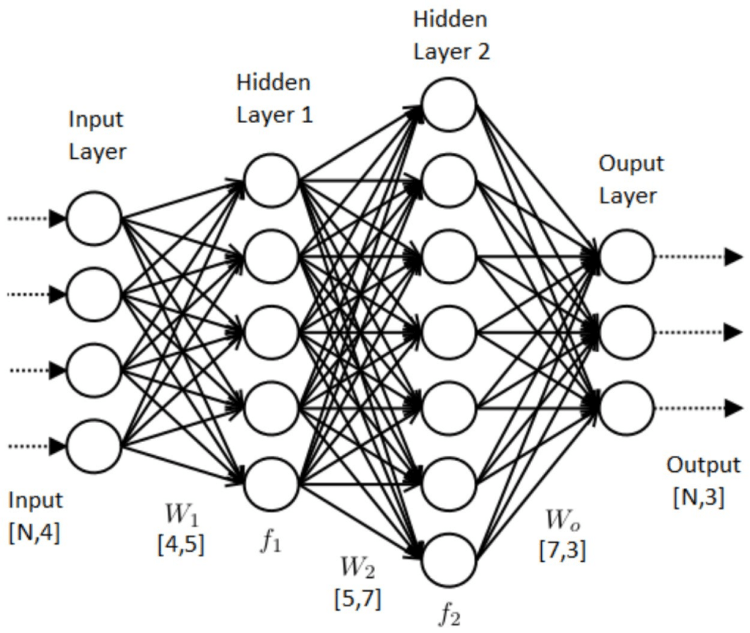
Now, let’s talk about how the model trains the data. Although there are many ways to classify sound, most of them use something called deep neural networks. Deep Neural Networks use a series of input and output layers.

Top 4 Most Popular Ai Articles:

1. AI for CFD: Intro (part 1)

2. Using Artificial Intelligence to detect COVID-19

3. Real vs Fake Tweet Detection using a BERT Transformer Model in few lines of code

4. Machine Learning System Design

They have the input layer, output layer, and a bunch of hidden layers that help classify the data into the layers. They are loosely based on the human brain and how it works. Here’s another article I wrote that explains a little more on how classification works. Here’s an article I wrote that talks about the different types of classifiers (Click here).

The testing phase

Once the model finished testing, I had to put it into testing. To test it, I had to upload the testing file, have the model guess what it is, and decide if it was good and it needed more testing. If there was one class that the model had trouble guessing, I would go back to the training data and add more files or delete files that may have caused the model to get less accurate results. Then I would make a model and retrain. I repeated the process until the model was perfect.

The App

For this app, I wanted to create an app that easily displayed how my model works so that other people could see how it works as well. You can read the article here. I liked the design they created for the app as it was simple, colorful, and easy to display the goal of what my article created. I highly recommended reading this article to learn more about how the guy created the app.

I’m not going to explain the coding process that much since you could read more about it in the article I linked above. To summarize what I wrote, I built the app to listen to your tone, and based on what it hears, it will display the name of the emotion associated with a certain color. In the end, the app should look something like this:

After a few hours, I was able to come and finish the app. If you want to view the files. You can find them here: https://github.com/AssiHann21/AVoiceEmotionClassifier

I was able to create an app that uses supervised learning to classify people’s voices into different tones.

Don’t forget to give us your ? !


Creating an App that can Detect Your Emotions Based on Your Voice was originally published in Becoming Human: Artificial Intelligence Magazine on Medium, where people are continuing the conversation by highlighting and responding to this story.

Via https://becominghuman.ai/creating-an-app-that-can-detect-your-emotions-based-on-your-voice-fe1ccdd5177f?source=rss—-5e5bef33608a—4

source https://365datascience.weebly.com/the-best-data-science-blog-2020/creating-an-app-that-can-detect-your-emotions-based-on-your-voice

AI Counters Hacking

Source

AI in Hacking

Over the past few years, we have seen that the amount of user data is being compromised. As the Internet of Things (IoT) and widespread Internet usage have caught on, cybercrime has grown rapidly. This not only compromises consumers but also damages the reputation of companies.

When these violations occur, the financial risks are unstable. Here’s how Artificial Intelligence (AI) is used to solve cybercrime.

AI: Flood Gates for Cybercrime:

Artificial intelligence is one thing that has enabled cybercriminals like never before, and the Internet of Things relies heavily on it. Simply put, cybercriminals are making AI developments much easier to breach systems and steal data. As AI continues to grow rapidly, there is certainly cause for concern.

It is widely known that cybercriminals are adopting the latest technologies in fields such as AI. They do this to create attacks that are more powerful, less noticeable, and have far-reaching effects. Also, with the huge expansion in cloud computing, the entire cybersecurity environment is more complex than ever before.

As AI SERVICES capabilities become more powerful, it is natural to use AI systems to create new threats and assist existing ones. Also, the ever-increasing impact of AI on the physical world think drones and automobiles may, in theory, lead to very frightening results.

Cybersecurity talent shortage:

This could not have come at a worse time: there is a huge talent gap in the cybersecurity industry. This is nothing short of a crisis. As hackers and cybercriminals accelerate their efforts using sophisticated technologies and tools, cybersecurity professionals need as much help as they can get their hands on. Unfortunately, cybercriminals are well aware and take advantage of this vulnerability.

Top 4 Most Popular Ai Articles:

1. AI for CFD: Intro (part 1)

2. Using Artificial Intelligence to detect COVID-19

3. Real vs Fake Tweet Detection using a BERT Transformer Model in few lines of code

4. Machine Learning System Design

Companies that are less expensive and employ less can do little to prevent attacks or respond decisively when they occur. This shortage of cybersecurity skills means that the demand is astronomical, the prices are high and there are many barriers to access to cybersecurity professionals. These are difficult to overcome, especially for smaller companies.

With the utility of web and cloud products and services currently dominating the market, it is very difficult for businesses to find the right talent for their IT needs. This is a very often targeted startup and small business and the results can sometimes be fatal.

All of this can happen, but large corporations can easily tap into cybersecurity expertise. Something needs to change, but what?

IBM study, what is alarming is that over 90% of cybercrime comes from defects on our behalf and on behalf of end-users.

While there are many sophisticated cybersecurity solutions available today, including those that use AI, most major breaches target the human errors that are rooted in our behavior, not just the vulnerabilities and vulnerabilities found in networks and systems. By becoming self-aware and recognizing this behavior, users like you and I can protect ourselves from cybercrime. It requires very little effort. It is widely acknowledged that many human behaviors help cybercriminals, but there are three more than others:

1. Default bias:

Accept and double the default security settings on computers And not using the full advantage of two-factor authentication does not only give IT departments a headache, but they can also endanger data.

2. Conditioning:

We are conditioned to stay tuned and complacent about the latest threats, vulnerable to significant minor cybersecurity issues such as phishing, and many security warnings and warnings.

3. Fear of Hype and False:

Every time a high-profile attack or problem hits the news. It asks security professionals to work round-the-clock to fix it. Organizations also follow suit and try to protect themselves without ever having to worry. All the while, they ignore the current vulnerability.

Cybersecurity professionals are looking at Artificial Intelligence (AI) with excitement and trepidation. On the one hand, it has the potential to add completely new layers of security for critical data and infrastructure, but on the other hand, it can also be used as a powerful weapon to prevent those defenses from leaving a trace.

AI hacking:

Researchers are already showing how neural networks can be fooled into thinking that the image of a turtle is actually a rifle’s image, and how a simple sticker on a stop sign causes an autonomous car to drive straight into an intersection. This kind of manipulation is not only possible after AI is deployed, but it also gives hackers the ability to destroy all sorts of vulnerabilities without hitting the client enterprise’s infrastructure while training itself.

The IT security industry is bracing itself for new wave hacking exploits powered by smart technology, machine learning, and artificial intelligence. Black Hot Computer professionals are expected to unleash a number of unethical tactics to target and manipulate individuals and organizations that are not fundamental to dealing with it.

Jobs in AI

The age of artificial intelligence is now underway, and the use of the power of AI is one of the key agenda issues in many business organizations worldwide. It is common to use machine learning to control business data and understand business trends.

Hackers are searching for this technology to create AI-powered malware that can detect malicious applications in a benign data payload. AI techniques can hide the conditions necessary to unlock malicious payload, making it nearly impossible to reverse-engineer a threat, bypassing advanced anti-virus and malware intrusion detection systems.

Potential for machine learning:

Many companies are now looking at leveraging AI against AI in the fight against cybercrime. At the moment, it is very clear that we are in the midst of an arms race against cybercriminals.

Cybercriminals may be winning now, but as cybersecurity professionals and new startups begin to focus on improving their AI algorithms and addressing this prevalent problem, it’s not clear how long they can go unchecked.

An exciting evolution is taking inspiration from the human body. For millions of years, our immune system has learned to understand itself. A big part of this is the way it can detect threats and fight back faster, even if our bodies have never seen them before.

This is the basic way to describe our immunity and the same can be applied to AI.

Under the influence of machine learning and cybersecurity solutions, the computer’s immune system can use algorithms to detect when digital threats occur, long before a breach occurs, and to prevent this. By connecting to the company’s network, AI can learn about it.

Over time, machine learning determines what is normal and struggles with anything that seems normal.

AI is great for developing cybercrime, but the best way to do it is with us. Although the threats from AI-assisted cybercrime are scary, according to a 2014 IBM study, what is alarming is that over 90% of cybercrime comes from defects on our behalf and on behalf of end-users.

While there are many sophisticated cybersecurity solutions available today, including those that use AI, most major breaches target the human errors that are rooted in our behavior, not just the vulnerabilities and vulnerabilities found in networks and systems. By becoming self-aware and recognizing this behavior, users like you and I can protect ourselves from cybercrime. It requires very little effort. It is widely acknowledged that many human behaviors help cybercriminals, but there are three more than others:

1. Default bias:

Accept and double the default security settings on computers And not using the full advantage of two-factor authentication does not only give IT departments a headache, but they can also endanger data.

2. Conditioning:

We are conditioned to stay tuned and complacent about the latest threats, vulnerable to significant minor cybersecurity issues such as phishing, and many security warnings and warnings.

3. Fear of Hype and False:

Every time a high-profile attack or problem hits the news. It asks security professionals to work round-the-clock to fix it. Organizations also follow suit and try to protect themselves without ever having to worry. All the while, they ignore the current vulnerability.

So, what is the technology or good human behavior of using AI to fight cybercrime that uses AI? While the former is much more likely to happen than the latter, it is a combination of the two that would be the most effective solution.

Closing Points:

Yes, there is much we can do to fight cybercrime more carefully and self-aware. However, there is still a huge shortage of skills and cybercrime is becoming smarter, more brazen, and harder to detect. It is a combination of AI and human intelligence, which is very promising in the war against cybercriminals.

Don’t forget to give us your ? !


AI Counters Hacking was originally published in Becoming Human: Artificial Intelligence Magazine on Medium, where people are continuing the conversation by highlighting and responding to this story.

Via https://becominghuman.ai/ai-counters-hacking-1e852c096f8c?source=rss—-5e5bef33608a—4

source https://365datascience.weebly.com/the-best-data-science-blog-2020/ai-counters-hacking

If you had to start statistics all over again where would you start?

If you are just diving into learning statistics, then where do you begin? Find insight from those who have tread in these waters before, and see what they might have done differently along their personal journies in statistics.

Originally from KDnuggets https://ift.tt/2XCrPDD

source https://365datascience.weebly.com/the-best-data-science-blog-2020/if-you-had-to-start-statistics-all-over-again-where-would-you-start

What Is a Data Warehouse?

data warehouse

Data warehousing is one of the hottest topics both in business and in data science. But if you’re new to the field, you’re probably wondering what a data warehouse is, why we need it, and how it works.

To answer these questions, first, we need to start with a definition – the meaning of the phrase ‘Single source of truth’.

In information systems theory, the ‘single source of truth’ is the practice of structuring all the best quality data in one place.

Let’s look at a very simple example.

Surely it has happened to you to work on a file and to create many different versions of it.

How do you name such a file?

Well, once you are done you often place the word ‘final’ at the end. This results in having a bunch of files with extensions:

  • ‘final’
  • ‘final, final’
  • ‘final, final, final’

Or my favorite:

  • ‘really final’… ‘final’

excel file with many different versions and extensions

If this is you, you are not alone. It seems that even corporations never know where the most recent or most appropriate file is.

But what if you knew that there is one single place where you would always have the single source of information?

That would be quite helpful wouldn’t it?

Well, a data warehouse exists to fill that need.

So, what is a data warehouse?

A data warehouse is the place where companies store their valuable data assets, including customer data, sales data, employee data, and so on.

In short, a data warehouse is the de facto ‘single source of data truth’ for an organization. It is usually created and used primarily for data reporting and analysis purposes.

definition of data warehouse

There are several defining features of a data warehouse. It is:

  • subject-oriented
  • integrated
  • time-variant
  • nonvolatile
  • summarized

Let’s quickly go through these, one by one.

“Subject-oriented” means that the information in a data warehouse revolves around some subject.

Therefore, it does not contain all company data ever, but only the subject matters of interest. For instance, data on your competitors don’t need to appear in a data warehouse. However, your own sales data will most certainly be there.

data warehouse is subject oriented

“Integrated” corresponds to the example from the beginning of the video.

Each database, or each team, or even each person has their own preferences when it comes to naming conventions. That is why companies develop common standards – to make sure that the data warehouse picks the best quality data from everywhere. This relates to ‘master data governance’, but that is a topic for another time.

data warehouse is integrated

“Time-variant” relates to the fact that a data warehouse contains historical data, too.

As mentioned before, we mainly use a data warehouse for analysis and reporting, which implies we need to know what happened 5 or 10 years ago.

data warehouse is time variant

“Nonvolatile” implies that the data only flows in the data warehouse as is.

Once there, it cannot be changed or deleted.

data warehouse is nonvolatile

“Summarized” once again touches upon the fact that the data is used for data analytics.

Often it is aggregated or segmented in some ways, in order to facilitate analysis and reporting.

data warehouse is summarized

So, that’s what a data warehouse is – a very well structured and nonvolatile, ‘de facto’, single source of truth for a company.

We hope we’ve managed to solve the mystery of data warehousing and that you enjoyed this blog post. Are there any data science terms you’d like us to explain? Please share your requests in the comments section below.

Ready to take the next step towards a data science career?

Check out the complete Data Science Program today. Start with the fundamentals with our Statistics, Maths, and Excel courses. Build up a step-by-step experience with SQL, Python, R, Power BI, and Tableau. And upgrade your skillset with Machine Learning, Deep Learning, Credit Risk Modeling, Time Series Analysis, and Customer Analytics in Python. Still not sure you want to turn your interest in data science into a career? You can explore the curriculum or sign up for 12 hours of beginner to advanced video content for free by clicking on the button below.


The post What Is a Data Warehouse? appeared first on 365 Data Science.

from 365 Data Science https://ift.tt/3eWutdo

Metis Webinar: Deep Learning Approaches to Forecasting

Metis Corporate Training is offering Deep Learning Approaches to Forecasting and Planning, a free webinar focusing on the intuition behind various deep learning approaches, and exploring how business leaders, data science managers, and decision makers can tackle highly complex models by asking the right questions, and evaluating the models with familiar tools.

Originally from KDnuggets https://ift.tt/2Uc71Rf

source https://365datascience.weebly.com/the-best-data-science-blog-2020/metis-webinar-deep-learning-approaches-to-forecasting

Upcoming Webinars and Online Events in AI Data Science Machine Learning: June

Here are some interesting upcoming webinar, online events and virtual conferences in in AI, Data Science, and Machine Learning.

Originally from KDnuggets https://ift.tt/2UadmwA

source https://365datascience.weebly.com/the-best-data-science-blog-2020/upcoming-webinars-and-online-events-in-ai-data-science-machine-learning-june

Design a site like this with WordPress.com
Get started