A detailed explanation of model evaluation metrics to evaluate a classification machine learning model.
Originally from KDnuggets https://ift.tt/2yFdI6O
365 Data Science is an online educational career website that offers the incredible opportunity to find your way into the data science world no matter your previous knowledge and experience.
Originally from KDnuggets https://ift.tt/2yFdI6O

In this blog, we are going to look at the following topics.
Convolutional Neural Networks (CNN) is a specific architecture of Neural Networks that are extremely effective at dealing with image data.
COMPUTER VISION — Computer Vision is a general term of using a computer program to access image data.
IMAGE KERNEL- Filters are essentially an image kernel, which is a small matrix applied to an entire image. For more details click here. Filters are referred to as convolution kernels.
Convolution– The process of passing them over an image is known as convolution.
Convolution is using a ‘kernel’ to extract certain ‘features’ from an input image. Let me explain. A kernel is a matrix, which is slid across the image and multiplied with the input such that the output is enhanced in a certain desirable manner
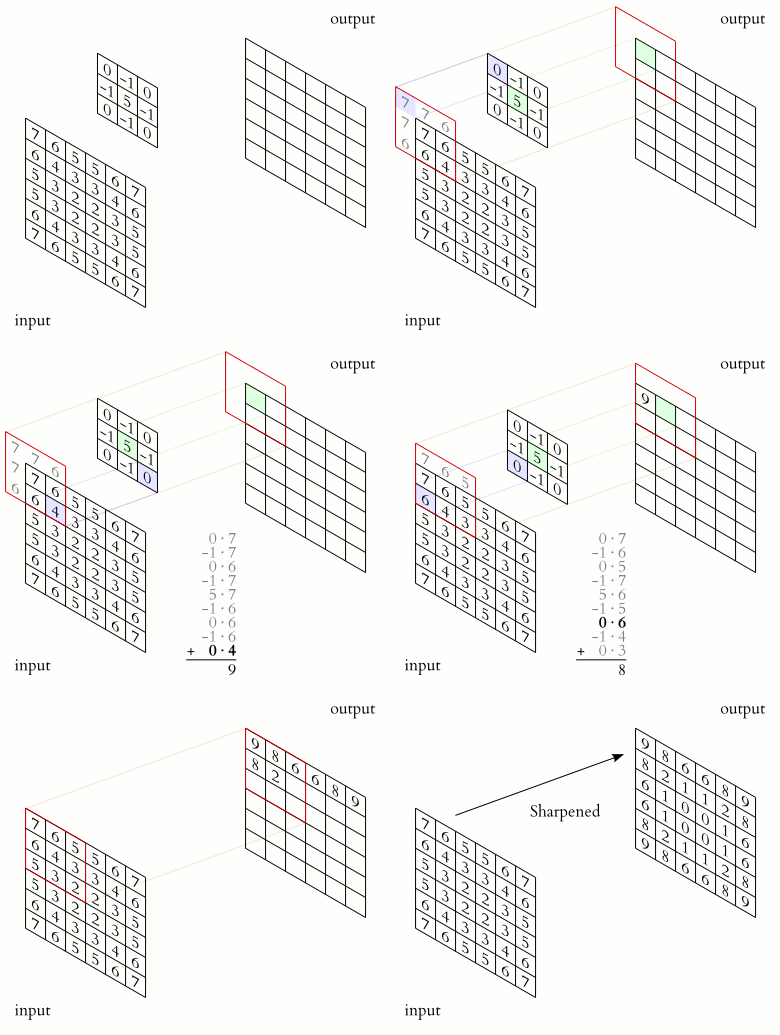
For example, the kernel used above is useful for sharpening the image. But what is so special about this kernel?? Consider the two input image arrangements as shown in the example below. For the first image, the center value is 3*5 + 2*-1 + 2*-1 + 2*-1 + 2*-1 = 7. The value 3 got increased to 7. For the second image, the output is 1*5+ 2*-1 + 2*-1 + 2*-1 + 2*-1 = -3. The value 1 got decreased to -3. Clearly, the contrast between 3 and 1 is increased to 7 and -3, which will, in turn, sharpen the image.

Instead of using manually made kernels for feature extraction, through Deep CNNs, we can learn these kernel values which can extract latent features.
Convolutional Layer — A convolutional layer is created when we apply multiple images to the input images. The layer will be trained to figure out the best filter weight values.
3. Real vs Fake Tweet Detection using a BERT Transformer Model in few lines of code
CNN also helps reduce parameters by focusing on local connectivity, not all neurons are fully connected. Instead, neurons are only connected to a subset of local neurons in the next layer.
CNN 1 Layer
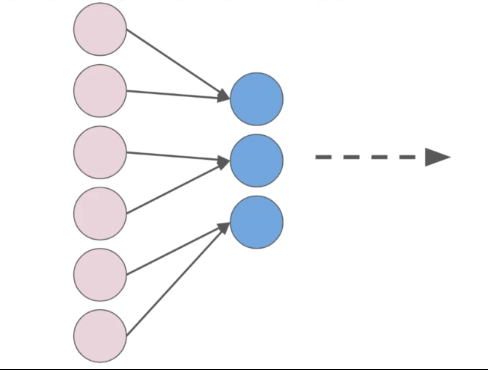
CNN 2 Layers
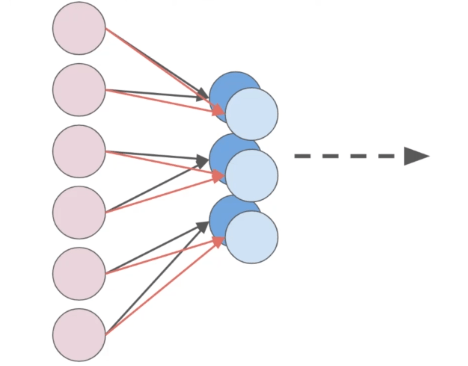
ANN (I have already taught Artificial Neural Networks in deep in my last blog. Click here to read.

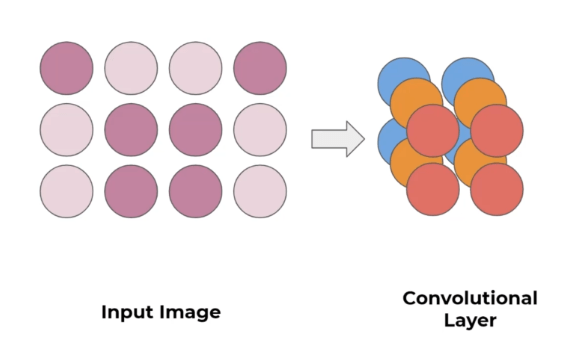
Note 2 Layers are enough for Grayscale images. For colour images, we need 3 Layers as Red Green Blue is 3 colours present in a colour image.
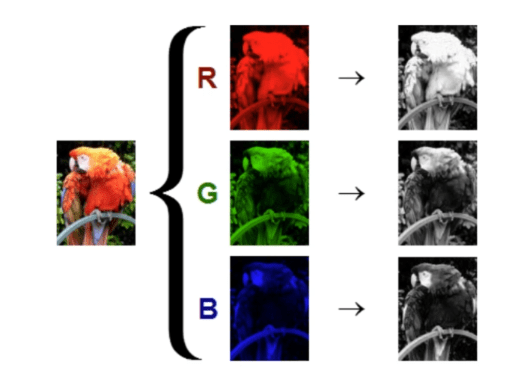
Note one thing that a computer won’t know a channel is red, it’s just known that there are 3 intensity channels. So to come up with this.
CNN layer is fed into another convolutional layer. This allows the networks to discover patterns within patterns, usually with more complexity for later convolutional layers.
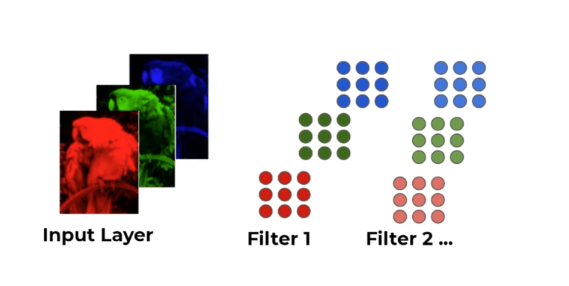
When dealing with colour images and possibly 10s and 100s of filters we will have a large number of parameters. In order to reduce it, we use pooling layer.
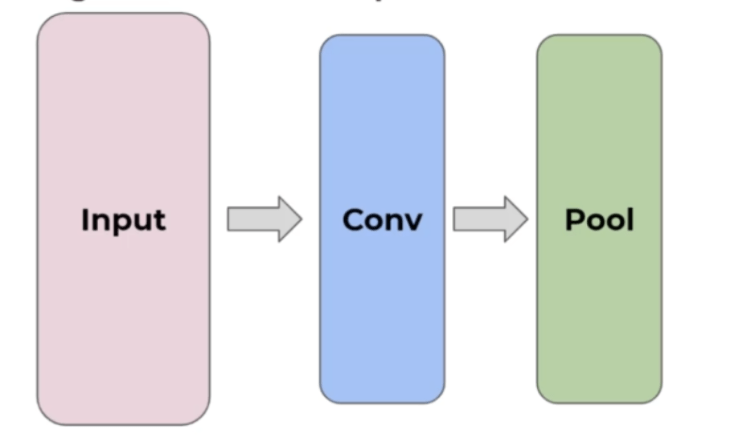
Pooling layer accepts convolutional layers as input as shown in image.
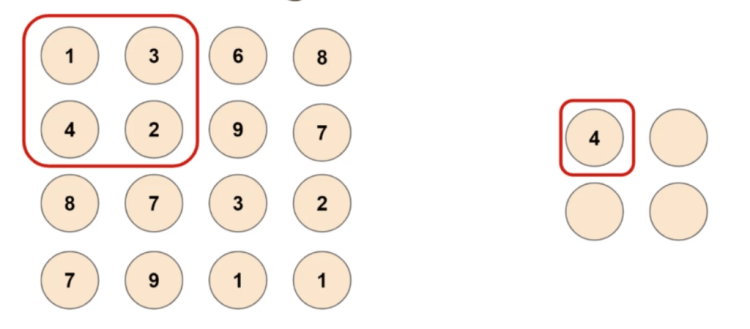
2. Taking Maximum values from 6, 8, 9 and 7 so the outcome is 9.
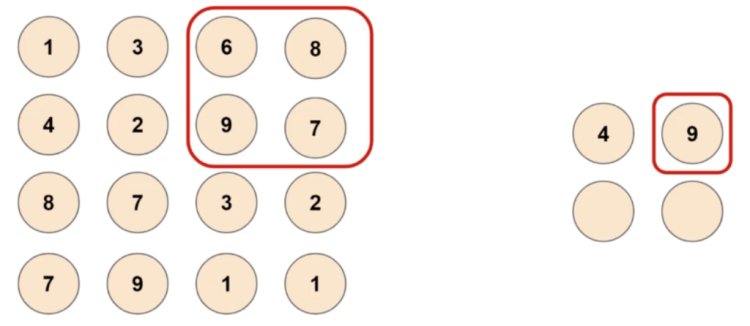
3 Similarly
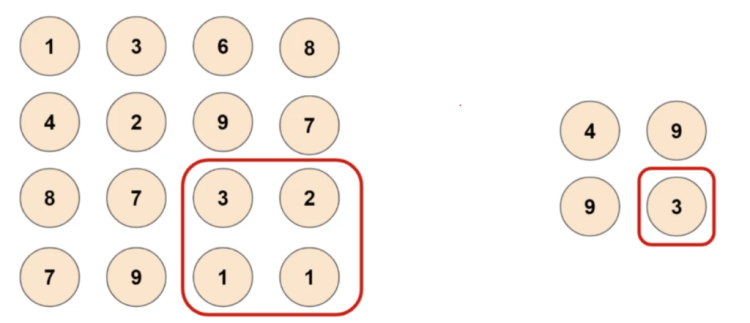
Another way is taking the average of the filters. As shown below.
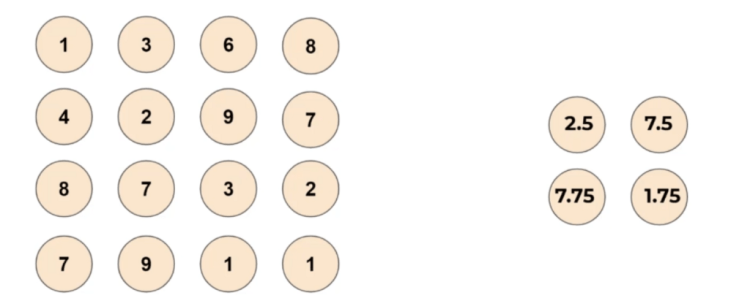
Pooling layer reduces the number of parameters. Pooling layer can reduce lots of small pooling kernels around 75% of the input data.
Dropout — Dropout can be thought of as a form of regularization to help prevent overfitting. During training, units are randomly dropped, along with their connections. This helps prevents units from “co-adapting” too much.
In the next blog. I’ll be sharing hands-on Convolutional Neural Networks.
Thank You.




A to Z about Convolutional Neural Networks. was originally published in Becoming Human: Artificial Intelligence Magazine on Medium, where people are continuing the conversation by highlighting and responding to this story.

One of the biggest issues with the rise of the Internet was the ease-of-accessibility to pirated content. From music to video games…
Continue reading on Becoming Human: Artificial Intelligence Magazine »

Search Engine Optimization, you would have often heard about this term, and if you have landed on this page, then you would be knowing about the same and want to explore how AI can impact SEO. One of the key functions of SEO is to increase the ranking of the website and drive more traffic towards it. There are various things that work towards this.
When we talk about some of the most advanced technologies, then AI and ML are something that you cannot ignore. In recent years, we have seen a growing use of both these technologies to transform the functioning of machines. These technologies are being used to develop new applications and software that will eventually enable the machine to promote human-like thinking.

Over a period of time, SEO has also modified, and there are various changes that have emerged in it. But, one of the biggest changes that we have seen is when Google introduced RankBrain in 2106. This is a machine learning algorithm that identifies patterns and bucket data; it eventually led to the identification of a new system that led to analyses of new Google Search. After this, SEO has changed a lot. It has evolved with the use of AI and ML, thereby creating a better search result. And in the years to come, we are going to witness the impact of SEO via images, videos, voice search, and pre-trained models.
How is AI going to impact the content strategy?
One of the first areas that we need to consider is the content strategy. In the times to come, content is going to be the king, and it greatly impacts SEO. Every company is now emphasizing creating content that is user-engaging, and at the same time, it can impart useful information. It will eventually help you in optimizing the work that matches the specification of Google or any other search engine.
AI is used by companies to analyze data and collect customer’s data, which eventually is helpful in framing the structure of the content. Overall it helps in creating content which the consumers are looking for or are searching. This will again help in making the content more engaging.
3. Real vs Fake Tweet Detection using a BERT Transformer Model in few lines of code
An example that we want to quote is here is of Kia. The company collaborated with an influential and influencer marketplace that uses AI to suggest influencer companies. With the help of this demographic data, influencers can match their brand with influencers, which will help them read target customers — Kia partners with Super Bowl Commercials for this.
Search engines and the role of machine learning
The search engine is an integral part of SEO. Over a period of time, SEO has become smart. Earlier, it was the need for the use of the right keyword or keyword density, metadata optimization, and adding new content to the website. But, now, SEO has improvised its ranking system. One of the trends that we would like to quote here is that in 2020, around 50% of the search will be voice-based. Google analyzed this rising trend and then designed its Google Assistant to understand the natural conversation.
Moreover, Google has also added more content to its search engine so that they successfully foretell search inquiries, and the same is applicable to Google maps location searches.
The algorithm has also become more adept at offering up images in search as Google images have 1 billion visitors.
Google is also making use of machine learning to improvise service. There are a variety of channels for consumers to search for what they are looking for. The marketers have to use the same tools so as to make their website and content as per the requirement of the search engine. There are various tools like Moz, which will help you benefit from keyword usage, organizing content, monitoring the maneuverability of a page, thus meeting the basics of optimization. These tools can also remind you to use images while framing content. They are thereby making the content which the user is going to like.
The Future Thoughts
Search engines will continue to evolve over a period of time. The tase of the consumer is highly dynamic, it changes with time, and for the system to become adept to the changes, they need to use such tools which are going to help you make your content consumer friendly and search engine friendly.
Having the right skill is going to help you with the same. Most of the companies are going to hire experts in AI and ML so that they can bring in their expertise and make the system optimized as per the requirement. Hence, there is going to be greater demand for such a skilled workforce. It is a lucrative career option, and if you, too, are willing to become an Artificial intelligence expert or ML expert, the Global Tech Council is going to offer you the right platforms for the same.
Future Of SEO: How AI & ML Impact Business was originally published in Becoming Human: Artificial Intelligence Magazine on Medium, where people are continuing the conversation by highlighting and responding to this story.
Originally from KDnuggets https://ift.tt/3gwk8WX
source https://365datascience.weebly.com/the-best-data-science-blog-2020/taming-complexity-in-mlops
Originally from KDnuggets https://ift.tt/3cds1gy
Originally from KDnuggets https://ift.tt/2Xy45iI
Originally from KDnuggets https://ift.tt/3d7GbBn
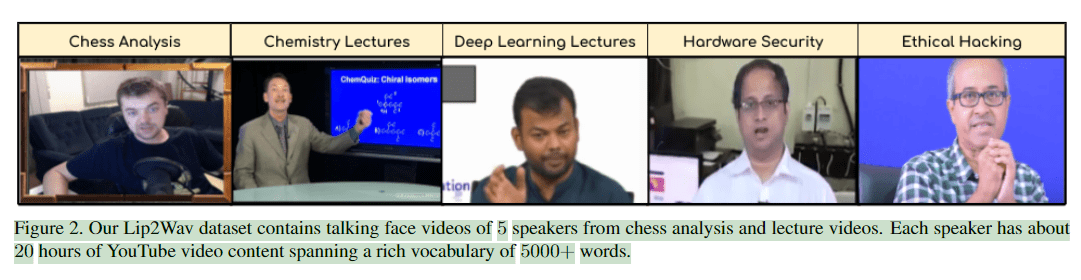
We, humans, are able to understand, to some extent, to understand speech just from lip movements. In this research, the authors gave that…
Continue reading on Becoming Human: Artificial Intelligence Magazine »

Hello guys, when I started learning Data Science and Machine learning, I had a hard time figuring out how everything worked. Which programming language to use for Data Science? Python or R? Which library was the best for building a deep learning model and plotting charts? Which algorithms worked best for which data set? How could I know my model was accurate? etc
I spent a lot of time on tutorials, books, courses, and reading to try and finding out answers to these questions. In the end, I felt like the process I took to learn deep learning was too inefficient.
That is why I am writing this article to share different Machine learning libraries, their purpose and a free course to learn them. If one of your goals is to learn Machine learning and Deep learning in 2020, then these resources can help you a lot.
In this article, I am going to share some of the best free classes to learn Machine learning and Deep learning online. Btw, If you are thinking to learn Data Science, Machine learning, or Deep learning then you are not alone, more and more people are starting with these advanced skills around the world.
Though, I have seen a lot of interest from Indian engineers in machine learning and Artificial intelligence space. They are totally caught up with the craze of developing programs that can recognize numbers, alphabets, vehicles, and several other image scanning stuff.
The craze is very similar to what the 1980’s programmer has about video games, where moving a character on screen gives the joy you get when your program correctly identifies the number or letter you make from hand.
From college graduates to junior programmers and from experienced programmers to software architects, all are showing interest in Machine learning and Artificial intelligence to become part of the next technical revolution, we may be witnessing.
Btw, if you are wondering about what is Machine learning and Deep Learning, then let me give you a brief overview.
Machine learning programs use algorithms to parse data, learn from that data, and make informed decisions based on what it has learned. One example of that was selecting the best Cucumber from a lot, which was done by a Japanese programmer, you can read the full story here.
On the other, Deep learning structures algorithms in layers to create an “artificial neural network” that can learn and make intelligent decisions on its own. It’s more complicated than machine learning.
These free courses are great to learn both basic Machine learning concepts as well as useful Python libraries which make things possible. Btw, if you don’t mind paying few bucks for learning a valuable skill like Data Science and Machine Learning then I also recommend you check out Machine Learning, Data Science, and Deep Learning with Python by Frank Kane on Udemy.
It’s a complete hands-on course to learn Machine learning, DataScience, Tensorflow, artificial intelligence, and neural networks
Machine Learning in Python (Data Science and Deep Learning)
Before I share the list of courses, I’d like to clarify that, even though these courses are free, they are not of inferior quality, and they are just made free by their instructor for promotional and education purposes.
In fact, sometimes these free courses are covered into paid courses once the instructor reaches their promotional targets, so please be careful and check the price of the course before you join.
Anyway, Here is my list of some of the best free courses to learn Machine Learning and Deep Learning online by yourself.
This course is a prerequisite to Learn Machine Learning and I strongly suggest you learn and master Python before you deep dive into machine learning libraries and algorithms.
This is a beginner level course and designed for programmers, who want to learn Python Programming to get into Data Science or Machine Learning. You will learn all the basic Python programming concepts in this course for FREE.
The course covers things like:
Here is the link to join this course — Python for Machine Learning — FREE
This is another excellent free course to learn Deep Learning on Udemy. This covers four major Python libraries, like the Numpy, Scipy, Pandas, and Matplotlib stack, which are crucial to Deep learning, Machine learning, and Artificial intelligence.
If you don’t know, Numpy provides essential building blocks, like vectors, matrices, and operations on them, while Scipy uses those general building blocks to do specific things.
Panda’s strength lies in loading data, particularly from the database, while Matplotlib helps in looking at that data using some standard plots like namely the line chart, scatter plot, and histogram.
Here is the link to join this course — Numpy Basics For Machine Learning
In this 1.5 hours long course, you will learn all these libraries and learn how to supervise machine learning (classification and regression) with real-world examples using Scikit-Learn.
You will also learn how to use Numpy, Scipy, Matplotlib, and Pandas to implement numerical algorithms, and most importantly, you will learn the pros and cons of various machine learning models, including Deep Learning Decision Trees, Random Forest, Linear Regression, Boosting, etc.
In short, an excellent free course to learn Deep Learning using Numpy, Scipy, Pandas, and Matplotlib stack.

This is an excellent course to learn another powerful Python machine learning library called Keras. If you don’t know, Keras is a both powerful and easy-to-use Python library for developing and evaluating deep learning models.
It wraps the efficient numerical computation libraries like Theano and TensorFlow and allows you to define and train neural network models in a few short lines of code, which is just awesome.
In this course, you will learn how to build a Keras Autoencoder using Python and extract actionable insights from data using unsupervised and semi-supervised modeling. You will also learn to find anomalies in data.
This is a great course for anyone who wan to analyze data, perform anomaly detection and interested in Autoencoders and machine learning with Keras
Here is the link to join this course — Finding Actionable Insights using Keras Autoencoders
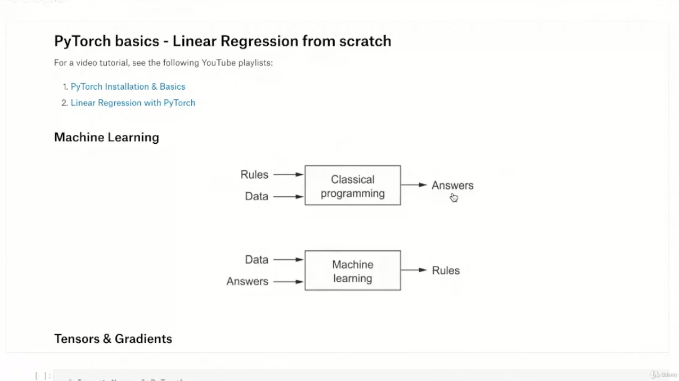
PyTorch is another open-source neural networks library developed by Facebook which is often used for building deep learning models. It’s like TensorFlow but much simpler and easy to use.
Here are the concepts you will learn in this course:
Here is the link to join this course for FREE — Deep Learning with PyTorch — Zero to GANs
The Meeshkan is an easy and inexpensive platform where people can explore ideas in AI, Machine Learning, and Deep Learning. In this course, Meeshkan C.E.O. Mike Solomon will teach you how to do Machine Learning on Meeshkan.
This course starts with a simple AI question — Can a machine predict if a GitHub project will be successful by analyzing only the first few commits of that project?
First you will learn how to run the Machine Learning project on Meeshkan. After that you will go through each step of the process in detail, covering data collection, data egress, infrastructure deployment, model design, model executing, and result in analysis.
3. Real vs Fake Tweet Detection using a BERT Transformer Model in few lines of code
After completing this course, you should be able to design, run, and explore your own Machine Learning models using public APIs and the Meeshkan Machine Learning service
Here is the link to join this course for FREE — Meeshkan: Machine Learning the GitHub API
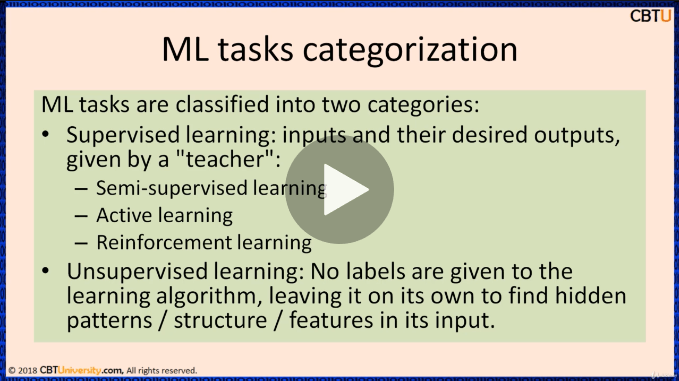
This is another excellent free course to learn Python Deep learning libraries and essential algorithms. This course covers Deep Learning, Neural Networks, KDD, AI, BI, ANN, Decision tree, Bayesian networks, TensorFlow and Knime
You will learn about the process of building supervised predictive models and make several of them using Python, the most widely used programming language for machine learning.
As part of the course, you will also learn how to do Machine Learning on AWS covers more details about concepts of TensorFlow, Amazon SageMaker, and other AWS ML topics.
Here is the link to join this course —Learn Machine Learning algorithms, software, deep learning
If you don’t know the question, you probably won’t get the answer right, and this course is all about asking the right machine learning questions.
Machine learning is behind one of the coolest technological innovations today, but contrary to popular perception, you don’t need to be a math genius to successfully apply machine learning.
At first, you need to identify whether machine learning can provide an appropriate solution, and in this course, you’ll learn how to identify those situations.
The topics covered in this course include Classifying Data, Predicting relationships using regression, Recommending a product, and Clustering large data sets into meaningful groups.
Here is the link to join this course — How to Think About Machine Learning Algorithms
You need Pluralsight membership to access this course, which costs around $29 per month. On the other note, Pluralsight is a great resource, and its membership is definitely worth every penny spent. I have bought the annual membership, which comes with a discount.
Anyway, even if you don’t have Pluralsight membership, you can still access this course for free by signing up for a 10-day free trial without any commitment, which provides 200 minutes of watch time.
Overall an excellent course to get a high-level overview of what is machine learning and how to use it to solve real-world problems. This is one of the basic Machine learning course, but I have put that into the end because it’s not entirely free.
There is a huge gap for many programmers between machine learning “theory” and writing actual code and without basic knowledge of data manipulation, vectors, and matrices, you can put your great ideas into working solutions, on a computer.
Created by Lazyprogrammer Me this course closes that gap by teaching you all the basic operations you need for implementing machine learning and deep learning algorithms.
In this course, you will learn about machine learning algorithms, and implement those algorithms in code using the tools and techniques you learned in this course.
Here is the link to join this course for FREE — Deep Learning Prerequisites: The Numpy Stack in Python V2
This is a great course for Data Science beginners looking for direction. This course covers Keras, a high-level deep learning API.
This course is designed to get you up and running with deep learning as quickly as possible. This course uses Keras because it is one of the easiest libraries to learn for deep learning. Each lecture goes over a different machine learning algorithm and its use cases.
The four algorithms we focus on the most are:
1. Linear Regression
2. Dense Neural Networks
3. Convolutional Neural Networks
4. Recurrent Neural Networks
In short, one of the best free course to get a quick intro into deep learning using Keras library.
Here is the link to join this course for FREE — Learn Keras: Build 4 Deep Learning Applications
Pandas is another powerful and essential Python library for Data Scientists. It allows you to do anything and everything with colossal data sets like cleaning, analyzing, organizing, sorting, filtering, pivoting, aggregating, munging, cleaning, calculating, and more!
With over 27 lectures and 6 and half hours of Pandas training material you will learn everything a Data Scientist should know, from installation to visualization! Thanks to Srinivas Reddy for creating this awesome course.
You will learn hundreds of different methods, attributes, features, and functionalities packed away inside this awesome library. We’ll dive into tons of different datasets, short and long, broken and pristine, to demonstrate the incredible versatility and efficiency of this package.
If you’ve spent time in spreadsheet software like Microsoft Excel, Apple Numbers, or Google Sheets and are eager to take your data analysis skills to the next level, this course is for you!
Here is the link to join this course for FREE —Pandas with Python

More and more programmers are realizing the vast benefits and uses of analyzing big data. However, the majority of people lack the skills and the time needed to understand this data in its original form.
That’s where data visualization comes into the picture, it helps you to create easy to read, simple to understand graphs, charts, and other visual representations of data.
And, when it comes to Data Visualization, Python 3 and Matplotlib are the most easily accessible tools for Data Visualization and this course will teach you everything you want to know about the MatPlotLit library.
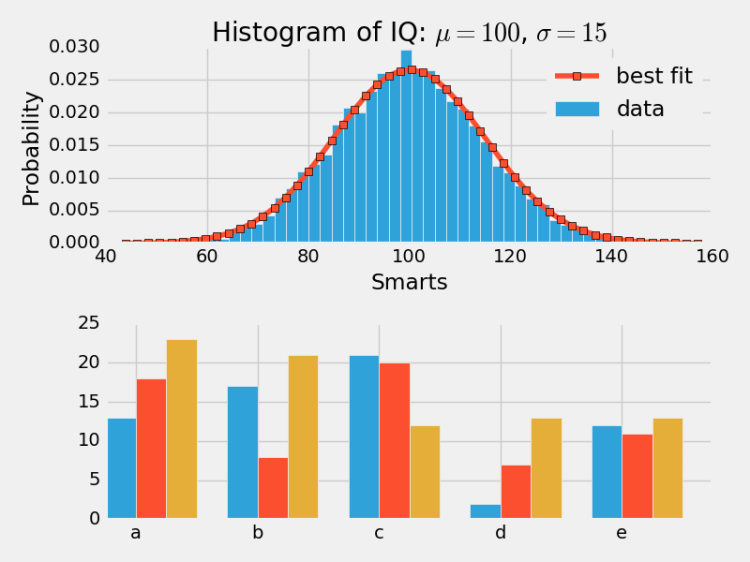
With over 58 lectures and 6 hours of content, this course covers almost every major chart that Matplotlib is capable of providing. You will learn how to create line graphs, scatter plots, stack plots, pie charts, bar charts, 3D lines, 3D wireframes, 3D bar charts, 3D scatter plots, geographic maps, live-updating graphs, and virtually anything else you can think of!
Here is the link to join this course for FREE — MatPlotLib with Python
That’s all about some of the best free courses to learn Machine Learning, Deep Learning, and Artificial intelligence in 2020. As I have said, these are new technologies which will rule the world in the coming years, hence learning them now will provide you with valuable experience and you will be well ahead of others.
At the moment, Machine learning specialist is also drawing a very handsome salary and solving some interesting problems of the world, so it’s not only financially rewarding but also work is really great.
Other Free Programming Courses you may like
Thanks for reading this article so far. If you like these free Data Science and Machine Learning courses, then please share it with your friends and colleagues. If you have any questions or feedback, then please drop a note.
P. S. — If you are looking for the best Machine Learning course and don’t mind paying some money, then Machine Learning A-Z: Hands-On Python & R is the perfect course to start with. This would be the right choice to learn Machine learning in 2020.
Machine Learning A-Z (Python & R in Data Science Course)
10 Free Courses to learn Python Machine Learning libraries — Scikit-Learn, NumPy, Pandas, Keras… was originally published in Becoming Human: Artificial Intelligence Magazine on Medium, where people are continuing the conversation by highlighting and responding to this story.

 365 Data Science