Data Science Cover Letter Dos and Don’ts

data science cover letter dos and don'ts , dos and don'ts in a data science cover letter, data science cover letter tips

A well-thought-out cover letter can give your job application a powerful edge, especially in the highly competitive field of data science. But what are the most crucial data science cover letter dos and don’ts?

In this article, we list the must-have ingredients of a winning data science cover letter, and the common pitfalls you should avoid at all costs.

Let’s get right down to it.

What Are the Data Science Cover Letter Dos?

Here’s our top 10 of data science cover letter dos you shouldn’t skip:

1. Mark how the hiring manager wants to receive your data science cover letter

If the company request data science cover letters as attachments, there will be no significant changes required on your part. Just convert your work into a suitable file format and upload where designated. However, if the hiring manager has specified that your cover letter should be sent as the body of an email, consider the following:

  • Compose a professional subject line with the job you’re applying for, your name, and the job number (if there’s any listed in the job ad), e.g. Data Analyst-Mike Green-4351;
  • Move your contact information to the bottom of the letter, right below the sign-off. Headers work great for attached CVs but it doesn’t make much sense to use them in an email.

2. Tailor your data science cover letter to the specific job ad

This applies to each and every job posting you take a shot at. So, if you’re serious about getting a specific job, be specific. Explain how your skills and qualifications will contribute to the well-being of the business. Research your target company and make sure your cover letter answers their goals and needs. And focus your content around why they’ll benefit from hiring you, instead of falling victim to irrelevant self-praise. (The latter will most probably backfire).

3. Use a powerful first sentence

The first sentence after the greeting can make or break your data science cover letter. So, make sure you start it in a memorable way. You can open your data science cover letter with an impressive achievement of yours, or by directly addressing an employer’s pain-point and how you can help resolve it. Of course, if you were referred by someone who works there, definitely mention that in the beginning. An advanced tactic you can use is to research the hiring manager themselves and stroking their ego by sharing your admiration for their own achievements. In addition, your data science cover letter can only win if you make enthusiasm a recurring theme in your writing style.

4. Demonstrate excellent writing skills

Before you can actually speak to the hiring manager, it’s your writing that does the talking. View your data science cover letter as a means to prove your great communication skills  – keep the tone direct and professional. However, it’s better to avoid complex words – they will only weigh down your content. So, keep your phrases focused and friendly, just like you.

5. Use keywords from the job posting

Highlight the most important skills, experience, and education in the job description and include as many of those keywords as possible. Not at the expense of honesty, of course. This will help your data science cover letter pass the ATS (Applicant Tracking System) check. Moreover, it will help you score high with your potential employer.

6. Great layout

When it comes to layout, good is never good enough. Strive for perfection – choose the same style you used in your resume; select an elegant, easy-to-read font; aim for a single-page length; make spacing work to your advantage, along with margins and alignment; and make sure everything stays in place with a compatible file format.

7. Use the cover letter to straighten out red flags

Your data science cover letter gives you a chance to get a handle on red flags, such as employment gaps or lack of relevant degrees in advance.

You can use your narrative to your benefit by briefly mentioning the reason why you were out of the workforce for a few months or years. For example, maybe you traveled extensively or needed to stay at home for family reasons.

Regarding lack of required education, emphasize your practical experience and bring forward the transferrable skills that make you the best fit for the job, despite the lack of a shiny degree.

8. Quantify, quantify, quantify

It isn’t flattery but metrics that will get you anywhere, especially when it comes to your projects and the business goals they contributed to. Be your own private eye and apply measurable evidence to every accomplishment you decide to include in your data science cover letter.

9. Finish off with a concrete intention to follow-up

Show that you value your time by making your intentions clear. There’s nothing wrong with writing that you’ll call the hiring manager next Wednesday to discuss a possible interview with them (just make sure you keep your promise).

10. Proofread

Ernest Hemingway said, “After you write, read”. But in the context of composing a data science cover letter, that would sound more like: “After you write, proofread”. A single spelling mistake can send your cover letter straight to the trash folder. So, make sure you spend just as much time checking, as you did writing.

What Are the Data Science Cover Letter Don’ts?

Is there’s anything more important than what you include in your data science cover letter? Yes – what you leave out.

Here are 10 examples of data science cover letter don’ts you should steer clear of:

1. Don’t write a memoir

A single one-sided page with up to 400 words of strong content is all you need for an impactful cover letter. Omit any details that you already stated on your resume. Your cover letter should indeed support the content of the resume. But it also has a story of its own. And that should be a brief and strategically planned story that highlights your personality and relevant accomplishments.

2. Don’t exaggerate or try to sweet talk the hiring manager

As mentioned, don’t write anything that you can’t back up with relevant metrics. Rest assured, empty claims won’t make the right impression.

Also, it’s good to show that you know the business of the company and you appreciate their success. However, go easy on the compliments. Try to balance things out, or you risk sounding fake.

3. Don’t copy your resume

A well-crafted data science cover letter can put you way ahead of the competition unless it’s a copy-paste. Your cover letter is your resume’s sidekick that matches its style and adds to its superpower (or lends a helping hand where your resume lacks in context).

4. Don’t snatch decisions from the hiring manager

If there’s one sure way to aggravate a hiring manager, that would be making a decision instead of them. Don’t write things like “I’m sure you’ll see I’m the best candidate for the job”. The goal of your data science cover letter is to prove that you are the perfect fit, not to show off and hijack the role of a decision-maker.

5. Don’t sound needy

Remember, the company needs you because you are a great data science professional. Never state that you are in a tight spot financially or that you want the job, so you can enhance your relevant experience on your resume.

6. Don’t use buzz words and data science slang

It’s good to show that you know your stuff. However, in your cover letter, as on the job, you’ll communicate with non-technical executives and coworkers all the time. And chances are that the hiring manager you’re addressing doesn’t have the advanced technical background that you have. So, be professional and avoid tech slang that would leave anyone but people on your team perplexed.

7. Don’t mention salary expectations

…because that would be getting ahead of yourself. It’s not only redundant this early in your job application process, but it could cost you the interview (where you’ll get that question anyway). And you can never win – if you state a lower number, you will lose your chance to negotiate a higher paycheck. State a higher number, and you may never get that interview invitation you’re hoping for.

8. Don’t get too personal

It’s true that your cover letter is about creating a narrative about yourself, and that doesn’t exclude adding a little something from your personality. But limit your examples to those that serve the purpose. Namely, showing that you have the necessary character traits and experience to meet the expectations for this role. The hiring manager isn’t interested in where you spend your family vacation last summer (unless during that vacation you built a machine learning algorithm that increased your current employer’s revenue by 25%).

9. Don’t forget to match the cover letter format to your resume

The devil is in the details.  And using the same style in both your cover letter and your data science resume is a detail you don’t want to miss. You’ve spent precious time writing the best content possible, so why would you risk it going unnoticed? After all, your job application’s cohesive look demonstrates professionalism and elegance at first glance. And very often, that’s all it takes for a hiring manager to start reading.

10. Don’t expose your weaknesses

Sincerity is a much-appreciated quality by employers but not to the extent where you confess all your professional “sins”, such as lacking expertise in a certain area, or past failures on the job. Always remember that the goal of your cover letter is to make an impeccable first impression that would urge the employer to think “I must interview this person right away”.

These data science cover letter dos and don’ts can make all the difference in how your job application is perceived.

So, now that you know the basic guidelines, be sure to check out the other articles we dedicated on the topic:

How to Write a Data Science Cover Letter

How to Organize a Data Science Cover Letter

How to Format a Data Science Cover Letter

If you’re curious to lift the curtain and see what the data science interview has in store for you? Visit our in-depth guide Data Science Interview Questions and Answers You Need to Know in 2020.

Ready to take the next step towards a data science career?

Check out the complete Data Science Program today. Start with the fundamentals with our Statistics, Maths, and Excel courses. Build up a step-by-step experience with SQL, Python, R, Power BI, and Tableau. And upgrade your skillset with Machine Learning, Deep Learning, Credit Risk Modeling, Time Series Analysis, and Customer Analytics in Python. Still not sure you want to turn your interest in data science into a career? You can explore the curriculum or sign up for 12 hours of beginner to advanced video content for free by clicking on the button below.

The post Data Science Cover Letter Dos and Don’ts appeared first on 365 Data Science.

from 365 Data Science https://ift.tt/3grHwoK
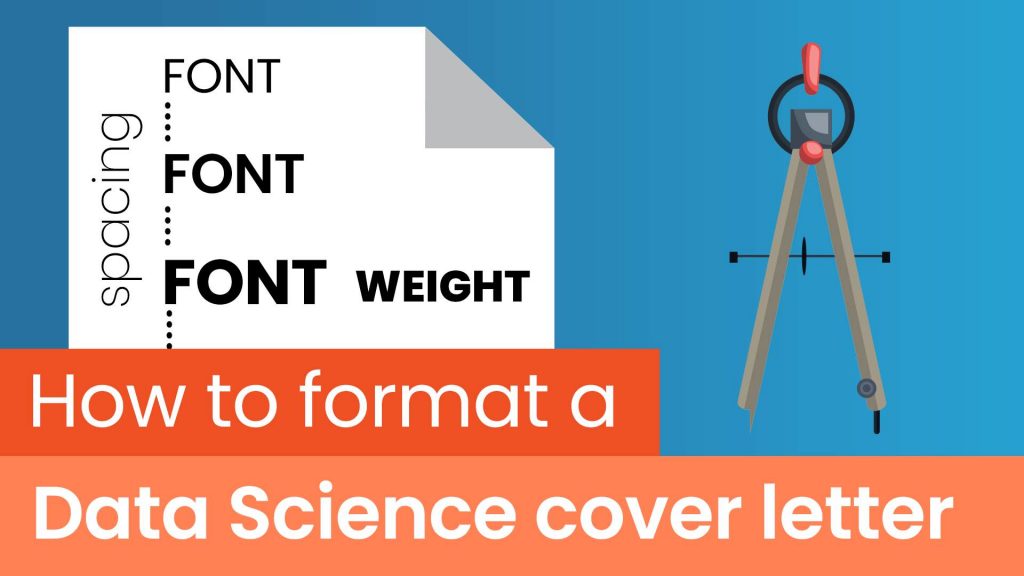
How to Format a Data Science Cover Letter?

how to format a data science cover letter, formatting a data science cover letter, data science cover letter format, data science cover letter formatting tips

When you format a data science cover letter, there are 6 keys to success:

  • unified look with your resume;
  • easy-to-read font;
  • single-page length;
  • consistent spacing;
  • 1-inch-margins and left alignment;
  • compatible file type.

Why is the format of a data science cover letter important?

The format of your data science cover letter is critical to making a positive first impression. A clean and polished format keeps the focus on the content and conveys attention to detail.

Conversely, a sloppy layout signals a lack of professionalism and can instantly eliminate you from the race for your dream job.

So, how to format a data science cover letter for the win?

Let’s go through them together.

Match your data science resume style

Using the same style in both your cover letter and your data science resume will give your job application a cohesive and elegant look. Also, make sure you align both with the image of the employer. A conservative company won’t appreciate ornate fonts and extravagant design. Keep in mind that your cover letter is also a business letter; and, above all, a powerful tool to get a data science interview invitation. So, its style should reflect that.

Choose a crisp font

With so many font styles out there, choosing the best one could be a challenge.

Our advice is: Keep it simple and clean.

Yes, when you format a data science cover letter, legibility is a top priority.

Flashy custom fonts and special characters are not only distracting, but they’re also hard to read, both for Applicant Tracking Systems (ATS) and humans. There’s nothing wrong with classics like Calibri, Verdana, and Cambria (among many others). Another way to ensure your data science cover letter is readable and scanner-friendly is to select the right font size. Stay on the safe side and go for 10-12 pt. That’s how you’ll tick two boxes: easy-to-read and easy-on-the-eyes.

Cut down the length

Less is more. A single one-sided page with 250-400 words is completely adequate for an efficient cover letter. Resist the temptation and leave out any details that the hiring manager can find on your resume. Of course, you can be brave and experiment with a super-concise cover letter of 150 words. But while this one is sure to be read, you run the risk of omitting some important information.

Remember that spacing is important, too

When it comes to spacing, consistency is key. To achieve a coherent look, opt for single-line spacing after each section of your data science cover letter (contact information, greeting, introduction, body, closing, and sign-off). Remember, packing your cover letter with quality content doesn’t equal typing one giant wall of text. That would make it look cramped and messy. On the other hand, spacing and shorter paragraphs balance the page and let your document breathe. Plus, they make the content much easier to process.

It’s okay to adjust the margins… But keep the alignment to the left

But don’t go lower than ¾ or ½ inch… And only if you really need the extra space. When you format a data science cover letter, you need to make sure it doesn’t end up looking cluttered and squished. In other words, it’s best to stick to the business letter format rules and set 1-inch margins on all sides. That leaves plenty of margin space for printing and creates an elegant layout. Speaking of best practices, always left-align your cover letter content. No justification and indentation needed, as they go against the standards.

Save as… the appropriate file type

Saving your data science cover letter in the right file format is vital.

To make sure the reader can open and view it, rely on text type formats, such as .doc or pdf. Both are widely accepted and usually cause no compatibility issues.

How to format a data science cover letter: Additional resources

If you need help to format a data science cover letter, you can browse the wide choice of cover letter builders available online. But how do you pick the best out of many? To make your search easier, we’ve made a quick list of the cover letter builders that offer the best features and useful relevant resources.

  1. Kickresume
  2. ResumeGenius
  3. Wozber
  4. ResumeLab
  5. Zety

Your data science cover letter is an effective tool in your job application process.
Now that you know how to format it to make a strong first impression, be sure to check out the rest of our articles on the topic:

How to Write a Data Science Cover Letter

How to Organize a Data Science Cover Letter

Data Science Cover Letter Dos and Don’ts

If you’re eager to lift the curtain and see what the data science interview has in store for you, visit our in-depth guide Data Science Interview Questions and Answers You Need to Know in 2020.

Ready to take the next step towards a data science career?

Check out the complete Data Science Program today. Start with the fundamentals with our Statistics, Maths, and Excel courses. Build up a step-by-step experience with SQL, Python, R, Power BI, and Tableau. And upgrade your skillset with Machine Learning, Deep Learning, Credit Risk Modeling, Time Series Analysis, and Customer Analytics in Python. Still not sure you want to turn your interest in data science into a career? You can explore the curriculum or sign up for 12 hours of beginner to advanced video content for free by clicking on the button below.

The post How to Format a Data Science Cover Letter? appeared first on 365 Data Science.

from 365 Data Science https://ift.tt/3eotwdv

How to Organize a Data Science Cover Letter?

how to organize a data science cover letter, what to include in a data science cover letter, what to write in a data science cover letter, paragraphs in a data science cover letter

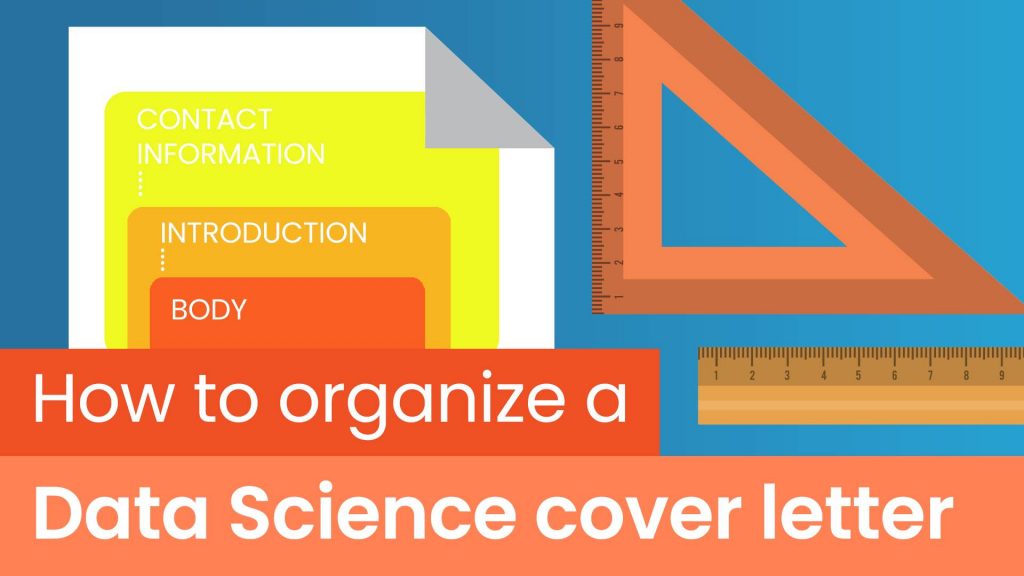
There are 7 easy steps you can follow to organize a compelling data science cover letter:

  1. Write your contact information at the top;
  2. Address the right recipient by name;
  3. Craft a memorable introduction;
  4. Demonstrate the value you can add to the company in a short and direct body paragraph;
  5. Devise an effective closing paragraph with a strong call-to-action;
  6. Use a professional sign-off.
  7. Proofread (and then proofread again).

We already walked you through the first steps to writing a great data science cover letter. So, now it’s time to focus on the essential elements of your cover letter and the content that will make it shine.

What to include in a data science cover letter?

How to Organize a Data Science Cover Letter: Contact Information

Do you know what hiring managers hate? Rummaging through the content of a data science cover letter to find your contact information. So, do them (and yourself) a favor and put your name and contact information at the top. The easier you make it for your potential employer to reach out, the better. Your contact information should include your name, phone number, and a professional email with your first and last name. Clean and easy-to-find.

How to Organize a Data Science Cover Letter: Opening/Greeting

This is your chance to make a great first impression. Whatever you do, don’t start with “To whom this may concern”. It will make you look sloppy and unprofessional. Instead, do your homework and find out who you’re addressing. Yes, it may take some phone calls and a few Google or LinkedIn searches. However, it’s worth the effort, especially if most candidates have written a blunt generic opening.

Now, depending on the company culture, you could address the recruiter/hiring manager by their first or their last name.

But what if you can’t find the hiring manager’s name?

In that case, go with a safe option like “Dear Data Science Team Hiring Manager”, “Dear Hiring Manager”, or simply write “Dear [Company Name] team”

How to Organize a Data Science Cover Letter: Intro paragraph

Your cover letter introduction should tell your potential employer the following 5 things:

  • Who you are;
  • Your profession/expertise;
  • What role you’re applying for;
  • How you discovered the job posting (especially if you were referred by a current employee of the company);
  • Why you’re interested in the company/job and what makes you a perfect fit for that position.

However, being informative isn’t always enough. Therefore, an underlying goal of your cover letter introduction is to entice the hiring manager. You want them to keep reading to learn more about you. So, think of a unique opening line that would grab their attention. For example, you can include an impressive achievement of yours.

Even if you have no experience in the field, and you’re applying for an entry-level data scientist position, you can still make this work.

Just emphasize on your degree, personal or group projects, volunteering, and relevant certifications. Another way you could go is to mention an important accomplishment or recent success of the target company (or the hiring manager themselves) they’re proud of. If you were referred by a current employee or an important client, make sure you write that in, too. But don’t go overboard with humor or self-praise. Show that you’re enthusiastic about the company. Let them know you’re aware of their needs and you’re following their latest developments. Tell them what you can offer them to help them achieve their goals All the while, Do your best to sound natural and leave the strict formalities behind. Go for simpler words. This will help you achieve a friendlier tone.

How to Organize a Data Science Cover Letter: Body paragraph

This is the most crucial part of your data science cover letter. Fortunately, there are a few rules of thumb that will help you present yourself in the best light possible:

Less is more

It’s easy to get carried away when you want to make a good impression. But there’s a thin line between showcasing your skill set and just bragging about your accomplishments. Be short and direct. And only include meaningful achievements in light of business success you can provide relevant context for.

Don’t copy your resume

…But do borrow some tangible metrics from it, especially when it comes to relevant projects you’ve worked on and the impact you’ve had on achieving your current/former employer’s business goal. It’s a numbers game, so make sure you quantify the results you’ve accomplished.

Show you’re the solution to their problems

Employers hire people to solve specific challenges. It could be improving an algorithm for an AI-powered app; or implementing changes to their database management system to increase efficiency… Or increase their revenue by developing a machine learning solution from scratch. Whatever it is, it’s your job to research the urgent business needs of the company. Once you’ve discovered their pain-point, explain how you can use your expertise to help. You can even take it one step further by finding information about the company’s future goals. Then use your relevant work history to prove you can help them get there.

Use the job description to your advantage

Make no mistake, Applicant Tracking Systems (ATS) will leave no word in your data science cover letter unchecked. So, incorporate as many keywords from the job description as appropriate. In fact, this is the part of writing your data science cover letter where direct copy-paste is highly encouraged. Just go right ahead, it’s guilt-free!

Work experience isn’t everything

Are you a recent graduate with no professional experience in data science? Keep your chin up because you still have plenty to offer. When it comes to entry-level positions, employers look for 3 things – suitable education, skills, and desire to learn quickly. Focusing on these in your data science cover letter will make up for the lack of 5-page work history.

In case you’re transferring into data science from a different field, emphasize on the data science certifications and skills you’ve acquired. These not only open the door for you, but also demonstrate a commitment to your new profession. (Data science isn’t a field you can enter without any relevant qualifications, so additional courses and online trainings are key). There’s also something else you can capitalize on – your transferrable skills. So, refer to your data science resume and include the most suitable examples for the particular job posting. And don’t forget to mention the reason for your career change. Your potential employer will appreciate that you’re proactive and enthusiastic about what you do.

Show some personality

Your data science cover letter isn’t just a supplement to your resume. It’s a brief story about who you are, how you can make a difference, and why you’re the perfect fit for the job. So, let your personality shine through. Add a layer to your cover letter by touching on certain interests that relate to the role; hint at your sense of humor; share a particular detail you like about the company and their culture… Anything that will make a really good story of what makes you “you” in your working life.

How to Organize a Data Science Cover Letter: Closing paragraph

The closing paragraph in a data science cover letter serves a two-fold purpose:

  • To remind the employer why you’re the best candidate for the job;
  • To prompt the employer to get in touch with you with a concrete call-to-action.

Make it clear that you’ll be happy to be interviewed. You can also tell them that you’ll follow-up in a week if you don’t hear back. And, of course, don’t forget good manners – thank the hiring manager for taking the time to read your cover letter.

Sign-off

Your sign-off should be sharp and professional, just like you. Anything other than “Sincerely”, “Regards”, and “Best regards”, followed by your first and last name, would be redundant.

Proofread

How to proofread a cover letter? A typo or a spelling mistake in your data science cover letter can cost you the interview. That’s why we prepared a list of proofreading tips you can use to submit a polished and mistake-free cover letter:

See it in print

Printing out your resume in a larger font is a legit strategy for catching errors, missing punctuation marks, and even text inconsistencies. You can highlight the edits you need to make with a colored pen. This way, you’ll find the changes easily once you get back to your cover letter file.

Your voice is your top editor

Reading your data science cover letter out loud might feel awkward, especially if there’s no love lost between you and the theater. However, that’s one of the best ways to detect bad phrasing and spelling mistakes. And it’s so much better to notice them before your potential employer does, right? Once you’ve finished your monologue, you can read your cover letter out loud once again. Only this time, start from the bottom to the top. It’s fun and it will help you spot that one typo you’ve previously missed.

Phone-a-friend

Everyone has that one spelling-bee friend. So, why not put their talent to good use and ask them to review your cover letter? Very often, it takes seconds for an extra set of eyes to spot an error you weren’t even aware of. Once your data science cover letter has passed this final test, you can finalize your proofreading efforts with some free tools like Grammarly, ProWritingAid or WhiteSmoke.

Your data science cover letter is a powerful tool in your job application process.
Now that you know how to organize it and fill it in with killer content, make sure you check out the rest of our articles on the topic:

How to Write a Data Science Cover Letter

How to Format a Data Science Cover Letter

Data Science Cover Letter Dos and Don’ts

Curious to discover what the data science interview has in store for you? Visit our detailed guide Data Science Interview Questions and Answers You Need to Know in 2020.

And, if reading this piece helped you identify some key skills you need to add to your data science toolbox, take a look at the courses in the 365 Data Science Training. You can explore the curriculum or sign up 12 hours of beginner to advanced video content for free by clicking on the button below.


The post How to Organize a Data Science Cover Letter? appeared first on 365 Data Science.

from 365 Data Science https://ift.tt/2zoa41I

How to Write a Winning Data Science Cover Letter (2020)

how to write a data science cover letter, how to write a winning data science cover letter, great data science cover letter, perfect data science cover letter

“Why do I need to write a data science cover letter?”

Even if it isn’t listed as a prerequisite, a data science cover letter can still be a vital step in your job application process.

A well-crafted data science cover letter has the power to distinguish you from the crowd. It speaks volumes about you as a professional. What’s more, it creates context around your resume and lets the potential employer see beyond the bulleted lists with qualifications and accomplishments.

If written properly, a data science cover letter gives insight into your personality and shows how you’ll fit the company’s team and culture. But, most importantly, it gives you a chance to address a company’s pain-point and demonstrate you have what it takes to offer a solution. And that’s precisely what can move your application to the top of the pile.

So, how to write a successful data science cover letter?

This thorough data science cover letter guide will help you build a cover letter to land a job in data science from scratch. It will take you through all the necessary steps:

  • initial research and target job deconstruction;
  • sections and content of a data science cover letter;
  • data science cover letter formatting;
  • tips and mistakes to avoid when writing your data science cover letter.

So, quit staring at a blank page wondering what to write. It’s time to call your great storyteller alter-ego and let’s get down to it.

How to Write a Cover Letter for a Data Science Job?

A great data science cover letter should convey that you’re the perfect fit for the company. But you can’t create that impression if you’re not an expert on your target company first, right? So, before you start writing, here’s the initial step you need to take.

Research the company

That’s a must for any job candidate. But it’s especially important in the data science field. Why? Because data science serves a lot of industries. So, you must be informed about how things go down in a variety of businesses, be it security, stocks trading, food innovation, or consulting. Moreover, you should be familiar with their main competitors on the market and the technology your target company uses. And yes, there are clever ways to incorporate this knowledge into your cover letter. (And we’ll discuss how to do that to score yourself some extra points later in the article.) Fortunately, there are plenty of places where you can find all the information you need.

Why Start with the Company’s Website?

The company’s website is the first place you should look. Because it is all in there – services, projects, product descriptions, news… And of course, the “About Us” page and the company’s Mission Statement, where you can find out more about the company culture and their core values. So, here’s a quick tip: just learn these by heart. Then make sure you mention some central details in your data science cover letter. That’s how you’ll prove your avid interest in this particular job opportunity at this company. After all, no employer wants to be just one out of many.

Example:

Spoonshot’s constant commitment to leveraging AI technology to help solve the F&B industry biggest challenges is why I’m so excited to apply for this position. My 3 years of experience in the food industry and my passion for data-driven research for answering hard questions with data have always driven me forward in my ambition to develop novel techniques to understand food data and build applications to address business problems.

Stackshare, G2 Track or similar sites:

Stackshare and G2 Track are crowdsourced platforms where companies’ team members share the technology they use in their workplace (Including top Fortune 500 companies like Amazon and Walmart). You can explore the company profile to find the application and data tools, utilities, devops, and business tools it employs on a daily basis. And, if you’re proficient in any of those, definitely add it to your data science cover letter.

Example:

With 3 years of experience in Tensorflow and Pytorch, I am confident I will be an excellent fit for Cinnamon’s next AI Research Engineer. My hands-on experience in infrastructure construction (AWS, GCP, Docker) and understanding key Machine Learning concepts has provided me with the innovative and technical skills necessary to successfully provide your company with appropriate technical solution approach to client issues.

Social media

Don’t forget to check out the company’s LinkedIn, Instagram, Facebook, and Twitter. These will get you up to speed with their latest projects and upcoming initiatives. Moreover, it might also give you a sneak peek into some recent team events and help you a sense of what the company culture is like.

Annual report

If you’re applying for a job at a publicly traded company, their annual report is a real gold mine. That’s where you can get an insider’s look at the industries the company is involved in, their business segments, a management’s discussion and analysis (MD&A) of the business financial condition… and even results over the past couple of years. You can also find the list of the board of directors, and executives, along with their occupations. In addition, the annual report shares details about their product lines, operating locations, and project leads. Not only is that a bonus for your cover letter, but it will also inform your data science interview preparation.

Read through the job description to tailor your cover letter.

This is super-important. Similar to your resume, you should target the data science position you’re applying for. This doesn’t mean you should go overboard with self-praise. Just tie your skills and education to the company’s business goals, or to a pressing issue you believe you can solve.

Example:

I know that HEALTH[at]SCALE’s current plans involve designing and implementing new predictive machine learning and artificial intelligence algorithms to improve outcomes and economics of care. This project is a perfect match for my interests and an exciting opportunity to identify and formulate analytical problems underlying major healthcare challenges and match the world’s patients to the best treatments possible. I would be happy to leverage my knowledge of machine learning, optimization toolkits, Python, and R to achieve groundbreaking results with this initiative. 

How to organize a data science cover letter?

This is the most essential part of writing a great data science cover letter. Your cover letter must be coherent and impeccable. Each paragraph should be well-thought-out to serve a particular purpose. So, you need an opening directed to the right person, an introduction that creates interest and curiosity, body paragraphs that bind your qualifications and skills to the company’s targets and plans for development. And, last but not least, a strong closing paragraph with a must-have call to action. Continue reading…

How to format a data science cover letter?

Formatting can speak louder than words. Therefore, a clean and stylish cover letter consistent with your resume exudes professionalism and a serious approach to the job application process. Luckily, there are simple rules you can follow to create an elegant and sharp cover letter. Continue reading…

Data science cover letter tips and mistakes to avoid

There are certain things that can make or break a cover letter. By all means, your resume should be succinct; explain what you bring to the table; and underscore the strong sides of your personality. But what are the other do’s you should strive to have? And, more importantly, what mistakes should you steer clear of? Continue reading…

Ready to take the next step towards a data science career?

Check out the complete Data Science Program today. Start with the fundamentals with our Statistics, Maths, and Excel courses. Build up a step-by-step experience with SQL, Python, R, Power BI, and Tableau. And upgrade your skillset with Machine Learning, Deep Learning, Credit Risk Modeling, Time Series Analysis, and Customer Analytics in Python. Still not sure you want to turn your interest in data science into a career? You can explore the curriculum or sign up 12 hours of beginner to advanced video content for free by clicking on the button below.

The post How to Write a Winning Data Science Cover Letter (2020) appeared first on 365 Data Science.

from 365 Data Science https://ift.tt/2XuGbEP

LinkedIn Open Sources a Small Component to Simplify the TensorFlow-Spark Interoperability

Spark-TFRecord enables the processing of TensorFlow’s TFRecord structures in Apache Spark.

Originally from KDnuggets https://ift.tt/2XvnosP

source https://365datascience.weebly.com/the-best-data-science-blog-2020/linkedin-open-sources-a-small-component-to-simplify-the-tensorflow-spark-interoperability

10 Useful Machine Learning Practices For Python Developers

While you may be a data scientists, you are still a developer at the core. This means your code should be skillful. Follow these 10 tips to make sure you quickly deliver bug-free machine learning solutions.

Originally from KDnuggets https://ift.tt/36xwGsv

source https://365datascience.weebly.com/the-best-data-science-blog-2020/10-useful-machine-learning-practices-for-python-developers

How IoT AI And Big Data Can Enable Environmental Sustainability

An uninhabitable planet — the inevitable future or a risk that humanity can still overcome? Cornell researcher states that approximately…

Via https://becominghuman.ai/how-iot-ai-and-big-data-can-enable-environmental-sustainability-7af91624b190?source=rss—-5e5bef33608a—4

source https://365datascience.weebly.com/the-best-data-science-blog-2020/how-iot-ai-and-big-data-can-enable-environmental-sustainability

How Important is Self Learning in Data Science?

Source

Self learning is a process by which individuals take the initiative, with or without the assistance of others, in diagnosing their learning needs, formulating learning goals, identifying human and material resources for learning and evaluating learning outcomes.

Wikipedia compares self-learning to Autodidacticism which it then defines as education without the guidance of masters (such as teachers & professors) or industries (such as schools).

Self Learning

Learning never really ends in Data Science. Right from the very first day one starts to learn Data Science, till gaining some proficiency and eventually a job in Data Science, learning still continues. As one gets deeper in the art, the kind of questions asked, interests, etc. may change, requiring also a change in the channel/method of learning.

Self learning offers a large pool of possibilities and flexibility while learning which the traditional way of learning may not offer. With the recent influx of so many online courses and schools, the internet has made self learning even richer in what it is able to offer.

ML Jobs

In my view, self learning is an important skill that everyone who has a career in tech should embrace. Here are some reasons why:

  1. Data Science is constantly evolving

Whether it is in simplifying data science processes or algorithms or the evolution of new ideas, everyday Data Science is evolving. Technology frameworks change and get updated with time, from little details of possibilities in a newer version of a library on Python/R to new algorithms that make predictions/regression better or faster, one can easily be left far behind and lacking information about new developments in Data Science.

Due to the pace at which Data Science is evolving, significant skill gaps are appearing quicker than ever, placing pressure on Data Scientists to constantly upskill. Thankfully, the internet provides a vast amount of resources such as online courses which are readily available for one’s consumption.

2. Flexibility and Time Management

Flexibility makes learning enjoyable, relaxing and less intense. With a lot of online courses and e-schools now offering flexible learning patterns this makes self learning even easier. Whether one is reading a book, or reading an academic paper, or taking online classes, all these can be done at one’s pace and free time.

Trending AI Articles:

1. AI for CFD: Intro (part 1)

2. Using Artificial Intelligence to detect COVID-19

3. Real vs Fake Tweet Detection using a BERT Transformer Model in few lines of code

4. Machine Learning System Design

I would also like to state that this flexibility should not be abused. One problem is how to stay motivated from start to finish. This article gives some advice on how to address this.

Self Learning provides flexibility

3. Cost Effective

Compared to being taught, where one often has to pay for the services of a teacher, self learning is often cheaper or even free.

For people who want to switch careers into Data Science, I often recommend self learning to learn the basics. If something is unclear, you can ask a friend who works in the industry, or interact with others on public forums for explanations.

I have to say that even though self learning offers some interesting advantages, from my personal experience, being taught by an experienced teacher also gives speed to learning, and you are likely to be taught some details which your teacher has learnt from his/her experience which one may not get through self-learning. It is also said that being able to put a face to what is being taught also helps some people’s assimilation.

My aim of writing this article is to encourage learning and show some of the reasons why asides being taught, we must also be deliberate to teach ourselves. Let me know what you think in the comments.

Feel free to reach me on Linkedin and Twitter.

Don’t forget to give us your ? !


How Important is Self Learning in Data Science? was originally published in Becoming Human: Artificial Intelligence Magazine on Medium, where people are continuing the conversation by highlighting and responding to this story.

Via https://becominghuman.ai/how-important-is-self-learning-in-data-science-48284d5b85ff?source=rss—-5e5bef33608a—4

source https://365datascience.weebly.com/the-best-data-science-blog-2020/how-important-is-self-learning-in-data-science

The Engineering Impact

Source

Impact is probably the only word from a tech company lexicon that ever worried engineers. What is this ‘impact’ people are talking about, and how could we possibly be seen to have any?

We can define impact as,

actions with a discernible and objective benefit to the company

The most important word there is ‘objective’: you don’t get to decide your own impact, it has to be something that can objectively be agreed.

is this impact?

Impact is something that benefits the business. You might be absolutely certain that a piece of work is going to be a huge win — but what if others don’t agree?

ML Jobs

Test your assumptions. Find people who agree that it’s important. Figure out what your work will improve, and how you can track that improvement. This could be by tracking a metric on a graph, or it could be gathering feedback from colleagues or users. Gauge the impact of work you’re not doing. The project you’re focusing on may be impactful, but if there is other work people are relying on you for? You should compare what you’re doing to what they expect. This holds true whether you tell them or not (but of course, you should tell them). Be aware of the impact on the road not taken.

…..could be, could be

There is something even more fundamental you can do: structure your work to maximise impact. Companies reward people for doing what is best for the company.

Let’s talk about that a little anyway.

How do I demonstrate impact ?

You should always aim to do what’s right for the company, even if you think you’ll get a bad rating because of it. If you are really doing what’s right for the company, you won’t get a bad rating. What’s key is:

  • you should have a clear idea why what you’re doing is the right thing
  • you should be willing to test that idea with other people, and,
  • you should know how to prove it

Impact is easiest to demonstrate when you have buy in from your manager, peers and partner teams. It is possible to lone ranger a project, swim against the flow and have outsized impact even when everyone else thinks you’re doing the wrong thing. But that’s tiring, unsustainable and — frankly — unlikely. It’s not how the company wants you to have impact.

If you are sitting down to write your self-review, and you are thinking about impact for the first time in the half then you’ve left it late! Not too late, but late. Retrospectively figuring out why work you did had impact means you have this backwards. You should know why it had impact — you should have had a good idea about the impact before you began the work!

By thinking of the work you do in terms of its impact, you are staying mindful of what the company wants from you.

By posting about it and tracking your impact, you are,

  • leaving yourself reminders about your impact
  • testing whether your colleagues’ view of your impact matches your own
  • leaving a trail of evidence you can refer to when building your self-review
  • forcing yourself to think early about how to communicate and track the impact of your work
  • letting other people know about the work, giving them the opportunity to make use of or contribute to it

Whether you document something in your self-review or in posts throughout the half, you should know how to demonstrate it effectively.

1. Know how to prove it

The easy case: clearly, the impact for some work is easy to quantify. You still have to remember to measure it though!

Trending AI Articles:

1. AI for CFD: Intro (part 1)

2. Using Artificial Intelligence to detect COVID-19

3. Real vs Fake Tweet Detection using a BERT Transformer Model in few lines of code

4. Machine Learning System Design

If you have a service that is crashing in production, you should be aware of a graph / metric that records how many times the service crashed. After submitting a diff to fix the issue, did the metric improve? You should capture that, and write a short post to say so. If you are starting the piece of work with a clear view of the impact, it should be less than 20 minutes work to screencap the graph and pop it into a post.

Fiddly, trivial little things (1): sometimes, you spent time doing a lot of little things, and it seems impossible to capture the trivial impact of them all. Did you update a bunch of wiki pages, clarifying some terminology and removing a bunch of outdated information? Maybe that wasn’t the most impactful work in the world, but you can record it in your weekly update. If you’ve done enough, you could even post about it. If someone in your (or a partner) team appreciates it, you might get a thanks! Which reminds me — be appreciative of the work your colleagues do! If someone spends time on things you know are fiddly, but useful — send them a thanks!

Fiddly, trivial little things (2): something you might book under this heading is… admin. The stuff we all sometimes feel forced to do because we have to. Maybe it’s weekly reports, or attending a weekly meeting, or regular 1:1’s, or feedback, etc…

So, where is the impact? Sometimes, the truth is: you won’t be directly rewarded for this work — but there would be a detriment to your team, org or the company if you didn’t do it. This sits in the bucket of ‘expected behavior’ — maybe you don’t get special recognition for doing the work, but you’d get (negatively) recognized for skipping it, because doing so affects the work of another part of the company / colleagues / leaders. (Of course, if you really think it’s a waste of time you should try and remove — or automate — the requirement, freeing up time on your schedule and for others — something that does have very recognizable impact!)

Messy, human things: did you just spend a day coaching someone through an interpersonal challenge, or helping them understand part of the codebase that was new to them? Did you give a colleague a crash course on database locks or lambda functions? What’s the point if there’s no impact to be gained? Obviously it’s the right thing for the company, so there is impact to be gained, of course! It’s hard to measure, but it’s real and it matters. The challenge is that it’s not obvious whether it will be ‘seen’. There is basically one thing you can do about this. You could ask for feedback— which could be a thanks, or some ad-hoc feedback (recently enhanced in the feedback tool), or as constructive feedback on how to improve. Whether you ask or not, you may or may not get something you can use.

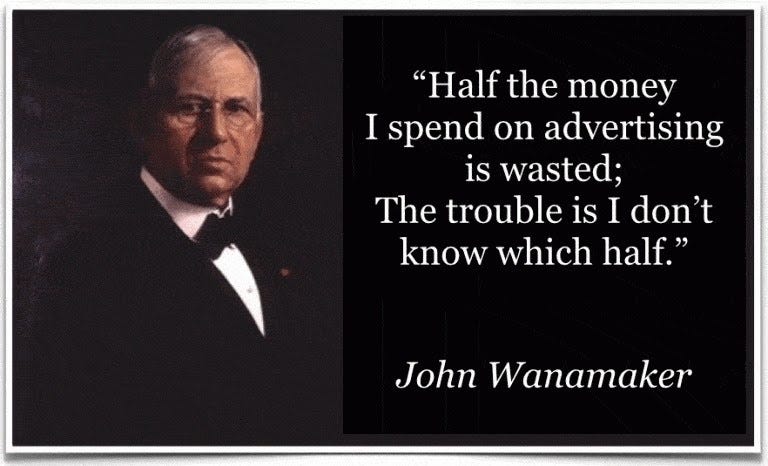
Many of the things we do will not have quantifiable outcomes and may be missed. This is inevitable, and reminds me of this quote about advertising,

Half the good things you do at a company will not get called out. The good news is: the other half will! What’s more, everyone knows how hard it is to quantify being a great mentor or going the extra mile to help someone. If you build a reputation for doing those things, it will be noticed.

In general: you should have an idea how you are going to answer these questions:

  • what was the result of this work? (a new feature? a bug fix? mentoring a colleague? improving documentation?)
  • what was your role? (did you do this on your own? did you invent/design/drive/code it? did you publicize it?)
  • so what? (does anyone use this feature? has anyone read your note? did something improve? how do you know?)

If you can answer these questions, then you know how to prove it.

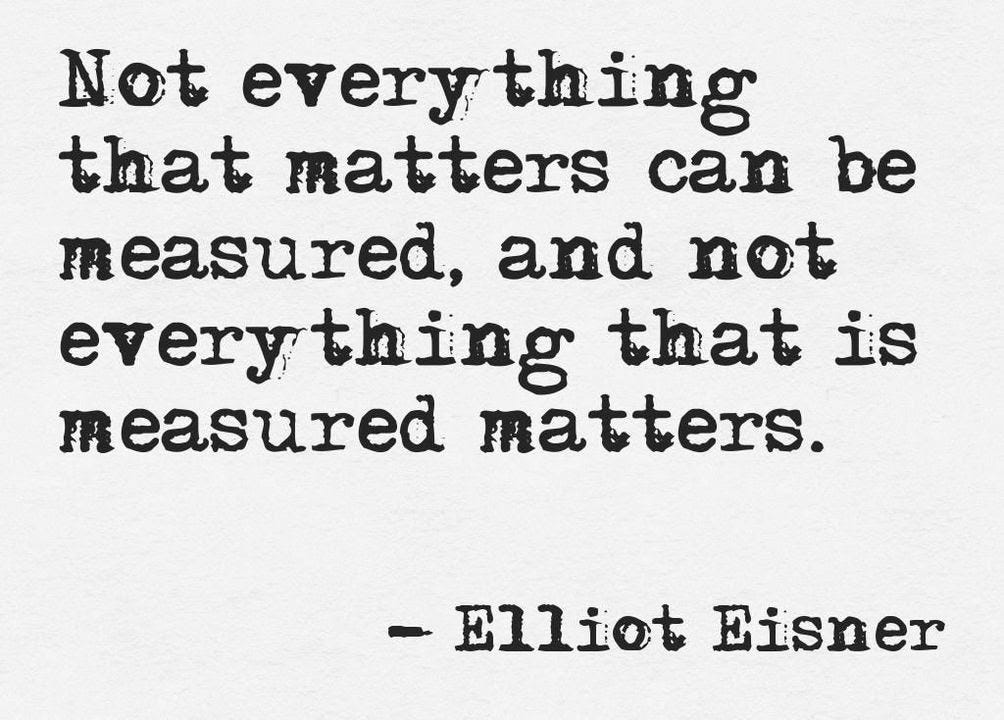
It is possible to over-emphasize the importance of being able to measure impact. Of course, if there is a metric to track you should definitely find it and use it. But it doesn’t mean that all unmeasurable work isn’t impactful. You can still capture the impact through feedback from colleagues and partner teams.

2. Remember that different levels have different expectations.

Axes are not equally weighted, and the weightings are different at each level. Be aware of this when you write your self-review.

It’s always great to have a high diff count, to show a commitment to code quality or to knock out lots of tasks the team need to accomplish in order to keep things ticking over. Doing these things will be recognized and rewarded. However, this will be particularly rewarded for junior engineer levels. More senior engineers can get recognition for doing this work (particularly if there’s no-one else to do it), but it could work against their favor. This is because it is completely expected that they will step in and do this kind of work when required. The more significant expectation is for them to support junior members of their team as they take on this kind of work.

The context is as important as the work: for a junior engineer, it’s a great achievement to say that you ramped up on a code-base in a half, fixed a large number of bugs and left the codebase is a cleaner and more maintainable state. A senior engineer can get credit for this where there was a pressing need — perhaps it unblocked a project or increased velocity in a crunch — but more frequently they’d be recognized for contributing by supporting their colleagues and setting goals for them to work towards.

3. Continually test the narrative of your work with your team, partners and your manager

What’s your story?

When your manager prepares your packet for a review meeting, they are preparing to tell the story of your half. They won’t have time to list all the diffs you made, or even talk about every project you were involved in. They only have a few minutes to set the scene and lay out the story — and there are a few ways that you can influence and guide it. One is to write a clear and well-corroborated self-review that demonstrates significant, relevant and level-appropriate impact — but this represents the final step..

What the narrative is matters, and it has to align with your manager’s expectations. Think about a top-level sentence such as, “Philip is a level-3 engineer who has been ramping up on two major systems this half”, or, “Philip is an level-4 engineer who delivered <some major project> this half”, or, “Philip is an level-6 engineer who has been leading design initiatives that made <piece of infrastructure> more cost-efficient, robust and supportable.”

To make an impact, you should get into the habit of asking what highlights and supports the narrative your manager is going to present? This will be easier to answer if you have been thinking that way throughout: what can I work on that will contribute to the story of my half?

So, take action and start now!

Don’t forget to give us your ? !


The Engineering Impact was originally published in Becoming Human: Artificial Intelligence Magazine on Medium, where people are continuing the conversation by highlighting and responding to this story.

Via https://becominghuman.ai/the-engineering-impact-db96f06e2fb9?source=rss—-5e5bef33608a—4

source https://365datascience.weebly.com/the-best-data-science-blog-2020/the-engineering-impact

Design a site like this with WordPress.com
Get started