Post AI world Were gonna be paid more

(Let me explain – from a fellow marketer’s perspective)
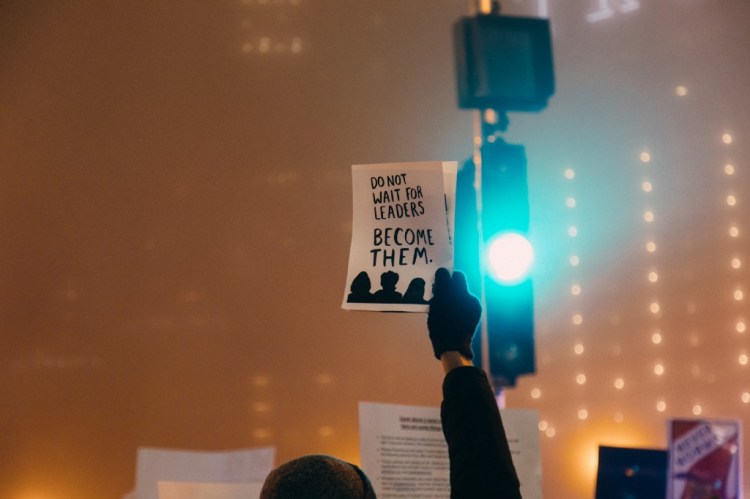
Photo by rob walsh on Unsplash

I’m a marketing strategist by profession. I strongly believe — keen observation & logical prediction are two main skills that a good marketing strategist should be endowed with. This blog is a predictive supposition of what would likely to happen, once the Artificial Intelligence (AI) hype wave has swept the world. This view, and my reasoning behind it, is of course, riddled with my biases, blind spots and other cognitive shortcomings. Many of you are experts or have better ideas than I in these areas, so know that I’m eager to hear your thoughts.
Jobs in ML

AI is being/will be adopted quickly on a very rapid scale for obvious reasons we all are exposed to — it saves time, money and performs what it is instructed in a way more efficient than humans in most cases. In other words, “Make more money in less time with fewer resources” — every corporate business in this world would fall for this. Though early technology adoption and setup cost may be high, it will not be priced so high that the corporate will have no second thought or whatsoever to afford it. The other reason that we will witness rapid adoption rate is that marketers have become so good at marketing these things, almost all industry is now powered by AI, even where there seems to be a no relevance at all. All they want is to sound cool & to look like they are keeping up with the trend.

Take this one for instance- Homeopathy & AI. ¯\_(ツ)_/¯

But, what I’m expecting is, We humans basically are social beings, deep inside we all have feelings and emotions attached. We will reach a point in the near future where making everything “artificial” will soon start to suck. We will long to experience life just the way it has to be — more lively, interactive and unexpected — that’s what keeps us alive.

In today’s AI, everything is almost streamlined, input/output based — we will soon reach the point of realization of boring nature of making everything artificial. We will very soon demand more human interactions as a part of our daily life. It’s not that AI is not more efficient than human, the reason is it’s not human at first place, how hard you try to make it as human as possible, we all know the truth already.

For instance, take this scene from the movie Whiplash,

These kind of experience are the things that make us humans, we cherish it, we love it, we expect it. We will very soon return to a point where we not only prefer but also feel good/humble/happy to interact with a fellow human being than to a bot.

At present, we are comfortable interacting with machines/bots than with humans is because we have failed to value ourselves and our jobs. We tend to be lazy, dumb, cheat, lie, ignore, spread hatred, play with emotions but machines won’t do that, even though they did it will be seen as a technical error.

In-order save our asses, we have to realize our mistakes, take lessons from the past and stop being a total jerk collectively as a human race before its too late. Otherwise, these corporate giants will continue make hefty ransoms while replacing each one of us with a bot.

I see the future in services industries where having human employee/resources will be marketed as a premium service. The word Humane will be added to the list of classic/vintage/pristine in the post-AI world. You will be paid more just for being a human with the required skill set, once people realize the importance and need of humanism, which they soon will.

Trending AI Articles:

1. Basics of Neural Network

2. AI, Machine Learning, & Deep Learning Explained in 5 Minutes

3. How To Choose Between Angular And React For Your Next Project

4. Are you using the term ‘AI’ incorrectly?

I kinda feel like it has already begun, just look at what I have stumbled upon while editing this draft —

The only way to prove our existence in our jobs beneficial than that of AI is to be more humane as possible in every possible situation. This is our call to action. Be kind, love your job, take care in what you do, make a difference, no matter what you do you can do it a lot better than those emotionless bots out there, be the change, create a fucking movement, all in a most humane way possible, machines won’t do that, machines can’t do that but only can be made to fake us. End of story.

The following are the few instances where the everyday people inspire this world to be more humane. (Please free feel to share stories which inspire you, in the comment section.)

With all said, I’m not against AI. Their aid would be a great boon to humanity, it could rapidly propel our existing knowledge and understanding in the field of astronomy, medicine, transportation, telecommunication, economics and more. I’m all in for AL/ML to be used in the field of research, exploration, analytics be it be any field but definitely not on our decision making processes especially in the field of privacy, governance, war and judiciary.

Let AI guide, not dictate. Let humanism prevail.

Don’t forget to give us your ? !


Post AI world — We’re gonna be paid more was originally published in Becoming Human: Artificial Intelligence Magazine on Medium, where people are continuing the conversation by highlighting and responding to this story.
Via https://becominghuman.ai/post-ai-world-were-gonna-be-paid-more-bd798a8b1b80?source=rss—-5e5bef33608a—4

source https://365datascience.weebly.com/the-best-data-science-blog-2020/post-ai-world-were-gonna-be-paid-more

AI and Machine Learning for Healthcare

Traditional business and technology sectors are not the only fields being impacted by AI. Healthcare is a field that is thought to be highly suitable for the applications of AI tools and techniques.

Originally from KDnuggets https://ift.tt/2AkGRVh

source https://365datascience.weebly.com/the-best-data-science-blog-2020/ai-and-machine-learning-for-healthcare

Coding habits for data scientists

While the core machine learning algorithms might only take up a few lines of code, it’s the rest of your program that can get messy fast. Learn about some techniques for identifying bad coding habits in ML that add to complexity in code as well as start new habits that can help partition complexity.

Originally from KDnuggets https://ift.tt/3dNTnLF

source https://365datascience.weebly.com/the-best-data-science-blog-2020/coding-habits-for-data-scientists

International Data Science Hackathon – Register Today!

international data science hackathon

Dear 365 Data Science blog readers, our friends at the Data Science Society have a new data science hackathon coming up this May. It’s called the International Data Science Hackaton – and we are excited to share some interesting details about it with you. So, check out the article below if you’d like to participate or you just want to find out more.

The Data Science Hackathon

The seventh edition of the Data Science Hackathon, organized by Data Science Society is happening in May 202o! The Online Datathon 2020 is a 48-hours competition for all data passionates to explore real-world challenges. This give the opportunity to learn from practice and by working together with like-minded people and mentors globally.

For all Data Scientists there is still an opportunity to participate virtually! We are welcoming the most passionate Datathoners to join the competition. The only requirements for the participants are to power up their laptops and come with determination to build the best data models and improve their Data Science knowledge!

The Awards!

Thanks to our great partners Ernst & Young , 365 Data Science and Imperia Online we have awards in cash , tutorials and in products of total amount of more than $16,000.

Part of the fund will go to the best solutions working on their cases – “Predicting weather disruption of public transport” and “Let’s play a game!”.

The participants

The Global Datathon is open for data science students coming fresh out of college, as well as experienced experts with different backgrounds and data science skills.

The Society has developed a specially tailored platform for the data fans to communicate before, during, and after the challenge. To share ideas on their solutions and team up. The participants will have the opportunity to work on their cases enriched with real data sets in collaboration with mentors and industry experts from leading data-driven companies.

At the end of the Hackathon the most devoted participants will have their machine learning and predictive analytics skills improved and will be able to brag about their Jupyter notebooks and scientific articles with real solutions to a data problem.

Datathon 2020 is the meeting point for all Data Scientists from all around the world who are thrilled to be challenged with real data science cases.

Data Science Society

Data Science Society is a volunteer organization open for all people passionate about cracking patterns and getting insights from data. The society has been building a global network of individuals, mentors, organizations, partners and data-driven companies.

Registration

From any place on earth, check our website for more info and join the Online Datathon 2020: https://www.datasciencesociety.net/datathon/

To make sure you save your spot, make sure you  register by May 14th!

Good luck, everyone!

The post International Data Science Hackathon – Register Today! appeared first on 365 Data Science.

from 365 Data Science https://ift.tt/3bt4IiF

Satellite Image Analysis with fast.ai for Disaster Recovery

We were asked to build ML models using the novel xBD dataset provided by the organizers to estimate damage to infrastructure with the goal of reducing the amount of human labour and time required to plan an appropriate response. This article will focus on the technical aspects of our solution and share our experiences.

Originally from KDnuggets https://ift.tt/2An3IiZ

source https://365datascience.weebly.com/the-best-data-science-blog-2020/satellite-image-analysis-with-fastai-for-disaster-recovery

Top KDnuggets tweets May 06-12: 24 Best (and Free) Books To Understand Machine Learning; Weve Been Looking At The #Coronavirus Data Wrong

Also: C passes Java and becomes number 1 programming language; This Professor Says We’ve Been Looking At The #Coronavirus Data Wrong; Some Common #DataScience Stacks

Originally from KDnuggets https://ift.tt/2zxEX3i

source https://365datascience.weebly.com/the-best-data-science-blog-2020/top-kdnuggets-tweets-may-06-12-24-best-and-free-books-to-understand-machine-learning-weve-been-looking-at-the-coronavirus-data-wrong

DeepMinds Suggestions for Learning #AtHomeWithAI

DeepMind has been sharing resources for learning AI at home on their Twitter account. Check out a few of these suggestions here, and keep your eye on the #AtHomeWithAI hashtag for more.

Originally from KDnuggets https://ift.tt/2Wulp99

source https://365datascience.weebly.com/the-best-data-science-blog-2020/deepminds-suggestions-for-learning-athomewithai

Melanoma skin cancer detection with CNN

Classifying mole images with Efficientnet

Melanoma of the skin, one of the most commonly occurring forms of cancer, represents a serious risk to women’s and men’s health worldwide. The survival rates for melanoma skin cancer depend heavily on the cancer’s stage when diagnosed. If the melanoma of the skin is detected before it has the chance to spread, the chances of surviving are very high. If the cancer has already spread to other body parts, it is less likely that the treatment will be successful, and the risk of death is thus higher. Getting skin exams on a regular basis can help diagnose skin cancer early and reduce risks. According to the Canadian Cancer Society, doctors follow the ABCDE rule to differentiate a normal mole from skin cancer. This rule includes features such as the asymmetry, the irregularity of the edge, the colour, the size and the evolvement of a mole.

In this article, we are going to predict the diagnosis of suspicious moles based on images of benign and malignant skin moles by using a Convolution Neural Network with keras tensorflow.

The dataset used contains 1800 pictures (224×244) of benign skin moles and 1494 pictures (224×244) of malignant skin moles from the ISIC (International Skin Image Collaboration) Archive.

Implementation

You can find the full codebase on Google Colab with this link: https://colab.research.google.com/drive/1jSpUEJIAz2N6A0rY_rGQYtLXNgSUP8sK

Loading pictures

Pictures are loaded and turned into numpy arrays using their RGB values.

Creating train, validation and test sets

Pictures are labeled as 0 (benign) and 1 (malignant). Dictionary of images with their corresponding labels are created. Train and test data are shuffled. Validation set is created with 500 pictures from the original train set. The final train, validation and test sets contain respectively 2137, 500 and 660 images.

Pictures example

Here is a display of the first 20 images of moles belonging to the train set and their respective labels.

Normalizing pictures

Pictures’ RGB values are divided by 255 to have values between 0 and 1.

One-hot encoding

Categorical variables are transformed into vectors of 0 & 1 where vectors length correspond to the number of categories to classify.

Data augmentation

Additional augmented data is created by reasonably modifying the data in our training set. The purpose is to add more data to our training set that is similar to the data we already have but is reasonably modified to some degrees so that it is not exactly the same.

Trending AI Articles:

1. Introducing Ozlo

2. How to train a neural network to code by itself ?

3. Paper repro: “Learning to Learn by Gradient Descent by Gradient Descent”

4. Reinforcement Learning for Autonomous Vehicle Route Optimisation

Square regions of pictures are randomly masked out (cut out) using the Random Erasing implementation to improve overall performance of our convolutional neural network. Image Data Generator is used to generate batches of image data with real-time data augmentation.

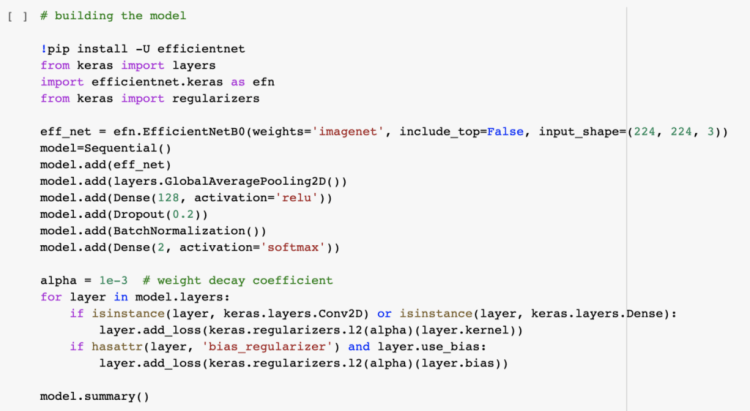
Building CNN model

The model uses the pretrained model Efficientnet, a new CNN model introduced by Google in May 2019. In the paper called “EfficientNet: Rethinking Model Scaling for Convolutional Neural Networks”, EfficientNet showed a great improvement in accuracy and in computational efficiency on ImageNet compared to other state of the art CNNs.

A weight decay of 0.001 is set to reduce overfitting of the CNN and improve its performance on new data. A dropout of 20% is set to randomly ignore some subsets of nodes by dropping some nodes in a given layer during training. This helps the model generalize better on data it has not seen before.

Training the model

Our model is trained on the train set and uses a validation set to ensure that it is not overfitting and can generalize on data it has not seen before.

The callback ReduceLROnPlateau is used to reduce learning rate when a metric has stopped improving. In this part we set a factor of 0.5, a patience of 3 and a minimum learning rate of 0.000005 so if the validation accuracy doesn’t improve after 3 epoch, the learning rate will be reduced by factor 0.5

The model is trained on 100 epochs with a batch size of 64 which corresponds to the number of observations propagated through the network.

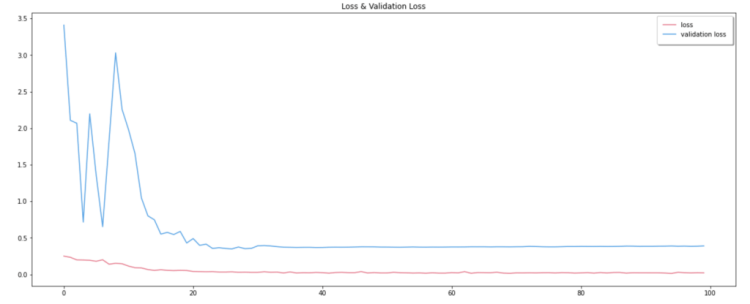
Loss & Validation Loss:

Accuracy & Validation Accuracy:

Overall, validation metrics are getting closer to the training metrics after the 20th epoch which is a good sign indicating that our model is not overfitting.

Testing the model

The test set is structured just like the training set and is used to assess the performance of our model. We want to make sure the model is able to generalize well. This is definitely the case, the accuracy on the test set is 90.45% which even higher than the validation accuracy.

Confusion Matrix

A confusion matrix showing a table with 4 different combinations of predicted and actual values is used to evaluate the performance of our model.

  • Number of benign moles classified as benign: 329
  • Number of benign moles classified as malignant: 32
  • Number of malignant moles classified as malignant: 268
  • Number of malignant moles classified as benign: 31

Conclusion

In this task, we focused on the classification’s accuracy which is 90.45% based on the test data. This does not give the full picture however. In the context of a patient waiting for melanoma test results, the worst situation is to wrongly diagnose a malignant mole as benign. The patient would not be starting any treatments, and this would decrease the chances of survival. This means it is more important for us to know how many malignant cases are being caught rather than just how good the model is at guessing between the two options. By calculating the recall rate (Number of malignant moles classified as malignant/Total number of malignant moles), we can see that the model correctly identifies pictures of malignant moles 89.63% of the time. This means that there is 10.37% chance that the model will wrongly identify a malignant mole as “Benign“. The specificity (Number of benign moles classified as benign/Total number of benign moles) shows how many benign moles are correctly identified by the model. In this case, the model classifies correctly benign moles 91.11% of the time. Our CNN model seems better at classifying benign moles than malignant ones. This could be due to the dataset containing more values from benign moles (1800 pictures) than from malignant moles (1494 pictures).

Sources

Léa Sénéquier – Student Consultant – Data Analytics UX/UI – Pratt & Whitney Canada | LinkedIn

Don’t forget to give us your ? !


Melanoma skin cancer detection with CNN was originally published in Becoming Human: Artificial Intelligence Magazine on Medium, where people are continuing the conversation by highlighting and responding to this story.

Via https://becominghuman.ai/melanoma-skin-cancer-detection-with-cnn-90dc3749f3d7?source=rss—-5e5bef33608a—4

source https://365datascience.weebly.com/the-best-data-science-blog-2020/melanoma-skin-cancer-detection-with-cnn

Can the AI trader beat the Human trader

Source

Introduction of the article

Ever since trade has existed, market participants have sought to profit from exchange rate movements. We’ve come a long way from trading tulips to cryptocurrency exchanges, but with one statement, everyone agrees: It doesn’t work for everyone.

First, the advent of computers and then the internet opened a new chapter in investment, with the emergence of online brokers, cryptocurrencies, trading robots. Currently, human traders and robot traders coexist. In this article, we will compare the latter two actors. We examine how people make decisions and how the machine has become able to learn which team is in the majority and who is more successful!

The Human Trader

How do traders make decisions? What can be the outcome of the decision? How many times do they have to decide?

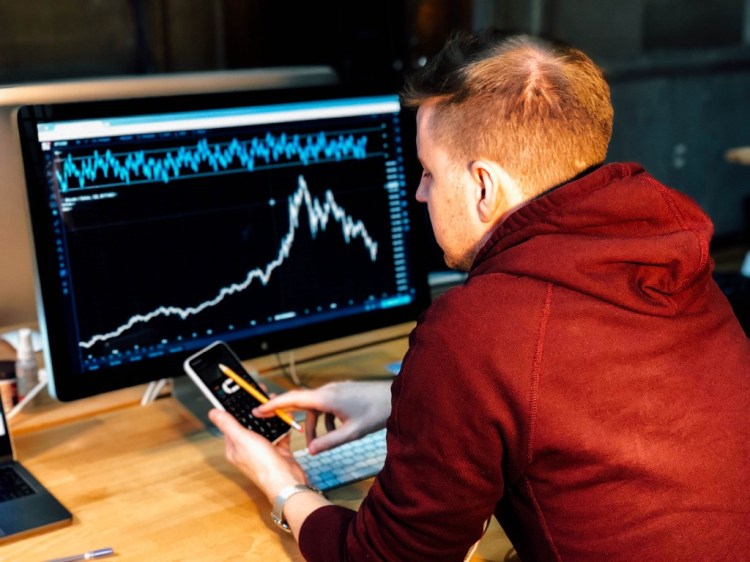
The accepted conclusion in the trader world is that no one should trade without a carefully put together strategy. The strategy should cover selling and buying decisions, when not to do anything when to get out. The first phase of the strategy is always market entry. What do I need to see to get on either the buy or sell side? This signal can be one or more indicators, a chart pattern, a support/resistance level, a news event. Whichever one you choose, one thing is for sure: none of it will deliver a 100% result, so you have to enter the market over and over again for every signal. The strategy has been carefully tested and I know that if I follow the signals I will be 60% right and will be in net profit.

All of this assumes that I am perfectly capable of implementing my strategy every time. If it’s that simple, why are there so many articles on the importance of trader psychology? Why do success traders see influencing their emotions as the key to their success? And why Trading in the Zone by Mark Douglas became so successful?

The strategy is easy to implement in the beginning, but much more difficult once some time has passed, especially if we have suffered a few losses. If we logically rethink what the strategy says in this situation, it is clear what we need to do, but for some reason, we do not make that decision. Why does a trader behave irrationally when he has decided not to do so?

We have to look for the answer in the brain.

Studies show that the decision is made in the brain much sooner than we could consciously grasp. Furthermore, external influences can also obscure our logical brain and make a decision we would not have made under other circumstances.

What affects?

Emotional state

Neurons in the brain respond to a state of self-confidence and make decisions more easily without prior information gathering. Remember the trade that, although it did not follow the strategy, for some reason we felt it would work. Following the strategy correctly is only possible if we can make an unbiased, emotion-free decision every time and it is difficult in the long run. Not only confidence but a negative emotional state also affects. “I don’t dare get into this trade, I didn’t make it last time, I don’t feel confident.”

The Prospect theory developed by Daniel Kahneman and Amos Tversky in 1979 states that it would hurt people to lose $ 1,000 more than it would feel good to win $ 1,000. Because of this effect, one makes decisions that will help him avoid losing and the gain will be less desirable for him. Prospect Theory was awarded the Nobel Memorial Prize in Economics in 2002 for the work of Kahneman. It is the foundation of behavioral economics and behavioral finance.

Intuition

Intuition is a process in which information is not acquired through processes of thought or inference. That’s the famous Gut feeling. We don’t know how we know what we know, but we know. Can intuition be used in trading? Intuition can be very useful as well as very harmful. A trader who trades with such a feeling does not think about why it would be worthwhile to enter the market, simply based on his experience so far, he thinks that what he is doing is a good decision. And he makes the decision himself very quickly. Such day-traders don’t even stay in position for long. Daniel Kahneman mentions in his interview with TheStreet that over the years, such traders develop within themselves a skill that they use in the way of an athlete in their trading. If someone’s intuition is so advanced, it can be very helpful, but a lot of time until it develops.

A human is influenced by emotions, prone to irrational decisions, have difficulty following his strategy, having biological needs, and can easily fall behind in a position during sleep that is a mistake to miss. At the same time, he can learn, try new theories, make intuitive decisions, and develop skills. It takes a lot of time for your abilities to develop and for you to be able to master your emotions At least 95% of human traders are loss-making in trading and only a lucky 5% can make a profit in the long run.

The AI Trader

Traditional trading algorithm

Trader algorithms have been around since the 20th century, but have not been widely used until now. According to a 2016 study, 80% of trades in the Forex market are made by automated trading systems instead of people. They are not affected by emotions and can execute orders at a speed and in a quantity that one will never be able to. The trader algorithm works according to pre-written rules, it does not make an independent decision, it is always just what it is written for. Most often, it trades based on some method of technical analysis, such as an indicator. The stick is an easy backtest to see if our strategy would have worked in the past. Unfortunately, such backtests are no guarantee of future performance.

Trending AI Articles:

1. Introducing Ozlo

2. How to train a neural network to code by itself ?

3. Paper repro: “Learning to Learn by Gradient Descent by Gradient Descent”

4. Reinforcement Learning for Autonomous Vehicle Route Optimisation

Furthermore, they may work particularly poorly when market conditions change. A strategy that uses moving averages can give good results in a trending market, but perform poorly in a volatile market. Mathematically describing it how to distinguish the state of the market is extremely difficult. At the same time, it frees one from the psychological and biological burden, which gives a significant advantage to the trader but can never be more than what was originally written for. They are even more vulnerable to unforeseen, significant events. When market conditions suddenly change, the algorithm can still do nothing but implement the strategy as before, if the new conditions are no longer appropriate, a loss is guaranteed.

Machine learning algorithm

With the advent of artificial intelligence, a new era began. In front of machine learning algorithms, there is always a goal and a data set. Based on the data, they build mathematical models for predicting the future and making decisions. They do not follow a predetermined command line but develop a solution to the problem based on their own mistakes and experience. The science of machine learning is used in many areas, from facial recognition to self-driving cars to finance. Artificial intelligence has already been proven in areas where previous algorithms have failed. The DeepMind program can play games like Go or Chess after a few days. Such a game cannot be played successfully by executing a rigid command line. The strategy must change and respond to the opponent’s actions. The same is true for cryptocurrency trading. The market does not give the luxury of being predictable. Artificial intelligence, like a human, can learn from its mistakes and develop itself, but much faster and more precisely than a human.

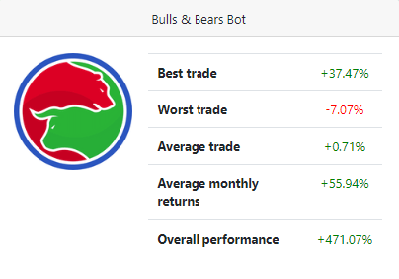
B-cube.ai is a fintech startup specializing in machine learning algorithms. The first trading bot made with this technology trades in Bitcoin and Ethereum cryptocurrencies. During the first six months of its life, the bot also experienced major events such as the March 2020 collapse as a result of the COVID-19 pandemic. Many human traders and traditional algorithms have gone bankrupt as a result of the unprecedented event. However, the B-cube’s bot closed all 6 months in profit, and its best month was just the crash-weighted March with a profit of 230%. Its success is due on the one hand to the combined methods of analysis and on the other hand to the advanced machine learning models.

Overall, both groups have good and bad qualities. Humans can develop skills, but it takes a very long time and they are prisoners of their own emotions. On the other hand, traditional algorithms have no emotions, but they cannot work profitably in the long run.

All in all, the AI ​​trader who uses machine learning has the most potential. It is not a prisoner of its emotions, it is not a prisoner of biology and most importantly it is not a prisoner of its own mistakes.

Don’t forget to give us your ? !


Can the AI trader beat the Human trader was originally published in Becoming Human: Artificial Intelligence Magazine on Medium, where people are continuing the conversation by highlighting and responding to this story.

Via https://becominghuman.ai/can-the-ai-trader-beat-the-human-trader-afabce77e933?source=rss—-5e5bef33608a—4

source https://365datascience.weebly.com/the-best-data-science-blog-2020/can-the-ai-trader-beat-the-human-trader

Quantum Computing on MacOS with MS QDKSetting UP

source https://365datascience.weebly.com/the-best-data-science-blog-2020/quantum-computing-on-macos-with-ms-qdksetting-up

Design a site like this with WordPress.com
Get started