On Evolution

I’m just trying to build up an intuition here.

What do we mean by evolution?

Evolution, this mysterious concept that allegedly started with the works of Charles Darwin, so many people call it Darwinism. Tree of life, this famous motto “Survival of the fittest, not the best” that echos in our minds when we think of evolution. Monkeys as our furry cousins, chickens that are evolved from T-rexes, and many more stories linked to this single word: “Evolution.” It’s like a perfect battlefield for science enthusiasts and religious fundamentalists, and it usually ends like “…you might be descending from chimps but not me…” [holy spiritually drops the mic].

I know, I was there. Had my arguments with creationists, sat alone and dwelled on why did something evolve like this, why didn’t we grow wings and horns. For me, it all got serious when I started to experience a personal renaissance slowly happening around 2009. I started learning tiny pieces about evolution on my biopsychology textbooks, but then I became obsessed with these stuff around 2012, actively searching for more information. The Internet helped a lot; actually, all those youtube videos and lectures expanded my understanding of evolution. The next pieces fit after I enrolled in a graduate programme with a strong focus on animal behaviour and biology. I learned evolution is not all about natural selection, it’s also about randomness and sexual selection and a bunch of other concepts that we’ll just skip here. When I was done there, I was pretty confident that I’ve seen the light, finally, I know how evolution works but nope. I was almost there, but a crucial piece of information was misaligned. In this post, I want to share my current knowledge of evolution using some Adobe Illustrator and results from the current state of my PhD project. You see, I’m not an evolutionary biologist so probably this post won’t give you the most accurate explanation, what I want to do here is to build up a visual intuition. The last “Eureka” happened when I saw bits of evolution with my own eyes, and I realised what this sentence really means: Survival of the fittest, not the best. So I want to do the same here.
Evolutionary Optimisation; The fittest

First of all, the motto is not from Darwin, but it was Herbert Spencer’s impression of Darwin’s book but let’s get not distracted by who coined it. Back to the content, natural selection is one of the many ways that organisms evolve, and according to good old Wikipedia, it’s defined like this:

Natural selection is the differential survival and reproduction of individuals due to differences in phenotype. It is a key mechanism of evolution, the change in the heritable traits characteristic of a population over generations.

What the fuck, Wikipedia? diFfeRenTiaL sUrviVal aNd reProDuCtiOn of inDivIdUalS dUe to difFeReNcEs in pHeNoTyPe… that’s one of the reasons that people can’t see the beauty in it. Let’s make it simpler using some common sense. Imagine you’re searching for gold, want to reach the X, which by chance, you know it’s located at the lowest point of the field. It’s night by the way so you really can’t see what’s around. How should we reach it? Well, that seems not that terrible, I’d start by walking downwards till I reach a point that every other direction goes up. Probably I’m there, but I don’t know since I don’t have a helicopter view or something. To be sure, I start from a different point once more and see if I end up in the same lowest place. I shall now dig and hope for the best. Let’s make it more abstract using balls and surfaces in the pictures below:

Imagine you have a tiny ball on a surface. The goal is to find the lowest point. I colour coded the surface with the warmer means higher, obviously. Also, these figures free to use, let me know if you want the vector format and I’ll send them to you random reader.

Technically, this is how many optimisation algorithms work to minimise the error of some fancy machine learning tools. Interestingly, a family of optimisation algorithms called “evolutionary algorithms are inspired by how evolution works. Ok now imagine the surface to be like a mountain full of many hills, again the goal is to find the lowest point because we want the gold baby. You can do the same, keep walking downwards waiting for a flat land with surroundings being higher than itself then dig and hope you’re on the right spot. That’ll take some time since you have to try from a couple of other initial points. Now imagine you’re doing the same, but this time you gathered groups of people to help, they all start from a random position, move downwards step by step. You folks might all reach the same local minimum but probably each will end up in a different low point. Now imagine the space you’re exploring is so vast that during this process people need to settle in those locations like tribes and after a while, they develop their language and culture that if by chance you end up going there, they look pretty different. Ignoring the inner mechanisms of evolution, this is a good analogy for how it’s working. Here, let’s take a look:
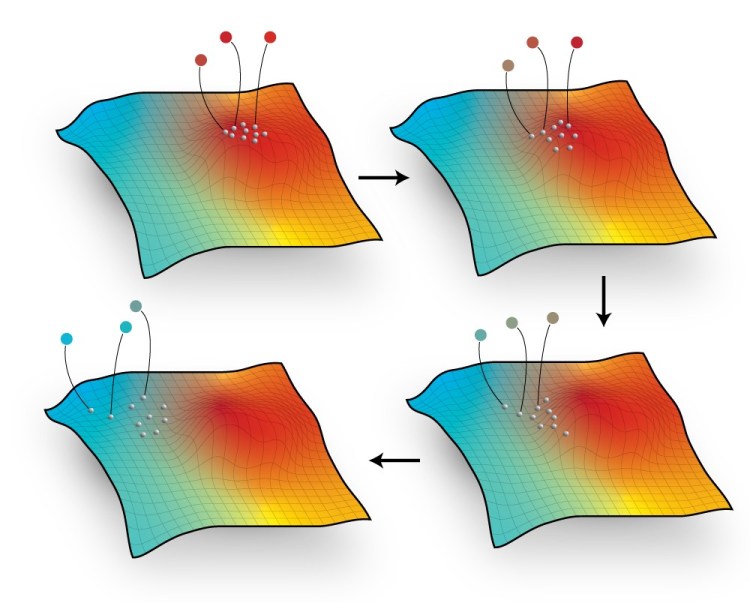
Usually, in an evolutionary algorithm, we optimise whatever we want it to be optimised using a population of points on the “error landscape”. The algorithm, in its essence, is pretty simple:

start from a random location, see which solution has the lowest error, start a new population from there, keep moving till you reach a local minimum.

Trending AI Articles:

1. TensorFlow Object Detection API: basics of detection (2/2)

2. Understanding and building Generative Adversarial Networks(GANs)- Deep

3. Learning with PyTorchDeep Learning Book Notes, Chapter 1

4. Artificial Intelligence Conference

Here we have parameters to play with, how many points we have in our population? How to reproduce the fittest solution? How tight are the circles around each other? And sometimes, when the population considered to be two different population? And so on. Look at the following figure to see what I mean by the last sentence:
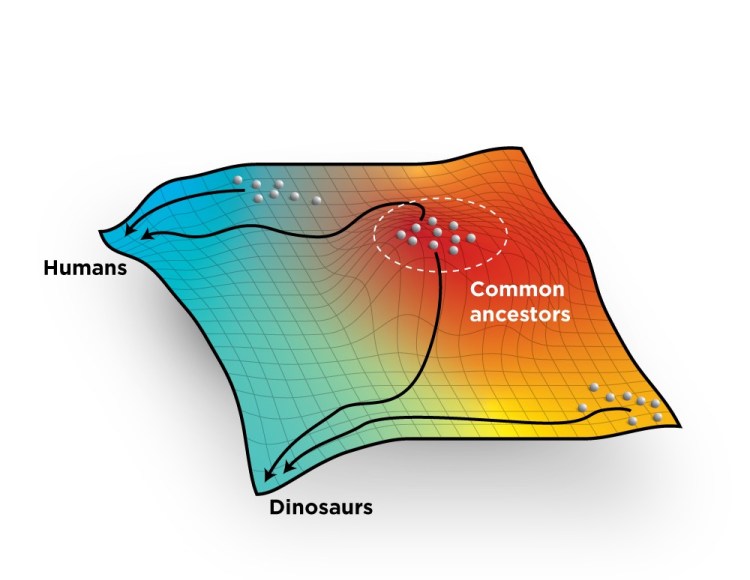
You see, after a while, the population can end up separated into different species. Algorithms such as NEAT exploit this feature to produce many right solutions for the task you’re working on. Hopefully, by now, we have a way to see what does the fittest mean. I know I oversimplified this and you should know it too. For example, this landscape is not static, and we don’t know what are we optimising here. Take a look at this:
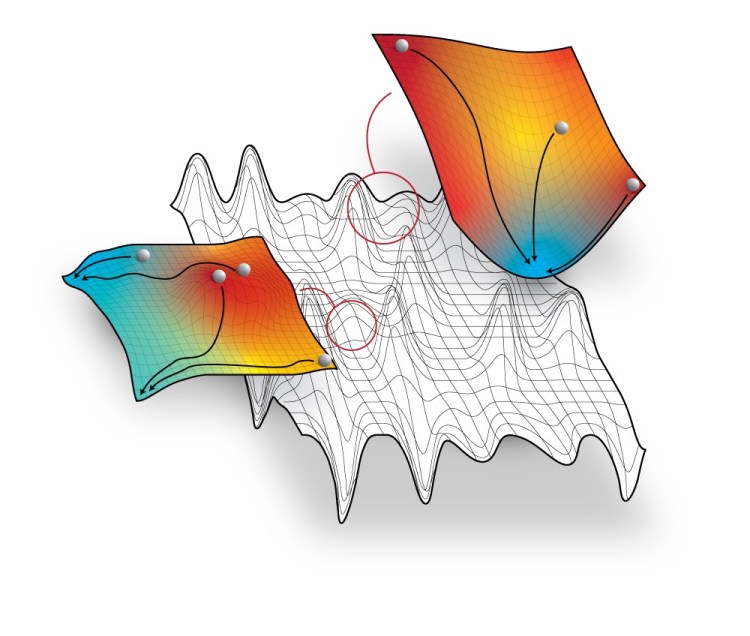
The landscape is massive, open-ended, dynamic, and has an unknown number of variables and constraints. But at least now we have a way to look at a toy example. But just for everyone to be on the same page, keep this figure in mind:
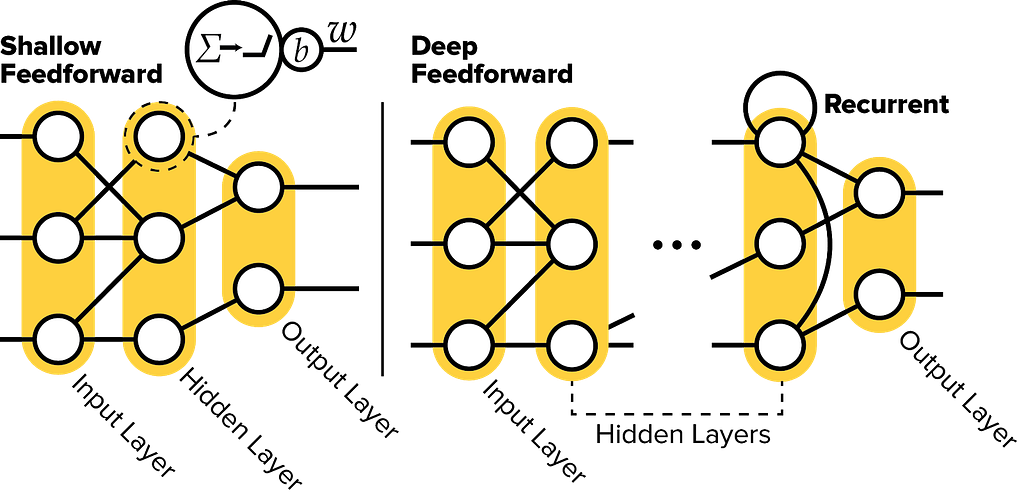
A brief structural overview of Artificial Neural Networks. One of the classic examples of an ANN is a shallow feed-forward network in which information flows from a previous neuron to the next. Generally, each neuron performs a linear computation such as summing up the inputs following a non-linear transformation — in this case, a Rectifier Linear Unit (ReLU) that dismisses the negative values. By stacking many hidden layers in between input and output layers, we can then turn a shallow network to a so-called Deep network that is capable of learning more abstract representations of the input. Eventually, capturing the temporal dynamic of the input is possible using Recurrent architectures that will feed their output to themselves or other neurons regardless of their hierarchical positions.

The misalignment; Survival

I remember reading many times that evolution isn’t smart. It’s just recycling stuff and doing dirty, messy things. But I couldn’t get this, I mean look around you, everything is so perfect for its environment. Tiny stuff does brilliant things how this is messy and not elegant. Until I used NEAT for my project and saw the mess in action. Oh boy, it’s terrible inside. I remember reading about tons of junk DNA that are just there doing apparently nothing, or many things that we carry which had a function at a point but not anymore. Let me show you what’s happening.

NEAT is an evolutionary algorithm that people use to train their AIs. You should probably know what it does; otherwise, I wasn’t successful in what I meant to do in the first part. Tell me, please! Anyway, I won’t go into the technical details of NEAT, and how cool it is, you can find ton’s of articles here in Medium so just search “neuroevolution” and watch NEAT in action. I used NEAT to make artificial brains that are capable of playing the given computer game. I didn’t use fancy Deep Reinforcement Learning stuff because I needed the network to be traceable. My PhD project is not about developing better AI, but as a neuroscientist, I want to know how the structure of this artificial brain can be linked to its function. For that, I’m using a Game Theoretical framework called Multi-perturbation Shapley Value Analysis. It doesn’t matter how it works, all you need to know is: what I wanted to do after I had my AI agent, is to ruthlessly destroy its brain many times to see how damaging different components messes with the performance. So I started playing Flappy Bird. I ended up with many networks that are good at playing Flappy Bird equally, but the strange thing was their topology. Let me show you:
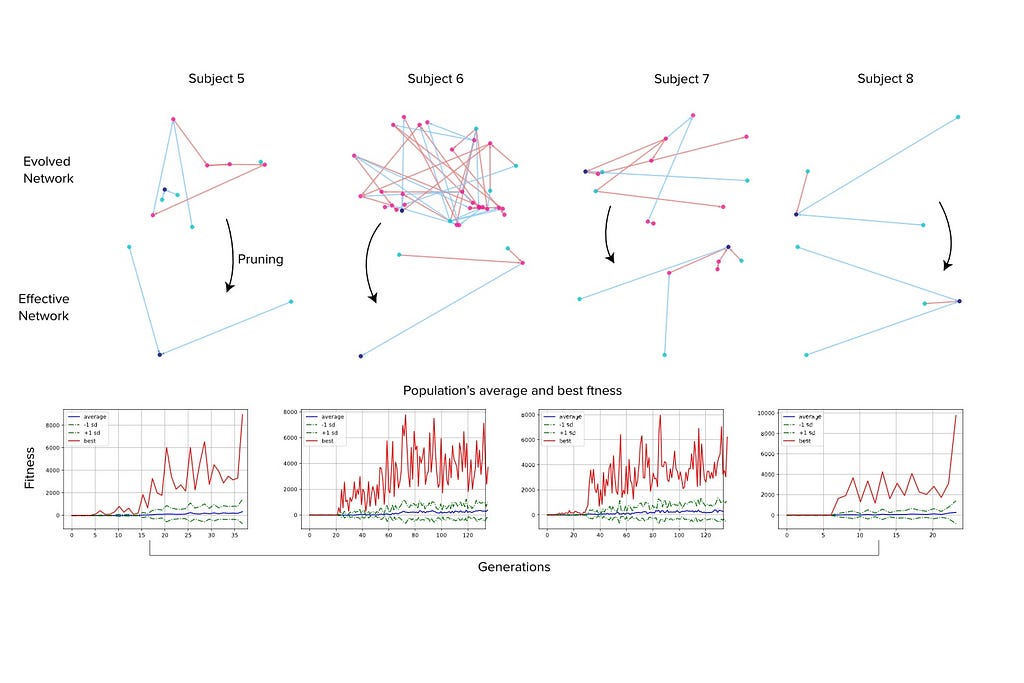
Dark blue is the output neuron; light blue means input neuron and pink show the hidden layer.

Ok just look at this fuck, NEAT evolved those entangled webs with lots of literally useless neurons and connections. I could prune them because in this case, I only had one output neuron, so any path that eventually is not ending up there is useless. You see, after pruning those deadends we end up with a much smaller network that is doing the job while the rest are just there much like our junk DNA. But why?

I was so troubled with this because I was asking the wrong question from evolution. I was asking what the evolutionary benefit of something is? in other words, if something is there, it means it had an advantage. Hence, it stayed there; otherwise, evolution would throw it away. Nope, it’s the other way around. We are talking about the survival of the fittest so: whatever doesn’t kill me, it’s not essential for evolution. Let me put it differently:

Not everything has evolutionary benefits, we are carrying lot’s of garbage in our bodies because they didn’t have much of an evolutionary cost.

Let me go back to the Shapley value for a second and then we can wrap it up. What this value indicates is the importance of the element for the system’s performance (oversimplified). Perfect, I now have a number for how important each element is + evolution = we can see stuff again. That’s what I did, this time not with Flappy Bird but Space Invaders. Ask me for the details if you’re interested, but for now, all we need to know is that I ended with a system with 51 connections among 19 neurons. I calculated the importance of each connection. Look for yourself:

On the left side, you see most of the connections are somewhat useless (the Shapley values are around zero). This time I couldn’t prune them because they are all connected to the output neurons at the end. But functionally, their existence is not crucial for the performance. In fact, this is what right side of the figure is showing. I could have the same performance with only the four most important connections. What makes it more interesting is that the other 47 connections can’t do shit without these four! So basically, evolution didn’t throw them away, even the one that had a negative impact on the performance. What I want to show here is that not only we are carrying junks around, some of them are reducing the fitness. This will take us to the last point:

It’s still happening.

There was another point that I kept forgetting. We’re not done, the landscape is massive, open-ended, dynamic, and has an unknown number of variables and constraints. It’s possible that I’d lose the one bitchy connection that is messing with my fitness, but I decided to stop it after the network reached a specific lowest point. It did, with the burden on its artificial shoulders, it did anyway so who cares. I ended the simulation to see the current network, it’s like us looking around assuming this is it. We are the evolutionary hallmark; we are the fittest, look at us, look at this big brain. No stop looking we’re not done, and there’s no end to this as long as there’s a landscape to explore. Organisms will adapt, evolution will continue fitting and shit will change.

I want to leave you with a figure from the book “The Tree of Knowledge: The Biological Roots of Human Understanding” by Francisco J. Varela It inspired me a lot, I recommend y’all to give it a try.
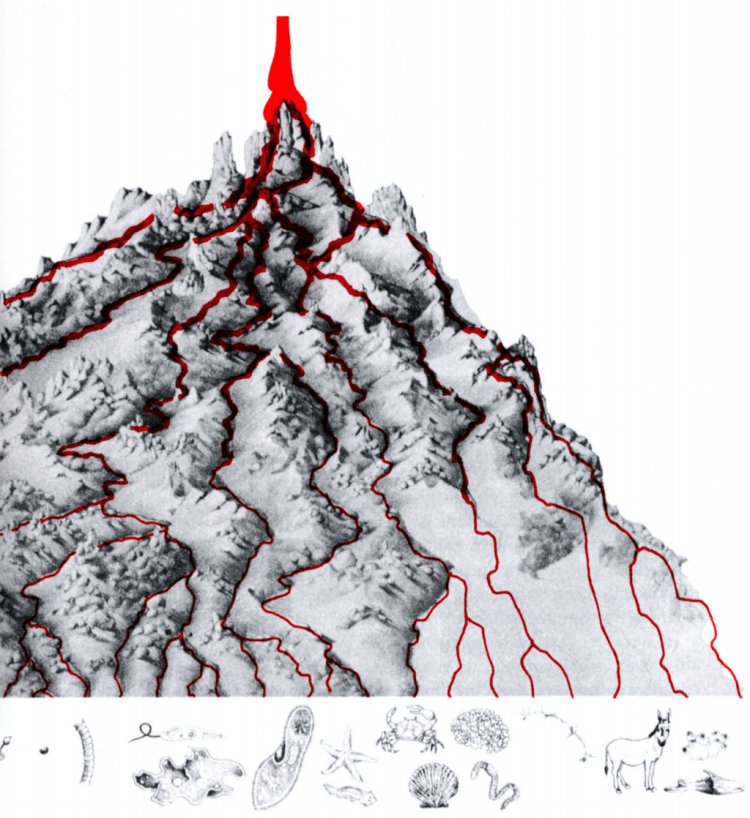
The Tree of Knowledge: The Biological Roots of Human Understanding, Page 111

Disclaimer: I don’t know how many times should I emphasise on this, I’m not an evolutionary biologist, and this post wasn’t supposed to give you a lecture or something. I struggled myself, and I thought this post could help others. I know many like me need to see stuff to understand them so, again, I wanted to give you a visual intuition. Learn the real deal somewhere else.

Don’t forget to give us your ? !


On Evolution was originally published in Becoming Human: Artificial Intelligence Magazine on Medium, where people are continuing the conversation by highlighting and responding to this story.

Via https://becominghuman.ai/on-evolution-6db4f308795?source=rss—-5e5bef33608a—4

source https://365datascience.weebly.com/the-best-data-science-blog-2020/on-evolution
How do Natural Language Processing systems work?

Have you ever come across situations like you’re typing something on your smartphone and it is coming up with word suggestions based on what you’re currently typing and what you usually type?

Probably you are already aware of the fact that artificial intelligence and machine learning are all around us, from phones to devices and a huge number of things in between. But do you know what is the core technology that enables these devices to perform effectively? It’s natural language processing or NLP.

Have you ever come across situations like you’re typing something on your smartphone and it is coming up with word suggestions based on what you’re currently typing and what you usually type?

Surely you did and that’s a natural language processing system in action. We surely overlook the technology and take it for granted but in the business domain, it is one of the biggest innovations that have transformed the entire domain.

This post aims at giving you an overview of what is a natural language processing system, how it works, and some of its most common applications. Let’s delve deeper.

1- What is a natural language processing system?

At its core, natural language processing is a subset of artificial intelligence that helps machines comprehend, interpret, and manipulate natural language used by humans like text and speech. Its main objective is to fill the gaps between computer understanding and human communication.

Natural language processing is an emerging technology which drives different forms of artificial intelligence we’re used to experiencing.

While natural language processing is nothing new and has been studied for a significant number of decades, these days it’s advancing rapidly thanks to the availability of big data, enhanced algorithms, powerful computing, and an increased interest in the communications between humans and machines.

2- How a natural language processing system works

Performing natural language processing is difficult mainly because of the complex nature of human language. Understanding the human language comprehensively needs an understanding of the concepts and the words, and how they’re connected in order to deliver the intended results. While we can master a language quite easily, the imprecise characteristics and ambiguity of the natural languages are the two biggest aspects that make a natural language processing system difficult to be implemented.

In order to understand how a natural language processing system works, it would be helpful to understand how we use language. Each day, we generate hundreds, for example, of words in a declaration which are interpreted by other people to do numerous things. For us, it’s simple communication, but everyone knows that the words come with a deeper context.
There’s always some context which we derive from what we speak and how we speak it. Whenever we say something to another person, that person can understand what we are actually trying mean. The reason is humans learn and develop the ability to understand things through experience. Here, the question is how we can offer that experience to a machine. The answer is we need to provide it with sufficient data to help it learn through experience.

The first working step of a natural language processing system relies on the system’s application. For instance, voice-based systems like Google Assistant or Alexa need to translate the words into text. Usually, this is done using HMM (Hidden Markov Models) system. The HMM utilizes mathematical models to determine what a person has said and translate that into text utilizable by the natural language processing system. Next step is actual understanding of the context and the language.

Though the techniques slightly vary from one natural language processing system to another, they follow a fairly similar format on the whole. The systems attempt to break every word down into its noun, verb etc. This happens via a series of coded rules which depend on algorithms which incorporate statistical machine learning in order to help determine the context.

If you are thinking about the working procedure of a natural language processing system other than speech-to-text, the system skips the initial step and directly moves into analyzing the words utilizing the algorithms and grammar rules.

The final outcome is the ability to categorize what a person says in many different ways. The results get utilized in different ways depending on the underlying objective of a natural language processing system.

When you’re learning how a natural language processing system works, it’s also important to obtain an overview of its key components. Let’s have a quick look at each of them.

  • Syntactic analysis: Syntax stands for the words’ arrangement in a sentence so that they can make grammatical sense. In natural language processing, syntactic analysis is utilized to assess the way the natural language gets aligned with the grammatical rules. Here, grammatical rules are applied by using computer algorithms to a group of words in order to derive meaning from them.
  • Semantic analysis: Semantic analysis refers to a structure developed by the syntactic analyzer that assigns meanings. Here, computer algorithms are applied to understand the interpretation and meaning of words and the way sentences are structured. It’s important to note that this component only abstracts the real meaning or dictionary meaning from the given context.

Two popular methods are applied to implement a natural language processing system — machine learning and statistical interference.

Trending AI Articles:

1. TensorFlow Object Detection API: basics of detection (2/2)

2. Understanding and building Generative Adversarial Networks(GANs)- Deep

3. Learning with PyTorchDeep Learning Book Notes, Chapter 1

4. Artificial Intelligence Conference

3- Some most common applications of natural language processing systems

Natural language processing systems are being steadily implemented by a wide range of businesses, regardless of the domain and industry. Here’re some most common applications of this technology.

3.1- Chatbots

Chatbots are highly responsible for mitigating customer frustration about customer care call assistance. They offer virtual assistance for resolving simple problems of the customer where no skill is required. These days, chatbots are gaining lots of popularity and trust from both the consumers and the developers.

3.2- Language translation program

Natural language processing systems are often implemented to help language translation programs that can translate from one language to another (for instance, English to German). The technology allows for rudimentary translation before a human translator gets involved. This cuts down the time required for translating documents.

3.3- Sentiment analysis

Here, natural language processing systems are used to understand and analyze the responses to business messages posted on social media platforms. It helps the business to analyze the emotional state and attitude of the person commenting or engaging with posts.

Widely used on social media and web monitoring, sentiment analysis is implemented by using a combination of statistics and natural language processing by assigning values to the texts and then attempting to identify the context’s underlying mood.

3.4- Search autocomplete

Search autocomplete is another application of natural language processing that a lot of people use on a regular basis. Internet search engines and some personal search engines of companies have integrated this application to boost user experience. Sometimes, users may know just one keyword instead of the entire search term or phrase. Search autocomplete helps them to locate the correct search term and get the answers faster.

3.5- Descriptive analytics

Capturing reviews for products/services comes with a multitude of benefits. They can not only boost confidence in potential customers but seller ratings can also be activated using it. Businesses use natural language processing-equipped tools that can pull together consumer feedback and analyze it, pointing out how frequently different types of pros and cons are mentioned.

3.6- Search autocorrect

It’s quite normal to make mistakes when typing something and fail to realize it. If the search engine on a business’s website doesn’t identify the mistake and comes up with ‘no results’, it’s natural for potential buyers to assume that the store doesn’t have the answer or information they are looking for.

With the help of natural language processing systems chances of these occurrences can be reduced by equipping the website with a search autocorrect feature.

It identifies errors and comes up with appropriate results without needing users to perform any additional steps, similar to that of a Google search.

3.7- Form spell check

Spell check is one of the most commonly used applications of natural language processing systems. It’s simple to use and can eliminate lots of headaches for both agents and users. Not every user takes the time to compose grammatically perfect sentences when writing to a sales agent or a customer help desk.

With the help of natural language processing-equipped contact forms, businesses are now able to make the lives of both the users the customer support executives because error-ridden messages aren’t only difficult to interpret but may result in frustration and miscommunication for everyone involved.

Parting Thoughts

At this moment, natural language processing is trying to identify nuances in language meaning occurring due to different reasons — from spelling errors or dialectal differences to lack of context. Despite all these limitations, the discipline is developing at quite a fast pace and we can expect to reach a certain level of advancement in the near future.

We can expect to see that with the help of the natural language processing systems, future machines or computers will be able to learn from the information available online and apply that information in the real-world. However, a lot of work is needed to be performed in order to enable the machines to attain that high level of intelligence.

Don’t forget to give us your ? !


How do Natural Language Processing systems work? was originally published in Becoming Human: Artificial Intelligence Magazine on Medium, where people are continuing the conversation by highlighting and responding to this story.

Via https://becominghuman.ai/how-do-natural-language-processing-systems-work-1290d98dfa97?source=rss—-5e5bef33608a—4

source https://365datascience.weebly.com/the-best-data-science-blog-2020/how-do-natural-language-processing-systems-work

Designing AI Designing Humanity

Photo by Franck V. on Unsplash

Artificial Intelligence is a vast area of study. Even though most of its areas are still unknown, AI is pretty much applicable to many industries. Therefore, using the AI concepts in the designing world might actually be the next turning point in the industry.

How designing is applicable in AI

So, how this designing is applicable to AI? if you have ever wondered about it, it can be explained in such a manner. That, with the use of AI, a new set of rules are needed to be created and established between the product or the service and the customer. These will be based on what artificial intelligence can actually do for the product or the service. And what to be expected from the outcome. The designer is responsible to include the empathetic context for the innovation. That is when the designer is in need of, and how designing is applicable for the AI.

When it comes to a proper design for AI, a key aspect you need to consider is humanity. We are dealing with customers and they are humans. No matter what we exceed in the technology, the number one priority is the customer. There are numerous ways we can embed the designer skills to artificial intelligence. AR and VR are very popular these days that have been used the designing skills and mindset.

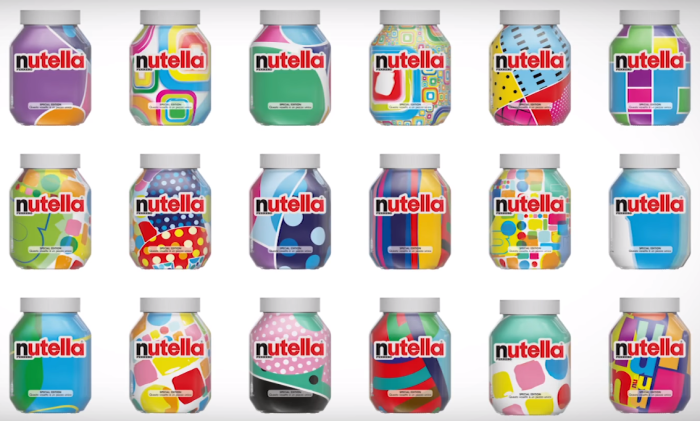
Latest Designing AI Example: Nutella’s Graphic Identity

One of the latest examples that designing for AI has been popular is the Nutella packaging design. The project was named “Nutella Unica” It is a designing algorithm that pulled dozens of patterns and colors to create 7 million versions of covers. And it has been a huge hit and all these unique designs have been printed into jars, which made all the jars to be sold in just one month. You can read more information about this project here.

If these weren’t designed without considering the empathetic context for the customer, selling these jars would have taken ages.

How the designs evolve

Since the industry is trending towards AI, the designs evolve step by step. And there are visible examples of using AI in Design. Deflamel is also another example of the usage of artificial intelligence in the industry. It emphasizes the vast area that can be covered by the design using AI technology. It provides the user to create a unique design using artificial intelligence. You can try it out here. It is a platform where you can create amazing book covers that are unique to your story.

Trending AI Articles:

1. TensorFlow Object Detection API: basics of detection (2/2)

2. Understanding and building Generative Adversarial Networks(GANs)- Deep

3. Learning with PyTorchDeep Learning Book Notes, Chapter 1

4. Artificial Intelligence Conference

You just have to include a few information such as book name, author to include in the book. And to generate the cover using the AI, you need to describe your book and select the genre. Even the users have been responded with amaze for their generated designs. That is a true sign of success in AI with design.

https://deflamel.com/

Final thoughts

No matter how the technology revolutionized, one thing we all should keep in mind is that we are all humans. We are dealing with humans. Artificial intelligence is created for machines to act using human-style that includes reasoning or perception. Including humanity and the empathetic aspect is the best way to add value to the outcome. If it is succeeded, then, in my opinion, the designer as done his role. Designing AI has achieved designing humanity.

Don’t forget to give us your ? !


Designing AI, Designing Humanity was originally published in Becoming Human: Artificial Intelligence Magazine on Medium, where people are continuing the conversation by highlighting and responding to this story.

Via https://becominghuman.ai/designing-ai-designing-humanity-5c7b53d5810c?source=rss—-5e5bef33608a—4

source https://365datascience.weebly.com/the-best-data-science-blog-2020/designing-ai-designing-humanity

How AI Can Help Manage Infectious Diseases

With the capability to analyze huge amounts of data, including medical information, human behavior patterns, and environmental conditions, big data tools can be invaluable in dealing with deadly outbreaks.

Originally from KDnuggets https://ift.tt/3f0PdBu

source https://365datascience.weebly.com/the-best-data-science-blog-2020/how-ai-can-help-manage-infectious-diseases

How to Transition to Data Science from Computer Science?

how to transition to data science from computer science

Why Transition to Data Science from Computer Science?

If you’re looking for the best ways to transition into data science, some degrees can give you a massive advantage. And a degree in Computer Science certainly qualifies you for this rewarding and challenging career.

So, in this article, we’ll be making the switch from computer science and explore the steps you need to take to enter one of the hottest career fields.

We’ll answer some of the most important questions that go through your head, like: “Can I”, “Should I” and “How can I” make this switch. We’ll also discuss the pros and cons, and give you some tried-and-tested tips to transition into data science.

How to Transition to Data Science from Computer Science


Let’s start with “Can I make the switch?”

transition to data science from computer science

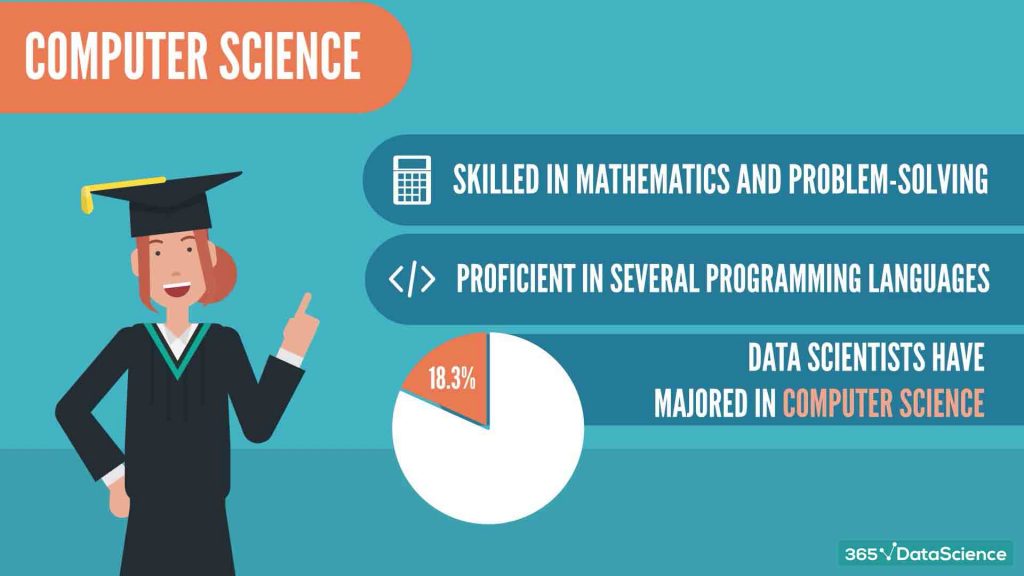
Well, if you can’t, then no one else can. A degree in Computer Science prepares you to be a code-savvy professional with strong analytical thinking, and a knack for creative tech solutions – which makes you the top choice of data science employers. Professionals with that degree have outstanding mathematics and problem-solving skills. Not to mention they are already proficient in several programming languages and tools. No wonder 18.3% of current data scientists have majored namely in Computer Science! So, let’s explore in detail the major points computer science helps you score.

computer science degree pros

The first and the most important advantage a computer science background gives you is spectacular problem-solving skills.

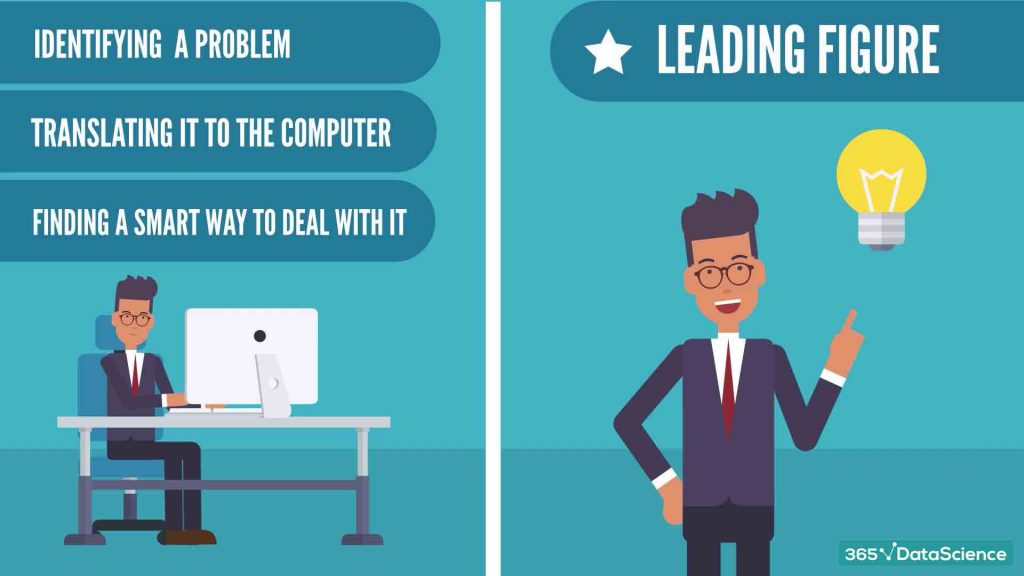
Computer Scientists thrive in challenging situations. And solving complex issues is just a regular part of their lifestyle!  Basically, what they do on a daily basis is identifying a problem, translating it to the computer, and finding the smartest way to deal with it. Over and over again. A Computer Science graduate rushes in and finds solutions where others fear to tread which makes them a leading figure in any data science team.

transition to data science from computer science, problem solving skills

Second – writing a code that’s reusable and understandable by others.

This is one of the most precious skills for everyone working in data science. Why is that?

For one thing, it saves a lot of time for everyone involved.

If your code is very hard to follow, no one will want to use it. Especially in a fast-paced business environment where data science teammates should work like a well-oiled machine.

On the other hand, writing readable code that complies with the best practices speaks volumes. It shows you’re good at explaining your way of thinking to others, which is undeniably crucial for a data scientist working within a cross-functional team.

As a Computer Science person, you obviously know how to do that, so this box is ticked!

transition to data science from computer science, best coding practices, writing good code

And third – having a super-versatile toolbox.

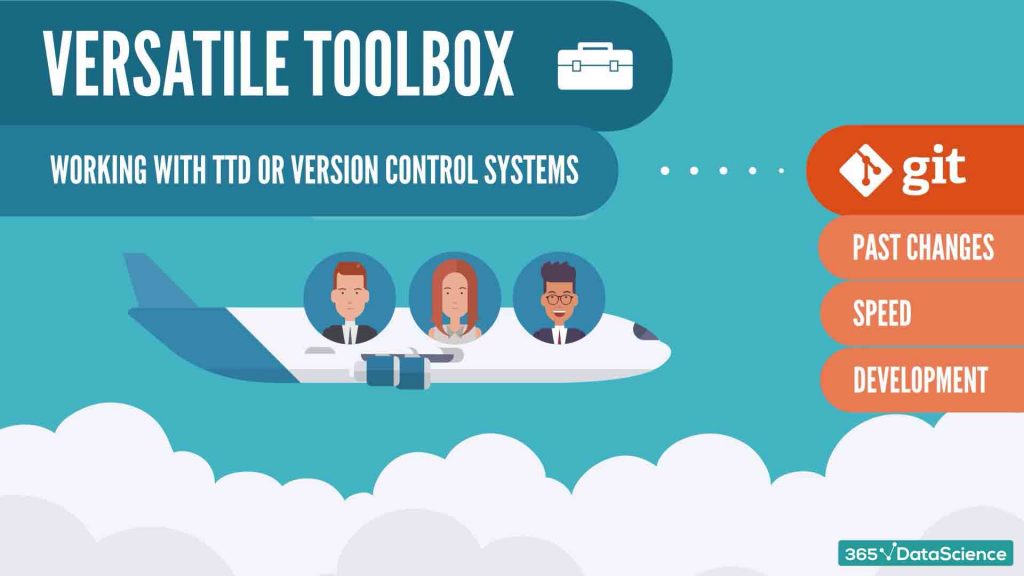
Data scientists rarely fly solo. That said, your ability to work with TTD or version control systems, like Git, for example, is indispensable to managing the code: including past changes, speed of execution, and development of the project. A data science team needs someone who knows how to monitor timelines or check if the code is labeled properly. Not many people are highly skilled at that, but a Computer Science graduate has the know-how that certainly gives them an edge.

transition to data science from computer science, skillset, git

We believe now you know transitioning into data science from computer science is not a question of “Can I?” rather than “Should I?”

Should I transition to Data Science from Computer Science?

Well, every person is different and so are their career choices.

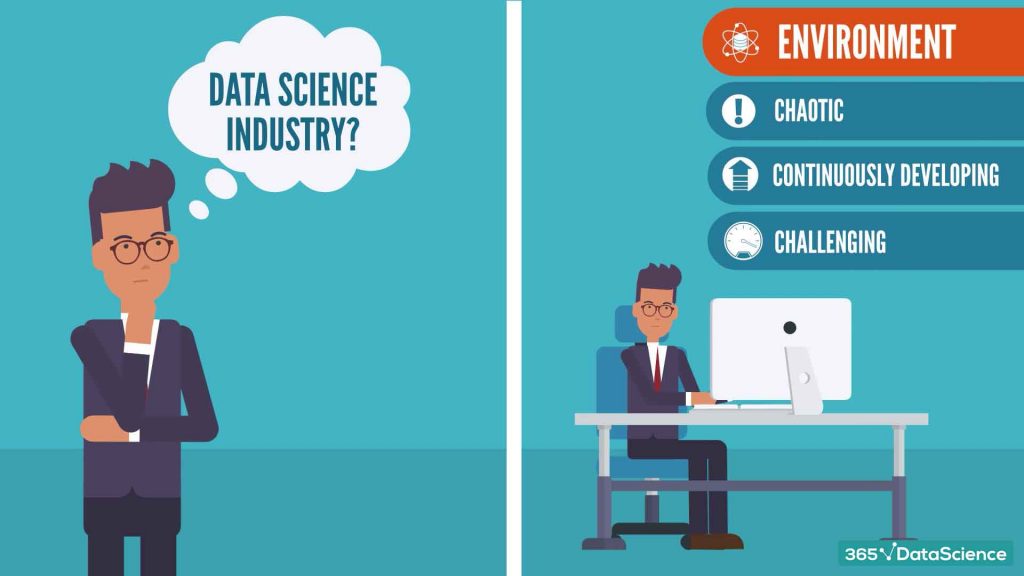
Data science has been recently “discovered” and giving it a worldwide meaning seems to be a problem. Because of that, understanding the data science industry is a tough job. We might say that in most places being a data scientist will require you to work in a chaotic, continuously developing, and challenging environment.

data science industry

And, yes, 20 years ago, there wasn’t a Data Science job… And you may ask “Why?”

The main reason is that there wasn’t that much data to work with.

But this is not the case now. There are 2.5 quintillion bytes of data created daily and businesses are in dire need of people working on it to improve our lifestyle, health, and more… In fact, the demand for data science professionals is so high that it will be hard for the supply to catch up for many years to come! That also explains the $100,000+ median base salary and why reports like Glassdoor’s 50 Best Jobs have consistently named Data Science the winner for the past few years.

demand for data science professionals

Consider this – data science today is very close to how computer science was perceived back in 2005.

Actually, data science and computer science are very similar in that they are following the same demand and supply laws… But only with a 20-year difference. So, you might as well take advantage of that before the market gets overcrowded with highly trained data scientists and salaries start to plateau.

So, how to transition to Data Science from Computer Science?

Knowing how to code has already put you on the fast track to the data scientist role. What you might miss in terms of knowledge is:

Statistics

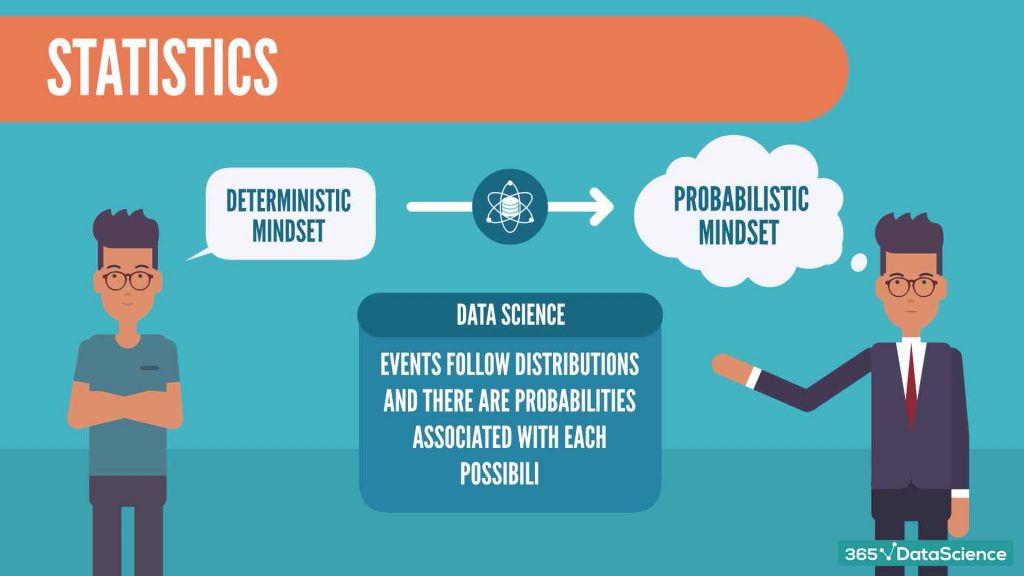
Computer Scientists boast a deterministic mindset. This compels them to want to have all possibilities covered. And that’s great, but, to be a data scientist, you need to shift to a statistical or even better – a probabilistic mindset. Why? Well, because of how data science works – events follow distributions and there are probabilities associated with each possibility. So, that’s a whole new way of thinking to adapt to.

statistics

Machine and Deep learning

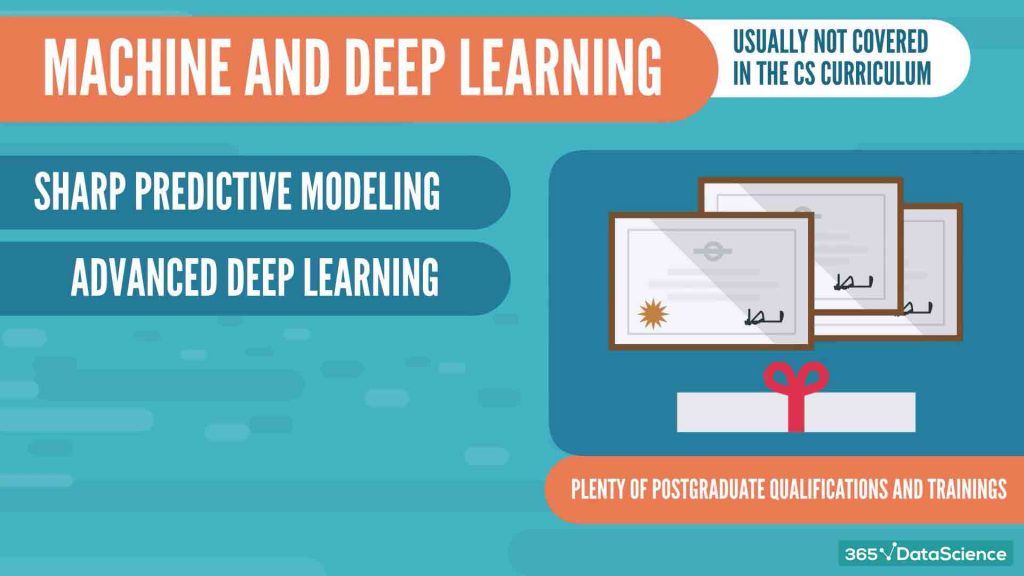
You guessed right -usually, the Computer Science curriculum doesn’t cover these. But namely sharp predictive modeling skills and advanced deep learning techniques will give you a huge competitive edge. Fortunately, there are plenty of post-graduate qualifications and online trainings that will help you get there.

transition to data science from computer science, machine learning, deep learning

Reading research papers

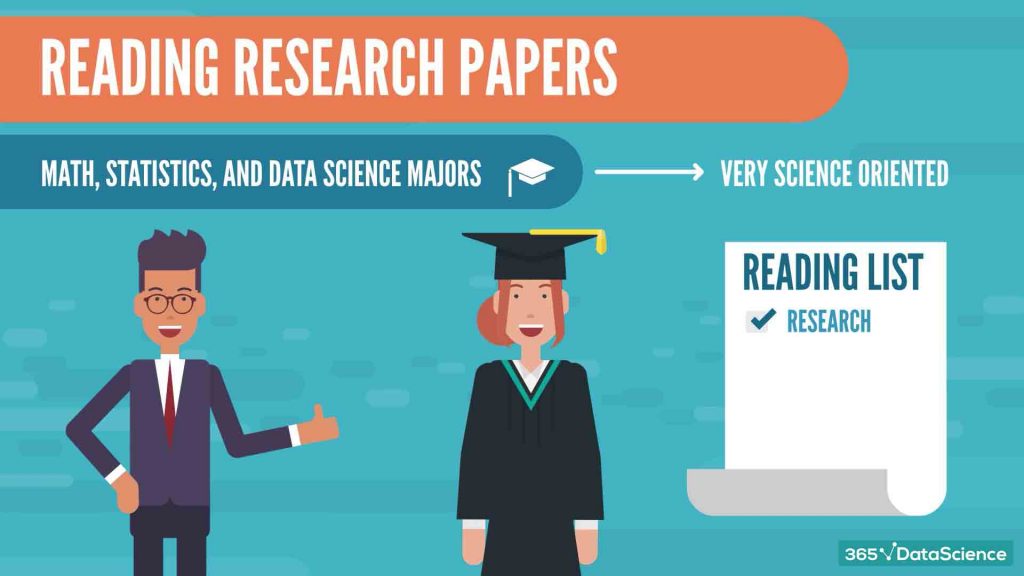
Math, Statistics, and Data Science majors are very science-oriented. So, reading, understanding, and applying the technical methods in said paper is no challenge for them. But these don’t come naturally to a Computer Science graduate. Being able to apply concepts from papers is the number 1 skill demanded in top companies. That’s why adding research to your reading list is certainly worth the effort.

research papers

Data Visualization

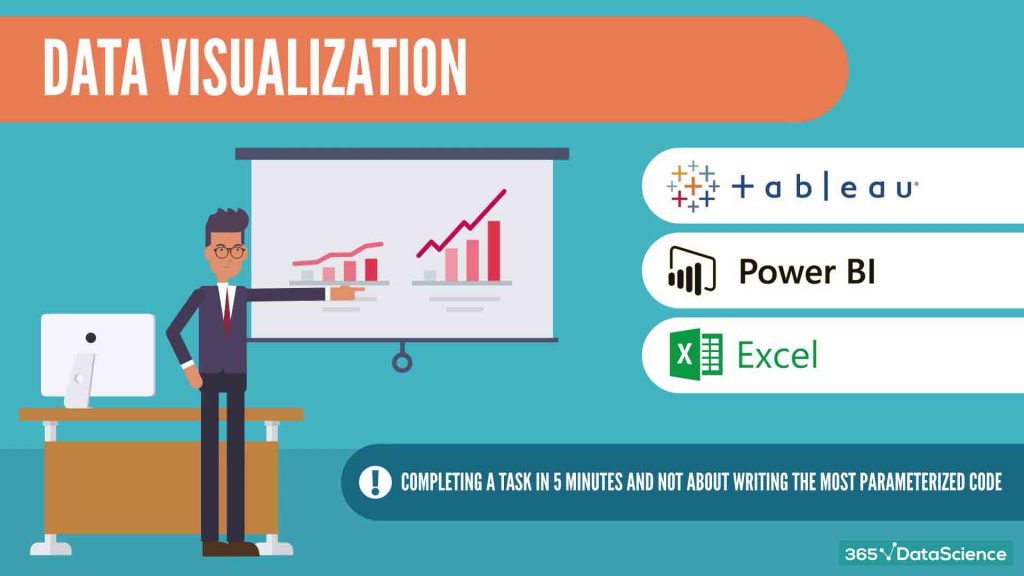
Representing whole data research on just a few graphs and tables is a major component of a data scientist’s work. And it’s not an easy task. So, while you may prefer to code, adding software tools like Tableau, Power BI, and Excel are a must for any data scientist. Overlooking these could be the biggest mistake of Computer Science graduates. Remember – in the business world, sometimes it is about completing a task in 5 minutes and not about writing the most parameterized code.

transition to data science from computer science, data visualization tools, tableau, power bi, excel

But even with these skills under your belt, data science is no easy street.

In fact, one of the biggest challenges you’ll face is working efficiently with both C-level executives and team members with various backgrounds and fields of expertise.

So, if you think that employers are only looking for top technical talent – you’re wrong. A data scientist should also be a great team player.

According to an internal study run by Google, the most inventive and effective teams within the corporation aren’t the ones full of top scientists. Instead, their best performers are interdisciplinary groups with employees who bring strong soft skills to the table and enhance the collaborative process…

team player

Which brings us to Leadership.

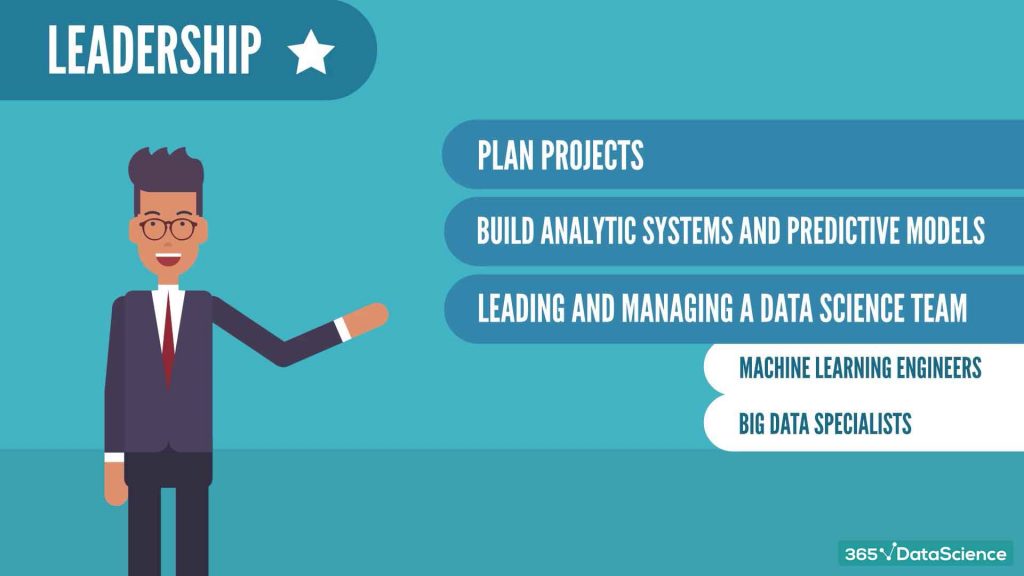
As a data scientist, you will not only plan projects, and build analytic systems and predictive models. You will also be the leader of a data science team. And managing a team of other data scientists, machine learning engineers, and big data specialists requires more than drive and vision.

transition to data science from computer science, data science team lead

In a data science team, you can always teach others or be taught yourself, regardless of their level in the hierarchy.

So, keeping an open mind to new and challenging ideas is a must. But don’t worry if you don’t feel you’re cut out to be a leader just yet– as long as you have empathy, integrity, and the desire to listen to your team’s needs and concerns, you can grow to become an outstanding Lead Data Scientist.

leadership

All things considered, Computer Science majors can, and should, try to pursue a career in data science because they have the necessary skills and there is high market demand. Surely, programming skills are mandatory for any data scientist. Thus, there is no doubt that you, dear Computer Science major, could be a successful one.

Ready to take the next step towards a data science career?

Check out the complete Data Science Program today. Start with the fundamentals with our Statistics, Maths, and Excel courses. Build up a step-by-step experience with SQL, Python, R, Power BI, and Tableau. And upgrade your skillset with Machine Learning, Deep Learning, Credit Risk Modeling, Time Series Analysis, and Customer Analytics in Python. Still not sure you want to turn your interest in data science into a career? You can explore the curriculum or sign up 12 hours of beginner to advanced video content for free by clicking on the button below.

The post How to Transition to Data Science from Computer Science? appeared first on 365 Data Science.

from 365 Data Science https://ift.tt/3f0STmA

10 Best Machine Learning Textbooks that All Data Scientists Should Read

Check out these 10 books that can help data scientists and aspiring data scientists learn machine learning today.

Originally from KDnuggets https://ift.tt/35h161x

source https://365datascience.weebly.com/the-best-data-science-blog-2020/10-best-machine-learning-textbooks-that-all-data-scientists-should-read

The AI & Chatbot Conference is starting in 24hrs.

There are now less that 5 tickets left, so be sure to get your tickets before they are all gone.

Check out our Agenda:

April 28th 2020: Live Q&A 10am to 2:30pm Pacific Time

Our agenda is designed to focus on the most important topics in the Bot, AI, Voice space:

  • 10:00 AM: Yaki Dunietz (CEO @Conversational Components) Topics: NLP & Design, Use Cases and Bot Ecosystem Overview.
  • 10:30 AM: Cristian Ignat (Co-Founder & CEO @Aggranda) Topics: Conversational RPAs & Backend Bots for Enterprises
  • 11:00 AM: Alex Weidauer (Founder at Rasa) Topics: NLP, NLU, Bot Ecosystem
  • 11:30 AM: Maciej Maliszewski (Head ofK2Bots.AI) Topics: Conversational Interphase of IOT
  • 12:00 PM: Lindsey McCarthy & Phoebe Parsons ( Design & ML @T-Mobile) Topics: Marketing and UX and Strategy
  • 12:30 PM: Yi Zhang (Co-Founder & CEO @ RulAI) Topics: NLP, NLU and NLG
  • 1:00 PM: Vittorio Banfi (Co-founder & CEO @BotSociety) Topics: Design & UX, Launch Strategy
  • 1:30 PM: Derek Roberti & Dennis Walsh (VP Technology & President @Cognigy) Topics: Conversational RPAs & Backend Bots
  • 2:00 PM: Mira Lynn (Conversational AI @GoDaddy) Putting it All Together Panel

April 29th 2020: Full Day Dialogflow Workshop 9am to 3:30pm Pacific Time

Build an AI Powered Customer Service Chatbot for your website in our full day workshop and get Certified in Dialogflow.

Agenda

  • Start Project with Dialogflow: Design Intents & Entities
  • NLP & NLU Fundamentals: Develop 10 Conversations, Welcome flow & Fallbacks
  • Launch Bot on your Website
  • Learn advanced Design & Copywriting Techniques
  • Quickly Add Pre-Built Conversational Components to your Bot using CoCoHUB


The AI & Chatbot Conference is starting in 24hrs. was originally published in Becoming Human: Artificial Intelligence Magazine on Medium, where people are continuing the conversation by highlighting and responding to this story.

Via https://becominghuman.ai/the-ai-chatbot-conference-is-starting-in-24hrs-e6aa3b33c379?source=rss—-5e5bef33608a—4

source https://365datascience.weebly.com/the-best-data-science-blog-2020/the-ai-chatbot-conference-is-starting-in-24hrs

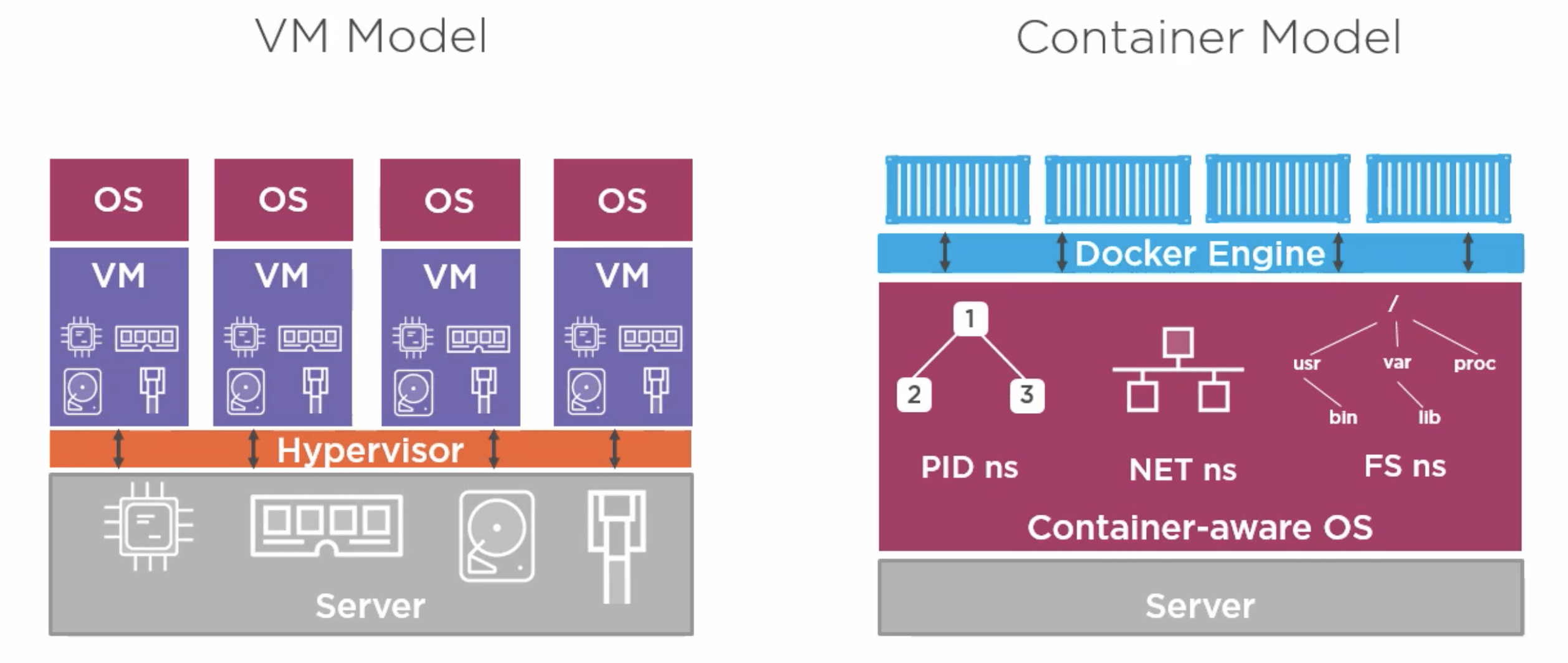
Docker for Full-stack

First all VM depending on the hypervisor, but docker is more like OS virtualization, it creates virtual OS and assigns one to each…

Via https://becominghuman.ai/docker-for-full-stack-27d1883578bd?source=rss—-5e5bef33608a—4

source https://365datascience.weebly.com/the-best-data-science-blog-2020/docker-for-full-stack

TensorFlow Micro-controllers

Source

There are lot many ML practitioners who are not having any background in Embedded Platform. And on the other hand, Embedded developers also might not be familiar with ML algorithms. But why you need to bring ML to the microcontroller like Arduino Nano Clock 64 MHz, Flash 1 MB, RAM 256 KB.

Why should we run ML on Micro-controllers.?

By running machine learning inference on microcontrollers, developers can add AI to a vast range of hardware devices without relying on network connectivity, which is often subject to bandwidth and power constraints and results in high latency. Running inference on-device can also help preserve privacy since no data has to leave the device.

Jobs in AI

So these are some of the practical reasons:

  • Accessibility — Users want smart devices to respond quickly to the local environment. Also, it should consider all the market scenarios such as size, availability of Internet connectivity and many more.
  • Cost — Device should be within the lowest budget hardware fulfilling all the requirements.
  • Efficiency — Battery life, functionalities, range, durability and most importantly device size. If you are running behind this Arduino Nano got this covered for you.
  • Privacy — Arduino cares about your data and takes the precautions to make sure that your data is in safe hands.

TensorFlow Lite Micro now can be used with the Arduino Nano 33 BLE Sense. This was the much-awaited announcement for all the microcontroller lovers out there.

It doesn’t require operating system support, any standard C or C++ libraries, or dynamic memory allocation. The core runtime fits in 16 KB on an Arm Cortex M3, and with enough operators to run a speech keyword detection model, takes up a total of 22 KB.

The inference examples for TensorFlow Lite for Microcontrollers are now packaged and available through the Arduino Library Manager. We can now easily run them on Arduino in a few clicks. In this section, we’ll show you how to run them. The examples are:

  • micro_speech — speech recognition using the onboard microphone
  • magic_wand — gesture recognition using the onboard IMU
  • person_detection — person detection using an external ArduCam camera

For more background on the examples, you can take a look at the source in the TensorFlow repository.

TensorFlow Lite for Microcontrollers is designed for the specific constraints of microcontroller development. If you are working on more powerful devices (for example, an embedded Linux device like the Raspberry Pi), the standard TensorFlow Lite framework might be easier to integrate and more useful as well.

Trending AI Articles:

1. Introducing Open Mined: Decentralised AI

2. Only Numpy: Implementing Convolutional Neural Network using Numpy

3. TensorFlow Object Detection API tutorial

4. Artificial Intelligence Conference

TensorFlow Lite for Microcontrollers is an experimental port of TensorFlow Lite designed to run machine learning models on microcontrollers and other devices with only kilobytes of memory. So,

The following limitations should be considered:

  • Support for a limited subset of TensorFlow operations are available (compared to the standard framework)
  • Support for a limited set of devices (all Arduino boards are also not supported till the date)
  • Low-level C++ API requiring manual memory management (If you are a python developer then this might be the toughest task)

Making TensorFlow Lite for Micro-controllers available from within the Arduino environment is a big deal, and as the availability of more pre-trained models, will be a huge change in the accessibility of machine learning in the emerging edge computing market. I will try running some models on Arduino and will share the experience.

Let me know your experience if you have worked already with these tools.!

Don’t forget to give us your ? !


TensorFlow + Micro-controllers was originally published in Becoming Human: Artificial Intelligence Magazine on Medium, where people are continuing the conversation by highlighting and responding to this story.

Via https://becominghuman.ai/tensorflow-micro-controllers-f517194209f?source=rss—-5e5bef33608a—4

source https://365datascience.weebly.com/the-best-data-science-blog-2020/tensorflow-micro-controllers

Design a site like this with WordPress.com
Get started