Earn a Master of Professional Studies in Data Analytics online through Penn State World Campus – and you can add in-demand skills to your wheelhouse while you continue to work.
Originally from KDnuggets https://ift.tt/2VHjJYc
365 Data Science is an online educational career website that offers the incredible opportunity to find your way into the data science world no matter your previous knowledge and experience.
Originally from KDnuggets https://ift.tt/2VHjJYc

Extracting data from tables isn’t quite as easy as it should be.
If you read up about just how wrong the Rolling Stones were when it comes to extracting data from tables, you already know!
Automating data extraction — even when it comes to complex tables and charts — is not as tough as you’d think.
When you ask yourself…and answer…some pointed, critical questions, you can learn if automation can be all it’s cracked up to be. The key, of course is asking the right questions…
So what are they? Let’s dive in.
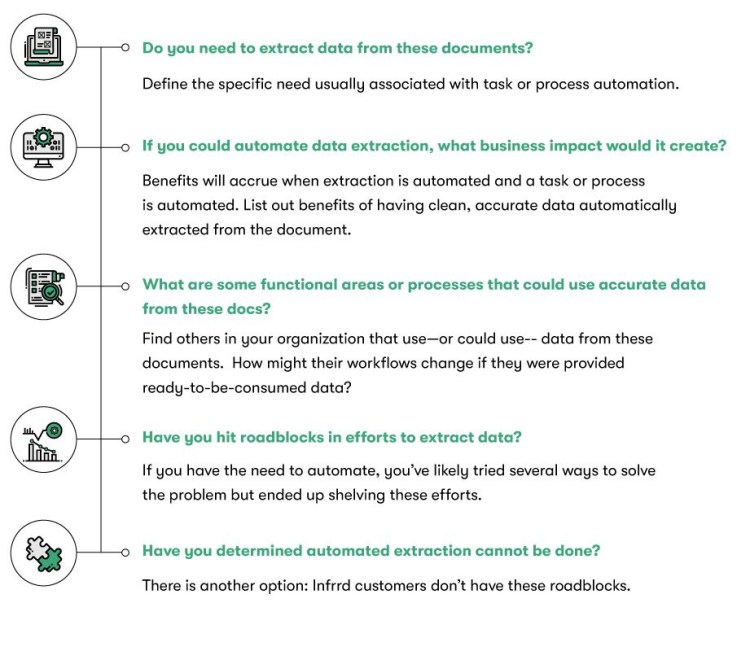
QUESTION 1: Do You Need to Extract Data from Tables?
The first question is always a doozy…right?
These days, time is precious for everyone.
That’s the gist behind this question.
If you don’t have a specific need identified for the data that’s often trapped in tables, then there’s no need to pursue automation!
If there’s no existing process that relies on or otherwise uses data trapped in tables and charts, then there’s no need to pursue automation.
But, if you DO have a need…if you DO have processes that use this kind of information?
Read on.
Answering the rest of these questions can make the path to automation (and all its advantages) more clear.
QUESTION 2: If You Could Automate Data Extraction from Tables, What Could It Do for Your Business?
This question is all about seeing the possibilities.
Before you answer it, consider the volume of data you have trapped in tables.
Automation saves time — sometimes a ton of it! But, if the volume isn’t there, then automation of data extraction may not make sense.
That said, if you’re processing thousands of documents (and for some even tens of thousands… or more!), then automation could mean you have measurable, untapped benefits waiting to be revealed.
2. AI, Machine Learning, & Deep Learning Explained in 5 Minutes
3. How To Choose Between Angular And React For Your Next Project
So to answer this question, make a list of what could be possible if you could automate all that data extraction work.
As you make your list, consider the full impact of what automation could mean for your business.
That means dig deeper.
For example…
It’s more than saved time…
…it’s an ability to focus on activities more strategic than data scraping.
It’s more than increased accuracy…
…it’s higher quality data that leads to an increased trust in the numbers.
It’s more than lower costs…
…It’s allowing skilled workers to focus on what they do best, rather than tiresome, monotonous, and deadly boring manual data extraction work.
QUESTION 3: What Are Some Functional Areas or Processes That Could Use the Accurate Data Extracted from These Tables and Charts? How Could Your Business Benefit?
Consider all of the functional areas and/or existing processes that could benefit from more accurate, extracted data.
List them out. (Really! I’ll wait for you!)
Need help?
Think of all the people that either already consume the data…
Think about all the people that could use this data to make more informed decisions.
And, consider this quote from a leading insurer to help paint the picture:
“If we could extract full information, then we could offer insights as a service to the rest of the organization. That means being able to automate other downstream processes.
For us, people across different BUs end up reading the same material every day just so they can run their processes. If we could extract ALL the data, then we could generate a ton of cost savings…and increase our speed to market, too.”
Once you have your list, you’ll have a better idea of just how big an impact quicker access to more accurate data can have for your business.
QUESTION 4: Have You Tried to Extract Table Data from PDFs, But Found You Always Hit Roadblocks?
Maybe you tried OCR.
OCR didn’t work.
Maybe you tried cloud tools from Amazon or Google.
Cloud tools from Amazon or Google didn’t work.
Maybe you tried [FILL IN WHAT YOU TRIED HERE].
[FILL IN WHAT YOU TRIED HERE] didn’t work.
The thing is, many people try this…and many people fail.
But the failure that so many experience doesn’t have to be the norm.
QUESTION: 5: As a Result of Those Roadblocks, Have You Determined Extracting Data from Tables Cannot Be Done Outside of Manual Efforts?
Have you determined automating this type of data just cannot be done?
If so, that would be a shame.
Because you CAN automate data extraction, no matter how complex your documents can get.
For example…consider this large insurer (you may know).
The large insurer (you may know) was using a manual process to extract data from documents that had tables, as well as other images, photos, fonts…even handwritten sections,
Their process? It took four weeks to fully complete.
They had all but given up hope of automating data extraction. It was a massive roadblock…until they learned how to remove it.
Once they eliminated the data roadblock — making that part of their process automated rather than manual — the large insurer (you may know) cut turnaround time by 75%.
What’s more? In doing so, they increased capacity by 60%, allowing them to process more claims…that is…do more business.
What Would 60% More Capacity Mean for Your Business?
Answering these critical questions are the first step toward finding out.
If you’d like to explore the possibilities with someone who’s been there…or even just want some assistance figuring it all out, it’s available.
Read more about how others have addressed their data extraction challenges head on and thrived.
OR…want to chat about it? Chat with an expert right now (!) or whenever you feel the need.
Finally, be on the lookout for more helpful content just like this…soon. ?




Critical Questions: How To Automate Data Extraction From Tables was originally published in Becoming Human: Artificial Intelligence Magazine on Medium, where people are continuing the conversation by highlighting and responding to this story.

Adaptive app development can be scary because you never know what you can get for it and how much it costs you. Furthermore, the growing adoption of Artificial Intelligence (AI), Machine Learning (ML) and Blockchain add to the complexity of business processes, and you need to customize the software to meet specific business needs.
After analyzing the trending developments in software, companies continue to study where changes often occur. Successful companies engage in technology, evaluate solutions, solve problems, and streamline business processes. Realizing that growing business requires software customization to survive in a competitive landscape.

The top custom application developers at Entrance Consulting demystify some of the key trends that revolutionize software worldwide and explain how we can leverage the benefits of app optimization to grow business.
3 Critical Consequences Opening new vistas in custom app development
AI-embedded companies are leading the race in niche dominance
A noteworthy trend is that companies have made significant inroads into business processing with the help of AI and ML and appropriately anchored the brand’s visibility. Experts estimate that AI is on track to create a $ 16 trillion stake in global business development.
America’s leading companies are leveraging big data to boost customer relationship ship management (CRM) to a whole new level. At the forefront is Chatbots, an ML application that dramatically reduces customer engagement costs while increasing customer satisfaction levels.
AI ensures continuity of business legacy, improves the scalability of business operations and accelerates service delivery by responding to change.
Reduce blockchain costs and streamline business process reengineering
According to Statista, the global cost of blockchain solutions, currently estimated at $ 2.7 billion, will reach $ 12 billion by 2022.
From the banking and finance sectors to the industrial assembly lines, healthcare and logistics, blockchain is gaining acceptance and redefining the rules of engagement in highly competitive sectors.
2. AI, Machine Learning, & Deep Learning Explained in 5 Minutes
3. How To Choose Between Angular And React For Your Next Project
Specify the blockchain and the first thing that strikes you is the uproar of cryptocurrency, especially bitcoin and the digital currency in the financial sector. But the blockchain goes above and beyond bitcoin.
By efficiently coding big data in an irreplaceable ledger in a computer network system, blockchain provides a cost-effective, red-tape-free alternative to slow-moving central companies like governments, banks, and financial institutions.
Advances in the field of quantum physics are promoting the exponential growth of AI and ML
The traditional binary computer, zeros and crunching them, limits the computing power and slows down the processing of big data by AI and ML algorithms. Quantum Computing (QC) Processing speeds increase many times when unlocking the enormous potential of subatomic particles.
In the coming era, quantum processing power will enable AI and ML algorithms to feature highly mapped data formats to provide better insights into industrial and business efficiencies. A revolution in adaptive application development promises growth in many sectors of the economy.
4 adaptive application development benefits that drive revolutionary software changes
Significant reduction in cybersecurity threats
Digital disruption provides significant exposure to cyber threats. The software developer’s essential job is to eliminate security threats and reduce the vulnerability of IT infrastructure to malicious attacks.
The combination of Activity Wings increases business efficiency and customer satisfaction
Scaling of business activities creates multiple divisions and intersections within the organization, with one side not knowing (or looking after) what the other is doing. The result is a system that negatively impacts efficiency and productivity.
The main advantage of adaptive application development is the multiple systems and protocols in the same system.
Come together under one platform. Systems integration can help you eliminate unproductive operational patterns. You will retain focus in areas that require your immediate attention.
Integration works for companies and clients. Companies become more efficient at conceptualizing, implementing and delivering products and services, and increasing customer relationships to increase customer satisfaction.
Brand imaging, employee satisfaction, and customer relationships go up Optimizing software for your specific needs is like a self-fulfilling prophecy — you get positive results in three critical areas.
Brand Imaging
Branding sets you apart from your competitors. It is the personality that enhances the product that encourages customers to engage you up close and personal. It is the quality of your service, pride, and loyalty when people associate with your company.
One of the unique benefits of software customization is that you can design your app to beautifully project your brand identity, but you also extend a happy customer experience, which forces users to come back for more.
Employee satisfaction
Conduct an employee engagement survey, and you will find that a significant portion of your employees wants to break free from daily routines and find a gateway to more professionalism that fosters purpose-fulfilled roles.
The customization manual provides a gold standard for reducing workload and improving the efficiency of business processes, engaging employees with customers and contributing to business development.
By building a single operations platform, you are creating a place where all employees (even in remote areas) can feel free to communicate and stay open.
Customer Relationships
Getting to know a small cross-section of customers in your immediate neighborhood and meeting their needs is not a task. What do you do when big data brings you a hugely growing customer base that spans your reach worldwide? Your challenge is to expand the scaling business and customer base, respond quickly to customer intent, and maintain customer loyalty, track and monitor customer preferences.
Feedback via social media. The all-in-one custom software solution manages customer data, oversees marketing campaigns, keeps tabs on the team responsible for product delivery, and ensures that your interface with the user works seamlessly and without minus hassles.
Closing Point:
Consider adaptive application development as a strategic tool that effortlessly integrates different aspects of your business to improve your operational success, increase your productivity, and increase revenue. The customization of the software gives you a technical boost that catapults the leagues before the competition and differentiates you from the audience you want to engage with.
Connect USM to know how our Mobile apps help your business and boost your business much more in a short time.
Benefits of Custom Application Development was originally published in Becoming Human: Artificial Intelligence Magazine on Medium, where people are continuing the conversation by highlighting and responding to this story.
Sophisticated computer technology is forming the base of our life. Fancy terms like AI, machine learning, and neural networks are no more a word associated with some out of the world technology; instead, you can find its implementation in our everyday life. Whether it’s your phone working as per your instruction or machines performing tasks as per the data fed in it, all this is a result of Artificial Intelligence. In the times to come, there is going to be a higher demand for AI skills, and in fact, it has gone up by 119% in the past three years. It is thus becoming one of the lucrative career options. Becoming AI exert requires artificial Intelligence certification. The AI market is expected to reach US $ 22.6 billion by the end of this year.
It brings us to another important question, what is promoting this rapid growth of AI. Well, increasing the adoption of cloud-based applications and IoT has played a vital role in the rise in AI. Besides, now companies are investing in 5G technology, and growing demand for VAs are also promoting the growth in adoption of AI. All this brings us to the conclusion that Artificial Intelligence is going to be a lucrative career option, and going for artificial intelligence certification is the right move that you can make.
“By 2025 AI Is Expected To Become A 60 Billion Dollar Industry”
After completing your certification in artificial intelligence, you will gain expertise in different skills that are going to help you grow in the professional world. High income is guaranteed after completing certification in artificial intelligence, and here are some of the probable career options for you after machine learning certification and artificial intelligence certification:
The objective of upskilling oneself is the need of the hour. With the growing competition and rising demand for skilled people, one needs to be proficient. Since AI and machine learning are going to be critical drivers of growth, it is also going to be a great career option.
2. AI, Machine Learning, & Deep Learning Explained in 5 Minutes
3. How To Choose Between Angular And React For Your Next Project
Here are some of the domains where AI is going to impact in the times to come, and there will be a need for skilled artificial intelligence expert :
With all these lucrative career options, you have the option of going for certification in artificial intelligence and machine learning certification that aim at providing proficiency in the concepts of AI and ML. Global Tech Council is going to be the right platform where you can boost your career in the field of AI and ML. This online certification program is going to give the right ignition to fuel your professional growth.
Sophisticated computer technology is forming the base of our life. was originally published in Becoming Human: Artificial Intelligence Magazine on Medium, where people are continuing the conversation by highlighting and responding to this story.
Originally from KDnuggets https://ift.tt/2Korzk8
Originally from KDnuggets https://ift.tt/2xO5859
source https://365datascience.weebly.com/the-best-data-science-blog-2020/announcing-pycaret-100
Originally from KDnuggets https://ift.tt/3eGrCFN
Originally from KDnuggets https://ift.tt/2RSIDTC
Originally from KDnuggets https://ift.tt/3eHMCwf
Extracting panel data from PDF documents is not for the faint of heart. If you already read The Odd and Interesting Story of Panel Data, you’d know exactly what that means!
Typically it’s a time-consuming, manual (and some would say torturous) process that’s as tedious as it is filled with error.
It’s all because of the challenges of extracting panel data.
It’s no secret that to extract panel data from PDFs is a pain. Those that do it know why:
So if it’s so tough, why isn’t there a fix?
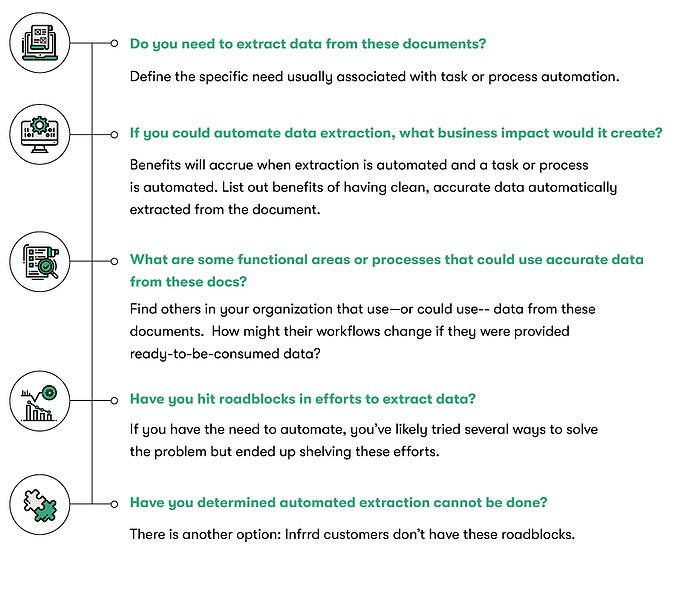
Well…there is. The first step? Answer these five questions. Your answers will help you identify if your processes are broken, and if they are a good candidate for automation!
Shall we begin? (That’s not the first question! ?)
QUESTION 1: Is Complete Panel Data Truly Necessary for Your Business?
If it sounds like an easy question, that’s because it is.
But, before you start down the path to automated data extraction from panel tables, it’s an important one to answer.
If you don’t truly NEED more accurate, complete data extracted from panel tables, then there’s no reason to invest the time and money to automate the process!
QUESTION 2: Imagine You Can Fully Automate Data Extraction from Panel Tables…What Would That Mean for Your Business?
Several years ago, a well-known global logistics company (UPS) ran a branding campaign that asked a question…”What can Brown do for you?”
Well, consider the automated data extraction version of that question!
What can automation do for you?
Don’t brush off answering this question. By thinking deeply about the effects of automation, you’ll come up with ways that automating the manual data extraction process can affect your business outcomes.
Here are some thoughts to get you started.
QUESTION 3: Now That You’ve Uncovered the Possibilities, What Are the Processes and Functional Areas That Could Benefit from the More Complete, Accurate Data Extracted from Panels?
Find others in your organization that use — or could use — data from these documents. How might their workflows change if they were provided ready-to-be-consumed data?
In other words, it’s time to consider where you’d be able to use this data. How could it impact specific processes or functional areas?
Make a list! Make note of the process or functional area, then how more complete and accurate data pulled from the panel charts would help.
QUESTION 4: Have You Attempted to Automate Data Extraction from Panel Tables in the Past, But Run Into Frustrating Barriers?
If panel data is critical to your business, then your answer to this question is almost certainly a YES!
In other words, if you have the need to automate, it’s likely you tried several ways to solve the problem, but ultimately ended up shelving your efforts.
Automation of data extraction from complex documents, like panel drawings, has been a challenge for a long time.
You’re not the first to hit roadblocks and postpone automation efforts. And, you won’t be the last.
The most important thing to take away from your answer to this question is this: As technology has evolved, so has the automation of data extraction.
Keep plugging. Don’t give up!
2. Paper repro: “Learning to Learn by Gradient Descent by Gradient Descent”
3. Reinforcement Learning for Autonomous Vehicle Route Optimisation
QUESTION: 5: As a Result of the Barriers (and your frustration), Have You Resigned Yourself to Using Manual Data Extraction for Panel Drawings?
That wouldn’t be surprising.
But, as alluded to in the last question, there’s another way!
Consider one particular Fortune 50 leader in engineering and manufacturing.
For more than a century, this stalwart has done business globally across multiple sectors, including aviation, power generation, healthcare, renewable energy, transportation, and finance.
To win business, the industry giant needs to respond to RFPs in a timely manner. Their biggest challenge in doing so? The RFP documents they receive are always free-flowing, often, spanning hundreds of pages with no fixed structure.
Like what you’ve probably experienced, their team would spend weeks extracting relevant information to be used in their quotations. The combination of the time it took to pull data and the risk of inaccuracies often cost the company their competitive advantage…and even affected how their brand was perceived.
Then, the company met Infrrd.
With the help of the Infrrd IDP Platform, an industry leader increased their data extraction accuracy by 90% (not a typo!) and they reduced the time to process the data from a single 200-page document from weeks to a few minutes.
What if you could reduce data extraction from panel tables from weeks to minutes?
If this Fortune 50 company can do it, so can you.
Explore the possibilities.
Automating panel data IS possible. And the effects it can have on your business may astound you.
Don’t give in to the limiting beliefs just because you already tried OCR or cloud automation tools from Amazon or Google.
If you’d like to explore the possibilities with someone who’s been there…or even just want some assistance figuring it all out, let’s chat.
Read more about how others have addressed their data extraction challenges head on and thrived.
OR…if you don’t want to wait to grow your business, chat with an expert right now!
Finally, if you dig helpful content just like this…register to get it regularly!
Sign up for regular updates right to your inbox. ?
How Do I Extract Panel Data From PDFs? First, Answer These 5 Questions was originally published in Becoming Human: Artificial Intelligence Magazine on Medium, where people are continuing the conversation by highlighting and responding to this story.

 365 Data Science