
The Performance Of Your Facial Recognition Model Depends On The Data You Feed It -Big Data

The Performance Of Your Facial Recognition Model Depends On The Data You Feed It -Big Data Analytics News

We’ve seen them in films, we’ve read about them in books and we’ve experienced them in real life. As sci-fi as it may seem, We have to face the facts — facial recognition is here to stay. The tech is evolving at a dynamic rate and with the diverse use cases that are popping up across industries, the wide range of developments of facial recognition simply appear to be inevitable and infinite.

Apart from helping us unlock our phones, facial recognition is used in criminal identification, optimize public safety and security, make banking and finance more secure, prevent shoplifting, and more.

The adoption of facial recognition across the world is so extensive that the global value is expected to be around $7bn by the year 2024. Not just that, in the next couple of years, close to 97% airports will be incorporating recognition technology.
However, deploying facial recognition technology in a business, venture or initiative is not an easy task. Technically, there are tons of challenges involved in terms of developing the right artificial intelligence models, building precise machine learning and deep learning algorithms, defining data sourcing or data collection strategies, and more.

For a facial recognition model to identify one particular face or emotion, it has to go through millions of datasets. This is because for it to learn what a smile is, it also has to learn what a smile isn’t. It has to go through millions of datasets on emotions like anger, resentment, regret, contentment, and more to differentiate a simple smile from the rest.

And this brings us to the topic of the importance of the right dataset for your facial recognition model.

What role does the quality of a dataset play in the efficiency of a facial recognition model?

Is data more important than algorithms?

Well, let’s find out.

The Significance of Right Data Sets For Facial Recognition Performance

One of the major hindrances to the efficient functioning of machine learning algorithms is the feeding of poor-quality data sets. The unavailability of quality data will plague the decision-making and analytical skills of the model you are trying to build, completely compromising its purpose. All your intentions with predictive and prescriptive analytics will be skewed with your model spewing incorrect and haphazard results.

To avoid these, it is on us to feed the modules with the right datasets and by right datasets, we mean the data needs to be:

  • generated or collected from correct, appropriate and relevant sources
  • adequately labeled or annotated
  • de-duped
  • and unbiased and devoid of assumptions

A facial recognition model is only as effective as the data it processes and if the data is improper or inadequate, the processing model has no true purpose or acceptable outcome. That’s exactly why data collection and annotation is crucial in building recognition models.

Trending AI Articles:

1. Top 5 Open-Source Machine Learning Recommender System Projects With Resources

2. Deep Learning in Self-Driving Cars

3. Generalization Technique for ML models

4. Why You Should Ditch Your In-House Training Data Tools (And Avoid Building Your Own)

How Data Annotation Optimizes Facial Recognition Models

Some may think that data in facial recognition is just a repository of images of faces, however, these chunks of images cannot be directly fed to a facial recognition model. If you do, the model wouldn’t know what the image is, what it means or what to do with it. To help the model better understand, we annotate or label the data by assigning diverse attributes and parameters.

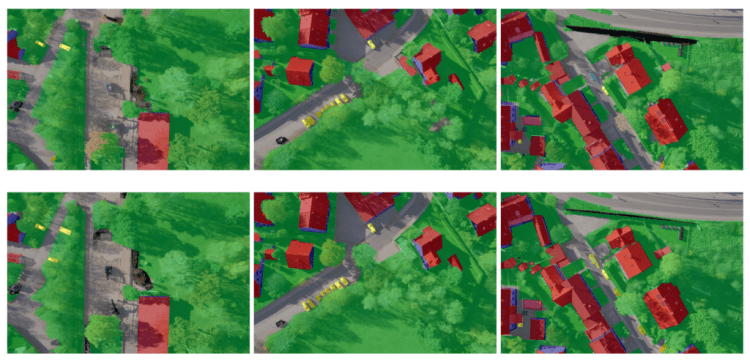
This could be as simple as drawing bounding boxes to developing semantic segmentation techniques, where every single pixel of the image is given a meaning. This helps the model differentiate, for instance, an eye from an eyebrow, a nose from an ear, and more.

The more such data the model is fed, the better it becomes at recognizing the nuances of the human face. In complex cases, data annotation can also be used to define the emotions, moods, and behaviours of people for the models to understand.

Despite sounding simple, the next challenge in the process is the availability of massive datasets to train the models. To build a facial recognition system, millions and millions of images have to be sourced and fed. And that’s where expert data annotators and AI ventures such as Shaip come in. With their repository of relevant images and data sourcing strategies, they can help train your models with the most appropriate data.

Facial Recognition: Use Case

When the model is trained with the right dataset, it can be used to perform diverse actions. To give you an idea of the most effective real-world applications of facial recognition, here’s a quick list.

Facial recognition is used in –

  • the detection of missing persons/children
  • prevent shoplifters from indulging in retail crimes
  • rolling out smarter and more personalized advertisements
  • helping the blind community communicate better with haptic feedback and notifications
  • optimizing law enforcement with real-time details on criminals and individuals in the vicinity
  • social media channels for tagging purposes
  • diagnosing diseases by detecting changes in the face that can go unnoticed to the naked eye
  • making schools airtight from threats and attacks
  • tracking and monitoring classroom attendance
  • preventing cheating and fraudulent transactions in casinos

Wrapping Up

Facial recognition has more use cases than we can imagine and with our implementations today, we are only scratching the surface. As the use cases become more advanced and requirements become more complex, comprehensive data annotation techniques would be needed to train highly sophisticated algorithms and keep pushing the boundaries of facial recognition innovation.

Are you prepared for the future?

Author Bio:

Vatsal Ghiya — CEO of Shaip

Vatsal Ghiya is a serial entrepreneur with more than 20 years of experience in healthcare AI software and services. He is a CEO and co-founder of Shaip, which enables the on-demand scaling of our platform, processes, and people for companies with the most demanding machine learning and artificial intelligence initiatives.

Related Posts

Don’t forget to give us your ? !


The Performance Of Your Facial Recognition Model Depends On The Data You Feed It -Big Data… was originally published in Becoming Human: Artificial Intelligence Magazine on Medium, where people are continuing the conversation by highlighting and responding to this story.

Via https://becominghuman.ai/the-performance-of-your-facial-recognition-model-depends-on-the-data-you-feed-it-big-data-d8bb66c763f8?source=rss—-5e5bef33608a—4

source https://365datascience.weebly.com/the-best-data-science-blog-2020/the-performance-of-your-facial-recognition-model-depends-on-the-data-you-feed-it-big-data

4 Machine Learning Concepts I Wish I Knew When I Built My First Model

Diving into building your first machine learning model will be an adventure — one in which you will learn many important lessons the hard way. However, by following these four tips, your first and subsequent models will be put on a path toward excellence.

Originally from KDnuggets https://ift.tt/30pVbWe

source https://365datascience.weebly.com/the-best-data-science-blog-2020/4-machine-learning-concepts-i-wish-i-knew-when-i-built-my-first-model

8 Women in AI Who Are Striving to Humanize the World

Some exceptional female researchers and engineers are working on projects to make the world a better place with the help of AI, data science, and machine learning.

Originally from KDnuggets https://ift.tt/2OCL2Tt

source https://365datascience.weebly.com/the-best-data-science-blog-2020/8-women-in-ai-who-are-striving-to-humanize-the-world

Top Stories Mar 1-7: Top YouTube Channels for Data Science

Also: Are You Still Using Pandas to Process Big Data in 2021? Here are two better options; 3 Mathematical Laws Data Scientists Need To Know; Google’s Model Search is a New Open Source Framework that Uses Neural Networks to Build Neural Networks; Machine Learning Systems Design: A Free Stanford Course

Originally from KDnuggets https://ift.tt/3rFqfgE

source https://365datascience.weebly.com/the-best-data-science-blog-2020/top-stories-mar-1-7-top-youtube-channels-for-data-science

How AI Will Power the Next Wave of Healthcare Innovation

How AI Will Power the Next Wave of Healthcare Innovation?

There’s no doubt that data is poised to transform healthcare like it has so many other sectors, but it’ll need a helping hand. Today, healthcare providers are collecting exabytes of patient data from hospitals, clinics, imaging and pathology labs, and more. This data contains a wealth of insight into human health, but its lack of structure and sheer volume means it’s well beyond the limits of the human ability to decipher it.

Fortunately, sophisticated AI and machine learning solutions can carry the torch of innovation.

In healthcare, the value of machine learning is its capacity for processing massive data sets that are far beyond the scope of human ability. Raw, unstructured data goes in and clinical insights come out, helping physicians plan and provide better care at a lower cost. While the sky is the limit as far as the benefits of machine learning, constructing these complex algorithms takes time. In the next five to 10 years, we expect to see medical professionals reaping the dividends of healthcare-based innovation in these areas:

Big Data Jobs

Advanced image analysis: Medical professionals are highly trained, and some of their work reflects their tremendous value add. However, there’s still a need for professionals to spend time on repetitive tasks such as image analysis. In radiology, for example, doctors spend time looking at images from CT scans, MRIs, ultrasounds, PET scans, mammography, and more. AI-assisted imaging solutions are using the technology’s advanced pattern-recognition capabilities to highlight image features, identify early predictors of cancer, prioritize cases, and cut down on the volume of labor required to perform accurate diagnoses. As AI processes more and more data sets, it’s inevitable that the technology will eclipse the ability of human doctors to spot the signs of disease as early as possible.

  1. Disease detection: Due to its high cost, healthcare imaging generally takes place only to confirm a diagnosis. It’s an effective solution, but one that AI promises to upend and replace. By conducting an in-depth analysis of huge amounts of historical data, AI can predict the possibility of sickness or disease at incredibly early stages. For example, by looking at an entire patient population that closely matches the demographic of a specific individual in addition to the medical history of relatives, AI could conclude that a patient is very likely to develop a malady such as heart disease years before a doctor could ever accurately make a diagnosis.
  2. Drug discovery: We’ve all seen firsthand how important it is to design and produce effective drugs and vaccines to combat a newly discovered disease. Historically, this process has taken massive investments of time and money, with development timelines extending out to more than a decade in some cases. The ability of AI to cross-reference drugs that are known to be safe and effective and replicate parts of their formulas to suggest new iterations could be groundbreaking, potentially saving countless lives and helping to prevent the next global pandemic.

Trending AI Articles:

1. Top 5 Open-Source Machine Learning Recommender System Projects With Resources

2. Deep Learning in Self-Driving Cars

3. Generalization Technique for ML models

4. Why You Should Ditch Your In-House Training Data Tools (And Avoid Building Your Own)

3. Digital consultation: The pandemic undoubtedly spurred innovation in the telehealth space, but there’s still a long way to go to make virtual visits as effective as a physical visit to the doctor’s office. AI can help close that gap in numerous ways. Machine learning and natural language processing (NLP), for example, will help facilitate symptom collection using just a patient’s voice. Combined with an analysis of the patient’s electronic health record, AI can highlight probable health concerns for doctors to review. By processing information ahead of time, AI increases the volume of patients that doctors can handle, improves the efficacy of virtual visits, and even minimizes the risk of infection from physical interactions as a result.

At Shaip, our goal is to usher in the exciting future of healthcare innovation by supporting firms in their AI initiatives. We help organizations build and train AI and NLP models by licensing the use of more than 10 million medical data sets consisting of images, electronic health record data, and even physician speech. Our data is 100% protected health information-free, accurately annotated, and sourced from more than 60 diverse geographies, ensuring high-quality outcomes.

We also have a deep understanding of AI from the ground up, which means we can lend our experience in selecting unbiased cohorts, healthcare data annotation, and the demands of semi-supervised learning to ensure our clients’ success. For more information on the solutions Shaip can help put in place, please reach out and request a demo today.

Don’t forget to give us your ? !


How AI Will Power the Next Wave of Healthcare Innovation was originally published in Becoming Human: Artificial Intelligence Magazine on Medium, where people are continuing the conversation by highlighting and responding to this story.
Via https://becominghuman.ai/how-ai-will-power-the-next-wave-of-healthcare-innovation-695a2196aae8?source=rss—-5e5bef33608a—4

source https://365datascience.weebly.com/the-best-data-science-blog-2020/how-ai-will-power-the-next-wave-of-healthcare-innovation

Why Use Python for AI and Machine Learning?

Why Use Python for AI and Machine Learning?

Today, most companies are using Python for AI and Machine Learning. With predictive analytics and pattern recognition becoming more popular than every, Python web development services are a priority for high-scale enterprises and startups.

Python developers are in high-demand — mostly because of what they can achieve with the language. AI programming languages need to be powerful, scalable, and readable. Python code delivers on all three.

While there are other technology stacks for AI-based projects, Python has turned out to be the best programming language for AI. It offers great libraries and frameworks for AI and Machine Learning (ML). They offer computational capabilities, statistical calculations, scientific computing, and much more.

In this article, we will learn about a few aspects of the Python programming language that make it perfect for Machine Learning engineers. We will look into the following:-

  • Why use Python software for Machine Learning and AI
  • The best Python libraries for AI
  • Conclusion

Let’s understand why developers prefer the programming language over others like R, Go, Scala, and others for AI-based projects.

Checkout Pros and Cons of Python

Big Data Jobs

Why use Python for Machine Learning and AI

Surveys show that Python is now one of the top programming languages after C and Java. It offers developers to build powerful backend systems for Python AI projects. There are multiple benefits of Python programming language for Machine Learning and AI development. Let’s have a look at them in detail.

Rapid development

The Python community admires the programming language for its quick prototyping capabilities. Developers can reduce the time wasted on learning the intricacies of the stack. They can start quickly with AI development and move to building AI algorithms and programs.

Since the Python code is similar to English, it is easily readable and simple to write. Developers don’t have to spend a lot of time on writing complicated code. On top of that, there are great libraries and frameworks for AI and Machine Learning (ML) in Python that simplify the process. We will have a look at them in detail later in the article.

Trending AI Articles:

1. Top 5 Open-Source Machine Learning Recommender System Projects With Resources

2. Deep Learning in Self-Driving Cars

3. Generalization Technique for ML models

4. Why You Should Ditch Your In-House Training Data Tools (And Avoid Building Your Own)

Flexible language

Allowing developers the utmost flexibility for AI applications is what Python programmers admire about the language. Python for Machine Learning allows you to choose OOPS or scripting-based programming. It enables quick result view without completely recompiling the Python code.

There are 4 different styles of Python software that you can choose from. There’s the imperative, object-oriented, functional, and procedural style — all of which reduce the possibility of errors based on your AI project.

Readability

For most developers, readability is a game changer. However, Python doesn’t complicate things for you. The syntax of Python for Machine Learning Development is just like English. You don’t have to indulge in understanding the language for a long-time.

If there are developers joining in the middle of a project, they can easily understand what’s going on. There are fewer chances of confusion, errors, and conflicting paradigms that enable swift development of any Machine Learning program.

Visualization options

Data is the most important aspect of Machine Learning, Artificial Intelligence, and Deep Learning algorithms. Working with data requires heavy visualization to determine patterns and make sense of all variables and factors. For that purpose, Python software packages are the best.

Developers can build histograms, charts, and plots for better understanding of how data will interact and work together. There are APIs as well that make the visualization process easier by enabling you to outline clear reports of data.

Apart from this, there’s amazing Python community support, consistency, and simplicity in development. The programming language is now becoming common for Machine Learning development. However, there are libraries that make this possible. Let’s look at the best Python libraries for Artificial Intelligence.

Checkout Difference between Artificial Intelligence (AI), Machine Learning(ML), and Deep Learning(DL)

Python’s 6 Great Libraries and Frameworks for AI and Machine Learning (ML)

The best thing about the Python programming language is the plethora of libraries for Machine Learning development. Here are the top 6 Python libraries that make Artificial Intelligence seamless with readable and powerful algorithms –

  1. NumPy
    Data science would be incomplete without NumPy. It is a Python software package that allows scientific computing. NumPy is a fantastic library for multi-dimensional array objects. They work together and reduce the computational complexity of the program.
  2. SciPy
    Another popular library for Python AI projects, SciPy is the first choice for Python programmers for scientific and heavy computing involving mathematics and engineering. It provides routines for numerical optimization and integration. The library is extremely user-friendly for beginners.
  3. Scikit-Learn
    The library is built upon NumPy and SciPy. It is used for supervised and unsupervised learning. The library is a perfect tool for data mining and data analysis. Scikit-Learn is a popular option for any Machine Learning engineer who wants to approach AI projects with an integrated approach.
  4. Pandas
    The open-source Python software package, Pandas, enables programmers to manipulate data and analyse it. It has efficient data exploration and visualization capabilities. The library offers high-level data structures with a wide variety of tools for working closely with multiple datasets.
  5. Keras
    Keras is an API that runs over TensorFlow. The focus of Keras is to allow developers quick experimentation for Artificial Intelligence. The library has a far better user experience than TensorFlow. It was developed in Python and is easier to understand than other tools.
  6. Matplotlib
    The mightiest of all libraries is Matplotlib. It offers capabilities for data visualization and exploration. It offers charts, histograms, scatterplots, etc., to customize Python AI projects. Matplotlib helps in quickly manipulating data for a visual representation in less time.

These were the top 6 libraries for Python and Machine Learning. Apart from these, there are libraries like TensorFlow, NLTK, PyBrain, Caffe, etc., which lead to the proper performance of AI apps.

Read the real life Python use cases and implement it in your organization.

Conclusion

The Python programming language has been in the game for so long — and it’s here to stay. There are only a few programming languages — and Python is one of the best. We saw the benefits of Python for Machine Learning and why it is important for AI. We also looked at the top Python libraries and tools that simplify the process of Python AI development.

In essence, Python is an exceptional programming language for Artificial Intelligence. It has the power and scalability to handle massive amounts of data requests simultaneously. It would be interesting to see the integration of Python and Machine Learning in the future.

Don’t forget to give us your ? !


Why Use Python for AI and Machine Learning? was originally published in Becoming Human: Artificial Intelligence Magazine on Medium, where people are continuing the conversation by highlighting and responding to this story.
Via https://becominghuman.ai/why-use-python-for-ai-and-machine-learning-a5d555f2980b?source=rss—-5e5bef33608a—4

source https://365datascience.weebly.com/the-best-data-science-blog-2020/why-use-python-for-ai-and-machine-learning

How Image Annotation Helps in AI Development for Agriculture Sector?

Image annotation is becoming important for computer vision based all types of AI models developed through machine learning. In agriculture sector AI has set foot through various advance equipment system and techniques, making this field more productive and efficient.

Yes, robotics, drones and AI-enabled machines are dedicatedly used in agricultural sector for performing various tasks. Actually, all these machines works on computer vision based technology. And these AI-enabled machines are trained through training data sets generated through images annotation.

Big Data Jobs

Image Annotation for AI and Machine Learning

Image annotation is the data labeling technique used to make the varied objects recognizable for machines. And in machine learning huge amount of such datasets are used through algorithms. Hence, image annotation plays an important role in model development.

And computer vision based all types of AI model can be well-trained if high-quality datasets is used with right algorithm. Though, there are varied types of image annotation techniques and according to the model’s algorithm’s compatibility and other feasibility, images are annotated.

IMAGE ANNOTATION IN AGRICULTURE

When image annotation is done for agriculture sector, there are many things (object of interest) are annotated as per the model requirement. From plants to fruit or land everything is annotated to make them recognizable or even comprehensible for machines so that they can actions accordingly. So, right here below we will discuss why and how image annotation in agriculture or farming.

Trending AI Articles:

1. Top 5 Open-Source Machine Learning Recommender System Projects With Resources

2. Deep Learning in Self-Driving Cars

3. Generalization Technique for ML models

4. Why You Should Ditch Your In-House Training Data Tools (And Avoid Building Your Own)

Image Annotation for Robotics to Detect Crops

The crops, plants or floras need to be detectable to robots for picking the fruits and vegetables. For precise detection of such objects, precise annotation is also important, so image annotation using the bounding box technique can annotate the object making AI possible in agriculture.

Image Annotation to Detect the Unwanted Crops

Along with useful plants, unwanted crops also grew while cultivating the fields in the agricultural sector. Weeds, wildflowers and other wild plants are highlighted with image annotation technique to make it identifiable, so that it can be removed by the machine for better growth and yield of the crop.

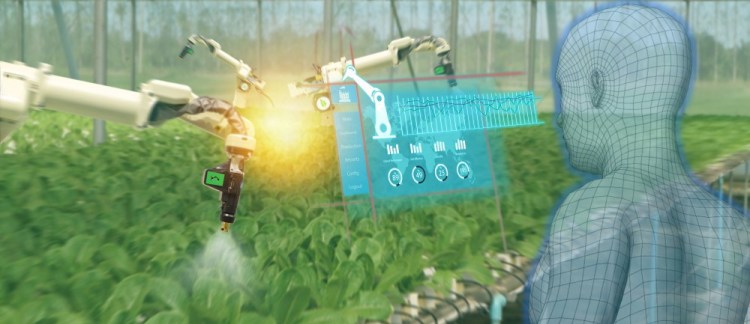
Ai In agriculture

And when huge amount of annotated images are used to train the model, then robots become capable to detect such unwanted crops that are eating nutrition of the main crops.

Image Annotation to Monitor the Health of Crops

Crops matured, not matured or getting infected due to insects or fungus can be now monitored through AI-enabled devices like drones or robots. But again to make such things identifiable you need to use the image annotation technique. From semantic segmentation to other popular image annotation techniques, there are many procedures that help to monitor the health of the crop.

Read More: How to Improve Computer Vision in AI for Precision Agriculture

Image Annotation for Geo Sensing of Fields

The one of the most important yet crucial use of image annotation is identifying the soil condition and health of the field. Yes, image annotation can be used for geo sensing that helps to find out the condition of agricultural field and make the right decision of cultivation or harvesting. The semantic image segmentation helps to generate set of large data for deep learning in agro field.

Anolytics is the leading image annotation service provider in the industry. It is also offering the high-quality image annotation service for agricultural field. AI companies seeking for high-quality training data for the robots, drone and other autonomous machines can get the annotated images here with scalable solution to produce the large volume of AI training data sets at lowest cost.

Apart from training data for agriculture, it is offering the set of data for other fields like automotive, retail, drones, autonomous vehicles, security cameras and computer vision based other AI models. The training data for AI here is developed in the highly secured environment to ensure the privacy & safety.

Image Annotation for Live Stock Management

Animal husbandry is now easier and productive with AI-enabled machines. Yes, animals can be monitored through drones or AI-enabled machines keeping them in count and inside the campus. Again image annotation is the technique, used to make such animals recognizable in various scenarios. Bounding box and semantic image segmentation helps to make the animals recognizable with accuracy.

Don’t forget to give us your ? !


How Image Annotation Helps in AI Development for Agriculture Sector? was originally published in Becoming Human: Artificial Intelligence Magazine on Medium, where people are continuing the conversation by highlighting and responding to this story.
Via https://becominghuman.ai/how-image-annotation-helps-in-ai-development-for-agriculture-sector-1803e495c789?source=rss—-5e5bef33608a—4

source https://365datascience.weebly.com/the-best-data-science-blog-2020/how-image-annotation-helps-in-ai-development-for-agriculture-sector

More Resources for Women in AI Data Science and Machine Learning

Useful resources to help more women enter and succeed in AI, Data Science, and Machine Learning fields.

Originally from KDnuggets https://ift.tt/30ldCeZ

source https://365datascience.weebly.com/the-best-data-science-blog-2020/more-resources-for-women-in-ai-data-science-and-machine-learning

Design a site like this with WordPress.com
Get started