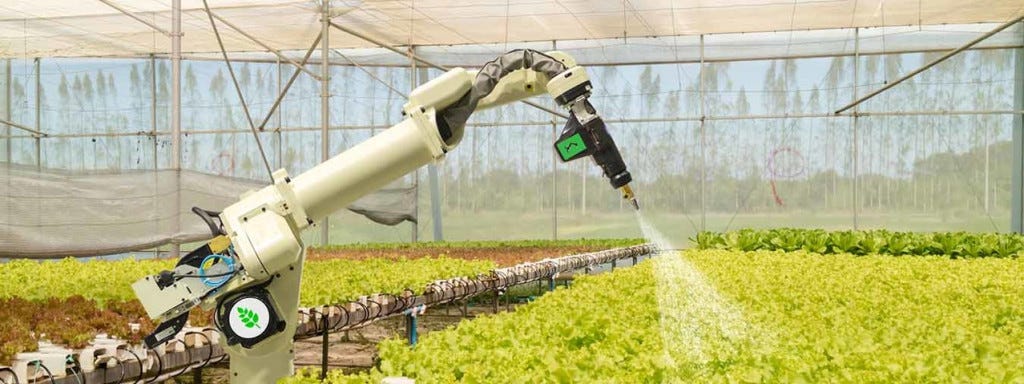
Data Labeling: A Potential and Problematic Industry Behind AI

Data Annotation Service: a Potential and Problematic Industry Behind AI

Annotation Service

Data annotation technique is used to make the objects recognizable and understandable for machine learning models. It is critical for the development of machine learning (ML) application industries such as face recognition, autonomous driving, aerial drones, etc.

Data Annotation Industry Size

According to Fractovia, the data annotation market was valued at $650 million in 2019 and is projected to surpass $5 billion by 2026. Another report released by McKinsey in April 2017 estimates that the total market for AI applications may reach $127 billion by 2025.

As far as we know, the data annotation industry is driven by the increasing growth of the AI industry.
Big Data Jobs

Data Labeling is not as Mysterious as AI

To put it in a simple way, data labeling applies multiple tools to process data. The labeled data is the basic element of the AI system as it “teaches” AI to identify, judge, and act like human beings. If labeled data serves as gasoline for AI, data labeling is to refine crude oil into gasoline.

At present, data labeling has been powering various industries such as autonomous driving, agriculture, healthcare, retail, etc.

For example, Baidu’s AI data annotation center just accomplished a labeling project for facial recognition with masks during the covid-19 period. Data labelers need to mark key points on human eyebrows, eyes, and cheekbones so that AI scanners can identify human faces and measure their temperature while wearing masks.

Trending AI Articles:

1. Top 5 Open-Source Machine Learning Recommender System Projects With Resources

2. Deep Learning in Self-Driving Cars

3. Generalization Technique for ML models

4. Why You Should Ditch Your In-House Training Data Tools (And Avoid Building Your Own)

The customer wants and needs

High-quality training data at scale

“We are eager to find reliable and cost-effective data labeling teams. The accuracy and quality of the processed data determine the outcome of our machine learning training test and final performance,” says Mr. Wang, an engineer in an AI company.

In fact, the strength of an AI system depends on the algorithm model and the quality and quantity of training data. It is showed that many AI companies use similar algorithm models, therefore, the quality and quantity of training data play a key role. In fact, getting high-quality labeled data is the toughest part of building a machine learning model. If the data quality is unqualified, the algorithm model cannot be well developed, AI company needs to label the data again. Timing is important, once the company is behind the schedule, the product may be overtaken by competitors.

Flexibility

In machine learning, in each round of testing, engineers would discover new possibilities to perfect the model performance, therefore, the workflow changes constantly. There are uncertainty and variability in data labeling. The clients need workers who can respond quickly and make changes in workflow, based on the model testing and validation phase.

Our Advantages

Bytebridge, a blockchain-driven data company, has also realized such urgent problems in the data labeling industry and committed itself to empower AI development via its automated data labeling dashboard.

Accuracy

Dealing with complex tasks, the task is automatically segregated into tiny components to maximize the quality level as well as maintain consistency.

The real-time QA and QC are integrated into the labeling workflow as the consensus mechanism is introduced to ensure efficiency.

Consensus mechanism: we assign the same task to dozens of workers for quality check, and the correct answer comes from the majority output.

All work results are completely screened and inspected by the machine and human workforce.

Flexibility

Developers can create their data collection and labeling projects on Bytebridge. The automated platform enables developers to customize various labeling projects and set labeling rules directly on the dashboard.

Moreover, developers can iterate data features, attributes, and task flow, scale up or down, make changes based on what they are learning about the ongoing project and how the AI model is performing in each step.

In addition, developers can check the processed data, speed, estimated price, and time on the visualized dashboard.
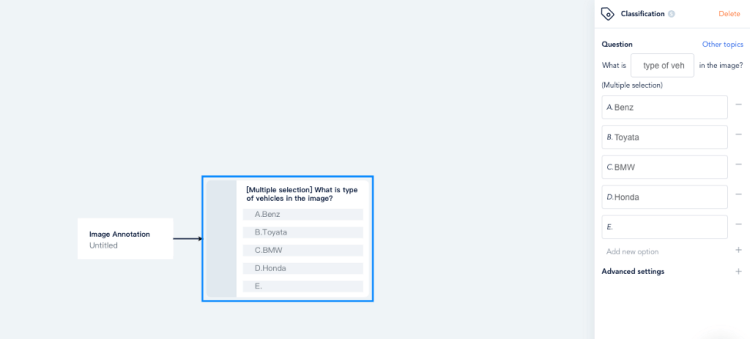
Visualization of Labeling Loop

Progress preview: clients can monitor the labeling progress in real-time on the dashboard

Result preview: clients can get the results in real-time on the dashboard

API

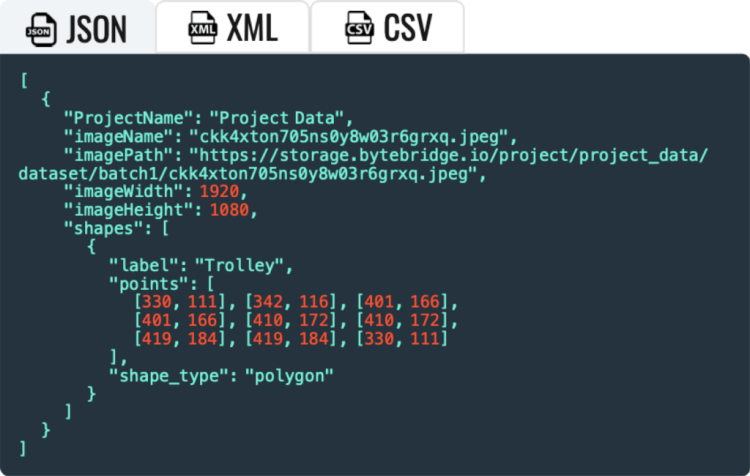
The easy-to-integrate API enables non-stop data submission and delivery. ByteBridge.io support JSON, XML, CSV, etc. and we can provide customizable datatype to meet your needs.
Cost-effective

By cutting out the middlemen and optimizing the workflow with automation technology, we provide the best cost-effective service. For more pricing info, please visit the website: Bytebridge.

End

The booming data annotation market has stimulated the data annotation companies to secure a niche position in the competition. Bytebridge is one of the great companies in the industry and determined to accelerate the AI revolution.

Don’t forget to give us your ? !


Data Labeling: A Potential and Problematic Industry Behind AI was originally published in Becoming Human: Artificial Intelligence Magazine on Medium, where people are continuing the conversation by highlighting and responding to this story.

Via https://becominghuman.ai/data-labeling-a-potential-and-problematic-industry-behind-ai-2495952dfcbd?source=rss—-5e5bef33608a—4

source https://365datascience.weebly.com/the-best-data-science-blog-2020/data-labeling-a-potential-and-problematic-industry-behind-ai

Are You Still Using Pandas to Process Big Data in 2021? Here are two better options

When its time to handle a lot of data — so much that you are in the realm of Big Data — what tools can you use to wrangle the data, especially in a notebook environment? Pandas doesn’t handle really Big Data very well, but two other libraries do. So, which one is better and faster?

Originally from KDnuggets https://ift.tt/3uQEj9t

source https://365datascience.weebly.com/the-best-data-science-blog-2020/are-you-still-using-pandas-to-process-big-data-in-2021-here-are-two-better-options

Top YouTube Channels for Data Science

Have a look at the top 15 YouTube channels for data science by number of subscribers, along with some additional data on the channels to help you decide if they may have some content useful for you.

Originally from KDnuggets https://ift.tt/2NQDi07

source https://365datascience.weebly.com/the-best-data-science-blog-2020/top-youtube-channels-for-data-science

Understanding Graph Databases

Between the four main NoSQL database types, graph databases are widely appreciated for their application in handling large sets of unstructured data coming from various sources. Let’s talk about how graph databases work and what are their practical uses.

Originally from KDnuggets https://ift.tt/3raG7Yg

source https://365datascience.weebly.com/the-best-data-science-blog-2020/understanding-graph-databases

Tackling ethics in AI algorithms: the case of Salesforce

Photo by Sigmund on Unsplash

AI is one of the most powerful emerging technologies that promises to make a stir in many industries. However, many technological giants have realized that it’s not enough to just implement AI: it’s not some checklist to tick off.

Prior to making AI technologies accessible to everyone, companies should learn how to use AI responsibly, inclusively, and ethically, as there are a number of ways where things can go wrong and inflict harm. As of now, we keep experiencing situations when facial recognition technologies can’t identify faces correctly (especially those behind masks), voice assistants can’t recognize accents, AI-driven software suggests incorrect diagnoses or denies candidates based on biased algorithms.

Since 2018, many technological corporations, such as IBM, Facebook, and Microsoft, have applied new ethical principles to increase fairness of their AI algorithms. Salesforce, the developer of one of the most popular customer success platforms powered by AI, is no exception. Based on Salesforce’s example, let’s review how companies can set up a framework for ethical AI.

Big Data Jobs

1. Launch a dedicated office for ethical development

Since Salesforce made its Einstein AI technology available in each of its products, the company has been thinking hard to ensure that their technology brings more value than harm. They’ve understood that ethical principles should be incorporated into each product development stage.

Following that lead, they founded the Office of Ethical and Humane Use as a part of the Office of Equality. The new office operates across product, law, policy and ethics fields, develops the framework for the ethical use of technologies, and fosters the framework implementation across all Salesforce products by means of:

– Safeguarding human rights and protecting customer data
– Leveraging feedback for continuous improvement
– Developing transparent user experience
– Respecting societal values

2. Build a culture of ethics-driven products

In order to nurture the right mindset for creating ethical products, Salesforce enrolls employees into special programs where they learn to put ethics at the core of their workflows and understand how to interpret AI-powered predictions and recommendations and identify harmful stereotypes regardless of their proficiency in data science. One of such trainings is called Consequence Training and requires participants to consider all potential intended and unintended consequences of their product or service in regard to users, and think how to mitigate potential problems.

As a result, the responsibility for maintaining good ethics is now shared by all the teams, which encourages each team member to participate in different stages of ethical AI product development, raise questions and report concerns, and reveal those problems and risks that could be otherwise overlooked.

Trending AI Articles:

1. Write Your First AI Project in 15 Minutes

2. Generating neural speech synthesis voice acting using xVASynth

3. Top 5 Artificial Intelligence (AI) Trends for 2021

4. Why You’re Using Spotify Wrong

3. Make products ethical by design

Salesforce has built the framework that guides the process of ethical development of AI solutions and pushes engineering and product teams to consider the impact of what they create.

The framework is based on five ethical principles: human rights, privacy, safety, honesty, and inclusion. These have been worked out during interviews with employees and external consultants regarding their views on the ethical use of technologies.

In case there’s an ethical issue, the framework calls for communication with industry experts as well as stakeholders who come from the affected community. The participants analyze the issue by discussing the ethical framing, use cases, and counter-perspectives, and work out a set of recommendations and protection mechanisms for different development stages. For example, in the course of one such brainstorming session, Salesforce decided to prevent their bots from misleading users into thinking that they communicated with a real person.

Salesforce has also established the Data Science Review Board that encourages and implements best practices of data quality management and model training across the company. Be it prototyping or product development, the Board ensures that the engineering and product teams spot and remove bias from the training datasets for machine learning algorithms.

4. Make machine learning models transparent for users

Salesforce commits to transparency by explaining models, using clear terms, and empowering users to control their own data and models that run on it. For example, the company uses model cards that standardize documentation procedures and reveal how machine learning models work, along with their inputs, outputs, working principles, and ethical considerations.

What’s more, those specializing in Salesforce consulting confirm that Salesforce products provide a number of features that help users make ethical choices indeed. For instance, the ‘sensitive field’ feature enables admins to mark fields that can add to the model bias, such as those regarding age, race, or gender. Einstein AI can search for the fields that correlate with the fields marked as ‘sensitive’ and flag them for an admin to review. The admin then decides whether to exclude those fields from the model and reduce possible bias as a result.

5. Make voice assistants ethical

Voice assistants based on natural language processing and automatic speech recognition play an important part in our daily activities while also disrupting enterprise operations. Enterprise-level voice assistants have to deal with much more complex questions, and they are not always expected to joke or be emotional. One thing is clear — voice assistants have started the next wave of AI innovation, so it’s a perfect moment to get this technology right when it comes to bias elimination, security, and privacy.

Salesforce has also powered its products for sales and customer service with intelligent voice capabilities. In order to make voice assistants a secure communication channel, Salesforce ensures that only employees with relevant permissions can access this information. To do that, the company encrypts data, stripping it of personally identifiable details automatically. Salesforce also designs personas to match their user types in terms of language formality, complexity of answers, range of suggestions, and more.

Ethics by design is the new normal

Talking about ethics in AI, we should ask ourselves: ethics in relation to whom? Every product and service is the representation of values, experience, and biases of their creators. In this regard, it’s important to gather a diverse team in terms of gender, race, religion, and abilities in order to diversify the corporate ethics culture, apply it at each product development stage, and release truly inclusive AI solutions.

Don’t forget to give us your ? !


Tackling ethics in AI algorithms: the case of Salesforce was originally published in Becoming Human: Artificial Intelligence Magazine on Medium, where people are continuing the conversation by highlighting and responding to this story.
Via https://becominghuman.ai/tackling-ethics-in-ai-algorithms-the-case-of-salesforce-1f9d7a178913?source=rss—-5e5bef33608a—4

source https://365datascience.weebly.com/the-best-data-science-blog-2020/tackling-ethics-in-ai-algorithms-the-case-of-salesforce

Future Tech: Artificial Intelligence and the Singularity

In this new series Future Tech, I pick a topic about the future in technology and discuss my thoughts and opinions on what we might…

Via https://becominghuman.ai/future-tech-artificial-intelligence-and-the-singularity-da9dbd7ca630?source=rss—-5e5bef33608a—4

source https://365datascience.weebly.com/the-best-data-science-blog-2020/future-tech-artificial-intelligence-and-the-singularity

How AI Can Be Used in Agriculture Sector for Higher Productivity?

Artificial Intelligence (AI) with help of Machine Learning (ML) can create an automated model for different fields. Agriculture and farming are one of the them, provides the food to the majority of populace on this earth that also need such technology to boost its productivity and efficiency.

Machine Learning in AI

Machine learning is the branch of AI, and such AI models cannot be developed without using the machine learning process. The ML process involves using the training datasets into an algorithms to learn the certain patterns and predict the results learnt from such data sets.

And when such models are trained enough to work automatically when exposed to new data and take actions without help of humans. Similarly, in agriculture sector, the AI technology can be used at promising scale to enhance the productivity level with better quality at less cost.

AI in Agriculture

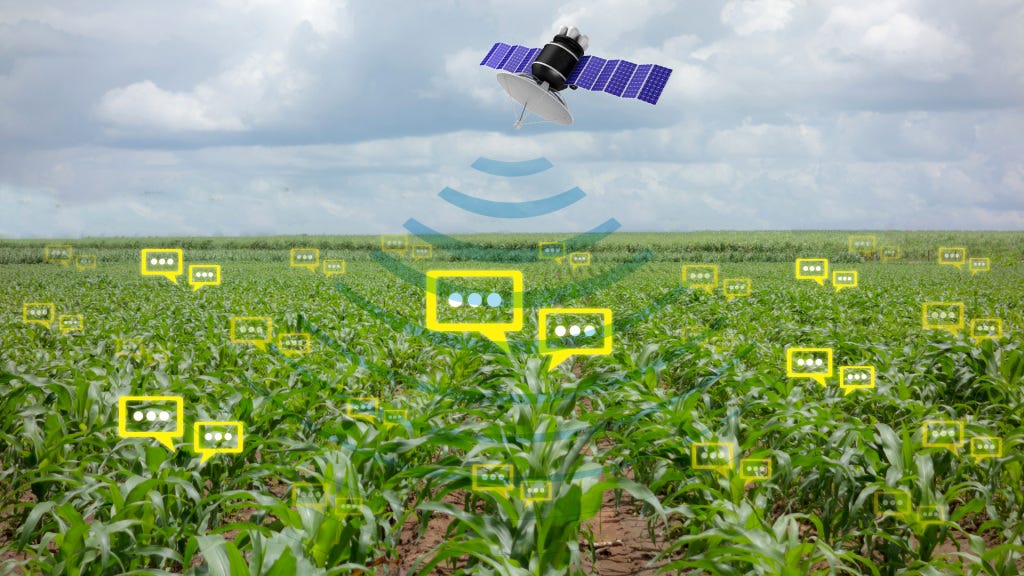
AI can be used in agriculture in many areas like from growing crops, to harvesting and keeping control of insects through aerial view monitoring on crops or spraying the pesticides. Actually, AI-enabled devices and machines can play many roles in agriculture and farming.

Big Data Jobs

And the role of machine learning is that, the models that can be used for agriculture sector, need to be trained with quality machine learning training data. So that, agro-oriented AI models can recognize the crops health conditions or understand the harvesting or other process to perform accordingly.

AI Use Cases in Agriculture:

  • Use of Autonomous Tractors
  • Robotics for Harvesting & Weed Control
  • Drones for Pest Controlling & Infestations
  • Drones & Apps for Soil and Crops Health Monitoring
  • AI Applications for Precision Farming with Predictive Analytics

For more detailed applications and use cases of AI in Agriculture, you can read here, and you will get to know how AI and ML can be used in agriculture sector. However, there is too much scope of using the AI enabled devices, machines or applications to make this sector more efficient and productive.

Whatever, the method of using the AI, but unless the right training data sets will be not available, developing an expedient model is not possible for the developers. So, agriculture training data is an important aspect of AI and ML based model development process.

Trending AI Articles:

1. Write Your First AI Project in 15 Minutes

2. Generating neural speech synthesis voice acting using xVASynth

3. Top 5 Artificial Intelligence (AI) Trends for 2021

4. Why You’re Using Spotify Wrong

Actually, such data sets help the visual perception based models like Robots or Drones to identify and recognize the object of interest and learn from that, so that it can utilize this source of information while analyzing and predicting the results when used in real-life. Analytics is the company, making use of AI possible in agriculture by providing the high-quality training data sets to develop the machine learning model for this sector. Anolytics provides the image annotation services, to annotate the plants, crops, fruits, vegetables and other types of objects reqyured to train the robots, drones and other AI-based models to detect such things precisely.

Don’t forget to give us your ? !


How AI Can Be Used in Agriculture Sector for Higher Productivity? was originally published in Becoming Human: Artificial Intelligence Magazine on Medium, where people are continuing the conversation by highlighting and responding to this story.

Via https://becominghuman.ai/how-ai-can-be-used-in-agriculture-sector-for-higher-productivity-a5ce4618e68b?source=rss—-5e5bef33608a—4

source https://365datascience.weebly.com/the-best-data-science-blog-2020/how-ai-can-be-used-in-agriculture-sector-for-higher-productivity

Data Science Learning Roadmap for 2021

Venturing into the world of Data Science is an exciting, interesting, and rewarding path to consider. There is a great deal to master, and this self-learning recommendation plan will guide you toward establishing a solid understanding of all that is foundational to data science as well as a solid portfolio to showcase your developed expertise.

Originally from KDnuggets https://ift.tt/37Opc6i

source https://365datascience.weebly.com/the-best-data-science-blog-2020/data-science-learning-roadmap-for-2021

5 Supporting Skills That Can Help You Get a Data Science Job

If you want to stand out among your fellow applicants, here are some supporting skills you should develop.

Originally from KDnuggets https://ift.tt/3qWtVKH

source https://365datascience.weebly.com/the-best-data-science-blog-2020/5-supporting-skills-that-can-help-you-get-a-data-science-job

Design a site like this with WordPress.com
Get started