Role of Image Annotation in Applying Machine Learning for Precision Agriculture

Artificial Intelligence (AI) is getting integrated into vital fields making human life more efficient and productive. Similarly, AI in agriculture is making agriculture and farming easier with computer vision-based crop monitoring and production system.

AI Robots, drones and automated machines are playing a big role in harvesting, ripping, health monitoring and improving the productivity of the crops. But do you know how these AI-enabled machines help in precise agriculture and farming?

Actually, these AI machines work on computer vision technology and AI models are trained through annotated images fed using the right machine learning algorithms. Image annotation is the process that helps machines to detect or recognize various objects or things in the agricultural fields, so that machine can easily identify and take the right action.

Also Read: How To Select Suitable Machine Learning Algorithm For A Problem Statement

Big Data Jobs

IMAGE ANNOTATION FOR MACHINE LEARNING IN AGRICULTURE

Image annotation in agriculture helps to detect and perform various actions like detecting the crops, weeds, fruits and vegetables. And when a huge amount of such annotated data is feed into the deep learning algorithm, the AI model becomes enough to recognize similar things like picking the plants, checking the health of the crops.

Also Read: How To Improve Machine Learning Model Performance: Five Ways

Image annotation is playing a crucial role in applying machine learning to agricultural data created through the data labeling process. Let’s find out how and what are the applications of machine learning in agriculture possible through image annotation services.

Robots for Precision Agriculture

Robots are nowadays widely in use across the fields. In the agriculture sector, it is performing various actions with the help of machine vision algorithms to operate successfully. It can perform actions like plowing, seeds planting, weeds handling, monitoring of productivity growth, fruits, and vegetable picking, packaging, sorting and grading, etc.
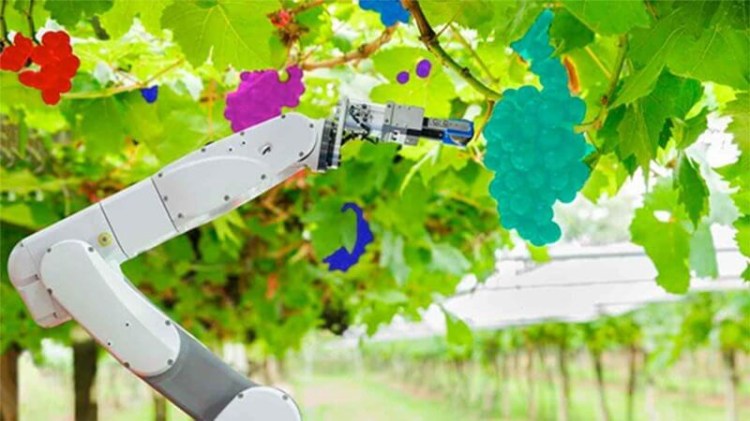
Robots can also detect weeds, check the fructify level of fruits or vegetables, and monitor the health condition of plants. Apart from that, using the computer vision camera, robots can classify the various fruits at high speed with better accuracy.

Also Read: Applying Artificial Intelligence and Machine Learning in Robotics with Right Training Data

And deep learning algorithms can identify defects from any angle with large color and geometric variation. The algorithms are set to perform the first object detection

Trending AI Articles:

1. Write Your First AI Project in 15 Minutes

2. Generating neural speech synthesis voice acting using xVASynth

3. Top 5 Artificial Intelligence (AI) Trends for 2021

4. Why You’re Using Spotify Wrong to locate the fruits and, after that, the classification is done accordingly.

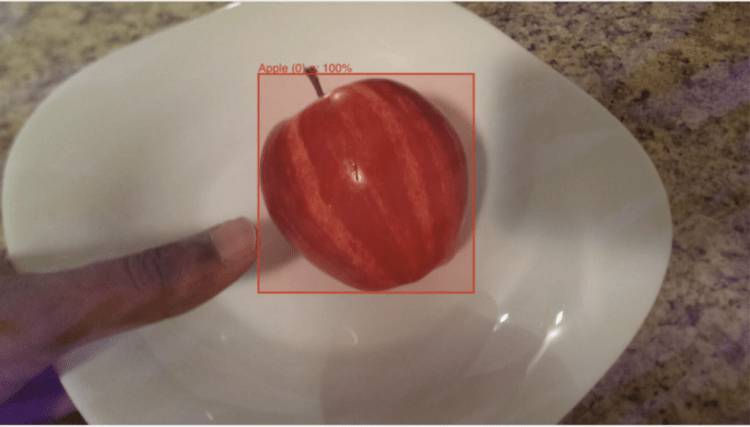
To train robots annotated images of such plants, crops and floras are feed into the algorithms. Bounding box annotation is one of the most popular image annotation techniques used to make the crops, weeds, fruits and vegetables recognizable to robots.

Sorting of Fruits and Vegetables

After collecting the fruits and vegetables at the time of packing at processing plants, a sorting task is performed by the robots to separate the healthy and rotten fruits or vegetables from each other send them to the right place. These robots can also detect existing features and defects, to predict which items will last longer to ship away and which items can be retained for the local market.
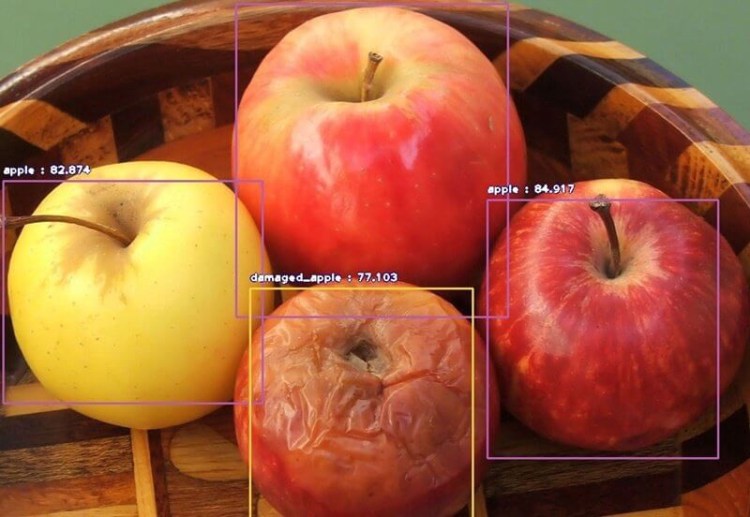
Sorting and grading tasks can be performed based on deep learning using the huge quantity of training data of annotated images. Making the sorting and grading process accurate is possible when precisely annotated images are used to train the robots.

Similarly, robots can sort the flowers, buds, and stems of different breeds, sizes and shapes, making them usable as per the strict standards and rules in use in the international flower markets. And with the help of first-class image annotation techniques, AI-enabled machines save time and reduce wastage promising more precise agriculture and farming.

Anolytics provide the data annotation service to help robots detect the different types of fruits and vegetables with the right accuracy. And as much as similar data will be used, the robots will become more efficient to detect such things agro field.

Also Read: Why Data Annotation is Important for Machine Learning and AI

Monitoring the Health of Soil, Animals & Crops

Using Geosensing technology, drones and other autonomous flying objects can monitor the health condition or soils and crops. This helps farmers to make sure what is the right time for sowing and what action should be taken to save the crops. Right soil conditions and timely insecticides are very important for better production and high crop yield.
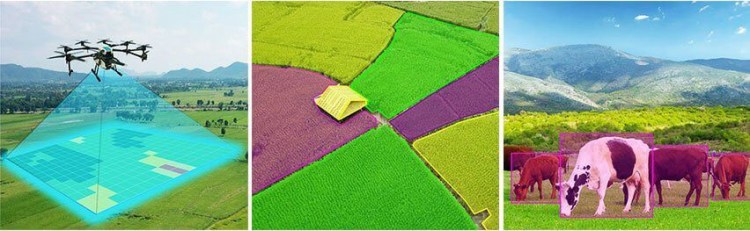
Similarly, AI-enabled technology makes it possible to detect the health of animals. Yes, Body Condition Score for bovines is the technique that helps to accurately measure the body of the cow, buffalo and other similar animals. Such a score is actually given by the veterinarian. As the body condition of such animals affects reproductive health, milk production, and feeding efficiency, and AI-based knowing the score helps the animal husbandry business more profitable.

Crop Yield Prediction Using Deep Learning

AI in agriculture is possible with deep learning datasets that help to predict the crop yield through portable devices like smartphones and tablets. Collecting and developing deep learning platforms requires expert knowledge for their training in order to provide reliable yield forecasts using the ample amount of training data used to train such models.

AI in Forest Management

Using aerial images taken by drones, planes, or satellites, AI in forest management is possible. Yes, images that are taken from such sources help to detect illegal activities like cutting trees that leads to deforestation affecting the biodiversity of our planet.

Also Read: How Satellite Imagery Dataset Used in Artificial Intelligence: AI Applications for Satellite Imagery

Actually, aerial images taken by drone, plane or satellite, in the field of forestry is automating the process of forest management through huge amounts of data to produce accurate measures, assessing the health and the growth of trees and enabling forest management professionals to make more accurate decisions while controlling the deforestation.

Other Projects in Precise Agriculture

Apart from the above-discussed use cases, image annotation offers various other object detection efficiencies in agricultural sub-fields irrigation, weed detection, soil management, maturity evaluation, detection of foreign substances, fruit density, soil management, yield forecasting, canopy measurement, land mapping, and various others.

Anolytics for Image Annotation in Deep Learning for Agriculture

Acquiring high-quality machine learning training data for computer vision-based AI models is a challenging task for the companies working on such projects. But dedicated data annotation companies like Anolytics are providing the right solution for AI companies to get the computer vision training data in large volumes at the lowest cost with the best accuracy.

Also Read: Top Data Labeling Challenges Faced by the Data Annotation Companies

Anolytics is known for providing training datasets for various fields like Healthcare, Agriculture, Retail, Self-driving cars, Autonomous Flying, AI Security Cameras, Robotics and Satellite Imagery. Working with world-class annotators, Anolytics ensure the precision levels of data labeling at every stage making sure the machine learning project can get the right data for giving accurate results by AI models especially when it is used in the real life.

Don’t forget to give us your ? !


Role of Image Annotation in Applying Machine Learning for Precision Agriculture was originally published in Becoming Human: Artificial Intelligence Magazine on Medium, where people are continuing the conversation by highlighting and responding to this story.
Via https://becominghuman.ai/role-of-image-annotation-in-applying-machine-learning-for-precision-agriculture-fa5a7966b2bd?source=rss—-5e5bef33608a—4

source https://365datascience.weebly.com/the-best-data-science-blog-2020/role-of-image-annotation-in-applying-machine-learning-for-precision-agriculture

How 3D Cuboid Annotation Service is better than free Tool?

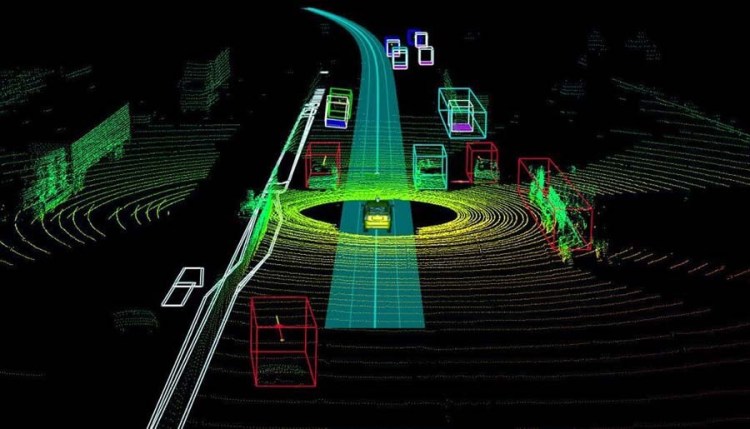
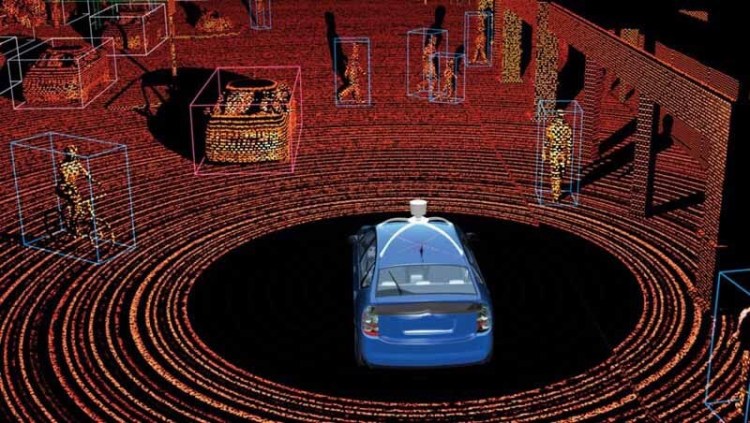
3D cuboid image annotation technique is one of the critical process, helps machines to recognize the all the three dimensions of the objects. This image annotation process is used to detect the objects in-depth that helps to train the 3D visual perception model.

Actually, this image annotation technique helps to build the ground truth datasets for AI models need more accuracy in recognizing the objects in-depth. Self-driving cars, autonomous vehicles and AI models need to recognize the objects kept inside the house.

3D Cuboid Annotation for Robot Training

The robots are basically used to pick the boxes or other items at warehouse or storage and other areas where the movement of goods and packaged items are transported into the carton boxes. And while developing the AI-based robots, 3D cuboid annotated images are used to train the machine learning algorithm, so that robots can identify and pick the objects precisely.

Big Data Jobs

Image Annotation for Multidimensional Objects Recognition

Objects visible with multidimensional, usually three dimensions to measure its depth and other facet, so that visual perception model can better understand such objects. Self-driving cars trained with 3D cuboid annotation can easily recognize the container trucks with all its dimensions. Such autonomous vehicles can visualize the real-world scenario with the ability to sense the distance of such objects from the vehicles and measure the spacing to avoid any collision or accident.3D Cuboid Annotation Services for 2D Images

Anolytics is an expert in annotating the images with the ability to convert the 2D images into 3D making them more comprehensible to visual perception based AI models. If you are looking for anyfree tool to annotate and create the 3D cuboid annotated images, you need an expert that can do this process more precisely and annotate the 2D images into 3D with best level of accuracy.

Trending AI Articles:

1. Write Your First AI Project in 15 Minutes

2. Generating neural speech synthesis voice acting using xVASynth

3. Top 5 Artificial Intelligence (AI) Trends for 2021

4. Why You’re Using Spotify Wrong

Why 3D Cuboid Annotation Service is better than free tool?

Free tool will not give the accurate data, as automated or machine enabled 3D objects annotated need more accuracy. And if you are looking to convert he 2D images to get annotated into 3D, it is not possible as this job can be done only manually for right and accurate predictions.

Anolytics provides, 3D cuboid image annotation service, to annotate all types of images in 3D cuboid format, backed with multilayer of quality check to ensure the training data quality. It can provide the huge amount of datasets for machine learning and deep learning need such images annotated in 3D for better model training and accurate algorithm at most affordable pricing.

Don’t forget to give us your ? !


How 3D Cuboid Annotation Service is better than free Tool? was originally published in Becoming Human: Artificial Intelligence Magazine on Medium, where people are continuing the conversation by highlighting and responding to this story.

Via https://becominghuman.ai/how-3d-cuboid-annotation-service-is-better-than-free-tool-30afdd2ecd95?source=rss—-5e5bef33608a—4

source https://365datascience.weebly.com/the-best-data-science-blog-2020/how-3d-cuboid-annotation-service-is-better-than-free-tool

Creative Destruction and Godlike Technology in the 21st Century

This is life in the 21st century. Your remote and your tv are both your smartphone now. ? The smartphone is the portal gun therefore…

Via https://becominghuman.ai/creative-destruction-and-godlike-technology-in-the-21st-century-a8cd3069c468?source=rss—-5e5bef33608a—4

source https://365datascience.weebly.com/the-best-data-science-blog-2020/creative-destruction-and-godlike-technology-in-the-21st-century

6 Web Scraping Tools That Make Collecting Data A Breeze

The first step of any data science project is data collection. While it can be the most tedious and time-consuming step during your workflow, there will be no project without that data. If you are scraping information from the web, then several great tools exist that can save you a lot of time, money, and effort.

Originally from KDnuggets https://ift.tt/3ur19El

source https://365datascience.weebly.com/the-best-data-science-blog-2020/6-web-scraping-tools-that-make-collecting-data-a-breeze

The Difficulty of Graph Anonymisation

Lessons from network science and the difficulty of graph anonymization. A data scientist’s take on the difficultly of striking a balance between privacy and utility in anonymizing connected data.

Originally from KDnuggets https://ift.tt/3pNIPSc

source https://365datascience.weebly.com/the-best-data-science-blog-2020/the-difficulty-of-graph-anonymisation

How Reading Papers Helps You Be a More Effective Data Scientist

By reading papers, we were able to learn what others (e.g., LinkedIn) have found to work (and not work). We can then adapt their approach and not have to reinvent the rocket. This helps us deliver a working solution with lesser time and effort.

Originally from KDnuggets https://ift.tt/3aRIv0G

source https://365datascience.weebly.com/the-best-data-science-blog-2020/how-reading-papers-helps-you-be-a-more-effective-data-scientist

How Is Machine Learning Revolutionizing Supply Chain Management

Supply chain management is a complex medley of processes in which even a slight lack of visibility or synchronization can lead to enormous losses and overheads. But with the recent developments in AI & machine learning, we can now harness historic and real-time supply chain data to discover patterns that help us understand what factors influence the different aspects of the supply chain network.

These insights help companies in getting a competitive edge, streamline processes, cutting down on costs and increasing profits, and leveraging recommendations to enhance the customer experience. According to Gartner, at least 50% of global companies would be using AI-related transformational technologies such as Machine Learning in supply chain operations by 2023.

Big Data Jobs

5 Ways In Which ML Acts As A Game Changer In Supply Chain Management

1. Inventory Management

Ensuring the right amount of product availability in the inventory as per the future market demand has always been a constant challenge for manufacturers. With big data analytics, manufacturers can analyze different types of data including past sales demand, chanel performance, product returns, POS data, promotions data etc. to get insights around:

  1. What is the optimal inventory required to meet demand while ensuring stock levels are at a minimum
  2. How to reduce out of stock situations
  3. How to control the impact of product recalls
  4. How to enable cross-selling and improve slow-moving stock’s performance

When feeded with the latest supply and demand data, machine learning can enable a continuous improvement in a company’s efforts towards solving the over or under stocking problem.

Trending AI Articles:

1. Write Your First AI Project in 15 Minutes

2. Generating neural speech synthesis voice acting using xVASynth

3. Top 5 Artificial Intelligence (AI) Trends for 2021

4. Why You’re Using Spotify Wrong

2. Predictive And Preventive Maintenance

Equipment failures and machine breakdowns are some of the significant reasons for supply chain disruption. Unexpected and extended downtimes can result in out of stock situations and lost revenue.

In order to avoid these situations, companies are replacing the reactive and inefficient break-fix service model with proactive maintenance approaches — predictive and preventive maintenance.

This involves using machine learning to analyze data from smart parts and sensors and predicting when a machine/part will fail and determining the right time for repairs and replacements.

This allows companies to reduce excess inventory, mitigate the costs and disruption caused due to unscheduled downtime and ultimately improve customer satisfaction and brand loyalty.

In addition, machine learning can also help understand how to extend the life of the existing assets, determine common reasons for failure and take necessary proactive steps.

3. Logistics

Last mile logistics in supply chain management is prone to operational inefficiencies and costs upto 28 percent of the total cost of the delivery.

Some common challenges in this area include:

  1. Not able to find a parking spot for large delivery trucks near the customer’s destination and having to carry the package to its destination by walk
  2. Customers not being at home to sign the receipt of items and thus causing a delay in delivery
  3. Damages to the package during this last leg of delivery

In most cases, it’s very difficult for companies to identify exactly what’s going on during this last mile. This final step is commonly referred to as the “black box” of the supply chain.

In order to address such last-mile logistics operations and improve operational efficiency, a global brewing company recently worked with MIT Megacity Logistics Lab to leverage data and machine learning. In this scenario, the ML tools analyzed the historic route plans and delivery records, and helped identify customer-specific delivery challenges for thousands of customers across the globe. The company identified customers whose delivery constraints posed the most significant disruptions to its last mile logistics operations. From there, the company reconfigured its distribution services for a certain pool of customers.

4. Production Planning

Machine learning can simplify the complexities involved in developing production plans. For instance, CPG and Food and Beverage manufacturers are analyzing weather forecast data (temperature and sunshine data) with machine learning to more accurately predict the demand for certain product categories and plan production and inventory.

5. Supplier Relationship Management

Robust Supplier Relationship Management strategies are essential for improving supply chain resilience. Machine learning algorithms can help businesses analyze supplier data and provide insights into supplier compliance, performance patterns, and potential risks. Supply chain and procurement professionals can improve their supplier selection process and minimize supply chain disruptions by forecasting and identifying any new supplier risks.

If you’d like to learn more about the use cases of machine learning in supply chain management, please feel free to get in touch with one of our AI and supply chain experts for a personalized consultation. source

Don’t forget to give us your ? !


How Is Machine Learning Revolutionizing Supply Chain Management was originally published in Becoming Human: Artificial Intelligence Magazine on Medium, where people are continuing the conversation by highlighting and responding to this story.
Via https://becominghuman.ai/how-is-machine-learning-revolutionizing-supply-chain-management-98faf3c7ed7b?source=rss—-5e5bef33608a—4

source https://365datascience.weebly.com/the-best-data-science-blog-2020/how-is-machine-learning-revolutionizing-supply-chain-management

How to Make Data Annotation More Efficient?

New Oil that Business Needs to Run

Data has been compared to a well-known phrase: new oil that business needs to run. IBM CEO Ginni Rometty explains it on the World Economic Forum in Davos in 2019, “I think the real point to that metaphor,” Rometty said, “is value goes to those that actually refine it, not to those that just hold it.”

Another view of data came from Alphabet CFO Ruth Porat. “Data is actually more like sunlight than it is like oil because it is actually unlimited,” she said during a panel discussion in Davos. “It can be applied to multiple applications at one time. We keep using it and regenerating.”

AI is Booming yet the Data Labeling Behind is Inefficient

Many industries are actively embracing AI to speed their structural transformation. From autonomous driving to drones, from medical systems that assist in diagnosis to digital marketing, AI has empowered more and more industries.

Big Data Jobs

Yann LeCun is the inventor of convolutional neural networks (CNN), one of the key elements that have spurred a revolution in AI in the past decade. As a Turing Award winner, LeCun once expressed that developers needed labeled data to train the AI model and more quality labeled data brought more well-performed AI systems.

While the AI industry is booming, a large number of data providers have poured in. Generally, there are two types of data service companies.

In-house

The company recruits a certain number of data labelers(300–500 people), gets them trained on each specific task, and distributes the work to different teams.

Subcontract

The company subcontracts the labeling project to smaller data factories. The subcontractors or data factories are usually located in Asia due to cheap labor costs. When the subcontractors complete the first round QC, the company collects the labeled datasets and transfers them to another partner who goes through QC again. After, the company delivers the data results to Party A company.

Such a traditional working process is inefficient as it takes longer processing time and higher overhead costs. ML companies are forced to pay high while the small labeling factory could hardly benefit.

Trending AI Articles:

1. Write Your First AI Project in 15 Minutes

2. Generating neural speech synthesis voice acting using xVASynth

3. Top 5 Artificial Intelligence (AI) Trends for 2021

4. Why You’re Using Spotify Wrong

ByteBridge: an Automated Data Annotation Platform to Empower AI

ByteBridge has made a breakthrough with its automated data labeling platform in order to empower data scientists and AI companies in an effective and engaging way.

On ByteBridg’s dashboard, developers can set labeling rules directly, check the ongoing process simultaneously on a pay-per-task model with a clear estimated time and price.

Efficiency

  • The real-time QA and QC are integrated into the labeling workflow as the consensus mechanism is introduced to ensure accuracy.
  • Consensus — Assign the same task to several workers, and the correct answer is the one that comes back from the majority output.
  • Through the dashboard, all the simplified tasks are distributed to workers who have passed the training exam. Once the output is qualified by a consensus mechanism, workers will get instant-paid. In this way, the labelers get motivated.
  • ByteBridge.io owns millions of registered workers with 2D boxing daily outputs to 100,000

“We focus on addressing practical issues in different application scenarios for AI development through a one-stop, automated data platform. Data labeling industry should take technology-driven as core competitiveness with efficiency and cost advantage,” said Brian Cheong, CEO, and founder of ByteBridge.

End

It is undeniable that data has become a rare and precious resource. ByteBridge has realized the magic power of data and aimed at providing the best data labeling service to accelerate the development of AI with accuracy and efficiency.

Don’t forget to give us your ? !


How to Make Data Annotation More Efficient? was originally published in Becoming Human: Artificial Intelligence Magazine on Medium, where people are continuing the conversation by highlighting and responding to this story.

Via https://becominghuman.ai/how-to-make-data-annotation-more-efficient-3e25edaea31f?source=rss—-5e5bef33608a—4

source https://365datascience.weebly.com/the-best-data-science-blog-2020/how-to-make-data-annotation-more-efficient

Label a Dataset with a Few Lines of Code

The purpose of this tutorial is to demonstrate the power of algorithmic labelling through a real world example that we had to solve ourselves.* If you want to see the resulting full labelled dataset from this process, sign up here.

In a later post we will go over a more thorough description of what algorithmic labelling is, but, in short, algorithmic labelling is about harvesting all existing information in a problem space and converting it into the solution in the form of a program.

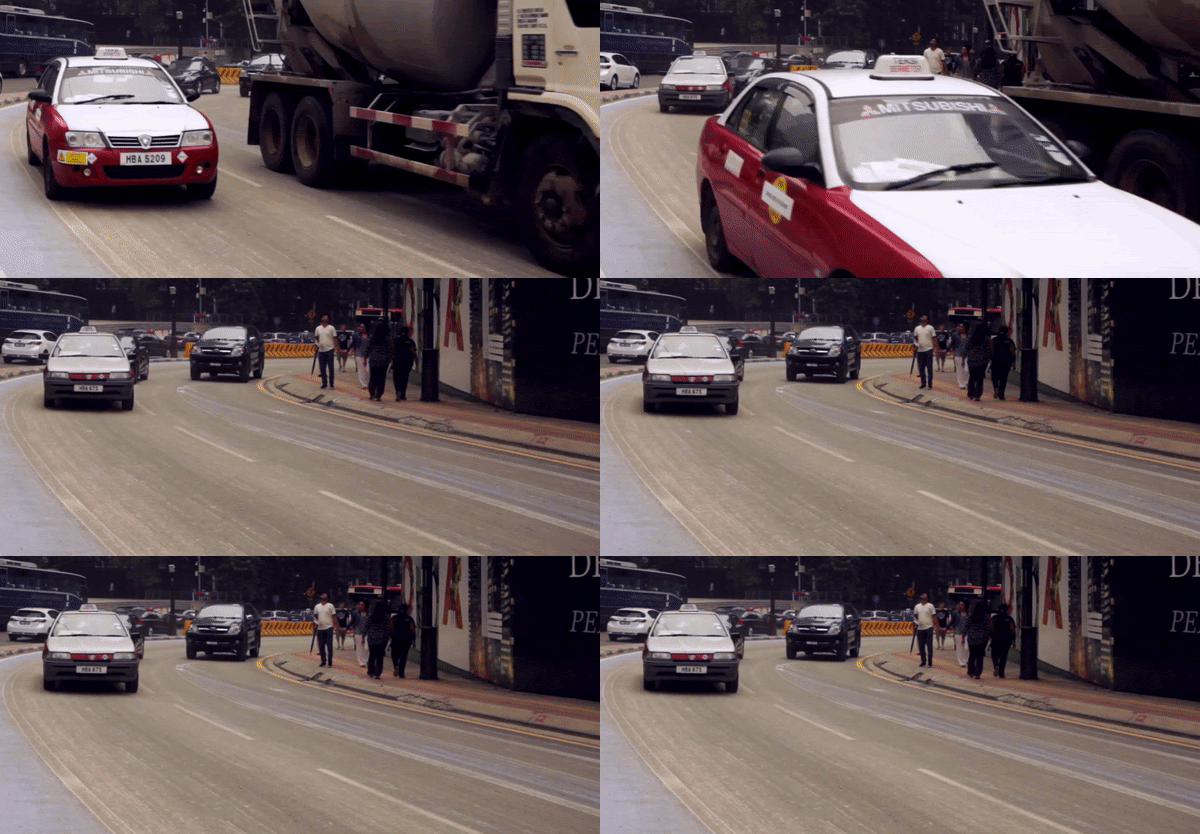
Here is an example of a algorithmic labelling that labels a short video of cars:

a) Raw Data b) Data Algorithm c) Labelled data

Our usual domain of expertise at Cord is in working with video data, but we recently came across a problem where the only available data was in images. We thus couldn’t rely on the normal spatiotemporal correlations between frames that are reliably present in video data to improve the efficiency of the annotation process. We could, however, still use principles of algorithmic labelling to automate labelling of the data. Before we get into that, the problem was as follows:

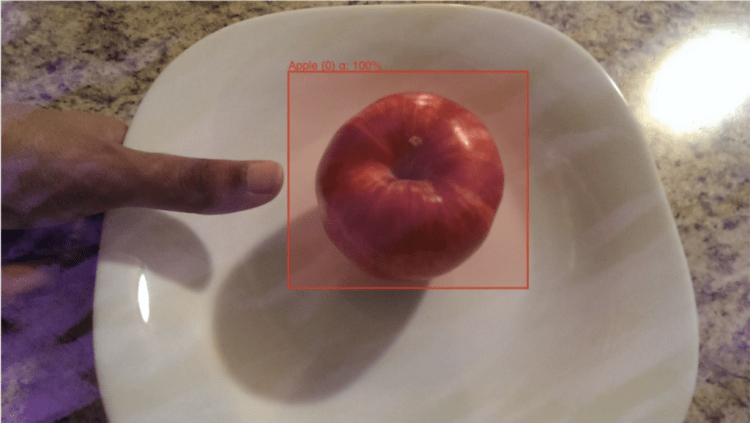
Company A wants to build a deep learning model that looks at a plate of food and quantifies the calorie count of that plate. They have an open source dataset that they want to use as a first step to identify individual ingredients on the plate. The dataset they want to use is labelled with an image level classification, but not with bounding boxes around the “food objects” themselves. Our goal is to re-label the dataset such that every frame has a correctly placed bounding box around each item of food.

Example Food Item with Bounding Box

Instead of drawing these bounding boxes by hand we will label the data using algorithmic labelling.

Why Algorithmic Labelling?

So before we talk about solving this with algorithmic labelling, let’s look at our existing options to label this dataset. We can:

  1. go ahead and hand label it ourselves. It takes me about six seconds to draw a bounding box, and with ~3000 images, it will take me about five hours to label all the images manually.
  2. send the data elsewhere to be labeled. An estimated outsourced cost will likely be around $0.15 per image with total cost about $450. It will additionally take some time to write a spec and get a round trip of the data through to an external provider.
Big Data Jobs

If we look at the cost/time tradeoffs of algorithmic labelling against our first two options, it might not seem like a slam dunk. Writing a good program will take time, maybe initially even more time than you would be spending annotating the data yourself. But it comes with very important benefits:

  • Once you have an algorithm working, it is both reusable for similar problems, and extensible to fit slightly altered problems.
  • The initial temporal cost of writing a program is fixed, it does not increase with the amount of data you have. Writing a good label algorithm is thus scalable.
  • Most importantly, writing label algorithms improves your final models. The data science process does not start once you have a labelled dataset, it starts once you have any data at all. Going through the process of thinking through an algorithm to label your data will give you insight into the data that you will be missing if you just send it to an external party to annotate.

Trending AI Articles:

1. Write Your First AI Project in 15 Minutes

2. Generating neural speech synthesis voice acting using xVASynth

3. Top 5 Artificial Intelligence (AI) Trends for 2021

4. Why You’re Using Spotify Wrong

With algorithmic labelling there is a strong positive externality of actually understanding the data through the program that you write. The time taken is fixed but the program, and your insight, exists forever.

With all this in mind, let’s think through a process we can use to write a program for this data. The high level steps will be

  1. Examine the dataset,
  2. Write and test a prototype
  3. Run the program out of sample and review

Examine the dataset

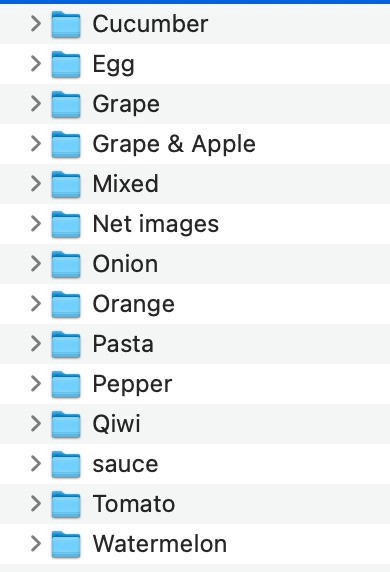
The first step to any data science process should be to get a look at the data and take an inventory of its organisational structure and common properties and invariants that it holds. This usually starts with the data’s directory structure:

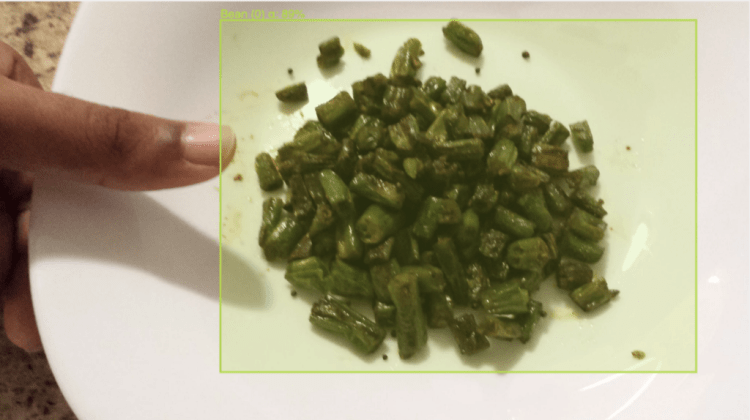
We can also inspect the images themselves:

Sample images

Let’s go ahead and note down what we notice:

  • The data is organised in groups of images of photographs of individual items of food on a plate.
  • The title of each folder containing the images is the name of the piece of food that is being photographed
  • There is only one piece of food per image and the food is the most prominent part of the image
  • The food tends to be on average around the centre of the frame
  • The colour of the food in most images stands out since the food is always on a white plate sitting on a non colourful table
  • There is often a thumb in the picture that the photographers likely used for a sense of size scaling

There are some food items that look more challenging than others. The egg pictures, for instance, stand out because the colour profile is white on white. Maybe the same program shouldn’t be used for every piece of food.

The next step is to see if we can synthesise these observations into a prototype program.

Write a prototype

There are a few conclusions we can draw from our observations and a few educated guesses we can make in writing our prototype:

Definites

-We can use the title of the image groups to help us. We only need to worry about a particular item of food being in an image group if the title includes that food name. If we have a model for a particular item of food we can run it on all image groups with that title.

-There should only be one bounding box per frame and there should be a bounding box in every single frame. We can write a function that enforces this condition explicitly.

-We should add more hand annotations to the more “challenging” looking food items.

Educated Guesses

-Because the food location doesn’t jump too much from image to image, we might want to try an object tracker as a first pass to labelling each image group

-Food items are very well defined in each picture so a deep learning model will likely do very well on this data

-The colour contrasts within the pictures might make for good use of a semantic segmentation model

Let’s synthesise this together more rigorously into a prototype label algorithm. Our annotation strategy will be as follows:

  • Programmatically upload the data onto the Cord annotation platform using the directory structure to guide us. We will use a Cord data function to concatenate the separate images into a video object so that we can also make use of object tracking
  • Hand annotating two examples for a piece of food, one on the first image and one on halfway point image. For what we think are going to be trickier food items like eggs, we will try ten annotations instead of two.
  • Run a CSRT object tracker across images. Again this dataset is not a video dataset, but with only one object per image that is around the same place in each frame, an object tracking algorithm could serve as a decent first approximation of the labels.
  • Train a deep learning model with transfer learning for each item of food using tracker-generated labels. We can start with a segmentation model. The objects have a stark contrast to the background. Training a model with the noisy labels plus the stark contours might be enough to get a good result. We already converted our bounding boxes to polygons in the previous step, so now the Cord client can train a segmentation model.
  • Run the model on all image groupings with that piece of food in the title. Convert the polygonal predictions back to bounding boxes and ensure that there is only box per image by taking the highest confidence prediction.

That’s it. The full code for the program can be found below. The data function library and full SDK are still in private beta, but if you wish to try it for yourself sign up here.

Let’s now run the program on some sample data. We will choose bananas for the test:

It seems to do a relatively good job getting the bounding boxes.

Run the algorithm “out of sample” and review

Now that we have a functioning algorithm, we can scale it to the remaining dataset. First let’s go through and annotate the few frames we need. We will add more frames for the more difficult items such as eggs. Overall we only hand annotate 90 images out of 3000.We can now run the program and wait for the results to come back with all the labels. Let’s review the individual labels.

We can see for the most part it’s done a very good job.

The failure modes are also interesting here because we get a “first-look” of where our eventual downstream model might have trouble.

For these “failures” I can go through and count the total number that I need to hand correct. That’s only 50 hand corrections in the entire dataset. Overall, the label algorithm requires less than 5% of hand labels to get everything working.

And that’s the entire process. We made some relatively simply observations about the data and converted those into automating labelling of 95% of the data.

We can now use the labelled dataset to build our desired calorie model, but critically, we can also use many of the ideas we had in the algorithmic labelling process to help us as well.

  • Real world examples are always better than concocted examples in that they are messy, complex, and require hands-on practical solutions. In that vein, you exercise a different set of problem-solving muscles than would normally not be used in concocted examples with nice closed formed type solutions.

Don’t forget to give us your ? !


Label a Dataset with a Few Lines of Code was originally published in Becoming Human: Artificial Intelligence Magazine on Medium, where people are continuing the conversation by highlighting and responding to this story.

Via https://becominghuman.ai/label-a-dataset-with-a-few-lines-of-code-45c140ff119d?source=rss—-5e5bef33608a—4

source https://365datascience.weebly.com/the-best-data-science-blog-2020/label-a-dataset-with-a-few-lines-of-code

Why Do Machine Learning Projects Fail?

At the beginning of any data science project, many challenges could arise that lead to its eventual collapse. Making sure you look ahead — early in the planning — toward putting your resulting model into production can help increase the chance of delivering long-term value with your developed machine learning system.

Originally from KDnuggets https://ift.tt/2P9jHsz

source https://365datascience.weebly.com/the-best-data-science-blog-2020/why-do-machine-learning-projects-fail

Design a site like this with WordPress.com
Get started