365 Data Science is an online educational career website that offers the incredible opportunity to find your way into the data science world no matter your previous knowledge and experience.
The demand for analytics skills and talent has never been higher. As the workforce continues to evolve, so do the technology and skillsets required. Millennium Bank has partnered with SAS to customize a tailored development training program that improved skills and knowledge, while strengthening retention.
Well, correct me if I am wrong in saying that most of our ML/DL scripts live in a folder that we never really access after doing our project. Once we get good results or learn what we wanted we just move on to the next task. Well here is the problem with us engineers. We just think too practically. Well, it’s great your model works but why not deploy it so that the whole world can learn from it.
This is called an end to end ML pipeline and this is what is valued in today’s job market.
You built a cool network. It’s great! But no one has the time or patience to clone it from Github and then install dependencies and then hope everything goes as planned. It might work but as engineers, our goal should be to remove as many barriers as we can for the customers using our products.
Streamlit is a web app building and sharing platform. It is Python-based and is extremely user friendly. You just need to install it using:
This will install the streamlit package. Now run:
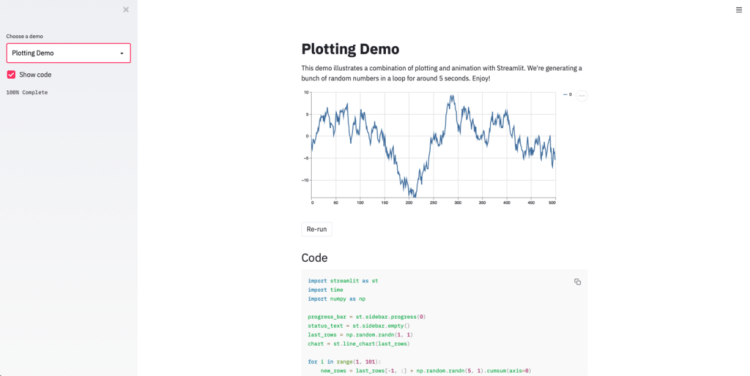
Running it will open up the hello file in your web browser. You can choose from a number of pre-built streamlit examples. Here I have chosen the plotting demo and the plotting happens in real-time.
Deploying custom Pytorch scripts
We will make a simple convolution visualizer. To give a title to our project st.title() is used as follows:
You can run this command in the terminal by running
You will get the following output in your web browser:
Empty screen with our title
Now we got to add our Pytorch model and start doing something fun. Let’s load a pre-trained model of Alexnet. Our plan is to ask the user the layer he/she wants to visualize and then display the convolutions in real-time.
The dictionary alexnet_layersis for mapping the user input to the convolutional layer. The @st.cache decorator does some heavy lifting for you behind the scenes. It allows developers to skip certain costly computations when their apps rerun. The Streamlit cache allows your app to execute quickly even when loading data from the web, manipulating large datasets, or performing expensive computations. When you mark a function with the @st.cache decorator, it tells Streamlit that whenever the function is called it needs to check a few things:
The input parameters that you called the function with
The value of any external variable used in the function
The body of the function
The body of any function used inside the cached function
The visTensor()method takes in a pytorch tensor as input and plots the tensor and saves it as a file to be later diaplyed by streamlit.
st.selectbox()constructs a dropdown menu. As you can see currently I just have one network architecture (Alexnet) but the drop-down can be extended by adding more elements to the list.
Then we make a dictionary of models. Here you can see that dictionary models only contain one key-value pair but more models can be added to it.
st.file_uploader() helps us upload any image file to our streamlit app. We check if the file is uploaded or not. We also make a slider using st.sidebar.slider() that helps us select number of convolutions per row to display as output. st.button(“Visualize”) is the button that we intend the user to press and get the results.
If the user clicks the button the code under “if clicked:” gets called.
The complete code is as follows
The following is the output on running
We select Alexnet from the dropdown menu and select 16 rows from the left scroll. Next, we select Convolutional Layer 1 to visualize from the drop-down.
I also select a random cat image as my input image.
Input image
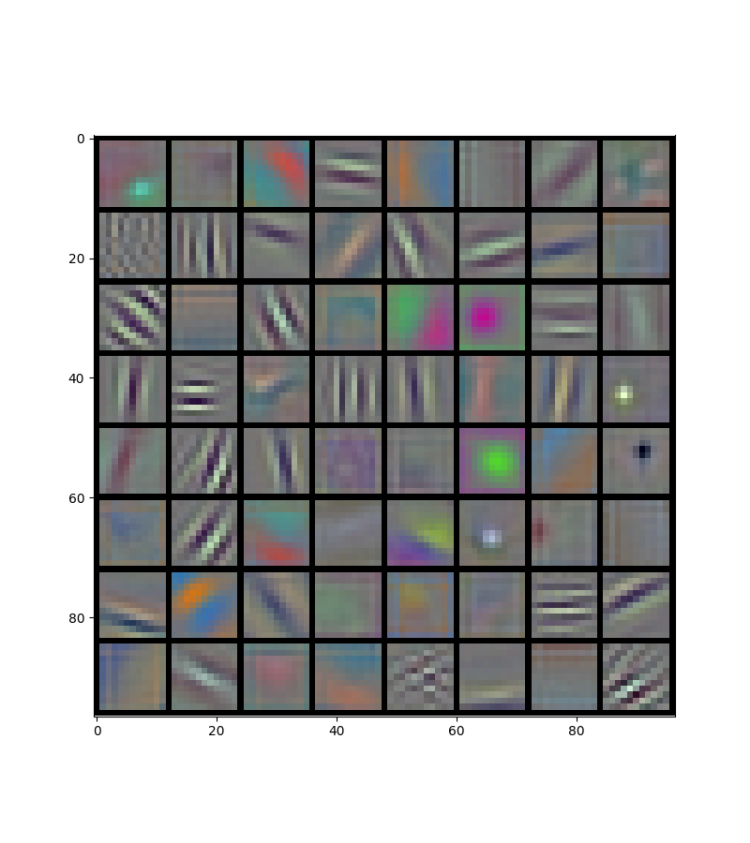
Now is the part you all have been waiting for. This is the part that makes it worth all the effort. Thank you for being so patient throughout this article. Here are the results for Layer 1:
Output of CNN Layer 1 of Alexnet
Now let’s have some fun and select convolutional layer 2.
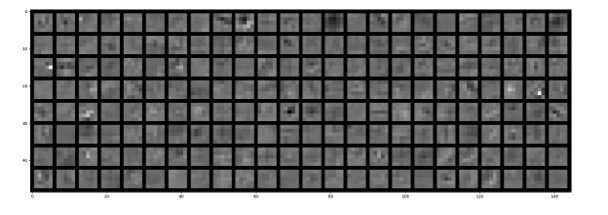
Note: Convolutional layer 2 corresponds to layer 3 in Alexnet. Also, any layer after layer 1 in Alexnet gets > 3 dimensions. So in order to plot it, we need to reshape it into a lower dimension tensor. In that process, we lose a lot of information but still, something is better than nothing.
Output of CNN Layer 2
I hope that this article was informative. I hope it will motivate you to get your hands dirty and delve right into it. If it was helpful please press the clap button. It helps a lot :).
“Man lives like a robot: mechanically efficient but with no awareness”- OSHO
courtesy: gadget flow
We (humans) are working to alter the nature of evolution. Today the human beings have surpassed 7.6 billion mark on earth, even after that we feel, we are alone on this planet. This feeling has amplified with time. Humans are busy with thyself and have no time for others. We are not having enough time even for ourselves.
It was once doubted that where will evolution takes the humanity, now its evident that it would be synthetic. We are moving towards a world of robots. We love them, play with them, spend most of our time with them and still want more out of them. The recent advancements in the technology have twisted our awareness and we just rely on the machines for almost everything.
Bots are replacing human efforts and making our daily chores easy and turning life towards luxury. It is no surprise if someday you discover that your new neighbor with whom you love to spend time while sipping the coffee is not human. Robots are sprouting around us at a faster rate than estimated. As Marvin Minsky said, “Will robots inherit the earth? Yes, but they will be our children.”
Big Data Jobs
Robot caregivers are lighting up lives of the lonely adults of our society whom our younger generation has left to survive on their own. Robots are not only outperforming in business but they are also preferred on the social fronts. They are being used to keep old folks mentally & socially engaged. They are proving themselves as an effective nurse and a good friend. Robots are improving our lives in more ways than we know.
We all love our mobile phones while only a few may know the fact that Android is one of the most popular robots in the modern world. In the wish list of human beings, one of the prominent wishes is to improve our physical and mental abilities more than what evolution has gifted us. We are even working to improve human capabilities since long and making artificial/synthetic DNA is one the most ambitious project in this direction.
AI and machine learning have accelerated the development of these man-made beings. These bots are taking various shapes and structures to enhance their adaptability and acceptability in our society. Now when so much is happening in our surrounding, it is important to know a few basic terms about them.
There are some terms mostly mistaken as same about these bots. We often feel confused when someone asks the difference between a cyborg and a robot. Well, we need to know about these species as they are fast embedding in our modern society. Claude Shannon once famously said that “ I visualize a time when we will be to robots what dogs are to humans. And I am rooting for the machines”. We need to understand pros and cons of robots to the humanity and my blog is just a step towards it.
Cyborg: It is a short form for the cybernetic organism. A cyborg is being who is partly organic and partly bio-mechanical. Humans are organic beings and their body is a result of million years of evolution, their capabilities and strength are because of the efforts we did until today. But in case of a cyborg, humans have interfered with nature and have provided artificial parts and organs to make the body much stronger and capable.
cyborg
If you have any artificial pacemaker in your body, you are a cyborg. These artificial parts are sometimes added to replace the faulty original organs but sometimes are introduced to take your physical strength to a higher level.
Getting lenses for better eyesight, hearing aids to improve impaired hearing, using the Internet to enhance the real-time decisions all these are examples of augmented capabilities and will be inculcated into the attributes of a cyborg.
Robot: A robot is a machine which is designed & controlled by programming, done using a computer. A robot was developed to reduce the human efforts. It is a sheer replacement to human beings instead of improving their own capabilities.
They were developed to do complex tasks and to replace humans at some really horrible workplaces. These robots can work day and night without any break and can be precise where humans lose their precision due to fatigue. Robots are being trained by the help of machine learning and their decision-making abilities are being augmented so that they can be the best replacement for humans. AI has enabled these bots to get smarter, now they perform better and improve daily.
Robots are proving themselves as a loyal servant to the humanity and thus we are working to transform these artificial beings. We want these bots competent enough to work in the hazardous environment and also carry human intelligence to analyze the situation as a human can. We want these bots to take shapes similar to human beings so that working with bots is comfortable.
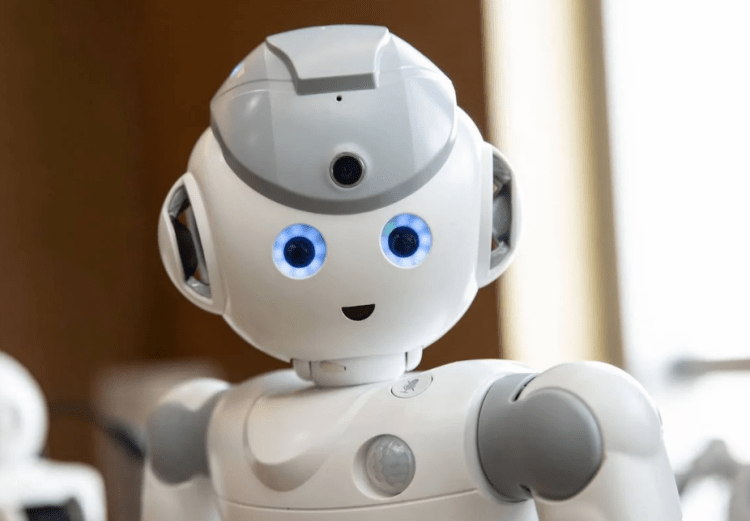
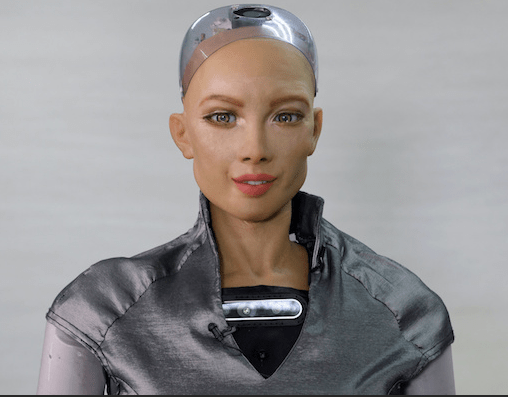
Humanoids are such robots who look like humans, having similar limbs and physical appearance. They are not humans but try to imbibe our style as much as they can. They behave like humans and are improving but still working with them is a bit uncomfortable. We have even decided the gender for these robots. Android is considered as a male robot and Gynoid is a female robot. Defining their gender is a step to treat them at par with humans.
courtesy: insideretail
The concept of working with robots is exciting, we have seen it a lot in various Hollywood science fiction movies. But in reality, it is still a distant dream. Many attempts have been made in recent times and many humanoids are performing in various fields, these bots have almost copied humans on looks the art but on performance they are inferior.
Even after that, its amazing to see these human creations performing above the expectations. We have high hopes and soon we will augment their capability at par with humans. Both of these species i.e. cyborg and robots are maturing and with improvements in cyborgs, our expectations levels from the robots enhance. There is a hidden race going on.
We want these machines to behave exactly like us and we are also working on improving our current capabilities. This makes their test tougher every day. We expect a lot from these machines and new expectations erupt as the older ones get fulfilled.
We should understand clearly what we want from these machines and have to mark our limits too. Clear guidelines and boundaries can resolve many prevailing issues associated with this technology. But first, we need to understand the most complex and beautiful creation of God, Mankind.
“The saddest aspect of life now is that science gathers knowledge faster than society gathers wisdom”- Isaac Asimov.
“Stay Informed and connect to Saavy Relations for the latest updates.”
Your Feedback is Highly Appreciated! We really appreciate the time you took to help us improve.
AI is viewed by customer service decision makers and agents alike as a boon to the customer and a significant boost to employee experience. AI adoption may still be relatively nascent in the realm of customer service, but it is set to soar in the coming years as more & more teams turn to chatbots, text, voice analytics, and various other use cases. Use of AI by customer service teams is projected to increase by well over 100 per cent over the next 1.5 years or so.
Since customer service is traditionally considered a cost centre by most organizations, the focus on customer improvement efforts has been inextricably linked on reducing costs. That has proved to be a critical mistake, as the resultant has left everyone unhappy. Even as customers grew increasingly sick of pressing two for reservations and four for service, service agents too got increasingly sick of answering the same questions over and over.
Increasingly, virtual agents are being used for service. These are essentially automated systems, trained on service transcripts, that can use AI to recognize and respond to customer requests whether by phone or chat. Unlike much of the history of customer service, the focus here is not on reducing the number of jobs and cutting costs.
Big Data Jobs
The two most important findings from the deployment of virtual agents are that the most significant gains are from improvement in the customer experience and not from cost savings and that successful virtual agents are build on the basis of bots working with humans rather than replacing them altogether.
A lot of customers, recalling their experiences with Interactive Voice Response (IVR) systems are sceptical. While they had to navigate phone menus for gathering information or eventually getting through to a human agent, the experience hardly led to shorter wait times or a better level of service. Online chats with agents can be similarly frustrating because of the slow responses, since the agent is juggling with anywhere between two to six sessions at any point in time.
Virtual agents however can bring about a shift for the better in terms of customer experience. If a virtual agent can interpret the intent behind your chat or phone request, it can get you an answer more quickly and efficiently than a human agent. For most common queries, this delivers a better experience than interacting with an actual human.
Let us drill down further to unearth details about how virtual agents and humans can work together.
Humans and bots have different skills. Human customer service agents can easily recognize when someone is frustrated and can respond with empathy. AI-powered virtual agents, on the other hand, are wizards at assembling data from disparate systems to render a judgment instantly, even if they lack the emotional intelligence to know why such a decision may or may not be the right one under the circumstances.
Bots can save human agents time. Data regarding deploying of virtual agent systems shows that those systems can typically handle 80% of incoming questions without assistance. But what happens when the question is too complex or the customer too upset to deal with a virtual agent?
Even under such circumstances, virtual agents can save time. Some virtual agent systems are actually designed to collect information, such as the customer’s name or account number and a description of the problem, and suggest resolutions as they hand off the call to a human representative.
Bots can make human agents smarter. Some companies, for example some high-end professional services firms, would rather have human agents handle all service calls. But the same human agents can appear smarter to the customer if a bot is whispering in their ears. Let’s say, for the latest promotion for a product line or for a product which has just gone out-of-stock, the bot will quickly bring it to the attention of the human agent. It’s somewhat akin to having an assistant scurrying around in real-time, to figure out the best things for you to say to the customer you are conversing with.
Bots can improve with human supervision. In cases where virtual agents can’t figure things out, a human supervisor can be of assistance. When it comes to customer service through online chat, a human agent can efficiently manage eight or ten conversations between chatbots and customers — a far higher level of productivity than if the agent were answering the questions herself. And when a virtual agent gets stuck, the more experienced human can step in and solve the problem. Not only that, but the human agent can tag the problem when the virtual agent gets bogged down, which allows the AI system to learn from that scenario and become smarter for the next instance when that question is asked. Thus, both the bots and humans are able to focus on what they do best. For the virtual agents, that is handling routine cases quickly and efficiently. For the human supervisors, that is solving more complex problems, using empathy and training the virtual agents on cases that they didn’t recognize at first.
Finally, let’s take a look at AI, customer experience and data insights aspects.
Customer experience is a competitive driver of growth when successful and the greatest source of risk when failing. Data insights are one of the primary tools for CX enhancement. CX datasets are messy, however, mainly because customer behaviours are chaotic. The rules are undefined and the success criteria are not well defined either. Often, CX can become the nightmare dataset for an AI developer.
The successful application of AI in customer experience requires 3 fundamental capabilities: Data Unification Real-time Insights Delivery Business Context Data Unification: Data unification to create a single customer view is a must for any type of behavioural analytics. AI thrives on information — the more the better.
The new generation of data unification tools make this daunting task cheap, fast, and relatively pain-free. Customer journey analytics platforms provide this service for a fraction of the cost of the dedicated data services providers of yore.
Real-time Insights Delivery: For AI to impact the customer experience, insights need to be conveyed in the moment through the customer’s chosen touchpoint. Integrating with these touchpoints is the key to in-the-moment engagement. Most enterprises must rely on myriad on-site, home-grown and legacy touchpoint data sources — product interfaces, payment platforms, point-of-sale systems, customer care, etc.. This reality creates a challenge for delivering real-time insights and still remains very much a custom affair. Customer journey analytics platforms are now filling this gap with a host of APIs options and development kits to deliver comprehensive, real-time touchpoint integration with minimal investment.
Business Context: For a simple, isolated interaction, AI is able to deliver results by simply knowing that an email is an email and a campaign is a campaign. But in holistic, cross-channel journey analytics, the idea that touchpoints of a similar category will be the same across enterprises is an outdated notion.
Customer journeys are as unique to individual businesses as fingerprints. Every company has its own set of touchpoints and a distinct method for employing those engagements in their customer experience. For AI to deliver value, it must be given some context. AI must know the significance of these events in shaping a customer behaviour. That requires an awareness of both the journey that these touchpoints helped to shape and the KPIs which were subsequently impacted by that customer behaviour — whether related to revenue, profitability, customer lifetime value, customer satisfaction or other factors driving high-level business performance.
Armed with that information, AI systems can do more than find the “next best action” or the optimal audience. With proper business context, an AI can find touchpoints and tactics which actually shape the customer behaviours behind the business’ primary measures of performance.
Data science success depends on leaders, not the latest hands-on programming skills. So, we need to start looking for the right leadership skills and stop stuffing job postings with requirements for experience in the most current development tools.
In this post, the author shares what to do to get job interviews efficiently. Find answers to these questions: Where should I look for data science jobs? How do I reach out to the gatekeeper? How do I get referrals? What makes a good data science resume?
Artificial intelligence refers to the development of computer-based solutions that can perform tasks that mimic human intelligence.
AI collects different technologies that can be brought together, where a machine acts at human-like intelligence levels. This includes learning rules that require simple decisions and reasonings to arrive at certain conclusions, learn from past mistakes, and experience self-correction.
There are many steps along the way where the computer can learn like a human. AI systems can be put into complexity buckets. At the moment, simple, weak and narrow systems are everywhere. We use them into our homes, cars and air traffic controllers.
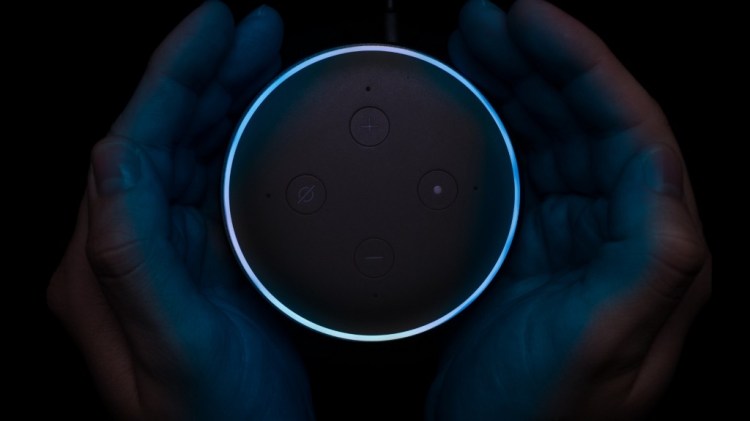
The idea is that an AI system is trained for specific tasks. These tasks could include virtual personal assistants such as Apple’s Siri, classifying images, and translation speech. For example, by merely asking Amazon’s Alexa, it can help you answer, set alarms and purchases, and so much more. So you may already be using artificial intelligence every day in your home.
There is a race to build robust AI when presented with unfamiliar tasks. A strong AI system would be able to find a solution without human intervention. Its intelligence would not just be able to touch but also to surpass that of humans. Strong AI currently exists with limits but is expected to advance over the next few decades. There are a host of other benefits that AI Brings.
Big Data Jobs
The origins of Artificial Intelligence Technology
Artificial Intelligence is not new. It was formally founded in 1956 by a group of scientists in the United States. Artificial Intelligence has gone through many cycles since then, going through significant scientific breakthroughs, followed by ‘AI winters’ — times of disappointment after AI failed to deliver its hype. In recent years, with the more widespread AI application, AI’s responsible use, including ethics and bias, has become a significant factor in its development.
The technologies behind Artificial Intelligence
Sense lets a machine perceive the world around it by gathering and processing images, sounds, speech and text, facial recognition, image categorisation, sound pattern recognition, and translating speech to text.
Computer vision allows machines such as computers or mobile phones to see their surroundings. Computer vision has already made its way to our mobile phones via different e-commerce or camera apps.
Audio Processing has to do with detecting and translating audio signals, like Google Cloud vision. It classifies images into thousands of categories such as cats and detects objects and faces within images. The second is Amazon Echo, which acts as a personal DJ to control through your voice.
Now a Fourth Industrial Revolution is building on digital technologies. It is thought to be a fusion of technologies that blur the lines between the physical, digital, and biological spheres. (Nkusi, 2020)
AI enables a machine to understand the information it collects through pattern recognition, such as finding patterns in social media posts on fraudulent behaviours for insurance claims. This is very similar to how humans interpret information by understanding the patterns presented and their contexts.
Some of the technologies that are behind it are Natural language processing or NLP. This technology allows computer programmes to understand spoken language. NLP currently works through a process called deep learning. In essence, language is broken down into shorter elemental pieces to teach the machine to understand their relationships and work together.
Knowledge representation is about representing information about the world in a form. A computer system can solve complex tasks such as diagnosing a medical condition or having a natural language dialogue. Speech recognition, this is the translation of speech into text or format that machines can read. For instance, think about automated phone systems that recognise your voice, process your request and put you through the correct department when you call a company.
Facebook also uses natural language processing to look for patterns and user posts to understand how people feel about a particular brand or product. Chatbots like IPSoft Amelia or IBM Watson perform service desk roles such as handling customer complaints or solving customer complaints or customer help desk issues.
AI can continuously learn, improve the outcomes, and become better at doing the task. It can continually optimise the performance by learning from successes or failures of these actions.
Some examples of where AI is acting and learning are Netflix, suggesting movies, TV Shows, and documentaries, based on the viewer’s prior activity, patterns, and behaviours. The more you watch, the more it learns and better suggests relevant content for you to watch. Deep learning is one of the things that makes self-driving cars possible.
Artificial Intelligence is also used to assist humans in non-repetitive tasks to find patterns. Learns from experiences and then using machine learning, choose the correct responses. Unlike automation, it does not follow orders or rules.
It is used to provide insights. For example, imagine someone has a head injury and needs to determine the level of damage. An AI machine could help diagnose the degree of damage by being ‘trained’ on multiple X-rays of previous head injuries. It would then understand the severity of the current head injury and provide an informed result. This could help doctors provide their overall diagnosis for the patient a lot quicker as they would already have gained insight into the severity of the AI machine’s injury and would therefore have a better understanding of the patient’s condition before doing their checks.
The benefits and things to consider relating to Artificial Intelligence
AI brings a new level of efficiency to the use of resources. Machine learning can extract meaning from large and complex data sets. Can, therefore, see patterns and anomalies in data that humans cannot.
Secondly, AI has been able to analyse weather patterns and climate data, resulting in more accurate forecasts. Thirdly, a better customer experience, using AI, can improve how it interacts with its customers. This could involve things like customer experience through chatbots and digital assistants, who are available 24/7 to converse with customers. It could also mean that in hospitals, AI can focus on the manual and repetitive tasks such as understanding a patient’s medical history by reading through all the historical records. In contrast, nurses focus on the more human side of their jobs, like forming close interpersonal relationships with patients. AI has also led to other enjoyable and innovative solutions. In certain hotels, hotel guests can now check-in to their hotel using an app by merely using their fingerprints or taking a selfie.
Artificial Intelligence is not here to replace us. It is here to help us.
The best results are achieved when human experts work hand in hand with AI, each bringing the best of their unique capabilities to a problem.
Artificial Intelligence, including machine learning and deep learning systems, are changing each and every industry and could create incredible opportunities for businesses. (Nkusi, 2020)















 365 Data Science