
Data Labeling and Annotation for ML Projects in 2021

Data Labeling Industry Needs to Take the Lead in Reform as AI is Difficult to Break the Ground

AI landing has become a difficulty

Two years ago, the investment and financing enthusiasm of the artificial intelligence field has been greatly reduced, and a considerable number of AI enterprises have completely disappeared. “The cold wave of artificial intelligence has arrived” has even become the industry’s hot word in 2019.

Compared with the boom a few years ago when entrepreneurship and investment enthusiasm went forward together, the AI industry has suffered a lot recently.

The reason is that “AI landing has become a difficulty”.

From the age of automation to the age of AI, the value created by artificial intelligence is constantly increasing. Meanwhile, the refinement and complexity of business scenarios are also constantly improving, bringing a series of challenges for AI landing.

When it comes to specific business industries, autonomous driving is the most important commercial field. Although the investment is a lot in unmanned driving/autonomous driving, the product is still far from large-scale commercial application.

At present, the main application scenarios are nothing more serious than road tests, exhibitions, and test drives in parks. However, these obviously cannot bring any substantial income to a profit-oriented enterprise.

Enterprises require profit, and AI enterprises are no exception. The most urgent issue is how to break the “AI landing difficulty” dilemma.
Big Data Jobs

The key to breaking the difficulty of AI is to find out what factors lead to this result.

In the field of artificial intelligence, algorithms, processing, and data are three important basic elements of the industry. For a long time, AI enterprises mainly focus on the field of algorithms and processing, generally pay less attention to the training data.

In fact, as the basement of the AI industry, data plays an important role in AI implementation. To apply AI to specific business scenarios, data quality and accuracy can not be neglected.

There is a simple but important consensus in the AI industry

The quality of the data set directly determines the quality of the final model.

In the early stage, the focus of the AI industry is mainly on the theory and technology itself. At this time, a cutting-edge technology concept is likely to bring huge external investment to the enterprise.

At the relatively mature stage, investors and AI enterprises turn their attention to the commercialization part. After all, investors care about most is the profits.

Trending AI Articles:

1. Why Corporate AI projects fail?

2. How AI Will Power the Next Wave of Healthcare Innovation?

3. Machine Learning by Using Regression Model

4. Top Data Science Platforms in 2021 Other than Kaggle

Specific commercial landing scenario showing up

However, the combination of theory and practice is not always smooth as imagined. In the process of commercial implementation, AI enterprises have found a problem: although the quality of annotated data sets can meet the basic needs of laboratories, it cannot support the development of AI implementation.

We take examples as evidence:

In single-point scenes such as face recognition, the related data types are generally simple. But in a more complete business scenario, the data becomes more complex.

In an industrial scenario, it would involve more refined data labeling, such as industrial scene image annotation, processing text data, and equipment running data.

In the medical scene, the annotation of medical images and texts requires personnel with medical professional knowledge.

In the past, only a small amount of datasets with high quality can meet the requirements in the laboratory. However, in the specific commercial landing scenario, there are many new requirements for annotated datasets:

Large scale, high-quality, scenario-based, customized.

In such a new situation, the key to breaking the ice is the reform of the data annotation industry.

In the trend of AI commercialization, the data annotation industry should not fall behind but should take the step forward.

ByteBridge, a human-powered data labeling tooling platform

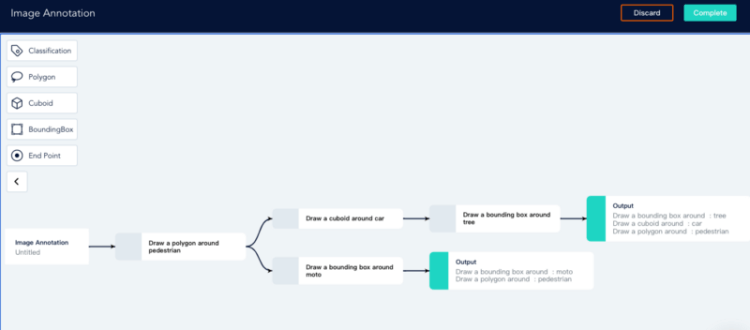
On ByteBridge’s dashboard, developers can define and start the data labeling projects and get the results back instantly. Clients can set labeling rules directly on the dashboard. In addition, clients can iterate data features, attributes, and workflow, scale up or down, make changes based on what they are learning about the model’s performance in each step of test and validation.
ByteBridge: a Human-powered Data Labeling SAAS Platform

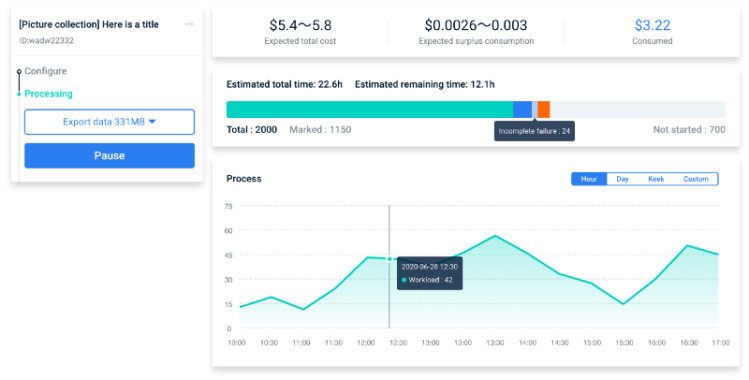
As a fully managed platform, it enables developers to manage and monitor the overall data labeling process and provides API for data transfer. The platform also allows users to get involved in the QC process.
ByteBridge: a Human-powered Data Labeling SAAS Platform

These labeling tools are available: Image Classification, 2D Boxing, Polygon, Cuboid.

We can provide personalized annotation tools and services according to customer requirements.

End

If you need data labeling and collection services, please have a look at bytebridge.io, the clear pricing is available.

Please feel free to contact us: support@bytebridge.io

Don’t forget to give us your ? !


Data Labeling and Annotation for ML Projects in 2021 was originally published in Becoming Human: Artificial Intelligence Magazine on Medium, where people are continuing the conversation by highlighting and responding to this story.

Via https://becominghuman.ai/data-annotation-industry-needs-to-take-the-lead-in-reform-as-ai-is-difficult-to-break-the-ground-4dab40dfaeca?source=rss—-5e5bef33608a—4

source https://365datascience.weebly.com/the-best-data-science-blog-2020/data-labeling-and-annotation-for-ml-projects-in-2021

How to organize your data science project in 2021

Maintaining proper organization of all your data science projects will increase your productivity, minimize errors, and increase your development efficiency. This tutorial will guide you through a framework on how to keep everything in order on your local machine and in the cloud.

Originally from KDnuggets https://ift.tt/3mZExHy

source https://365datascience.weebly.com/the-best-data-science-blog-2020/how-to-organize-your-data-science-project-in-2021

Free From Stanford: Machine Learning with Graphs

Check out the freely-available Stanford course Machine Learning with Graphs, taught by Jure Leskovec, and see how a world renowned researcher teaches their topic of expertise. Accessible materials include slides, videos, and more.

Originally from KDnuggets https://ift.tt/3x6XpJg

source https://365datascience.weebly.com/the-best-data-science-blog-2020/free-from-stanford-machine-learning-with-graphs

Data Profession Job Satisfaction: Beware Of The Drop

Latest KDnuggets Poll results: The Job satisfaction has declined for ML Engineers, Data Scientists, and Data Analysts, but remained the same for Data Engineers, and Managers/Directors. Data Scientist job satisfaction has an alarming drop in mid-career. Finally, which regions have the highest and lowest job satisfactions?

Originally from KDnuggets https://ift.tt/2RATsfD

source https://365datascience.weebly.com/the-best-data-science-blog-2020/data-profession-job-satisfaction-beware-of-the-drop

Templates Vs Machine Learning OCR

Over the past 15 years, I have had the chance to work with many OCR tools and one thing I can say with certainty is that the text extraction quality of these tools has steadily improved with ongoing improvements in artificial intelligence and machine learning OCR techniques.

More than ever businesses are trying to derive useful insights and meaning from scanned images and documents. For example, banks are wanting to extract intelligence such as parties involved and contract expiry dates from scanned contracts, insurance companies are wanting to detect fraudulent receipts submitted during the claims process, and many more. Use cases like these require unstructured text to be converted into structured meaningful data during OCR or post OCR.

Big Data Jobs

OCR tools inherently lack the intelligence to parse or understand extracted text beyond just extracting it. To assign meaning and structure to the content, another system needs to process the extracted text and extract entities and entity types from it.

In this example, the OCR system does an accurate extraction of text however it does not have the intelligence to identify the specifics of the merchant name, merchant address, or other important details such as tax, total, and individual line items.

In this article, I want to compare two post-OCR text enrichment techniques. One is the conventional technique of using templates while the other is the modern approach of applying machine learning.

Trending AI Articles:

1. Why Corporate AI projects fail?

2. How AI Will Power the Next Wave of Healthcare Innovation?

3. Machine Learning by Using Regression Model

4. Top Data Science Platforms in 2021 Other than Kaggle

Let’s dive into templates first. Templates are what the name says, templates. In this method, the user manually marks co-ordinates for the text of interest on the image and subsequently uses the output of the OCR engine to locate and extract text. This approach works well and is highly accurate if the text layout within the scanned image matches the layout coded in the template.

However, this approach starts to fail for systems that deal with a large number of document layouts and for systems that frequently encounter new types of documents. An invoice processing system that receives new types of invoices from different suppliers is a good example. For an invoice processing system, a template approach may work fine initially but will soon become unmanageable as the number of suppliers grows and change.

Now let’s consider the alternative machine learning approach. A machine learning OCR uses a trained model which encodes thousands of rules for determining the meaning of the content. This model is generally trained using a combination of supervised and unsupervised learning methods. For example, one approach for training could be to use feature data set as follows to predict if a line in the text contains a merchant name.

A trained model can fine-tune itself as more training data is collected and ingested into the training process. The machine learning approach is much more scalable across languages and across different types of documents even if they are not processed by the system. Although this approach requires that initial effort to build high-quality training models and entity recognition models, but once built, this approach scales faster and better than the templates approach.

At Infrrd we are researching and experimenting with various techniques involving machine learning to improve content enrichment post-OCR text extraction from different document types such as receipts, invoices, contracts, and shipping labels.

Don’t forget to give us your ? !


Templates Vs Machine Learning OCR was originally published in Becoming Human: Artificial Intelligence Magazine on Medium, where people are continuing the conversation by highlighting and responding to this story.

Via https://becominghuman.ai/templates-vs-machine-learning-ocr-93227e940d0b?source=rss—-5e5bef33608a—4

source https://365datascience.weebly.com/the-best-data-science-blog-2020/templates-vs-machine-learning-ocr

The Blue Brain Project-A mission to build a simulated Brain

Brain zones can be highlighted thanks to the Blue Brain Cell Atlas. Credit: © BBP / EPFL

The “Blue Brain” project, is a collaboration of IBM and Swiss University team, aims to create a digital reconstruction of the mouse brain by reverse-engineering mammalian brain circuitry.

The work was presented at the European Future Technologies meeting in Prague. Construction of building the complete digital brain is not completed yet but has passed most of the key milestones. There are reasons why such a brain wasn’t reconstructed in the pass 10 years.

It is an effort to create the first computer simulation of the entire human brain, right down to the molecular level and to identify the fundamental principles of brain structure and function.

Big Data Jobs

A detailed simulation of a small region of a brain built molecule by molecule has been constructed and has recreated experimental results from real brains.

It may also help in understanding how certain malfunctions of the brain’s “microcircuits” could cause psychiatric disorders such as autism, schizophrenia and depression

Milestones passed by the “ Blue Brain” project

First Milestone was achieved in 2007, they were to able to reconstruct the electrical behaviour of the neuron recorded in the brain. Also the software that supported the modelling of neuron was released. This was an important milestone because it allows us to automatically capture the realistic behaviour of millions and even billions of neurons; an essential step to building a whole brain, which has approximately a hundred billion neurons.

Second Milestone was an algorithm that can recreate the connectome of a microcircuit of neurons and allowed to capture the way neurons are connected in the brain and the 3D location of millions of synapses.

Third Milestone was to bring the different types of neurons and synapses together as a microcircuit, which was demonstrated in the form of the most biologically realistic copy to date of a neocortical microcircuit — the “CPU” of the neocortex. It demonstrated the extent to which and the accuracy one can predict missing data, because it revealed the first glimpse of the cellular and synaptic map of the most complex microcircuit in the mammalian brain, and because it provided a proof of concept, for building larger circuits such as brain regions.

Trending AI Articles:

1. Why Corporate AI projects fail?

2. How AI Will Power the Next Wave of Healthcare Innovation?

3. Machine Learning by Using Regression Model

4. Top Data Science Platforms in 2021 Other than Kaggle

Fourth Milestone was to validate and explore the emergent dynamics of the microcircuit in milestone three. This was a key milestone because it showed, for the first time, they could integrate all available data about a cortical microcircuit into a digital reconstruction that would give rise to a complex array of network states comparable to that observed in real circuitry.

Fifth milestone passed was to solve a decade-old problem of mathematically growing the shape of neurons (their morphology).

Sixth milestone passed was to validate that the methods developed to build microcircuits can be generalised to building a brain region with curved shape and differences in cellular composition and synaptic properties.

Seventh milestone passed was an algorithm to connect the 11 million or so neurons in the mouse neocortex. This was a very challenging milestone because the data was very sparse.

Eighth and ninth milestones were to validate that the algorithmic reconstruction approach works outside of the neocortex, which tested by reconstructing the thalamus and hippocampus, with publications in preparation. These milestones were important because they meant that the processes and algorithms that had developed for the neocortex also work, with some adaptation, for other brain regions.

Tenth milestone was to build a full cell atlas of every neuron and glial cell in the whole mouse brain.

In short they have established a solid approach to feasibly reconstruct, simulate, visualise and analyse a digital copy of brain tissue and the whole brain.This foundation took a long time to develop. It consists of solving how we database the brain, how we algorithmically and automatically build the brain in its digital form and how to simulate, visualise and analyse such a complex system. This involved building a huge ecosystem of software, discovering and developing many algorithms that can exploit inter-dependencies and establishing rigorous standard operating procedures that we must follow to build a digital copy of the brain.

Don’t forget to give us your ? !


The “Blue Brain” Project-A mission to build a simulated Brain was originally published in Becoming Human: Artificial Intelligence Magazine on Medium, where people are continuing the conversation by highlighting and responding to this story.

Via https://becominghuman.ai/the-blue-brain-project-a-mission-to-build-a-simulated-brain-f3eb1fb9885b?source=rss—-5e5bef33608a—4

source https://365datascience.weebly.com/the-best-data-science-blog-2020/the-blue-brain-project-a-mission-to-build-a-simulated-brain

AI and Human Rights A Story About Equality

Nearly a year ago, as the world was locking down, I learned about a new app that automatically matches people based on interests. It was invite-only and offered one 30-minute professional date every day of the week. My friend Grant knew I was looking to connect with people in the AI space and suggested giving LunchClub a try.

I proceeded to schedule one meeting per day over the next few weeks to see what came of the exchanges. On the other side of it, I’m glad I did because I connected with some remarkable humans who remain in my life today. One was Aaina Agarwal.

A Voice for the Future

Aaina was formerly a member of the AI policy team at the World Economic Forum, where she launched and ran the Global AI Council. She also served as the inaugural Director of Policy & Partnerships at the Algorithmic Justice League, where she serves as its Human Rights Advisor. I vividly remember our LunchClub meet because the dialogue was dense. Her background was fascinating, and the discussion was the first I ever had with someone who studied the system we’re building at bundleIQ.

Big Data Jobs

Today, I had the pleasure of joining as a guest on her new podcast, Indivisible AI.

Coming live from her San Francisco apartment, a dark brown-haired woman smiled back at me on the screen. Hi, Aaina! I said.

“Welcome to the Indivisible AI Podcast!

Jumping over the whos and whys and straight into the subject of the matter, she and I discussed my vision for bundleIQ as it pertained to equality. Having designed the conversation to bring visibility to AI implementation challenges and dynamics, she offered space to converse about these concerning human rights.

Reducing the Gap

Finding equilibrium in a society where economic disparity is widespread is no easy task. Close your eyes and picture a world where technology supports creating superpowers for some but not others.

Aaina describes AI as more than a technology; it is a rallying point for our future. And, acknowledges that because we are at the beginning of this journey companies and leadership have a chance to create with intention.

Advocating for human rights protects people against one-sided relationships of power. Building a tomorrow with this in mind is the opportunity at hand.

Trending AI Articles:

1. Why Corporate AI projects fail?

2. How AI Will Power the Next Wave of Healthcare Innovation?

3. Machine Learning by Using Regression Model

4. Top Data Science Platforms in 2021 Other than Kaggle

A Pivotal Moment in Time

bundleIQ’s role in this game has to do with adjusting the business model. At this time, we charge to unlock the power of AI. With this newfound capability, users can access relevant knowledge faster than humanly possibly. The few having an advantage over the many only perpetuates the problem.

The question then becomes, how does bundleIQ, as a company, balance this equation?

For starters, from where I sit as the CEO, I am aware of this reality, and I was even before this podcast. As far as unpacking the details of how we’ll get there, I’ll leave it for you to tune in to when Aaina drops the episode.

Being in the driver’s seat of augmenting human intelligence is a position I take seriously. When I set out on this journey, I had no idea what was possible; I just knew it was essential to help normalize cognition. Speaking with Aaina and people like her creates so much clarity and purpose for our mission, and I’m excited to share more when the time is right.

Don’t forget to give us your ? !


AI and Human Rights, A Story About Equality was originally published in Becoming Human: Artificial Intelligence Magazine on Medium, where people are continuing the conversation by highlighting and responding to this story.

Via https://becominghuman.ai/ai-and-human-rights-a-story-about-equality-e9488480acd2?source=rss—-5e5bef33608a—4

source https://365datascience.weebly.com/the-best-data-science-blog-2020/ai-and-human-rights-a-story-about-equality

What makes a song popular? Analyzing Top Songs on Spotify

With so many great (and not-so-great) songs out there, it can be hard to find those that match your musical preferences. Follow along this ML model building project to explore the extensive song data available on Spotify and design a recommendation engine that could help you discover your next favorite artist!

Originally from KDnuggets https://ift.tt/3v1XGM1

source https://365datascience.weebly.com/the-best-data-science-blog-2020/what-makes-a-song-popular-analyzing-top-songs-on-spotify

Essential Math for Data Science: Linear Transformation with Matrices

You’ll start seeing matrices, not only as operations on numbers, but also as a way to transform vector spaces. This conception will give you the foundations needed to understand more complex linear algebra concepts like matrix decomposition.

Originally from KDnuggets https://ift.tt/2OUQXEb

source https://365datascience.weebly.com/the-best-data-science-blog-2020/essential-math-for-data-science-linear-transformation-with-matrices

6 Mistakes To Avoid While Training Your Machine Learning Model

While training the AI model, multi-stage activities are performed to utilize the training data in the best manner, so that outcomes are satisfying. So, here are the 6 common mistakes you need to understand to make sure your AI model is successful.

Originally from KDnuggets https://ift.tt/3dleaZF

source https://365datascience.weebly.com/the-best-data-science-blog-2020/6-mistakes-to-avoid-while-training-your-machine-learning-model

Design a site like this with WordPress.com
Get started