How Conversational AI is Transforming MarTech

Conversational Artificial Intelligence (AI) has been around for some time now and making a substantial impact on customer acquisition and retention strategies. This subset of AI has influenced business websites, Internet of Things developments, and a whole range of other technologies.

The growth in SaaS tools for marketing has boosted the way businesses market their products and services and conversational AI has taken it one step further. Here is how this technology is transforming MarTech and what the future holds for it.

Voice search algorithms

One of the most commonly used conversational AI algorithms used by individuals on a daily basis in voice search applications. There are just so many of them and it is not like back in the day when Siri was the only voice search assistant.

Nowadays, there is Google Assistant, Alexa, and a couple of others. The use of the Internet of Things (IoT) devices has amplified the need for changes in marketing.
Big Data Jobs

After these applications started being used on a greater scale, marketing teams needed to change their approach. These changes affected mostly search engine optimization teams because they needed to cater to this development. They had to implement different keywords that would lead to higher rankings. Here is how the SEO experts did it and how you can do this:

1. Use long-tail keywords

2. Craft content in a conversational way

3. Implement long-tail keyword tools when researching

These three pointers can help you keep up with the changes conversational AI has brought in the lives of marketers. As devices like Amazon Echo start being more popular and widely used, you should keep up with conversational AI trends caused by this development.

Natural Language Processing in website chatbots

Many websites you use nowadays have been integrated with a chatbot that allows live chat capabilities. This development is another quite common influence conversational AI has on MarTech.

Not all these chatbots are outfitted with the common and widely used AI technology of programmed questions and answers. Instead, it uses deep learning and machine learning to try and understand the context of custom questions.

According to experts on assignment writing services, chatbots mimic the thought process of a real human being and try to gather relevant sources to provide a relevant answer. That is conversational AI manifest at its peak and this integration of Natural Language Processing has started gaining traction. It is a great tool to have in your MarTech box of tools but if you do not have the resources to implement it now, using regular chatbots is still a great alternative.

Trending AI Articles:

1. 130 Machine Learning Projects Solved and Explained

2. The New Intelligent Sales Stack

3. Time Series and How to Detect Anomalies in Them — Part I

4. Beginners Guide -CNN Image Classifier | Part 1

As time goes, you can improve and upgrade the chatbot system you’re using to use deep learning and machine learning technologies. However, some chatbot solutions are available in the market currently with these futuristic and advanced features. The only barrier is costing since they are quite expensive for now.

Conversational AI algorithms multi-language approach

Conversational AI can also help marketing teams by using multiple languages at once. How? Automated translation algorithms that can translate text in real-time are must-have in some industries.

Some businesses might be servicing customers from around the globe. To answer their questions or create content specifically for them, you should speak with them using their language.

Science and tech assignment writers on essay writing reviews mention that having multiple languages conversational AI tools can help marketing teams widen their reach and understand the content relevant to each buyer persona they have created. An international reach might be everything you have wanted but were limited by the language barrier.

Perhaps you considered hiring translators for each country is burdensome. To resolve that issue and lower the barrier of tapping into international markets, conversational AI algorithm developers are continually improving translation solutions.

Judging by the capabilities of Google Translate now, the developers have made great progress and their solutions can be implemented for corporate clients. You can use real-time translation or once-off to translate content or comments from users in different countries.

Currently, even Facebook and Twitter use these algorithms. Therefore if you get a comment in a foreign language, it will be much easier to understand and respond to it.

AI Assistants for personalizing content

Personalized content is a huge and ongoing topic in the marketing industry. Many solutions have been introduced to try and do this. Firstly, buyer personas were introduced to try and bridge this gap.

Later on, AI tools were used to try and process data from the buyer personas to find the best type of content for each one. However, this was not as efficient as expected and a new solution was developed.

The division head at a leading dissertation help says that conversational AI has introduced various personalization tools that understand search queries probed by users. At the same time, these algorithms gather and process all other data, such as historic searches and user behaviors. These fragments of information paint a clear picture of how marketers should curate the conversation with the targeted audience.

Personalizing content has never been this easy because customers can use these convenient AI assistants that understand search queries alongside other pieces of information. Utilizing these solutions can prove very fruitful because you will create content specifically designed for the people you’ll send it to.

AI-Powered chatbots on social media

Social media marketing constitutes a great portion of MarTech. This distribution channel provides widespread reach due to the millions of people who use it daily. You can reach users using various methods.

By posting on your timeline, tagging people they follow or utilizing other methods like promoting certain posts. However, after posting something, users might have questions about that post or one of your product or service offerings.

To ensure that this conversation is instantaneous, you can use AI-powered chatbots similar to the ones used for website pages. These AI-powered solutions can provide an effective solution for managing conversations with customers or the targeted audience. Just like website chatbots do, integrating social chatbots can improve the customer journey.

You can move them quickly to the next phase of the sales cycle you’ve created. At the end of the day, your conversion rate can improve exponentially and increase revenue growth greatly.

These chatbots can also keep a track record of conversations that most bother the targeted audience. As a result, you can be proactive and answer these questions when marketing products or services.

Ad targeting using conversational AI

PPC ad campaign hosting providers such as Google Ads, Taboola, and others can be optimized greatly if you have boosted ad targeting using conversational AI. This subset of Artificial Intelligence can improve the reach of your ads.

At the same time, you can get more interested individuals without spending too much. By refining the target audience filters, you can specifically gain access to interested individuals.

That is contrary to paying for your ads to be seen by people who are not interested or will not make a purchase. This type of ad targeting works similarly to personalizing content. The only difference is that it helps save a lot of funds which could be wasted.

Understanding what type of audience resonates with the content you are creating will be much easier to target them specifically and reduce the costs of acquiring customers.

The end result is an exceptionally great Return on Investment (RoI) because you won’t be spending on individuals that do not benefit the business. It is one of the most important tools to reduce costs in MarTech. Therefore, this also lowers the bar for small companies starting with digital marketing.

How conversational AI boosts customer experience

The collective benefit of conversational AI in MarTech is boosting the customer experience users get. Since this subset of Artificial Intelligence focuses greatly on sparking or understanding conversation, it makes it easier for customers to ask for help whenever needed.

In e-commerce solutions, it is like having a shop attendant whom you can ask anything related to their aisle. By boosting the customer journey, you are placed in a better position to influence purchase decisions.

Additionally, by personalizing content and product offers, conversational AI can contribute to higher conversions. That is because you are tailoring content for each specific individual.

The benefits of conversational AI are multifold and most of them are focused on making the lives of customers easier. By simplifying the customer journey, you stand to increase revenue by getting more conversions.

There are many other benefits that can contribute to sales and business growth. Undoubtedly, conversational AI solutions are a must-have in your MarTech toolbox due to their versatile applications and exponential growth potential.

You can start small and grow as time goes on by moving on to more advanced solutions that are high-grade and have better success results.

The bottom line

MarTech has completely been revolutionized by conversational AI because it has made digital marketing practices much more efficient. At the same time, it improves the Return on Investment for digital marketing. As a result, smaller companies can engage fruitfully and grow their operations using conversational AI.

Credits:

Ashley Simmons is a professional journalist and editor who works for a newspaper in Salt Lake City for four years and as a part-time college paper writer for the best essay writing service known for its high-quality assignment assistance and for essay writing service UK. She covers business and economics, marketing, human resources and digital marketing. Feel free to connect with her on Facebook or follow on Twitter.

Don’t forget to give us your ? !


How Conversational AI is Transforming MarTech was originally published in Becoming Human: Artificial Intelligence Magazine on Medium, where people are continuing the conversation by highlighting and responding to this story.
Via https://becominghuman.ai/how-conversational-ai-is-transforming-martech-ce18937f8621?source=rss—-5e5bef33608a—4

source https://365datascience.weebly.com/the-best-data-science-blog-2020/how-conversational-ai-is-transforming-martech

How to Deployement AI Models?Part 1

How to Deploy AI Models? — Part 1

Wish you all Happy New Year Guys!!! May this New Year add more feathers to our hat.

Model deployment is one of the very crucial task of the whole process. Deployment of trained model is very important because it makes the process easier for the end user and add value to the organization. In this series of model deployment, we are going to learn the following steps in upcoming articles:

  1. Repository Directory — Arrangement of the files in the repository.
  2. Git installation and RSA setup.
  3. Introduction of Github as well as creating and maintaining repositories in Github (Push, Pull, clone, branch and other important commands) as well as Source tree.
  4. Deployment of the model to Heroku app.
  5. Deployment of the model to Streamlit app.
  6. Deployment of the model using Docker.
  7. Overview of the Pycaret library.

Without any delay, let start our journey to Deploy ML/DL model.

  1. Repository Directory — Arrangement of the files and folders in the repository.

This is the basic section if you don’t want you can skip this section.While creating or initiating any project, it is very importing to arrange the files and folder of the project in a detailed way so any person who visit the repository can understand the content of the folder as well as file contents and he or she can carry it forward. In this Section of this article we are going to discuss this is detailed way.

Big Data Jobs

There is some kind of unstated rules which is followed in each and every step of the repository they are:

  1. Requirement.txt: As we all know for developing any project we need to import packages, library and project is based on some programing language i.e. Python, Javascript, NodeJS, etc. These programming languages and library have version associated with them and if these versions associated with these libraries and the programming language. If we do not install the same version of the programming language along with the programming language which we have used in thee development server in the production server then it will create a huge chaos and our whole hard work can go in the trash can. The best way is to automatically extract the installed library in the .txt format or you can update it manually. For reference how to extract the installed python packages and their respective version can be found in the article and code. It is always recommended to freeze the installed libraries/package before extracting it into the text file.
  2. Log.txt: This file is same as the log of any application, we use it contains the each and every activity which is performed on the repository. It can be updated automatically or manually. It keeps the track of the activity performed by the different teams on the repository.
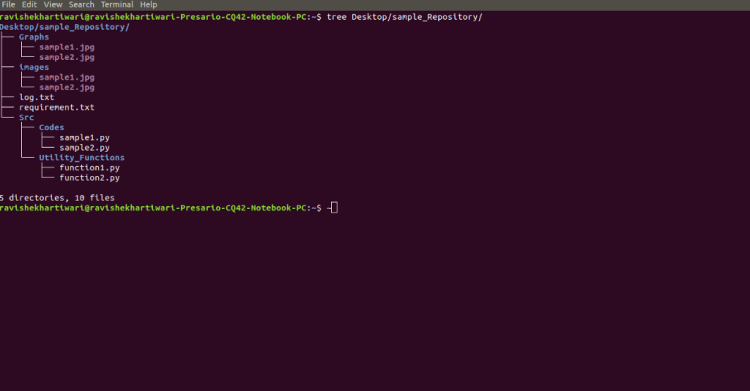
  3. The structure of the Repository: It is very important to have segregated folder structure with multiple branch dedicated to development, testing, integration and bug. The below diagram defines the folder structure of the repository.
Figure 1. Repository Structure

Trending AI Articles:

1. 130 Machine Learning Projects Solved and Explained

2. The New Intelligent Sales Stack

3. Time Series and How to Detect Anomalies in Them — Part I

4. Beginners Guide -CNN Image Classifier | Part 1

2. Git Introduction and set-up

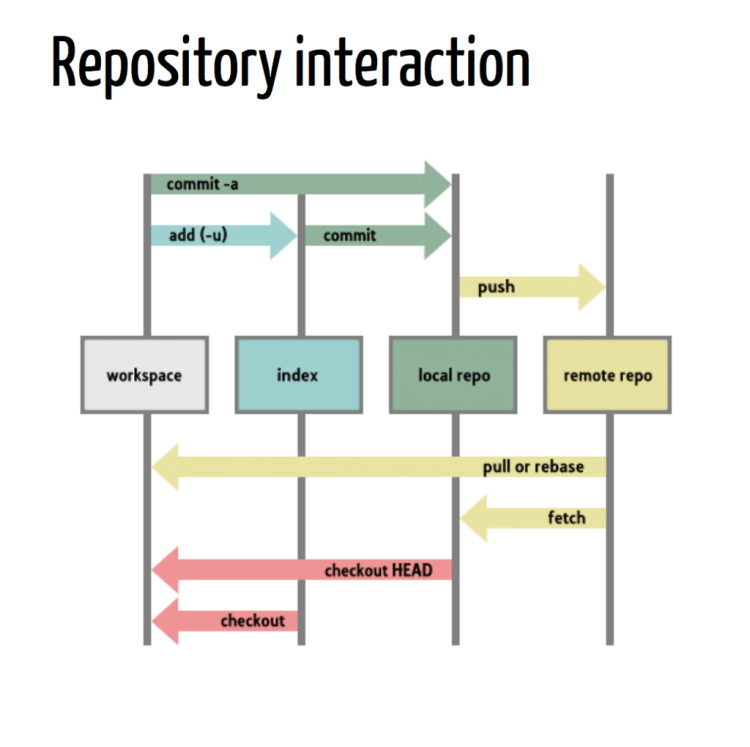
Git is a version control system which automatically tracks and keeps records of the changes which have been performed on the repository (local or remote) over the time. Below image summarizes the workflow of the git with local repository and remote repository.

Figure. 2 Git workflow

Installation: For installation of git you can visit the link.

  1. Configuration of Git: Before we take any step further we have to configure the username and as well as the email globally. For authentication we can set up ssh authentication the help of the RSA algorithm in which we have to upload the public key in the Github SSH and GSA section, so we do not need to write our email and password when we pull or push into the repository.

Setting- up email:

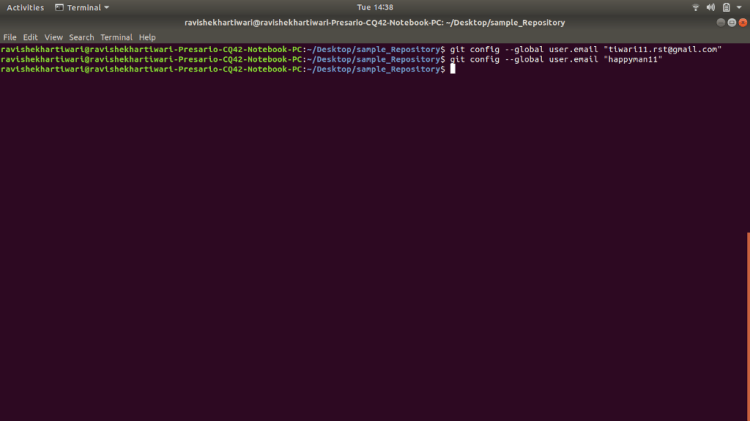
Command: git config — global user.email “enter your email”

Setting- up username:

Command: git config — global user.name “enter your user name”

Note: Create a github account prior to this section, use email and username associated with the github account.

Figure 3. Example of Username and Email Configuration

Setting- up RSA SSH authentication:

Command: ssh-keygen -t ed25519 -C “enter your email”

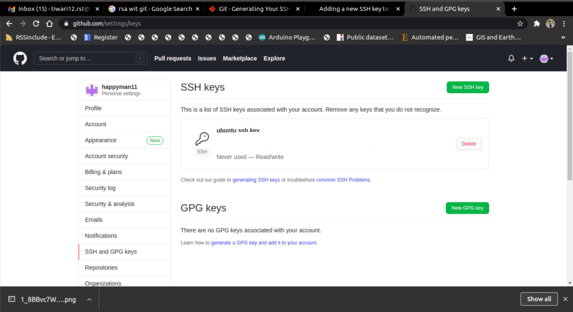
This above command will generate the RSA public and private key and you have to upload the public key in the SSH section of the Github inside settings page.

Checking SSH key:

Command: eval “$(ssh-agent -s)”

This above command will give the Agent pid which means it is functioning in local machine perfectly. Now we have to add SSH private key to the SSH agent using below command.

Command: ssh-add ~/ .ssh/id_ed25519

Note: If you have generated a key with different id please replace the “id_ed25519” with the id you have generated the private key.

Copying Key and Pasting it into Github SSH public key section:

Installing xclip to copy the content of the public key file

Command: sudo apt-get install xclip

Copy the content of the file to clipboard

Command: xclip -selection clipboard < ~/.ssh/id_ed25519.pub

Note: If you have generated a key with the different id please replace the “id_ed25519” with the id you have generated the public key.

The below image will describe the whole process :

Figure 4. SSH key generation procedure
Figure 5. Linking SSH with Github

Special Thanks:

As we say “Car is useless if it doesn’t have a good engine” similarly student is useless without proper guidance and motivation. I will like to thank my Guru as well as my Idol “Dr. P. Supraja”- guided me throughout the journey, from the bottom of my heart. As a Guru, she has lighted the best available path for me, motivated me whenever I encountered failure or roadblock- without her support and motivation this was an impossible task for me.

Reference:

Extract installed packages and version : Article Link.

Installation of Git: Link,

Git Documentation: Link

Github Documentation: Link

Notebook Link Extract installed packages and version : Notebook Link

YouTube : Link

If you have any query feel free to contact me on any of the below-mentioned options:

Website: www.rstiwari.com

Medium: https://tiwari11-rst.medium.com

Google Form: https://forms.gle/mhDYQKQJKtAKP78V7

Don’t forget to give us your ? !


How to Deployement AI Models? — Part 1 was originally published in Becoming Human: Artificial Intelligence Magazine on Medium, where people are continuing the conversation by highlighting and responding to this story.
Via https://becominghuman.ai/how-to-deployement-ai-models-part-1-49c2c334df18?source=rss—-5e5bef33608a—4

source https://365datascience.weebly.com/the-best-data-science-blog-2020/how-to-deployement-ai-modelspart-1

DeepMinds MuZero is One of the Most Important Deep Learning Systems Ever Created

MuZero takes a unique approach to solve the problem of planning in deep learning models.

Originally from KDnuggets https://ift.tt/358s50i

source https://365datascience.weebly.com/the-best-data-science-blog-2020/deepminds-muzero-is-one-of-the-most-important-deep-learning-systems-ever-created

Top Stories Dec 21 Jan 03: Monte Carlo integration in Python; 15 Free Data Science Machine Learning & Statistics eBooks for 2021

Also: SQL vs NoSQL: 7 Key Takeaways; Generating Beautiful Neural Network Visualizations; Meet whale! The stupidly simple data discovery tool; Key Data Science Algorithms Explained: From k-means to k-medoids clustering

Originally from KDnuggets https://ift.tt/3b67k9r

source https://365datascience.weebly.com/the-best-data-science-blog-2020/top-stories-dec-21-jan-03-monte-carlo-integration-in-python-15-free-data-science-machine-learning-statistics-ebooks-for-2021

All Machine Learning Algorithms You Should Know in 2021

Many machine learning algorithms exits that range from simple to complex in their approach, and together provide a powerful library of tools for analyzing and predicting patterns from data. If you are learning for the first time or reviewing techniques, then these intuitive explanations of the most popular machine learning models will help you kick off the new year with confidence.

Originally from KDnuggets https://ift.tt/3rPB6VT

source https://365datascience.weebly.com/the-best-data-science-blog-2020/all-machine-learning-algorithms-you-should-know-in-2021

Data Engineer Resume Sample and Template

Data engineer resume sample and downloadable template

Data Engineer Resume Downloadable Template

If you’re aiming to land a data engineer job, a robust skillset, relevant background, and experience are only a part of what it takes to get to the data engineer job interview.

What will actually make it happen is a well-crafted data engineer resume that communicates your expertise and spikes the employer’s interest.

So, whether you are an entry level data engineer or a junior data engineer, it’s essential to include the role of your accomplishments in advancing the business goals of the company, as well as some quantitative evidence of your achievements to convey your value to your target organization. For instance, how many people were impacted, by what percentage you increased efficiency, and how much revenue you helped generate.

But even if you do all the right moves, your data engineer resume can easily be overlooked, unless you grab the reviewer’s attention at first glance with impeccable and stylish formatting.

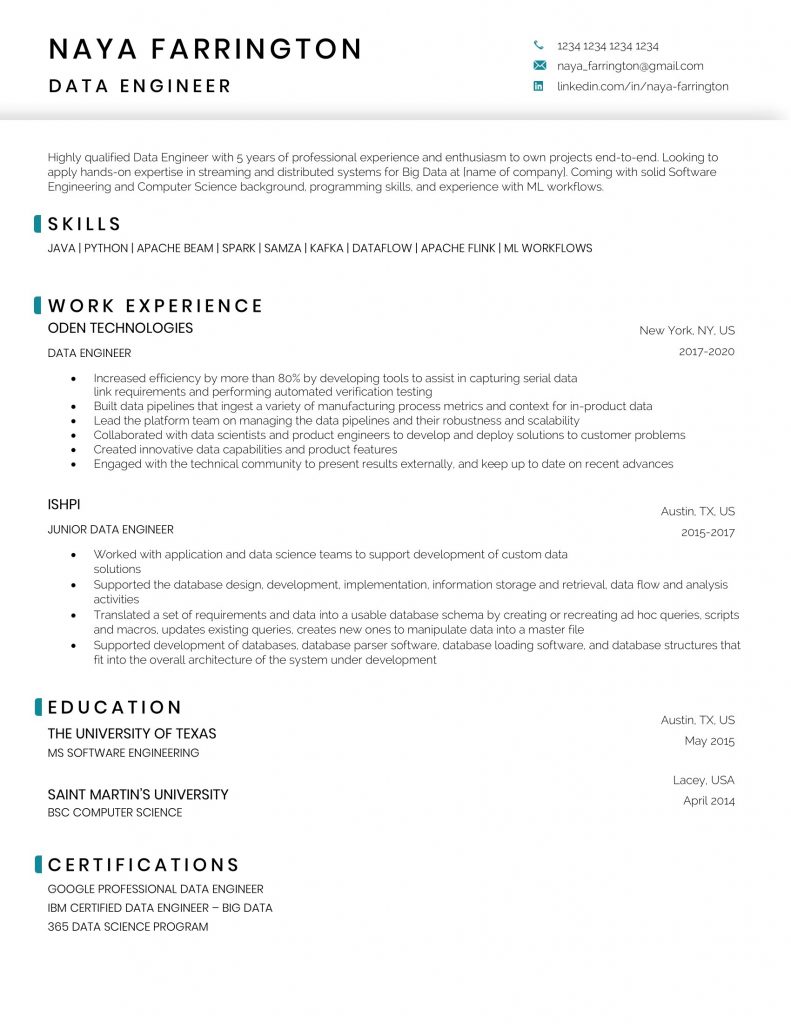
The following data engineer resume sample is exactly what you need to send the message of professionalism and excellence.

You can download this template easily and customize your resume in minutes!

Once you’re ready, all you have to do is pair it with your cover letter and submit your job application with confidence.

Just click on the button below and follow the instructions.


Data engineer resume sample

Data Engineer Resume Text Sample

Your Name and Contact Information

Data Engineer

Highly qualified Data Engineer with 5 years of professional experience and enthusiasm to own projects end-to-end. Looking to apply hands-on expertise in streaming and distributed systems for Big Data at [name of company]. Coming with solid Software Engineering and Computer Science background, programming skills, and experience with ML workflows.

Skills

JAVA | PYTHON | APACHE BEAM | SPARK | SAMZA | KAFKA | DATAFLOW | APACHE FLINK | ML WORKFLOWS

Work Experience

ODEN TECHNOLOGIES (New York, NY, US)
DATA ENGINEER (2017-2020)
• Increased efficiency by more than 80% by developing tools to assist in capturing serial data link requirements and performing automated verification testing
• Built data pipelines that ingest a variety of manufacturing process metrics and context for in-product data
• Lead the platform team on managing the data pipelines and their robustness and scalability
• Collaborated with data scientists and product engineers to develop and deploy solutions to customer problems
• Created innovative data capabilities and product features
• Engaged with the technical community to present results externally, and keep up to date on recent advances

ISHPI (Austin, TX, US)
JUNIOR DATA ENGINEER (2015-2017)
• Worked with application and data science teams to support development of custom data solutions
• Supported the database design, development, implementation, information storage and retrieval, data flow and analysis activities
• Translated a set of requirements and data into a usable database schema by creating or recreating ad hoc queries, scripts and macros, updates existing queries, creates new ones to manipulate data into a master file
• Supported development of databases, database parser software, database loading software, and database structures that fit into the overall architecture of the system under development

Education

THE UNIVERSITY OF TEXAS (Austin, TX, US)
MS SOFTWARE ENGINEERING (May 2015)

SAINT MARTIN’S UNIVERSITY (Lacey, USA)
BSC COMPUTER SCIENCE (April 2014)

Certifications

GOOGLE PROFESSIONAL DATA ENGINEER
IBM CERTIFIED DATA ENGINEER – BIG DATA
365 DATA SCIENCE PROGRAM

More Data Science Resume and Cover Letter Resources

Resumes:

How to Write a Data Science Resume – The Complete Guide (2021)

Cover Letters:

How to Write a Winning Data Science Cover Letter (2021)

How to Organize a Data Science Cover Letter

How to Format a Data Science Cover Letter

Data Science Cover Letter Dos and Don’ts

Cover Letter Templates

The post Data Engineer Resume Sample and Template appeared first on 365 Data Science.

from 365 Data Science https://ift.tt/3ndM048

Six Tips on Building a Data Science Team at a Small Company

When a company decides that they want to start leveraging their data for the first time, it can be a daunting task. Many businesses aren’t fully aware of all that goes into building a data science department. If you’re the data scientist hired to make this happen, we have some tips to help you face the task head-on.

Originally from KDnuggets https://ift.tt/388wjam

source https://365datascience.weebly.com/the-best-data-science-blog-2020/six-tips-on-building-a-data-science-team-at-a-small-company

Meet whale! The stupidly simple data discovery tool

Finding data and understanding its meaning represents the traditional “daily grind” of a Data Scientist. With whale, the new lightweight data discovery, documentation, and quality engine for your data warehouse that is under development by Dataframe, your data science team will more efficiently search data and automate its data metrics.

Originally from KDnuggets https://ift.tt/350WsG3

source https://365datascience.weebly.com/the-best-data-science-blog-2020/meet-whale-the-stupidly-simple-data-discovery-tool

15 Free Data Science Machine Learning & Statistics eBooks for 2021

comments At KDnuggets, we have brought a number of free eBooks to our readers this past year. I have written a series of posts highlighting Read more »

Originally from KDnuggets https://ift.tt/34XqSJn

source https://365datascience.weebly.com/the-best-data-science-blog-2020/15-free-data-science-machine-learning-statistics-ebooks-for-2021

Feature Scaling in Machine Learning

Normalization vs Standardization

In this article we will discover answers to the following questions:

  1. What is feature scaling and why it is required in Machine Learning (ML)?
  2. Normalization — pros and cons.
  3. Standardization — pros and cons.
  4. Normalization or Standardization. Which one is better.

First things first, let’s hit up an analogy and try to understand why we need feature scaling. Consider building a ML model similar to making a smoothie. And this time you are making a strawberry-banana smoothie. Now, you have to carefully mix strawberries and bananas to make the smoothie taste good. If you just mix one strawberry and one banana, chances are you would end up tasting only the banana flavour. Therefore, they need to be mixed in equal portions and not numbers. This is exactly what happens with models when there are a lot of input features and some features completely dominate others if unscaled. Thus, we normalize/standardize all the features to bring them on a common scale.

Every feature in a dataset consists of two parts:

Magnitude and Unit

Most of the time, the dataset contains features highly varying in magnitudes, units, and range. When using algorithms like K-Nearest Neighbour (KNN) or K-Means clustering etc., which measure the euclidian distance between two data points in their computations, this becomes a problem. To understand this problem better, consider 3 features from a housing dataset as shown in the figure:

“Age in years” indicates the age of the house, “Amount in Dollars” indicates the listed price of the house, and “Garage” is a flag feature that indicates if the house has a garage or not.

Machine learning Jobs

If unscaled, ML algorithms only take into consideration the magnitude of the feature. This means it would consider 1 dollar equivalent to 1 year. Which makes no sense. Also, as the values become larger and larger, the data points will be plotted further and further away. This not only increases the euclidian distance between the points but also because of the large values, the computational time of the algorithm is more.

Another problem is that the features with high magnitudes and range weigh in a lot more in the distance calculations than the features with low
magnitudes and range. For example, the feature that ranges between 0 and 10M will completely dominate the feature that ranges between 0 and 60. This means, the feature with high magnitude and range will gain more priority. This makes no sense either. Therefore, to suppress all these effects, we would want to scale the features.

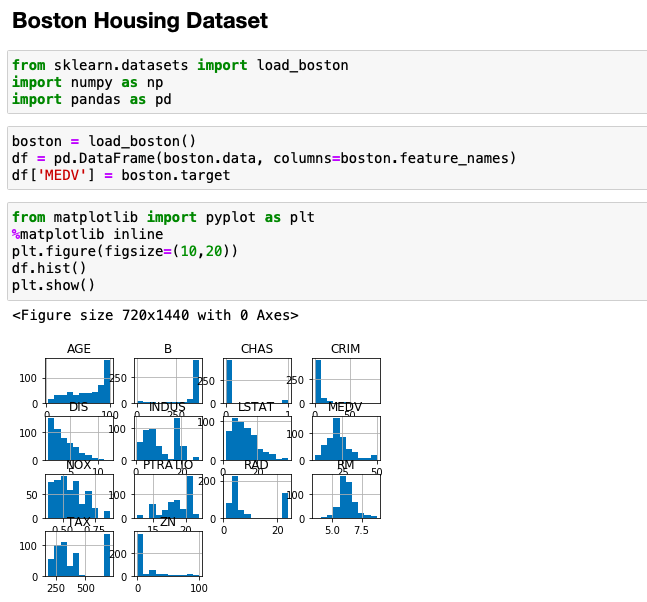
For this article, I will use some features from sklearn’s Boston housing dataset to demonstrate the effects of scaling. You don’t need to scale features for this dataset since this is a simple Linear Regression problem. I am just utilizing the data for illustration.

The two most common ways of scaling features are:

  1. Normalization
  2. Standardization

Note — Neither Normalization nor Standardization changes the distribution of the data.

Let’s look at them individually and understand the pros and cons of each.

  1. Normalization — Normalization(scaling) transforms features with different scales to a fixed scale of 0 to 1. This ensures that no specific feature dominates the other.

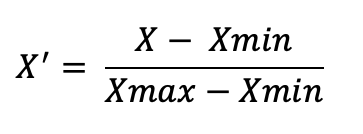
Normalization can be achieved by Min-Max Scaler. By default, Min-Max Scaler scales features between 0 and 1. We can also choose to specify the min and the max values using the “feature_range” argument in python. The formula for Min-Max Scaler is:

It is important to note that, normalization is sensitive to outliers. So, if the data has outliers, the max value of the feature would be high, and most of the data would get squeezed towards the smaller part of the scale.

Also, the min and max values are only learned from the training data, so an issue arises when a new data has a value of x that is outside the bounds of the min and the max values, the resulting X’ value will not be in the range of 0 and 1.

For e.g. Observe the effects of normalization on the ‘CRIM’ feature from the Boston housing dataset. ‘CRIM’ is the per capita crime rate by town.

Normalization did not change the distribution of the feature.

2. Standardization — Standardization transforms features such that their mean (μ) equals 0 and standard deviation (σ ) equals 1. The range of the new min and max values is determined by the standard deviation of the initial un-normalized feature.

Standardization can be achieved by Z-score Normalization. Z-score is given by:

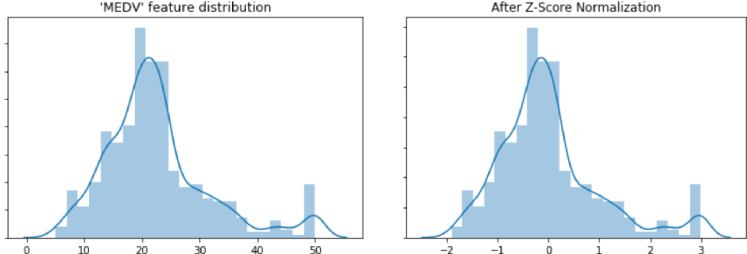
Unlike normalization, the mean and standard deviation of a feature is more robust to new data than the min and max values. Standardization is more effective if the feature has a Gaussian distribution, to begin with. Observe what happens when you standardize the ‘CRIM’ feature which has a right-skewed distribution.

Whereas, if you do the same on the ‘MEDV” feature, which has a Gaussian or Gaussian-like distribution, the z-score transformation is more effective. ‘MEDV’ is the median value of owner-occupied homes (in $1000’s).

So, Normalization or Standardization, which one is better? The answer is: you guessed it right, it depends. It is sometimes good to perform selective scaling of the numerical features, but the better option is to try out different combinations to data scaling and then comparing the performances of the model.

The different combinations could be:

a. Simply normalizing all the features

b. Simply standardizing all the features

c. Selectively normalizing features with Non-Gaussian distribution and standardizing features with Gaussian distribution.

Conclusion:

Normalization allows us to transform all the features with varying scales to a common scale but does not handle outliers well. On the contrary, standardization is more robust to outliers, new data and facilitates faster convergence of loss function for some algorithms. Therefore, standardization is typically preferred over Normalization.

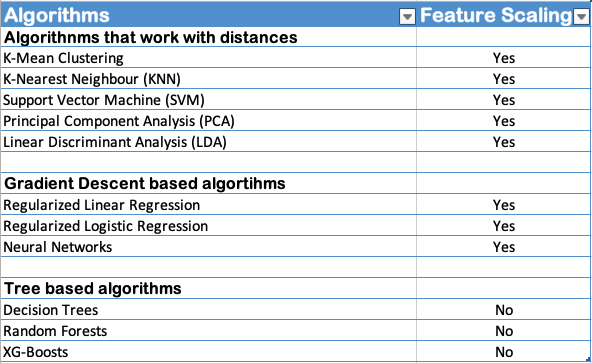
As a final note, here is a quick cheat sheet for reference.

Thank you for reading. Get in touch if you have further questions via LinkedIn.

Don’t forget to give us your ? !


Feature Scaling in Machine Learning was originally published in Becoming Human: Artificial Intelligence Magazine on Medium, where people are continuing the conversation by highlighting and responding to this story.

Via https://becominghuman.ai/feature-scaling-in-machine-learning-20dd93bb1bcb?source=rss—-5e5bef33608a—4

source https://365datascience.weebly.com/the-best-data-science-blog-2020/feature-scaling-in-machine-learning

Design a site like this with WordPress.com
Get started