The pandemic is widening the agent coaching productivity gap

How organizations are building resilient coaching programs in a period of rapid transformation
For unicorn insurance company Root Insurance, the shift to remote work came quickly. Really quickly.

“We decided to make the switch to work from home overnight. We went from everyone in the office to 97% of our company working from home. That’s a massive shift in a short amount of time,” said Chad Hudgins, who leads quality and training for more than 150 customer support agents at Root Insurance.

Contact centers across the globe shared this experience. Agents were moved from on-site to their living rooms, and with it, a swath of new challenges arose — from protecting customer data, to ensuring consistent customer experiences, and even maintaining company culture.
Machine Learning Jobs

But one of the biggest casualties of the transition is agent coaching programs. The old way of doing things just isn’t possible in a virtual environment. Then again, maybe it’s a phoenix rising from the ashes — a new way of coaching emerging?

The hard truth on agent coaching in a remote world

The pandemic has fundamentally changed the way organizations operate, collaborate, and coach. With that change, contact centers have had to find new ways to work productively, manage their new virtual environments, and lead their teams through these uncertain times.

For those responsible for coaching agents, learning and development, maintaining productivity in the face of new challenges is at the forefront of managing the transition.

  • From in-person to Zoom: Contact centers are struggling to recreate the personal coaching environment to conduct impactful sessions in a virtual world. So much is lost in a virtual call — interpersonal queues, body language, tone — which leads to big gaps for something as relational as coaching and teaching.
  • Agent enablement and inspiration: Supervisors periodically walk the contact center floor to monitor agents and provide in-person, on-the-spot performance coaching, as well as assisting agents with difficult situations. What does ad-hoc engagement look like remotely? How does it scale?
  • Camaraderie and culture: With agents handling hundreds of calls daily, forming relationships amongst co-workers helps agents stay engaged and happy. Impromptu peer-to-peer learning sessions in a collaborative culture were the norm. How do you provide your remote team unstructured time and formats for collaboration? How do people understand how they perform compared to peers and learn from top performers?
  • Compliance mitigation: From the secure contact center floor (in terms of both technology infrastructure and physical environment), to the agent’s living room, a new set of compliance challenges have arisen around maintaining compliance at home.

Trending AI Articles:

1. 130 Machine Learning Projects Solved and Explained

2. The New Intelligent Sales Stack

3. Time Series and How to Detect Anomalies in Them — Part I

4. Beginners Guide -CNN Image Classifier | Part 1

The result is a widening coaching productivity gap

With the rapid shift to distributed agents, a productivity gap quickly formed and continues to widen in two areas:

  • The success of the coaching programs themselves
  • The culture which is built around those programs.

To make up for these challenges, a greater focus on software integrations and a new reliance on interaction analytics and AI services, both in maintaining business continuity and easing the burden on teams, is helping companies better support their remote workforces.
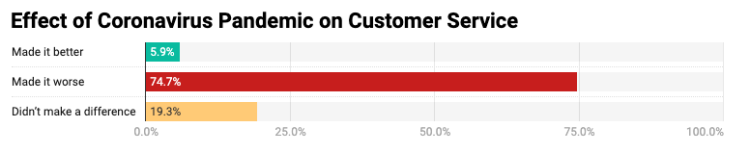
NBC/Telemundo Survey

There were a number of success stories.

JK Moving, one of the nation’s largest moving companies, used AI immediately to monitor for PPE Moments, where consultants used language to reassure customers that JK was adhering to COVID guidelines. These phrases helped drive additional revenue, attributed to coaching the team on new key phrases and key times.

VOO, a Belgian telco, moved 188 agents remotely in one week. Fully operational in the cloud, VOO saw a 38% increase in productivity within the week.

On the other side, the ongoing stories of poor customer experiences spread far and wide. Bank customers waiting on hold for hours, and sometimes days. The industry average on abandonment rate surged from 2% to 10%. The pandemic caused a perfect storm of customer service issues, with companies struggling to keep up while keeping their agents safe, engaged, and properly coached to handle the new normal.

How the gap formed, and continues to widen

Over the last decade, contact centers invested heavily in AI technology to gain a deeper understanding into customer interactions taking place, streamline processes, and drive better results across their most critical KPIs. In fact, 8 out of 10 contact centers have implemented AI into their customer service. It’s widespread and widely adopted.

But nobody could have foreseen the impact interaction analytics and AI services would have on the heels of the COVID-19 pandemic. The organizations that had invested in and embraced AI-driven technologies were far more equipped to handle the massive organization changes compared to those that hadn’t.

With a finger on the pulse of every business interaction taking place, AI-enabled contact centers were capable of quickly creating new and adapting existing coaching programs to better enable their newly remote agents.
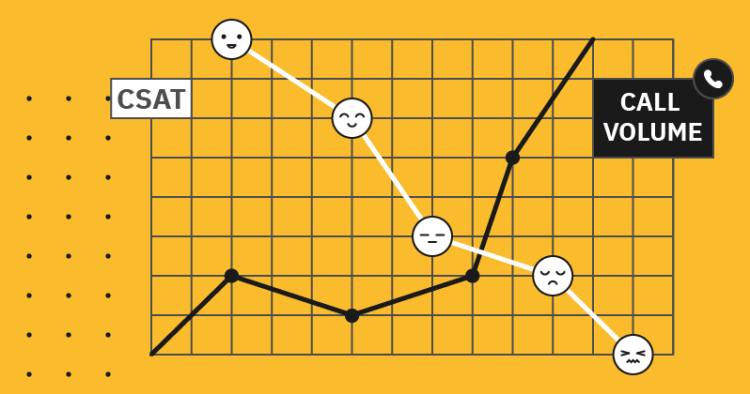
Taking a look at what’s working well

100% visibility through real-time insights

It’s no secret that leading contact centers already had the technologies in place necessary to get full visibility into what was happening with their interactions and agents. Coaching programs powered by cloud-based AI services, particularly interaction analytics, have empowered organizations to seamlessly move their interaction monitoring and analysis remote to maintain their speed to insight.

It didn’t matter where the agents were located — the organizations could still monitor 100% of interactions at scale, and in turn, continue to utilize those insights to influence their coaching programs.

Built-in coaching workflows

The pandemic also accelerated the volume of interactions that were taking place across all channels. This brought a new set of never-before-experience challenges to organizations, and their customer service teams on the frontlines bore the brunt of it.
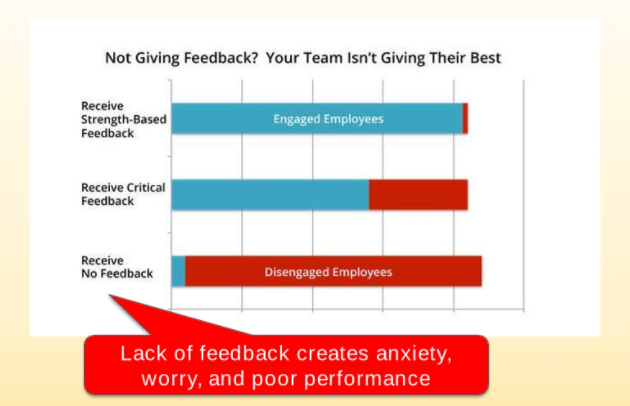
Bersin Report

Specifically for coaching, from the beginning, organizations were able to understand call drivers, what exactly was impacting CX, why customers were unhappy, and ensure compliance. Those who had built-in coaching workflows were able to immediately suggest tips, resources, and real-time monitoring of KPIs to help better handle the surge.

As the pandemic continues into 2021, equally important is monitoring the success of coaching programs, understanding what types of coaching are making an impact and where others are falling short. Not only will modern brands uncover ways to tailor coaching for each agent, but they’ll also use data to know where roles like QAs and supervisors need coaching, too.

Building resilient coaching programs in a period of rapid transformation

Organizations cannot afford to not invest in their agents, especially given the markets have never been more competitive, and customers have never been more stressed. In fact, a recent NBC poll found that 75% of respondents felt that customer service has worsened during the pandemic.
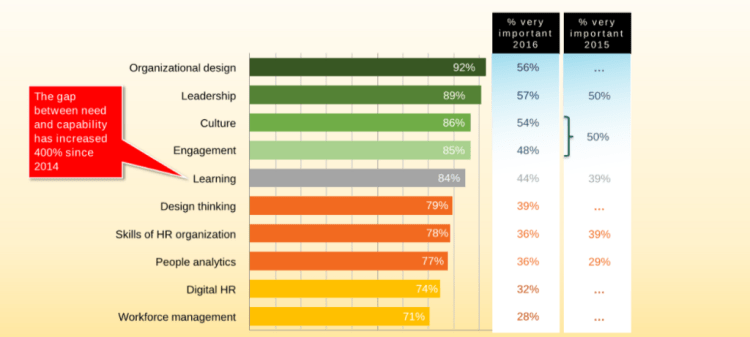
Bersin Report

Agents have a direct impact on the customer experience, and contact center leaders need to continue to make coaching a priority to drive a return.

The gap between the desire for better coaching, and the ability to provide it has grown to a 400% difference.

Thus, the emergence of new workflows, powered by interaction analytics. With deep intelligence on 100% of agent calls, coaching programs have moved from one-size-fits-all to contextual and personalized.

And many contact centers, particularly their coaching teams, tout the cultural motto: “employee experience = customer experience.” The crux of that belief rests in not only empowering the agents themselves, but the quality analysts and supervisors as well. Providing them the performance management tools and enabling real-time feedback bridges that gap.

Agile and in-the-moment

Success rests in agility, being able to utilize direct and indirect data to drive action. That includes proactively identifying and addressing issues before they become a widespread problem. This could be mandatory compliance dialogues required for every call taking place. Or maybe a certain keyword or phrase that directly impacts customer sentiment. It even includes leadership taking the insights from the frontlines to drive more impactful changes across the business. But the biggest impact is engaging the agents when they need help, in the moment.

At the beginning, we briefly mentioned JK Moving’s pandemic transition. Moving companies are obviously very hands on, and interact heavily in-person with their customers. From the get go, JK Moving had to ensure that their agents were properly communicating COVID-19 safety precautions to customers.

By quickly launching PPE Moments, to analyze the interactions related to this KPI, JK was able to rapidly and effectively coach their agents on the most impactful language to use to drive more customer trust, and as a result, higher conversions (in their case, booking a move with a customer).

Data-driven and increasingly real-time

Beyond the process, equally important is culture, with companies moving beyond the employee experience to create a learning and development culture built on transparency and trust. Built on data, not assumptions and subjectivity, agent performance is analyzed in a way that is fair for every agent.

Coaching sessions are built on the entire data set (the agent’s entire conversation record), not a random call drawn from a hat. The result is more relevant, more fair, and more impactful coaching conversations. Less disputes, and more progress.

What is Adaptive Learning?

A computer-based or online system that modifies the presentation of training material in response to learner’s performance. Adaptive learning uses interaction data to provide tailored and personalized training to each learner.

Shurland Buchanan, CLO at itelbpo

itelbpo, the largest BPO in the Caribbean, has made this practice the core of their SMART Academy. Fusing together adaptive learning programs with interaction analytics, itel’s L&D team is able to craft individual coaching programs for every agent. As their Chief Learning Officer Shurland Buchanan says,

When coupled with contact center AI, adaptive learning creates the perfect loop for improving performance. It’s real data on KPIs tied to learning objectives. We have the ability, with specific examples, to train agents on the most important opportunities and celebrate achievements.

Looking forward

It’s safe to say that the pandemic has radically transformed the contact center, from agents on the frontline all the way up to leadership. For those that were AI-enabled from the get-go, weathering the storm was seamless. For others, the crisis served as a trigger to reflect and drive change at their organizations, with the lofty goal of improving their coaching programs and providing agents certainty in a time of uncertainty.

But one thing is for sure — AI-driven services built around the interactions themselves is the key to driving more impactful coaching programs, and in turn, stronger enablement, productivity, and agent engagement. And that means outperforming and out-innovating the competition.

Don’t forget to give us your ? !


The pandemic is widening the agent coaching productivity gap was originally published in Becoming Human: Artificial Intelligence Magazine on Medium, where people are continuing the conversation by highlighting and responding to this story.

Via https://becominghuman.ai/the-pandemic-is-widening-the-agent-coaching-productivity-gap-21b4d4fa910c?source=rss—-5e5bef33608a—4

source https://365datascience.weebly.com/the-best-data-science-blog-2020/the-pandemic-is-widening-the-agent-coaching-productivity-gap

MLOps Is Changing How Machine Learning Models Are Developed

Delivering machine learning solutions is so much more than the model. Three key concepts covering version control, testing, and pipelines are the foundation for machine learning operations (MLOps) that help data science teams ship models quicker and with more confidence.

Originally from KDnuggets https://ift.tt/34P5tSL

source https://365datascience.weebly.com/the-best-data-science-blog-2020/mlops-is-changing-how-machine-learning-models-are-developed

Fast and Intuitive Statistical Modeling with Pomegranate

Pomegranate is a delicious fruit. It can also be a super useful Python library for statistical analysis. We will show how in this article.

Originally from KDnuggets https://ift.tt/2Ksn4Zo

source https://365datascience.weebly.com/the-best-data-science-blog-2020/fast-and-intuitive-statistical-modeling-with-pomegranate

What is Deep Learning and How it Helps to Healthcare Sector?Cogito

What is Deep Learning and How it Helps to Healthcare Sector? — Cogito

Healthcare industry is deeply interested in utilizing the power of artificial intelligence to provide better treatment and patient care at the same time improving their efficiency and lowering the cost of medication and medical facilities.

Over the past few years, AI has exploded into many fields and sub-fields with multiple technologies and sub-tools used under the AI development process. Machine learning, deep learning and semantic computing are the few terms making significant differences between them that help to develop a functional AI model.

To develop such models high-quality data is ingested, analyzed and returned to end-users that have a big impact while expecting the results with complete reliability and accuracy. In order to get choose between the right data scientists and suitable algorithms, healthcare organizations need to stay confident to adopt the different flavors of artificial intelligence and how they can apply this technology into different use cases.

Deep learning is the right place to start working on AI development process. And over the past few years this branch of AI has become transformative for healthcare providing better insights to analyze the data with better speed and accuracy.

Artificial Intelligence Jobs

But here you need to understand about deep learning and how it is different from machine learning or how the healthcare industry are leveraging deep learning techniques to solve the crucial problems while providing the patient care.

What is Deep Learning?

Deep Learning is a kind of machine learning process that uses a layered algorithmic architecture to analyze the data and make it easier to train the machines with suitable data sets and make a fully functional AI model.

Under the deep learning process, data is filtered through multiple layers and with a successive layer using the results from the previous one to tell its output. Deep learning based models can come more and more accurate as they process more data, mainly learnt from previous outputs to refine their ability to make a better connection and correlations.

Trending AI Articles:

1. 130 Machine Learning Projects Solved and Explained

2. The New Intelligent Sales Stack

3. Time Series and How to Detect Anomalies in Them — Part I

4. Beginners Guide -CNN Image Classifier | Part 1

How Deep Learning is changing the Healthcare Industry?

Currently, deep learning is mainly adopted for small scale model testing or at research projects and at pre-commercialized stages. However, on the other hand deep learning is also gradually find new ways into various innovative tools that have high-value applications in the healthcare industry. While few of the promising cases includes innovative applications for patients, and few of them surprisingly establish strategies for improving the end-users experience through IT related services in healthcare.

Imaging Analysis and Ailment Diagnostic

Conventional neural network (CNNs) is one the type of deep learning that is used for analyzing the images like X-rays, CT Scan and MRI to diagnosis the possible diseases. This neural network technology is designed with a motive to that it will process images, allowing the networks to handle the larger images and operate with better efficiency.

Several schools of medicine and research centers have developed a deep neural network capable of diagnosing the crucial neurological conditions, such as stroke and brain hemorrhage, around a hundred times quicker than human radiologists with the highest accuracy and some CNNs are even surpassing the accuracy of human diagnosticians.

Use of Natural Language Processing Tools

Deep learning and neural network, numerous natural language processing tools have become prevalent in the healthcare industry for translating the speech into text or converting them into dictation documents with accurateness.

Actually, neural networks have been designed for classification and they can easily identify individual linguistic or grammatical elements by “grouping” similar words together and mapping them in relation to one another. And this helps the network understand the complex semantic meaning but such tasks are affected due to distinctions of common speech and communication.

Though, most of the deep learning tools still find difficult while identifying the important clinical elements fail to establish a meaningful relationship between them, and translate such relationships into useful information for an end user.

Drug Research and Precision of Medicine

Deep learning also works with precision medicine and drug discovery agenda to provide the most advance medical research systems to developers. And to achieve such an agenda a huge volume of genomic, clinical, population-level and healthcare training data with the goal of identifying previously unknown associations between genes, pharmaceuticals, and physical environments is required with the right algorithm.

The medical research centers and universities are seriously working with deep learning technologies that will help to accelerate the process of analyzing data, these institutions also expecting the combination of predictive analytics and molecular modeling will hopefully uncover new insights into how and why certain cancers form in certain patients that will help to provide better and timely cure and treatments.

Clinical Analysis Support for Predictive Decisions

The role of deep learning in clinical analysis for predictive decisions is getting stronger with the hope of analyzing the variety of health conditions of different patients. In several conditions, deep learning may soon be a handy diagnostic tool in the inpatient setting, where it can alert attendants to changes in high-risk medical care conditions.

Certain artificial intelligence in healthcare laboratory and computer science centers have developed a project called ICU intervenes that enables to inform the clinicians to the patient under the critical care unit. In few eye related clinical trials, professionals use optical coherence tomography (OCT) scans to diagnose eye conditions.

And these 3D images provide a detailed map of the back of the eye, but they are hard to read and need expert analysis to interpret. But with the help of image annotation deep learning, the system an accurate as a human clinician, and has the potential to significantly expand access to care by reducing the time it takes for testing and diagnosis.

The Future Scenarios of Deep Learning in Healthcare

Deep learning is showing progressive growth with prevalent opportunities in the healthcare sector to develop more useful and efficient applications or computer systems that can provide better information with more quick and accurate results.

Further with the use of AI in the healthcare setting, some deep learning algorithms will produce “transformational” outcomes with high accuracy. The use of deep learning and NLP Sentiment Analysis with the right algorithm will help to understand casual conversation in a noisy environment, giving rise to the possibility of using a comprehensive, intelligent scribe to support the burden of documentation.

All these initiatives and developments will not only help return joy to practice by facilitating doctors and reduce their everyday workload but at the same time also help the patients get more dedicated and thorough medical attention, ideally, leading to better care and quick recovery from critical diseases with least agony.

Don’t forget to give us your ? !


What is Deep Learning and How it Helps to Healthcare Sector? — Cogito was originally published in Becoming Human: Artificial Intelligence Magazine on Medium, where people are continuing the conversation by highlighting and responding to this story.

Via https://becominghuman.ai/what-is-deep-learning-and-how-it-helps-to-healthcare-sector-cogito-67d79372bad0?source=rss—-5e5bef33608a—4

source https://365datascience.weebly.com/the-best-data-science-blog-2020/what-is-deep-learning-and-how-it-helps-to-healthcare-sectorcogito

MLOps Why is it required? and What it is?

Creating an model that works well is only a small aspect of delivering real machine learning solutions. Learn about the motivation behind MLOps, the framework and its components that will help you get your ML model into production, and its relation to DevOps from the world of traditional software development.

Originally from KDnuggets https://ift.tt/3mwA7Gm

source https://365datascience.weebly.com/the-best-data-science-blog-2020/mlops-why-is-it-required-and-what-it-is

Top 2020 Stories: 24 Best (and Free) Books To Understand Machine Learning; If I had to start learning Data Science again how would I do it?

Also: Know What Employers are Expecting for a Data Scientist Role in 2020; Top Python Libraries for Data Science, Data Visualization & Machine Learning.

Originally from KDnuggets https://ift.tt/3r6YI87

source https://365datascience.weebly.com/the-best-data-science-blog-2020/top-2020-stories-24-best-and-free-books-to-understand-machine-learning-if-i-had-to-start-learning-data-science-again-how-would-i-do-it

ebook: Fundamentals for Efficient ML Monitoring

We’ve gathered best practices for data science and engineering teams to create an efficient framework to monitor ML models. This ebook provides a framework for anyone who has an interest in building, testing, and implementing a robust monitoring strategy in their organization or elsewhere.

Originally from KDnuggets https://ift.tt/37tqsfl

source https://365datascience.weebly.com/the-best-data-science-blog-2020/ebook-fundamentals-for-efficient-ml-monitoring

Undersampling Will Change the Base Rates of Your Models Predictions

In classification problems, the proportion of cases in each class largely determines the base rate of the predictions produced by the model. Therefore if you use sampling techniques that change this proportion, there is a good chance you will want to rescale / calibrate your predictions before using them in the wild.

Originally from KDnuggets https://ift.tt/3mngn84

source https://365datascience.weebly.com/the-best-data-science-blog-2020/undersampling-will-change-the-base-rates-of-your-models-predictions

Design a site like this with WordPress.com
Get started